



Bone Inlaid Chest
These bone inlaid chest examples bring intricate surface work and global craft traditions into a room, offering both practical storage and striking historic detail.
Bone Inlaid Chest
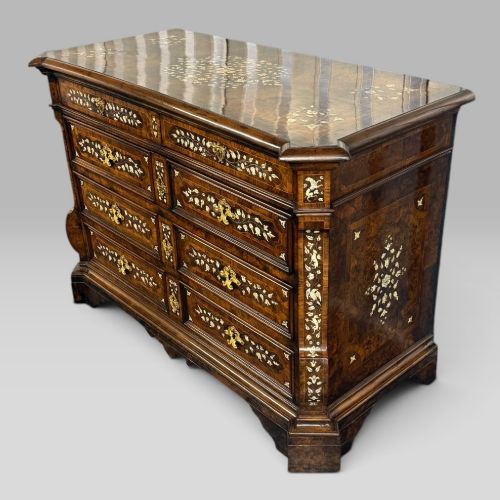
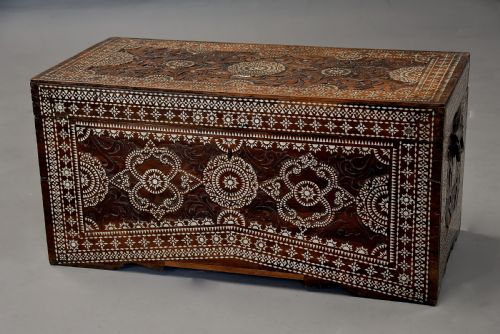
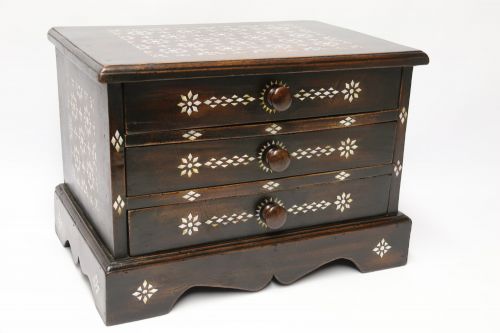
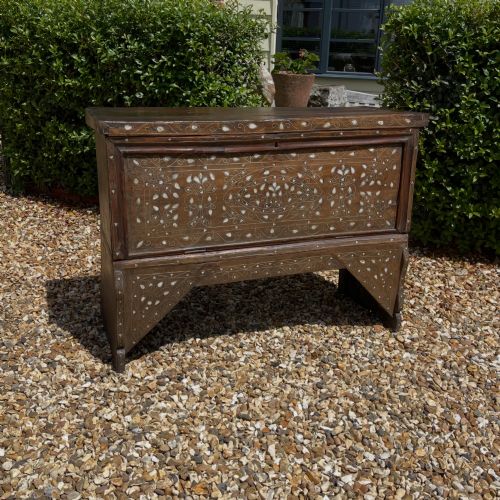
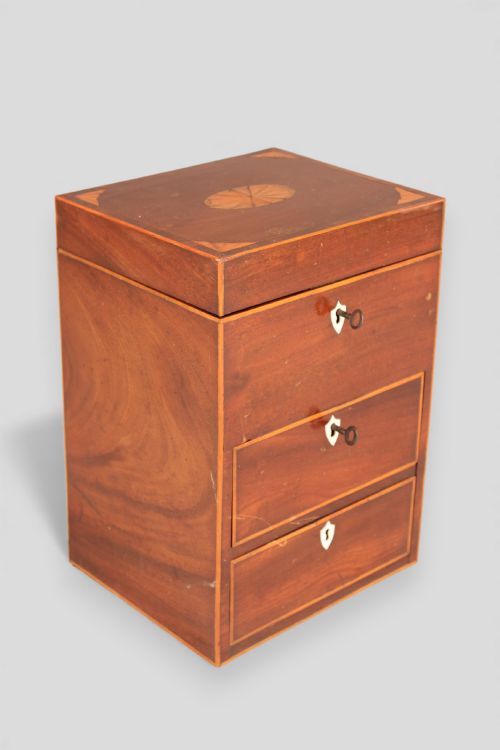
A bone inlaid chest encompasses forms ranging from large trunks and commodes to small tabletop caskets and collector boxes. The selection spans centuries of global craftsmanship, uniting disparate cultures through the medium of applied bone decoration.
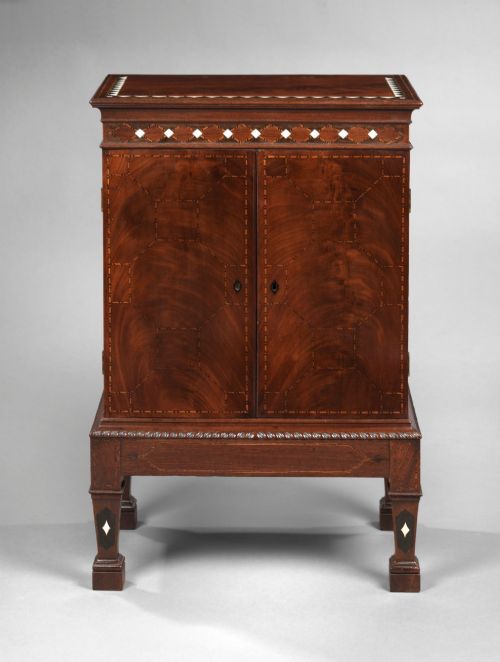
Buyers are most likely to encounter smaller trunks, caskets, and cabinets drawing on Anglo-Indian, Ottoman, and Syrian design traditions. These pieces showcase dense geometric or floral patterns set into dark hardwoods like ebony, walnut, and mahogany.
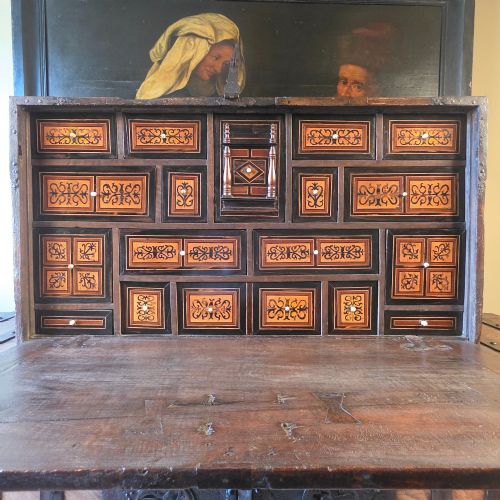
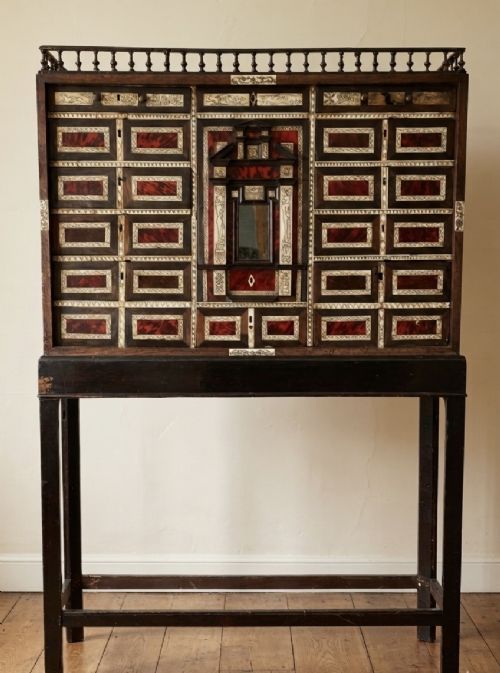
Earlier centuries contribute grander Italian Baroque commodes and Flemish cabinets on stands, where bone acts as a luminous contrast against rich woods. Each regional style applies the technique differently, creating distinct visual identities across the periods represented.
Assessing quality
Quality rests upon the precision of the joinery and the complexity of the inlaid pattern. Tighter tessellation and more elaborate pictorial or geometric arrangements separate masterwork production from simpler utilitarian items.
The choice of secondary timbers and the stability of the foundational carcass dictate longevity. Pieces retaining all original bone tesserae without extensive replacement demonstrate superior care and material integrity.
Secret compartments and hidden drawers frequently conceal themselves behind sliding bone panels in these intricate historical caskets.
The Bone Inlaid Chest Glossary
- Bone inlay
- The technique of embedding thin pieces of animal bone into a wooden substrate to create decorative patterns. This method appears across multiple centuries and global design traditions.
- Tessera
- An individual small block or piece of bone used to create a mosaic pattern. Artisans shape each piece by hand before setting it into the carved wood.
- Casket
- A small decorative box or chest intended for holding valuables, letters, or precious items. These smaller forms frequently display intricate surface decoration.
- Cabinet on stand
- A cabinet designed to sit upon a separate supporting table frame or stand. This elevated form highlights the decorative qualities of the piece at eye level.
- Commode
- A low chest of drawers or cabinet originating in France during the seventeenth century. Examples from this tradition often incorporate elaborate veneering and inlay.
Bone Inlaid Chest: Frequently Asked Questions
How do I clean a bone inlaid chest?
Dust gently with a dry, soft brush to prevent particles lodging between the bone segments. Avoid moisture and chemical cleaning agents, which can weaken old animal glues.
Changes in humidity cause wood to expand and contract while bone remains stable, leading to loose tesserae. Keep pieces away from direct heat sources and strong sunlight.
Are these pieces sturdy enough for daily use?
Many smaller caskets and boxes serve well for storing jewellery, trinkets, or dry goods. Larger trunks function effectively as coffee tables or blanket storage.
Historical construction methods mean older joints require gentle handling. Avoid overloading drawers or placing excessive weight on flat surfaces.
How do I distinguish regional styles?
Anglo-Indian and Middle Eastern pieces often feature dense scrollwork or geometric bone panels set into dark woods. European Baroque and Renaissance examples lean towards figural motifs and architectural cabinet forms.
Examining the secondary timbers and the cut of the dovetails helps confirm the likely geographic origin. Each region utilised distinct workshop practices.
Why do some pieces show yellowing on the bone?
Natural bone develops a warm patina and deepens in tone over centuries due to light exposure and age. This gradual colour shift is a normal characteristic of authentic antique material.
Pure brilliant white bone usually indicates modern replacement sections rather than untouched historical surfaces. Collectors generally value the consistent aged tone of an undisturbed piece.