



Antique Inlaid Coffer
An antique inlaid coffer is a sturdy storage chest decorated with contrasting woods or materials, offering centuries of craftsmanship and practical utility.
Antique Inlaid Coffer
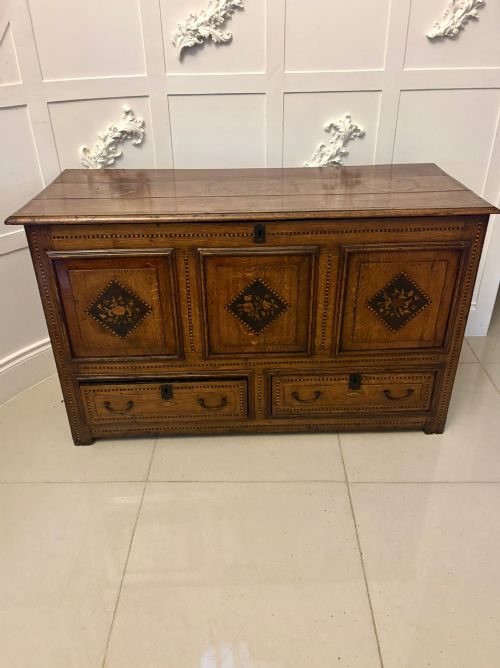
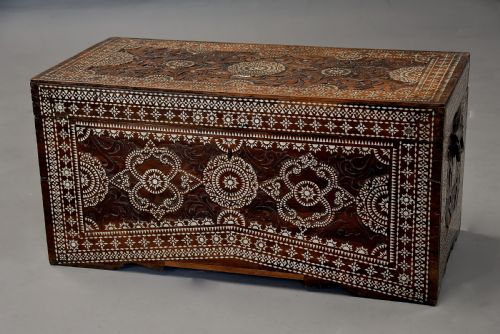
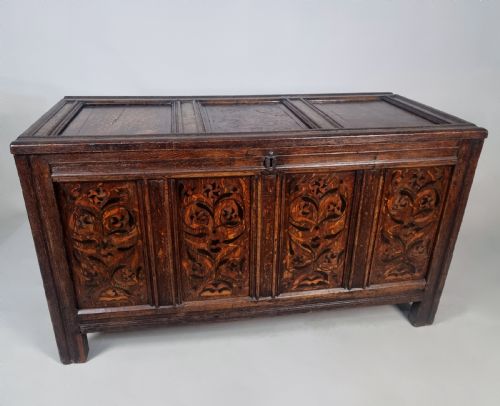
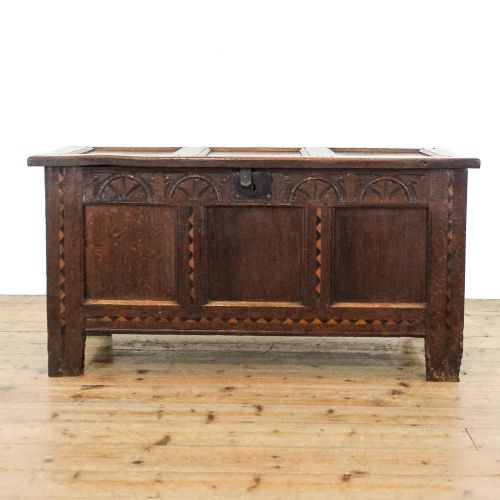
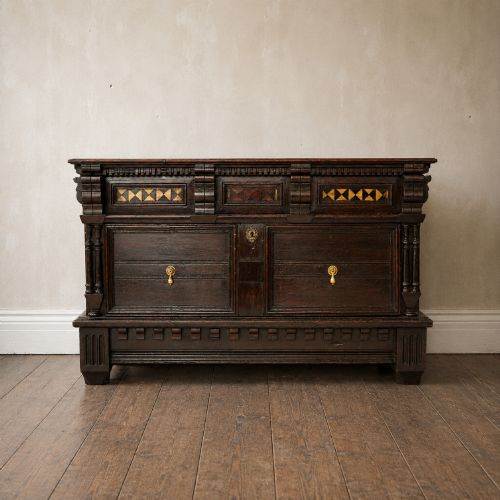
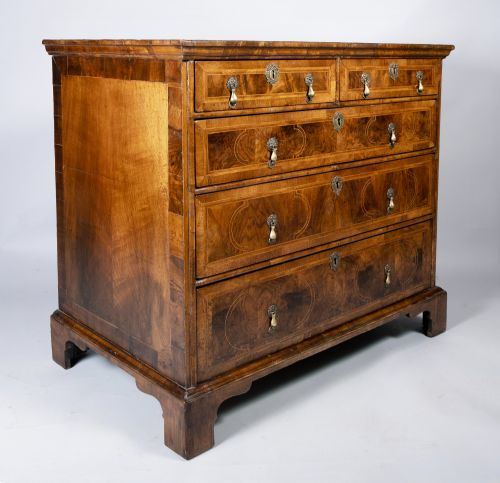
An antique inlaid coffer is a substantial wooden storage chest, often featuring hinged lids and decorative surface work, used historically for valuables, textiles or household goods. When you browse this selection, you encounter pieces spanning from the 16th century through the Victorian and Edwardian eras, reflecting diverse regional cabinet-making traditions.
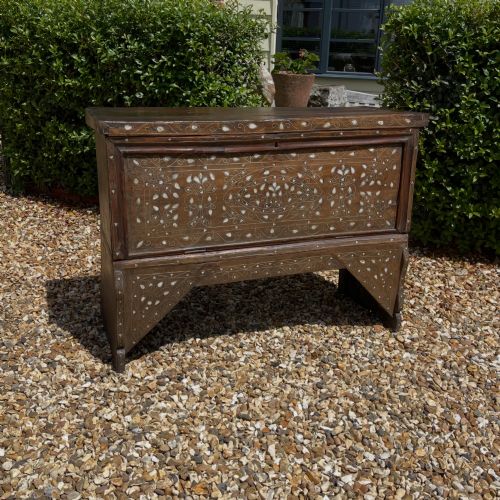
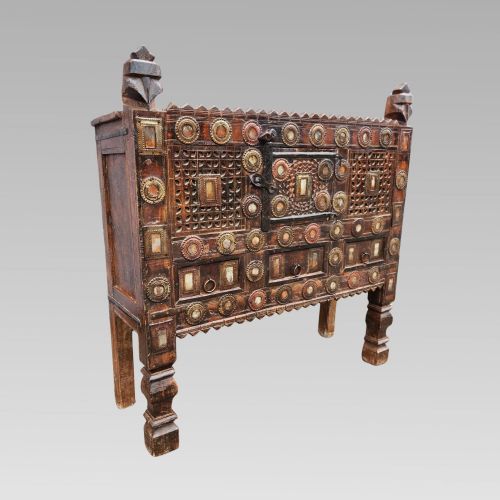
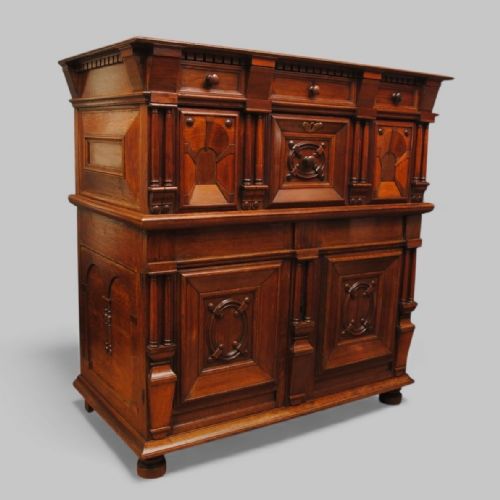
The most common forms on this page include oak and walnut panels embellished with marquetry, geometric patterns or contrasting fruitwoods. Many items originate from seventeenth-century English workshops, while others reflect continental or overseas influences such as Middle Eastern pearl inlay and Ceylonese cabinet work.
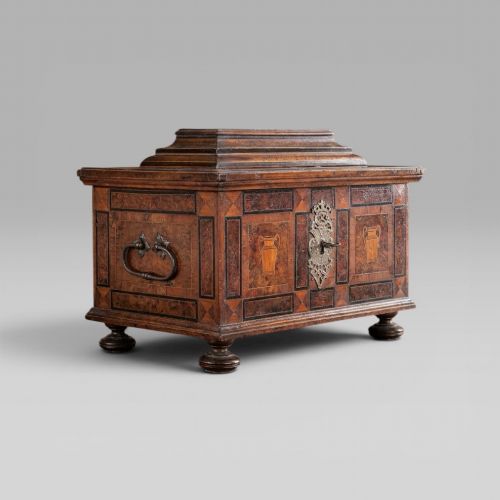
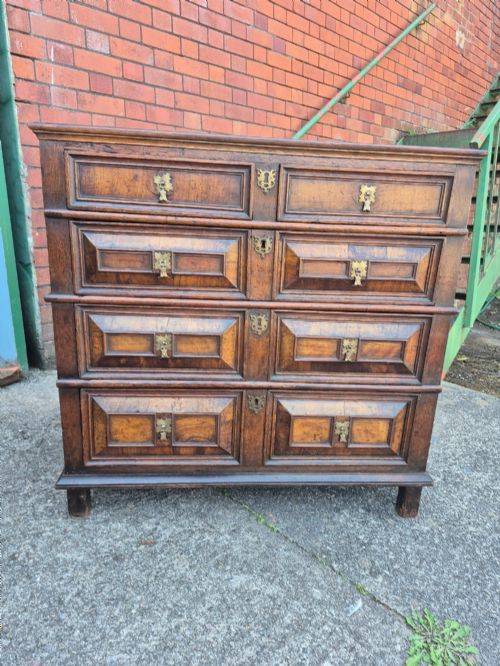
Beyond standard coffers and blanket chests, the selection encompasses related storage forms like mule chests fitted with lower drawers, miniature caskets, and specialised cellarettes. These pieces serve contemporary interiors as functional coffee tables, blanket storage at the foot of a bed, or hallway focal points.
How They Were Made
Construction relies heavily on native hardwoods like oak, walnut, and mahogany, joined using traditional frame-and-panel methods that accommodate seasonal wood movement. Artisans incorporated secondary timbers such as fruitwood, snakewood, and exotic woods like ebony and satinwood for decorative contrast.
Surface ornamentation involved intricate marquetry, wood inlay, and surface carving, alongside embellishments using mother of pearl, bone, and brass hardware. Cabinet makers cut recesses into the primary wood base to fit contrasting veneers and detailed pictorial or geometric motifs securely into place.
The listings feature pieces spanning the sixteenth through the early twentieth centuries, constructed in oak, walnut, mahogany, and hardwood.
What Varies in Quality
The standard of an antique inlaid coffer is largely defined by the crispness of its joinery and the complexity of its decorative surface. Pieces created by skilled workshops display precise veneer fitting, harmonious grain selection, and structural integrity that survives centuries of use without excessive timber shrinkage.
Originality of surface finish and hardware also separates standard examples from exceptional ones. Retaining period brasses, untouched patination on native oak or walnut, and intact marquetry without extensive modern timber replacement elevates a piece considerably for collectors.
Whytock And Reid
The Antique Inlaid Coffer Glossary
- Coffer
- A large strongbox or chest used historically for storing valuables, documents, or garments. These sturdy items typically feature hinged lids and heavy timber construction.
- Marquetry
- The art of applying small pieces of veneer to a structural structure to form decorative patterns or pictures. Craftsmen utilise varied timber colours to create depth and contrast.
- Mule Chest
- A traditional storage chest featuring one or more drawers built into the base beneath the main compartment. This form bridges the evolution between the simple coffer and the chest of drawers.
- Cellarette
- A lockable container designed for holding bottles of wine or spirits safely. They frequently appear in mahogany or walnut with fitted internal compartments.
- Vernacular
- Objects made by local craftsmen following regional traditions rather than high-style metropolitan fashions. Welsh vernacular pieces offer distinct local interpretations of standard furniture forms.
Antique Inlaid Coffer: Frequently Asked Questions
What were antique inlaid coffers used for originally?
These chests served primarily as secure storage for household valuables, textiles, documents, and precious garments in domestic settings.
Because they predated fitted wardrobes and chests of drawers, families relied on them to protect important possessions from dampness and theft.
How do I date an antique oak coffer?
Dating relies on examining construction techniques, joinery methods, timber types, and the style of any carved or inlaid decoration. Seventeenth-century examples often display pegged frame-and-panel construction and geometric marquetry, whereas later nineteenth-century versions show different secondary woods and manufacturing marks.
Comparing panel thickness, hinge types, and tool marks provides further clues to establish the approximate period of manufacture.
Where should I place a coffer in my home?
A coffer functions effectively as a blanket box at the foot of a bed, a hallway storage bench, or a living room coffee table. Their flat lids and spacious interiors make them exceptionally practical for modern storage needs.
Keep them away from direct heat sources and strong sunlight to protect the aged timber and delicate inlay work from drying out.
What is the difference between a coffer and a mule chest?
A traditional coffer consists of a simple chest with a top-opening lid and a single open internal compartment. A mule chest incorporates one or more functional drawers beneath the main storage box.
This drawer addition emerged to provide easier access to stored linens without needing to remove items stacked on top.