


Walnut Table Casket
These walnut table caskets are small, decorative storage boxes designed for precious personal items.
Walnut Table Casket
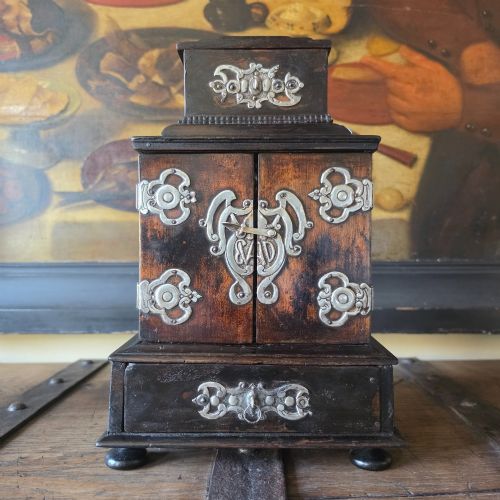
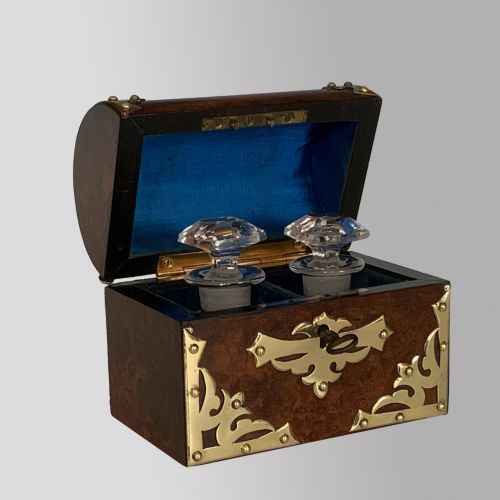
A walnut table casket is a compact desktop container intended for jewellery, gloves, or scent bottles. When you browse this selection, you encounter forms ranging from simple lidded table boxes to elaborate fitted cabinets with glass doors and internal mirrors.
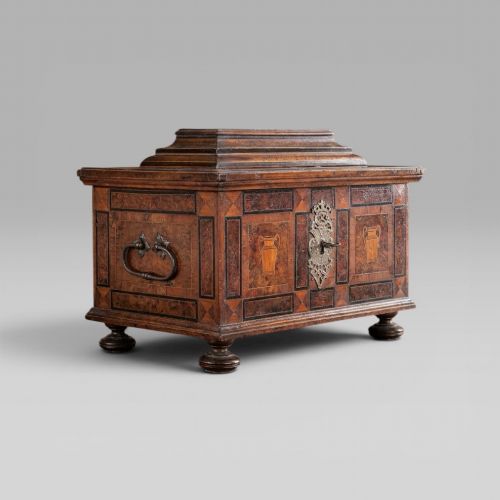
The pieces span several centuries, with Victorian examples appearing alongside seventeenth-century continental cabinets and eighteenth-century Spanish boxes. The variety encompasses styles such as Baroque, Ottoman, and Italian Renaissance revival, reflecting the diverse decorative tastes of different eras.
Objects on display serve primarily as secure storage for personal valuables or as ornamental desk accessories. They take various shapes, including domed lids, multi-tiered chests, and brass-bound rectangular cases designed to sit upon a surface.
How they were made
Construction relies heavily on walnut timber, frequently utilised as burr walnut veneer to display intricate, swirling grain patterns. Carcasses combine this primary wood with secondary timbers such as fruitwood and ebony, providing structural stability and contrast.
Surface ornamentation integrates diverse materials including brass mounts, mother-of-pearl inlay, bone, and glass panels. Metalwork components like ormolu mounts and brass binding reinforce corners and secure lids, while internal compartments often feature velvet linings.
Secret compartments occasionally hide behind velvet panels, waiting for a misplaced ring.
What varies in quality
Quality depends upon the complexity of the internal fittings, such as multi-ring trays, bevelled glass doors, and integrated mirrors. Superior examples retain their original velvet linings, functional locks, and internal compartments.
The refinement of the exterior decoration dictates distinction, separating simple lidded boxes from elaborately inlaid Italian Renaissance revival caskets or ormolu-mounted scent cases. Precision in brass binding, bone inlay, and figured burr walnut veneer highlights superior craftsmanship.
The Walnut Table Casket Glossary
- Burr walnut
- A type of wood veneer taken from the warted growth on a walnut tree, prized for its swirling grain patterns. It provides a highly decorative surface on Victorian and antique boxes.
- Ormolu
- Gilded bronze applied as mounts and decorative hardware on furniture and caskets. This technique adds metallic highlights to the timber exterior.
- Table cabinet
- A small, portable piece of furniture designed to sit on a desk or table with doors or drawers for storage. These items often feature internal compartments for jewellery or papers.
- Inlay
- A technique where contrasting materials like bone, pearl, or wood are inserted into recesses in the primary surface. It creates geometric or pictorial patterns across the box lid.
Walnut Table Casket: Frequently Asked Questions
What is a walnut table casket?
A walnut table casket is a small, decorative box constructed from walnut wood, intended to sit upon a desk or tabletop. These pieces were historically used to store jewellery, gloves, or letters.
Designs range from plain lidded boxes to elaborate cabinets with glass doors, internal mirrors, and velvet-lined compartments.
How do I date a walnut casket?
Dating relies on examining the construction methods, hardware, and stylistic influences present on the piece. Victorian examples often feature burr walnut veneer, brass binding, and fitted interiors with mirrors.
Earlier pieces from the seventeenth and eighteenth centuries display different construction techniques, such as heavy timber panels, ebony details, or Spanish walnut frames.
What were table caskets used for?
These caskets served primarily as secure, decorative receptacles for high-value personal possessions. Owners stored jewellery, rings, gloves, and small writing accessories inside them.
Many double as dressing table boxes or workboxes for sewing materials, featuring fitted compartments to keep small items organised.
How do I care for antique walnut?
Antique walnut requires stable environmental conditions away from direct sunlight and extreme humidity changes. Excessive dryness can cause timber to split or veneer to lift from the carcass.
Gentle dusting with a dry, soft cloth preserves the polished surface without damaging delicate brass mounts, bone inlay, or velvet linings.