






Ebony Inlaid Box
An ebony inlaid box brings dense, dark wood paired with crisp contrasting lines into a room, offering both practical storage and striking contrast.
Ebony Inlaid Box
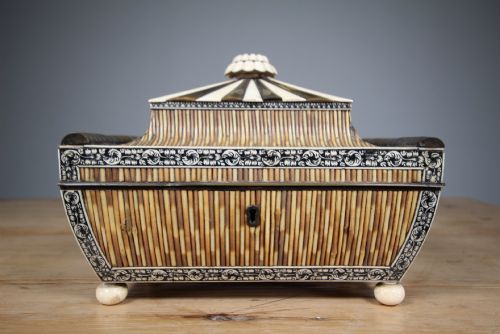
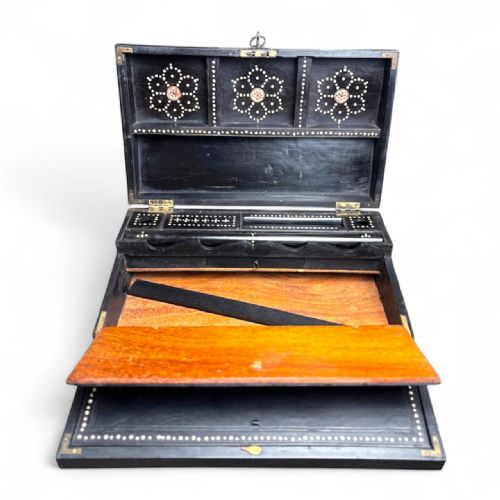
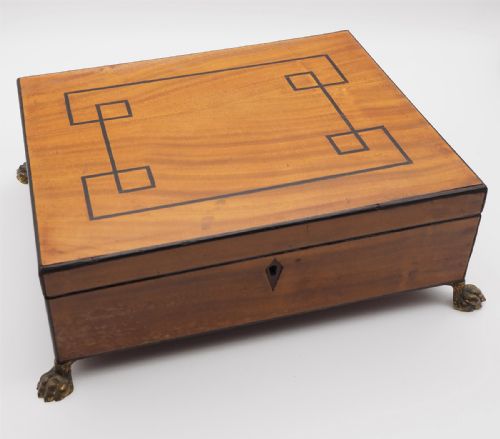
When searching for an ebony inlaid box, a buyer encounters a diverse group of lidded containers ranging from tea caddies and writing slopes to jewellery boxes and larger decorative chests. These pieces span the Regency, Victorian, and later nineteenth and twentieth-century periods, showing how different cabinetmakers applied dark tropical timbers to domestic storage.
The most common form on this page combines a rich carcase of mahogany, satinwood, teak, or shisham with contrasting linear or pictorial details worked in ebony and pale materials such as bone, ivory, boxwood, or satinwood. Many examples reflect specific regional traditions, from Anglo-Indian and Ceylonese workshops to European revival styles.
Forms serve varied domestic purposes, functioning as compact workboxes, tea canisters, or writing boxes fitted with internal compartments. Each piece relies on the striking visual weight of ebony to frame delicate geometric stringing or intricate pictorial mosaics.
How they were made
Cabinetmakers constructed the primary carcase from stable domestic or exotic timbers such as mahogany, walnut, teak, or satinwood before applying veneers and contrasting stringing. Hard, dense ebony was sliced thin for borders, grounds, or geometric details, while softer contrasting woods or animal materials provided crisp linear definition.
Inlaid elements required meticulous hand-cutting into prepared recesses, securing bone, ivory, brass, or lighter woods flush with the dark ebony surface. Regional traditions also incorporated specialised techniques, such as porcupine quill work fixed behind protective glazing or intricate mosaic banding assembled from tiny coloured wood segments.
Listings feature nineteen-century periods including Regency, Victorian, and 1930 Art Deco alongside regional Anglo-Indian and Ceylonese workshops.
What varies in quality
Quality rests upon the precision of the joinery and the tightness of the fitted inlay work where pale materials meet the dark ebony ground. Superior examples maintain perfectly flush surfaces without shrinking gaps or lifting veneer, showing disciplined hand-cut precision rather than stamped imitation.
Internal organisation and hardware further distinguish finer pieces, where original compartments, working locks, and subtle brass mounts remain intact. The sophistication of the design, from simple geometric stringing to complex pictorial parquetry or carved Ceylonese decoration, determines the piece's standing.
The Ebony Inlaid Box Glossary
- Stringing
- A thin, narrow strip of contrasting wood inlaid into a channel in the surface to form a border or outline. This technique creates linear definition around panels and lid edges.
- Caddy
- A small box or chest originally designed for storing loose tea leaves securely. Many feature internal compartments or nested canisters.
- Sarcophagus
- A distinct burial-vault container shape featuring a domed or steep-sided lid resting on a plinth base. Regency makers adopted this architectural form for decorative storage boxes.
- Parquetry
- Geometric mosaic woodwork formed by fitting small wooden tiles together into repeating patterns. It differs from marquetry by creating strictly geometric rather than pictorial designs.
- Crossbanding
- A veneer border applied so that the grain runs perpendicular to the main panel. This frames the central wood figure with an intentional directional contrast.
Ebony Inlaid Box: Frequently Asked Questions
What were these boxes used for?
These containers served specific domestic duties, holding precious tea leaves, writing materials, personal letters, or jewellery. Their robust construction kept valuable contents secure and protected from humidity.
Fitted interiors often contained small glass jars, velvet-lined compartments, or specialised trays designed for daily personal administration.
How do I date an ebony inlaid box?
Dating relies on combining the underlying timber species, the box form, and the specific style of the inlay work. Regency examples often display sarcophagus shapes and crisp boxwood stringing, while Victorian pieces incorporate richer veneers like walnut or amboyna.
Construction methods inside the carcase, such as hand-cut dovetails and lining papers, offer further clues to the decade of manufacture.
Where were porcupine quill boxes made?
Porcupine quill boxes were predominantly produced in nineteenth-century Ceylon, now Sri Lanka, often utilising local satinwood and ebony frames. Artisans arranged alternating dark quills with bone or ivory spacers beneath protective glass panels.
These distinctive export items combined European box forms with intricate regional decorative techniques popular during the colonial period.
How do I care for inlaid wood?
Inlaid surfaces thrive in stable room environments away from direct sunlight and sudden temperature swings. Excessive dryness can cause delicate bone or boxwood stringing to shrink and lift from the ebony ground.
Apply a minimal amount of appropriate furniture wax only when the wood appears dry, buffing gently with a soft cloth to preserve the finish.