


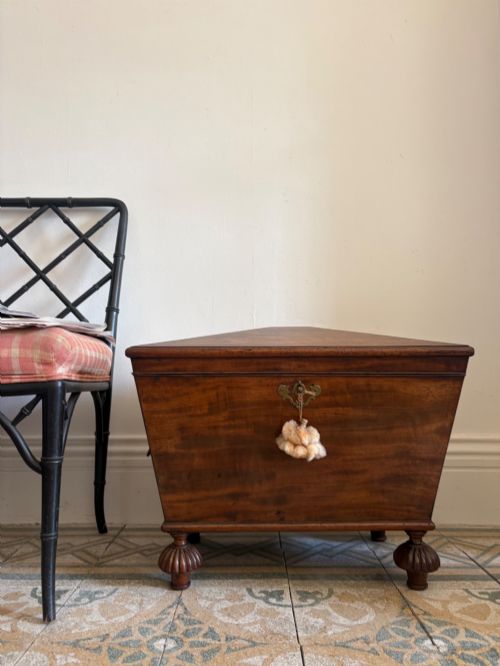

Regency Sarcophagus Box
A Regency sarcophagus box offers architectural dignity and secure storage, combining classic proportions with the rich grain of mahogany, rosewood or satinwood.
What a Regency Sarcophagus Box Is
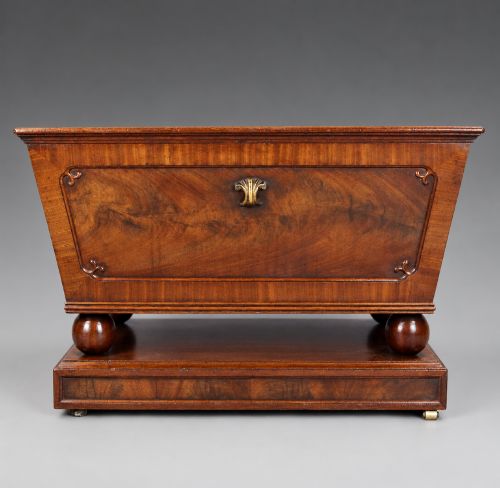
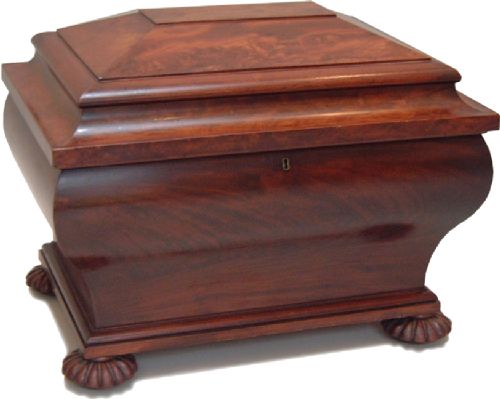
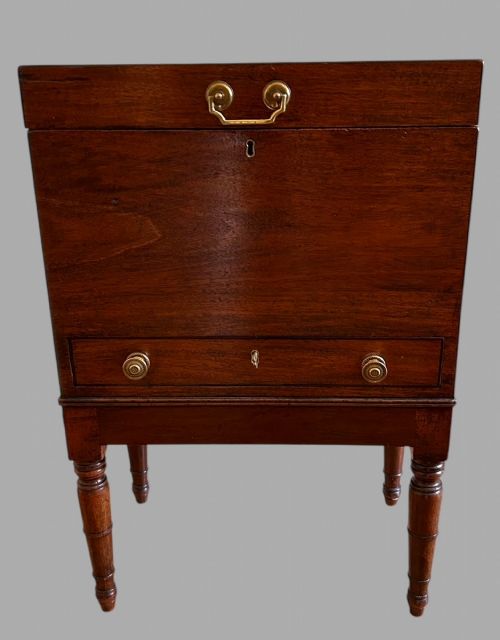
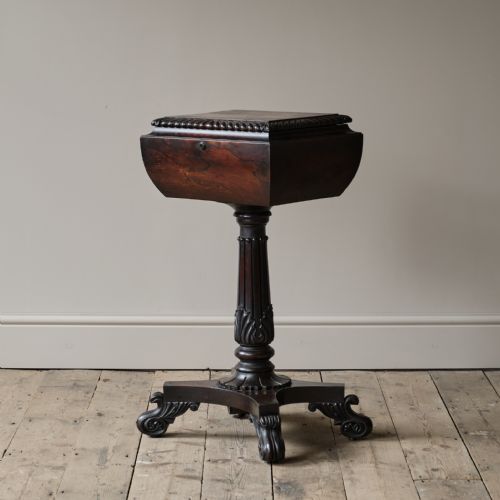
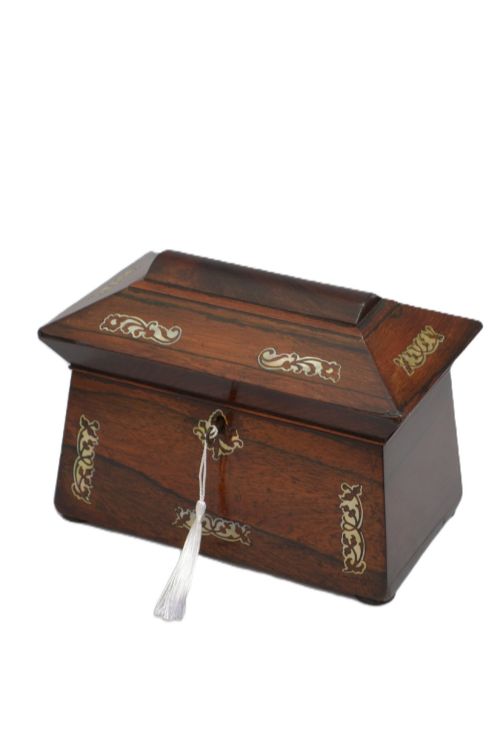
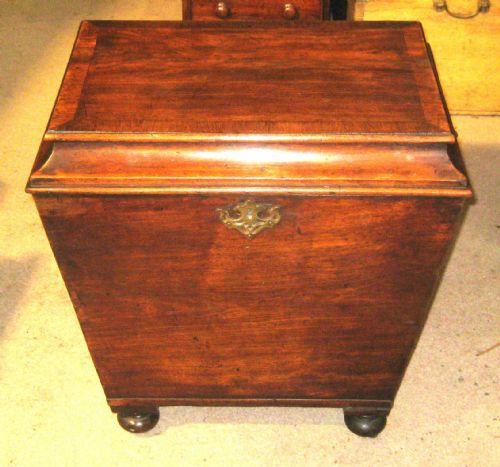
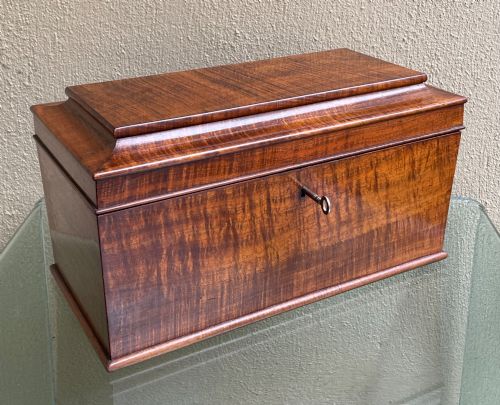
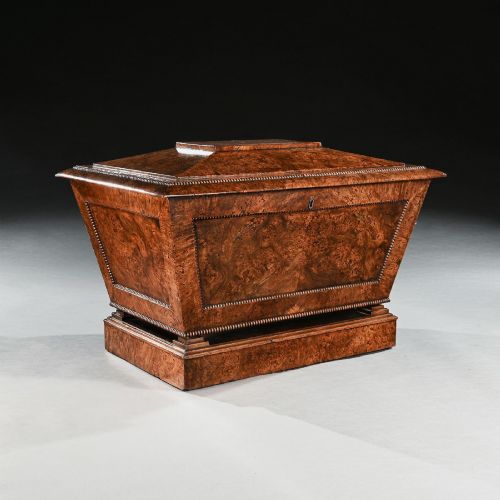
A regency sarcophagus box takes its architectural inspiration from ancient monumental tombs, translating grand classical forms down to domestic scale. These lidded containers serve various household duties, appearing on this page as tea caddies, cellarettes, stationery cases, glove cases, work boxes, sewing caskets and ottoman boxes.
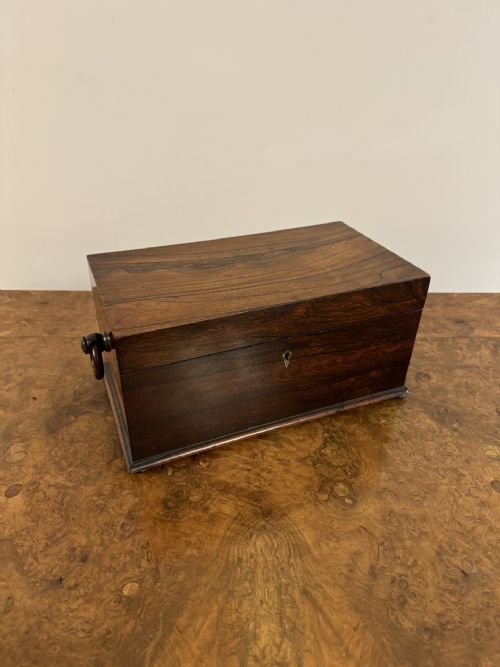
The most frequent examples found here belong firmly to the Regency period and the wider nineteenth century, often fashioned in England or within Anglo-Indian workshops. Their characteristic uptoped, tapered bodies sit upon compressed feet, frequently featuring ring handles or brass mounts at the flanks.
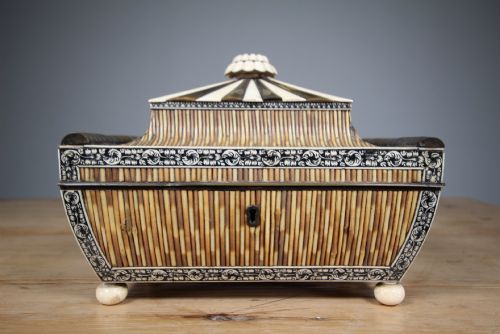
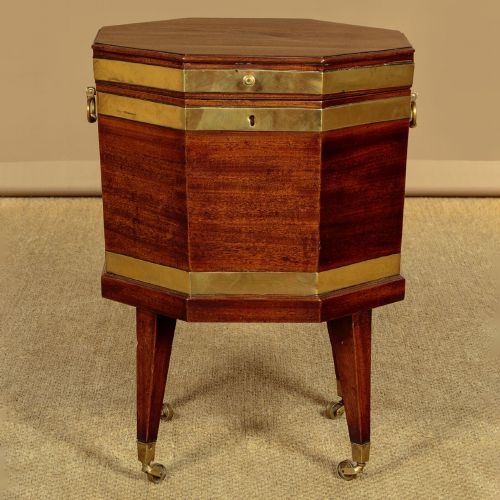
Makers adapted this distinctive shape to hold specialised contents, from glass mixers inside tea caddies to velvet linings in keepsake boxes. Buyers encounter both substantial floor-standing cellarettes in mahogany and intimate table boxes veneered in exotic woods like coromandel and porcupine quill.
How They Were Made
Cabinetmakers built these pieces upon robust wooden carcases using solid timbers and fine veneers of mahogany, rosewood, satinwood, ebony and coromandel. Surfaces were frequently embellished with intricate parquetry, bone inlay, or striking exterior textures like porcupine quill work.
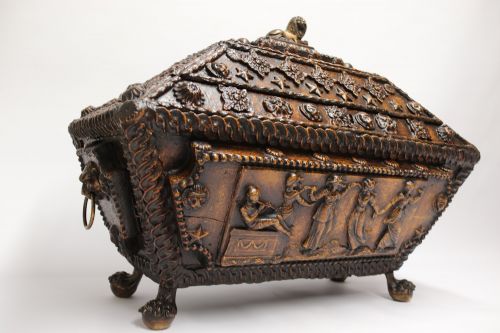
Metalwork played a structural and decorative role, utilising cast brass for lion paw feet, carrying rings, escutcheons and internal hinges. Interiors often incorporated specialised compartments lined in velvet, alongside fitted trays for sewing implements or stationery.
Retail Price Guide 2026
Typical UK retail prices for regency sarcophagus box, calculated from the Sellingantiques database of over a million retail prices indexed since 2003. This retail price guide relies exclusively on Sellingantiques data; no external sources or auction records are used, so the figures do not describe the wider market.
Listings demonstrate a strong preference for mahogany and rosewood, alongside decorative accents in ebony, satinwood, bone and porcupine quill.
What Varies in Quality
The distinction between ordinary and exceptional examples rests primarily in the choice and matching of veneer grains, from figured mahogany to banded satinwood and ebony stringing. Superior execution shows in the precision of inlaid parquetry and the crispness of brass mounts rather than surface ornament alone.
Internal complexity dictates the upper tier of the range, separating simple storage voids from elaborately fitted sewing caskets with bone details, glass mixing bowls, and intact velvet linings. Structural integrity also governs worth, distinguishing boxes that retain their original feet and internal partitions from heavily altered survivors.
The Regency Sarcophagus Box Glossary
- Sarcophagus form
- A tapered, pedestal-like shape with a stepped or domed lid, mimicking classical stone tombs. This silhouette defines the architectural style of these boxes.
- Cellarette
- A large, freestanding cabinet or box designed to hold bottles of wine, usually positioned near the dining table. They share the characteristic monumental shape of smaller table caddies.
- Parquetry
- Geometric mosaic woodwork formed by small pieces of veneer arranged in patterns. It creates striking decorative surfaces on the lids and sides of these boxes.
- Escutcheon
- A flat plate surrounding a keyhole, usually made of brass to protect the surrounding wood from wear. These fittings often match the carrying handles on the box flanks.
- Coromandel
- A dense, heavily grained tropical hardwood from South Asia, prized for its dark brown colour and dramatic black striping. It provides a luxurious dark surface for keepsake boxes.
Frequently Asked Questions
What were regency sarcophagus boxes used for?
These boxes served domestic storage needs across the home, housing luxury commodities like dry tea leaves, stationery, gloves, or sewing equipment. Larger examples functioned as cellarettes to keep wine bottles cool and secure near the dining room.
Interior fittings dictated their exact purpose, with glass mixing bowls, velvet linings, and divided trays organising the contents. Their decorative presence allowed them to sit openly on tables and sideboards as displays of refined taste.
How do I identify a regency period box?
Look for classical architectural proportions, tapered bodies, and specific decorative idioms like brass paw feet and ebony stringing. The use of dense tropical hardwoods such as mahogany and rosewood points directly to nineteenth-century cabinetmaking traditions.
Construction details also help establish the date, including hand-cut dovetails, brass escutcheons, and traditional timber preparation. Anglo-Indian variants often incorporate regional materials like porcupine quill alongside standard British forms.
Where should I place one in my home?
These boxes suit placement on sideboards, console tables, or desks where their figured wood grains and brass mounts can be appreciated. Smaller table-top caddies and keepsake boxes fit comfortably on bookshelves or living room surfaces.
Keep them away from direct sunlight and strong heat sources to protect delicate veneers and original interior velvet linings. Their contained proportions allow them to add architectural character to both traditional and modern rooms.
Are all these boxes made of solid wood?
Most examples utilise a stable secondary wood carcase covered with fine veneers of mahogany, rosewood, satinwood, or coromandel. Cabinetmakers employed this technique to display dramatic wood grain patterns without risking the warping inherent in large solid boards.
Solid timbers were reserved for structural elements, feet, and carved mouldings where strength was paramount. Inlaid details and contrasting woods were then applied directly over these veneered surfaces.