



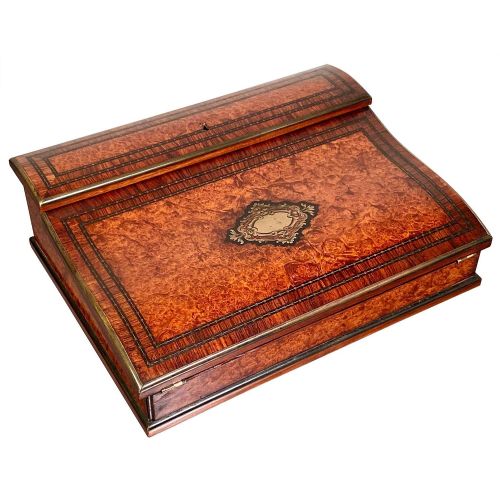
Inlaid Writing Box
When you search for an inlaid writing box, you are looking at portable portable desks and storage pieces finished with decorative wood or metal work.
Inlaid Writing Box
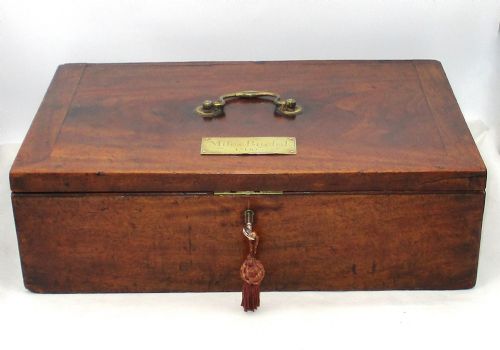
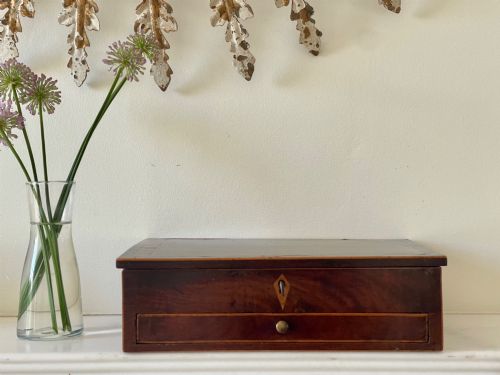
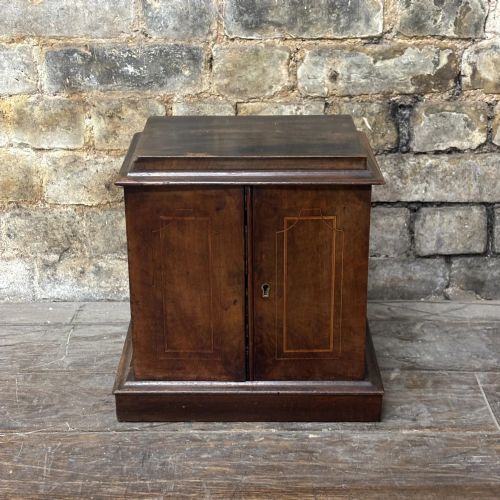
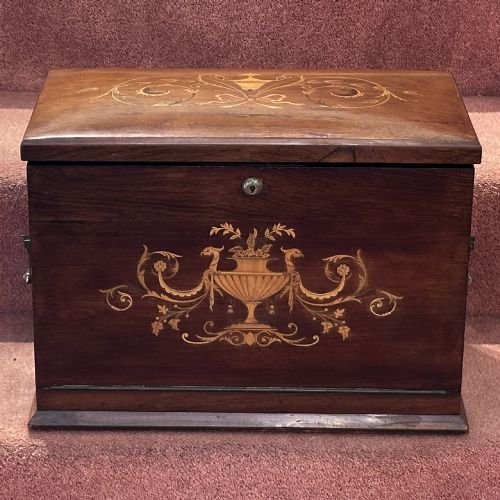
An inlaid writing box encompasses traditional portable writing slopes, stationery cabinets, document boxes, and lap desks designed for correspondence. These pieces originate mainly from the Georgian, Regency, and Victorian periods, alongside later Edwardian examples.
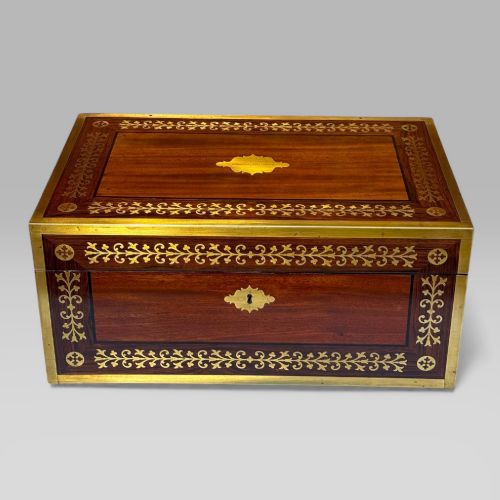
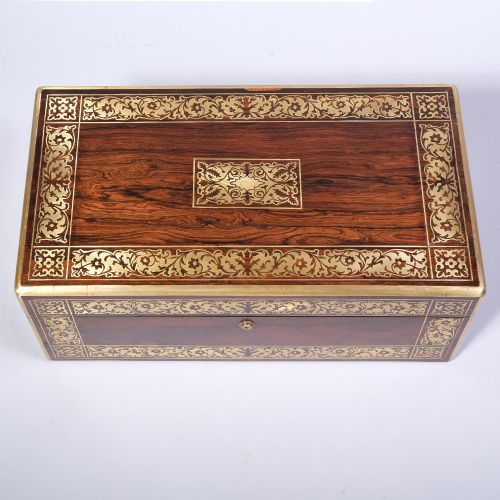
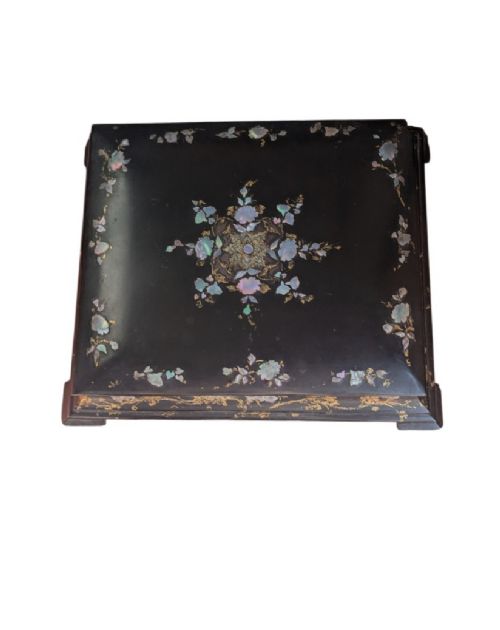
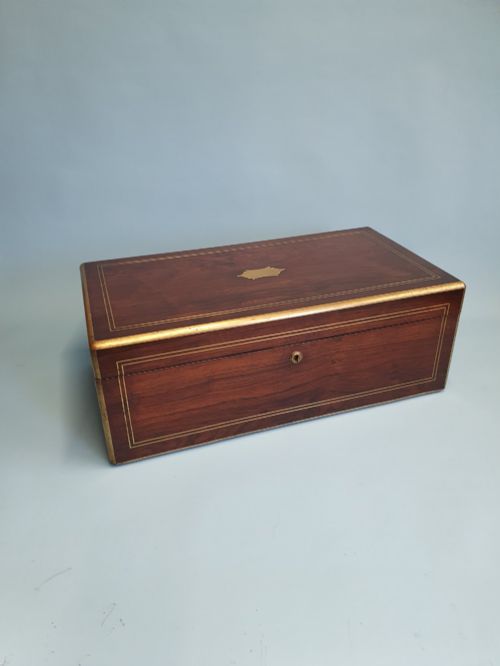
The most common formats met on this page are rosewood and walnut writing slopes featuring brass banding, mother of pearl accents, or Tunbridge ware details. They range from compact personal boxes to large, fitted campaign desks.
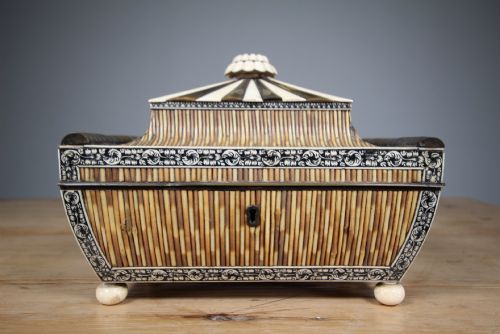
Makers and artisans from different regions produced these forms, including English workshops, Anglo-Indian creators, and French cabinet makers working in styles such as Napoleon III.
Materials and Techniques
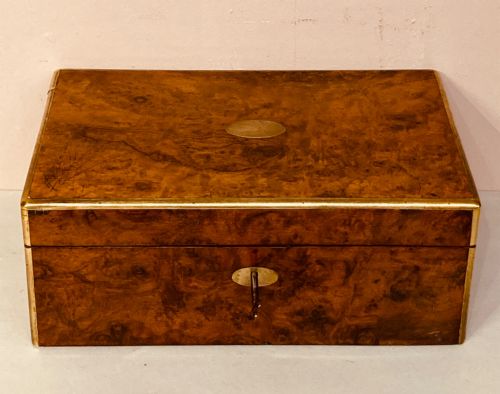
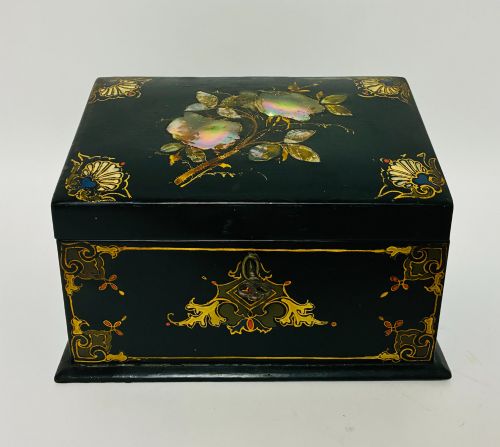
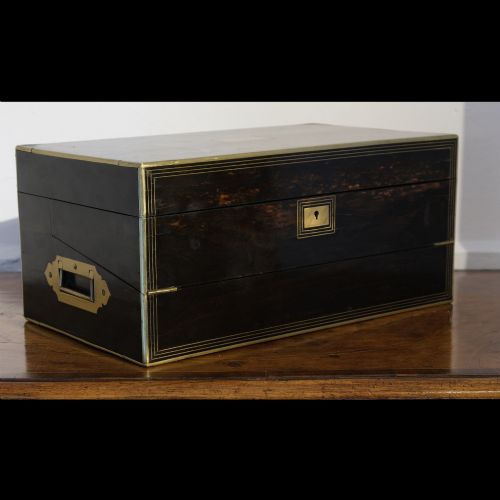
Carpenters constructed the structural carcase using dense timbers like mahogany, rosewood, burr walnut, coromandel, and teak, often applied as finely figured veneers over a secondary wood. Surfaces received elaborate embellishment through brass inlay, boxwood stringing, parquetry, and mother of pearl or abalone shell cartouches.
Interior fittings combined matching hardwoods with velvet or leather writing surfaces, glass inkwells with screw tops, and specialised secret drawers concealed behind false partitions. Mechanics relied on quality brass hinges, Bramah locks, and double-hinged folding mechanisms to create sturdy sloped writing surfaces.
Inlaid Writing Box Retail Price Guide 2026
Typical asking prices for inlaid writing box among the pieces listed under this phrase on Sellingantiques today, from the lower quarter to the upper quarter. They describe what is for sale here now, not the wider market.
Secret drawers hidden behind false partitions in Victorian walnut slopes were designed to protect private love letters and spare nibs.
Standards of Craftsmanship
Quality rests in the selection of the timber, where heavily figured burr walnut, rich amboyna, or perfectly matched flame mahogany distinguish superior boxes from plain or uniform stock. The precision of the inlay work, such as tightly fitted brass stringing and intricate parquetry or Tunbridge ware mosaic, marks the hand of a master cabinet maker.
Internal engineering and hardware define the upper tier of production, evident in smoothly functioning secret drawers, original Bramah locks with working keys, and robust brass bound edges that protect the box corners.
Edmund Nye
The Inlaid Writing Box Glossary
- Writing slope
- A portable box with a hinged lid that opens to form an inclined writing surface lined with leather or velvet. Inside, compartments hold pens, inkwells, and paper.
- Campaign box
- A sturdy box constructed for travel, typically featuring recessed brass carrying handles and brass corner reinforcement to withstand military journeys.
- Tunbridge ware
- A form of decorative woodwork produced in Kent, characterised by mosaic patterns assembled from thousands of tiny tinted wood blocks to create pictorial or geometric designs.
- Bramah lock
- A high-security cylindrical lock patented by Joseph Bramah in the late eighteenth century, commonly found on better quality period boxes.
- Parquetry
- A geometric mosaic of wood pieces used for decorative veneering on box lids and surfaces, utilising contrasting tones of satinwood, boxwood, and darker hardwoods.
Inlaid Writing Box: Frequently Asked Questions
What is an inlaid writing box?
An inlaid writing box is a portable antique desk featuring decorative wood or metal ornamentation set into the lid and surfaces. These pieces were designed to hold paper, inkwells, and writing implements while providing a sloped surface for correspondence.
They evolved from simple document chests into sophisticated personal accessories fitted with secret compartments and specialised stationary slots during the Georgian and Victorian eras.
How do I use a writing slope?
To use a writing slope, you unlock the box and fold down the hinged lid to create an angled writing plane. The interior compartments hold your writing paper, envelopes, and pens securely while you work.
Many boxes also feature removable inkwells with screw tops and small drawers hidden beneath removable panels for storing stamps and valuables.
How do I date an antique writing box?
Dating relies on observing the primary woods, construction techniques, and decorative styles used across different periods. Regency boxes often display bold brass banding and rosewood veneers, while Victorian examples frequently incorporate burr walnut, parquetry, or mother of pearl.
Hardware details like lock types, hinge construction, and the presence of maker signatures or registry marks also help establish the decade of manufacture.
Where were writing boxes made?
Writing boxes were produced across Britain and Europe by specialist cabinet makers, with prominent workshops operating in London and regional centres like Tunbridge Wells. Global trade also brought specialised examples from Anglo-Indian workshops and China.
Cabinet makers utilised both local British timbers and exotic imported woods such as coromandel, rosewood, and mahogany to satisfy the demand for portable desks.