
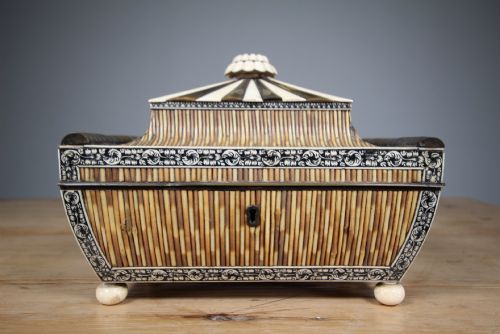
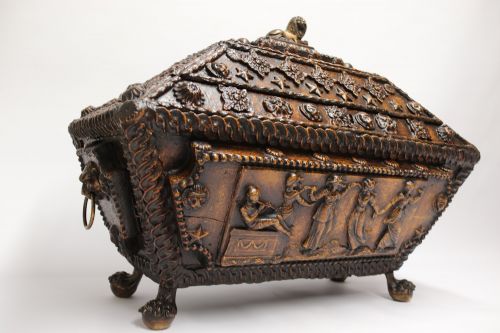


Sarcophagus Work Box
These sarcophagus work boxes are elegant lidded caskets shaped like ancient tombs, prized by collectors for storing sewing implements and jewels.
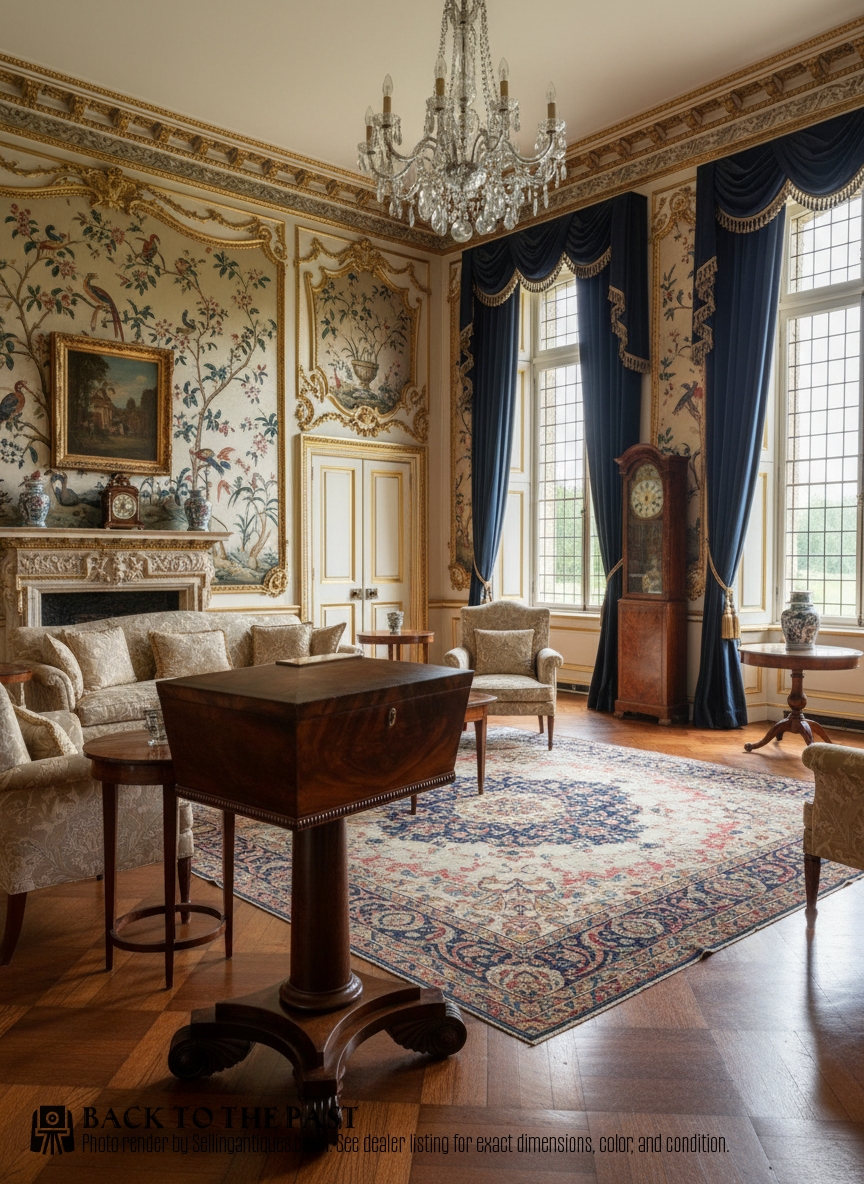
What They Are
A sarcophagus work box takes the distinctive flared, pedestal-mounted form of an antique tomb and adapts it into a compact tabletop chest. These pieces serve primarily as functional containers for sewing accessories, threads, and precious jewels.
The versions encountered on this page span the Regency, William IV, and early Victorian periods, alongside Anglo-Indian examples. They appear in forms described variously as decorative boxes, sewing boxes, jewellery boxes, and sewing tables.
Makers fashioned these caskets out of various cabinet timbers, most notably rosewood and mahogany, often incorporating specialised internal fittings. Their distinctive silhouette remains immediately recognizable across the nineteenth century.
How They Were Made
Cabinetmakers constructed the carcasses of these boxes using dense hardwoods such as rosewood, mahogany, and birdseye maple, sometimes deploying exotic materials like porcupine quill and ebony. Surfaces frequently display highly figured grain patterns selected for their visual depth.
Artisans embellished the exterior cases with contrasting inlays of mother-of-pearl, bone, ivory, and brass stringing to accentuate the architectural lines of the sarcophagus shape. Silk linings were fitted to the interiors to cushion needles, threads, and delicate ornaments.
Retail Price Guide 2026
Typical UK retail prices for sarcophagus work box, calculated from the Sellingantiques database of over a million retail prices indexed since 2003. This retail price guide relies exclusively on Sellingantiques data; no external sources or auction records are used, so the figures do not describe the wider market.
Listings here feature rosewood, mahogany, birdseye maple, and ebony, alongside exotic materials like porcupine quill and buffalo horn.
What Varies in Quality
The distinction between ordinary and superior boxes rests largely on the choice of primary timber and the intricacy of the decorative surface work. Examples utilising richly figured rosewood or complex porcupine quill and sandalwood arrangements stand well apart from plain mahogany variants.
Internal sophistication also defines the hierarchy of these pieces, separating simple open compartments from elaborately fitted interiors with lidded trays and specialised tool wells. The precision of the mother-of-pearl inlay and the retention of original silk linings further elevate the standing of an individual box.
The Sarcophagus Work Box Glossary
- Sarcophagus form
- A distinct box silhouette featuring a domed or stepped lid and flared sides tapering down to a smaller base, echoing classical stone coffins.
- Birdseye maple
- A decorative timber featuring small, circular knot formations that resemble tiny eyes scattered across the pale wood grain.
- Anglo-Indian Regency
- A style combining British furniture forms with indigenous non-Western materials like porcupine quill, buffalo horn, and sandalwood.
- Mother-of-pearl
- The iridescent internal layer of certain mollusk shells, shaped into thin plaques and inlaid into wood for decorative contrast.
Frequently Asked Questions
What is a sarcophagus work box?
A sarcophagus work box is a small nineteenth-century tabletop chest shaped like a classical tomb, designed specifically to hold sewing gear, threads, and jewellery.
Cabinetmakers utilised dense woods like rosewood and mahogany for the outer case, often fitting the interiors with lidded compartments and silk linings.
How were these boxes used?
Owners used these caskets to organise sewing tools, needles, bobbins, and precious personal ornaments in the drawing room or boudoir.
The fitted interior compartments kept delicate sewing implements secure and easily accessible during domestic needlework.
What materials did makers use?
Craftspeople built these pieces primarily from tropical hardwoods including rosewood, mahogany, ebony, and birdseye maple.
They decorated the surfaces with inlay materials such as mother-of-pearl, bone, ivory, brass, and occasionally porcupine quill or buffalo horn.
How do I date a work box?
Dating relies on identifying stylistic markers associated with the Regency, William IV, and early Victorian periods, alongside specific timber choices.
Classical proportions and brass inlay generally point to the early nineteenth century, while later Victorian examples often incorporate alternative decorative motifs.