

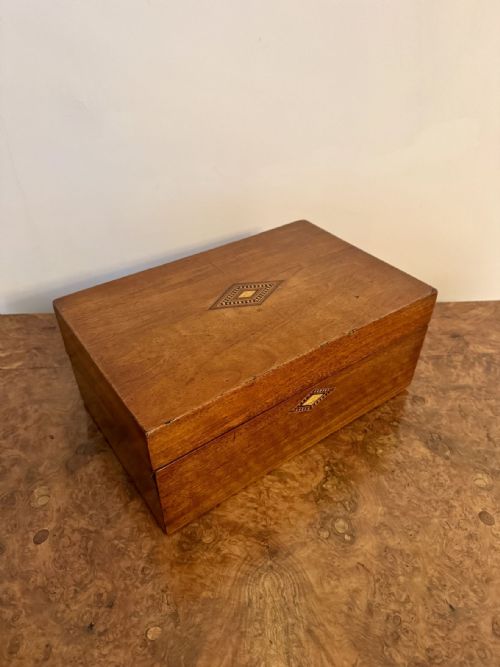
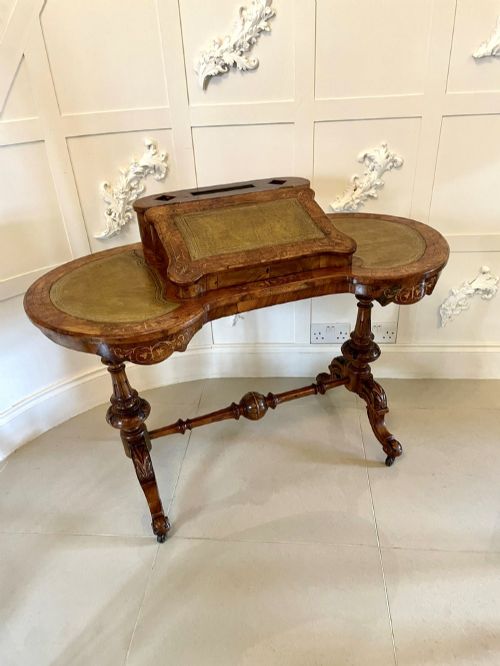
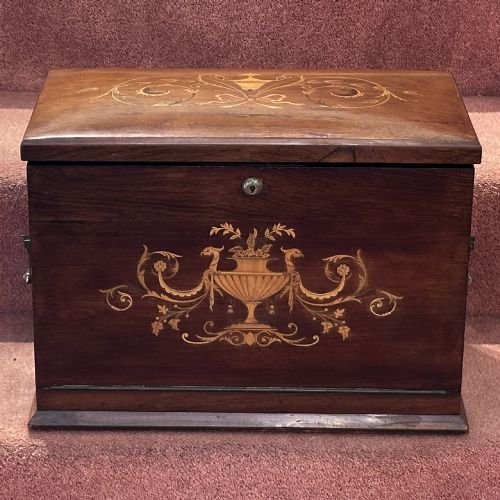


Marquetry Writing Box
A marquetry writing box brings intricate wooden patterns and fitted compartments to the desk, offering a portable workspace shaped by centuries of fine cabinet-making.
Marquetry Writing Box
A marquetry writing box serves as a portable desk or stationary repository, combining decorative surface work with practical interior compartments for ink, pens and paper. When you search for a marquetry writing box, you encounter pieces spanning from the seventeenth century through the Victorian era and into the early twentieth century.
Origins stretch across English, French and Irish workshops, encompassing distinct regional decorative traditions such as Killarney ware and Tunbridge ware. Pieces range from compact travelling cases to substantial freestanding tabletop caskets.
Materials and construction methods
Craftsmen built these boxes upon solid carcases of walnut, mahogany, rosewood or oak, applying fine veneers to the exterior surfaces. Boxwood, satinwood, fruitwood and mother-of-pearl were then precision-cut and inlaid to form floral, geometric or pictorial marquetry designs.
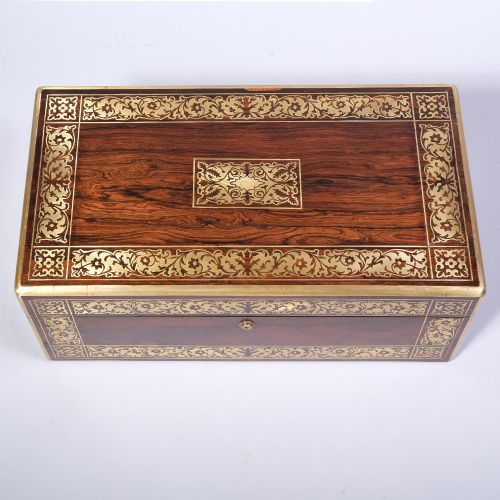
Many examples incorporate contrasting brass banding, stringing or ormolu mounts to edge the lids and key escutcheons. Interiors frequently reveal secondary woods, velvet or leather writing surfaces, and glass inkwells fitted snugly into dedicated wooden compartments.
Marquetry Writing Box Retail Price Guide 2026
Typical asking prices for marquetry writing box among the pieces listed under this phrase on Sellingantiques today, from the lower quarter to the upper quarter. They describe what is for sale here now, not the wider market.
A nineteenth-century box survives complete with unexpected imagery featuring an American Indian and a lion.
Distinctions in craftsmanship
Quality reveals itself in the precision of the veneer cutting and the tightness of the marquetry fit, where superior examples display seamless junctions between disparate timbers. The complexity of the pictorial or geometric design and the richness of the selected grain, particularly in burr walnut or figured rosewood, elevate the stature of a piece.
Internal fittings tell a further story, distinguishing utilitarian receptacles from luxury items outfitted with cut-glass inkwells, secret drawers and well-preserved velvet or leather slopes. The structural integrity of the main carcase and the original condition of the brasswork or hinges complete the assessment of execution.
Gill and Reigate
The Marquetry Writing Box Glossary
- Marquetry
- The art of applying pieces of veneer to a structure to form decorative patterns and pictures. Craftsmen slice various coloured woods and organic materials to assemble intricate floral or geometric motifs.
- Writing slope
- A hinged box that opens to reveal an angled surface designed for writing letters. Inside, partitions store stationary, pens and inkwells.
- Stationery cabinet
- An upright desktop box featuring tiered compartments or shelves for organising letters and envelopes. These pieces often include double doors or a fall-front mechanism.
- Tunbridge ware
- A specialised form of woodwork originating in Kent, characterised by mosaic patterns built from thousands of tiny tinted wood blocks. These geometric designs decorate the lids and borders of small boxes and desk accessories.
- Ormolu
- Gilded bronze mounts applied to the corners, feet and edges of nineteenth-century decorative boxes. This French technique adds metallic contrast to wood and marquetry surfaces.
Marquetry Writing Box: Frequently Asked Questions
What is inside a marquetry writing box?
These boxes typically open to reveal a sloping velvet or leather-lined surface for writing, alongside partitioned compartments for paper, envelopes and nibs. Many include small drawers, pen trays and glass inkwells with metal lids.
More elaborate examples incorporate secret compartments hidden beneath the stationery wells or removable trays designed for travelling.
How do I date a writing box?
Dating relies on a combination of timber choice, locking mechanisms, construction styles and decorative motifs. Regency pieces often favour rosewood with brass inlay, while Victorian examples frequently showcase burr walnut, Tunbridge ware or floral marquetry.
Interior linings, screw types and the presence of maker stamps or registration marks further narrow down the exact period of manufacture.
Were these boxes used for travel?
Many writing boxes were specifically engineered as portable desks for gentlemen and ladies on the move. Sturdy brass carrying handles, secure locks and internal inkwell lids prevented spills during transport.
Compact travelling variants allowed correspondents to maintain their letter-writing habits while away from a permanent study or home estate.
How do I care for antique wood surfaces?
Maintain these pieces by keeping them away from direct sunlight and steady heat sources that can dry out the timber and crack the delicate veneer. Dust gently with a dry, soft cloth and avoid commercial silicone polishes.
Occasional applications of microcrystalline wax help protect the polished surface and preserve the intricate marquetry inlay without building up heavy residues.