

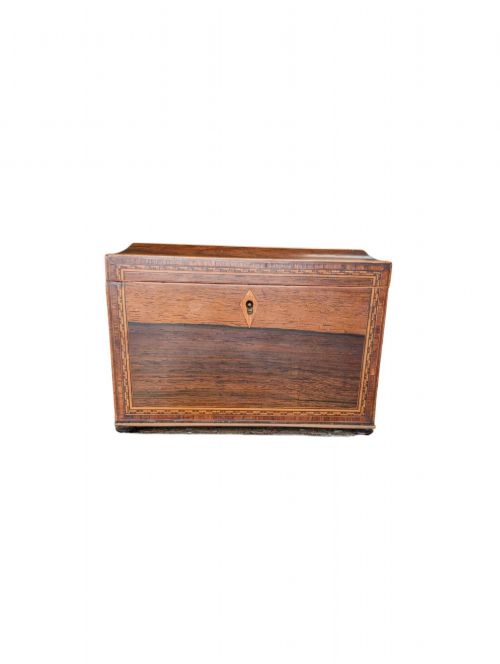


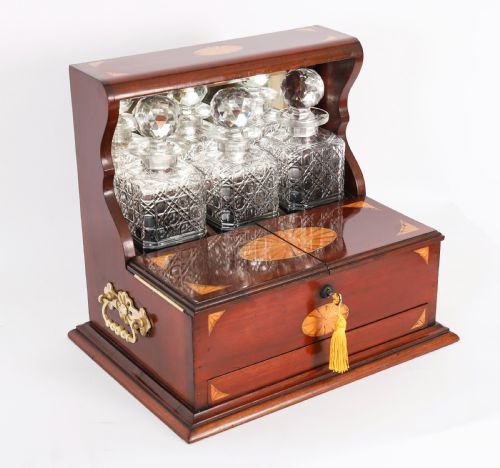


19th Century Marquetry Box
A 19th century marquetry box brings intricate wood patterns and historical craftsmanship straight to a desktop or side table.
19th Century Marquetry Box
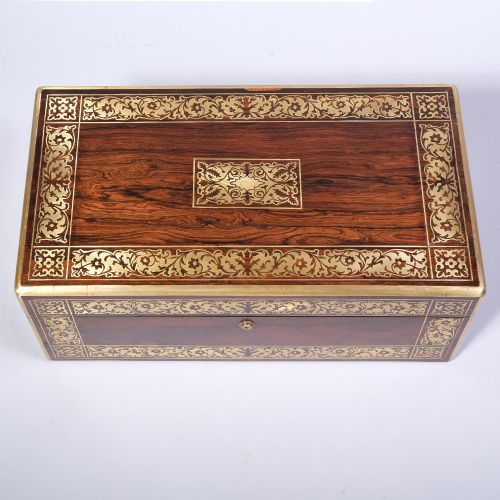
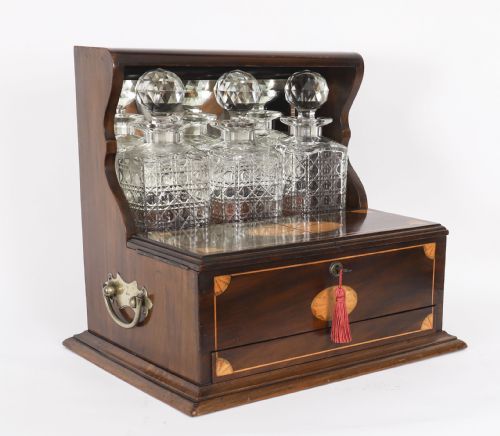
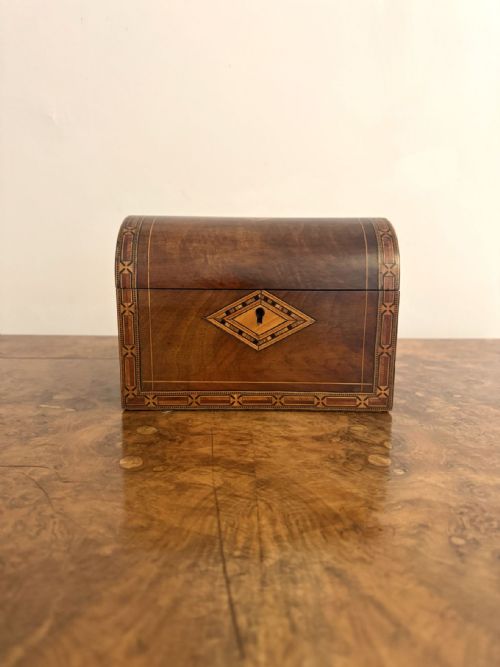
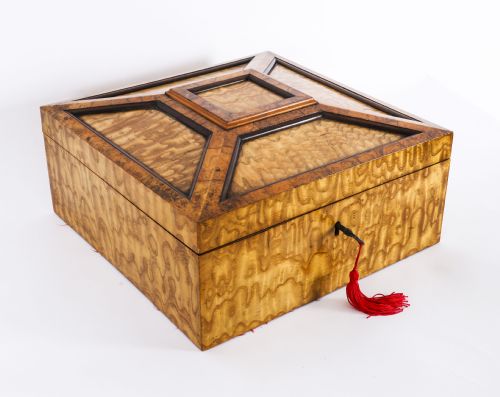
A 19th century marquetry box encompasses a diverse array of functional containers designed for writing, holding tea, storing trinkets, or preserving jewellery. These pieces emerge from periods spanning the Georgian, Regency, and Victorian eras, reflecting shifting domestic habits and interior tastes. The most frequent encounters on this page include tea caddies, writing boxes, and small decorative trinket containers.
Makers utilised various timber foundations to display elaborate pictorial or geometric wood veneers. Many examples incorporate specialised regional techniques, such as Tunbridge Ware mosaic patterns or Sorrento wood inlay. Buyers select these items for their blend of practical storage and decorative surface artistry.
Materials and construction
Craftsmen applied thin veneers of contrasting woods like walnut, rosewood, mahogany, and boxwood onto solid timber carcases. Marquetry cutters sliced these fine botanical sheets to form floral motifs, geometric bands, or architectural scenes before gluing them into place. Brass stringing, tortoiseshell, and ebonised wood often provided striking borders and structural accents.
Interior fittings frequently involved secondary woods, velvet linings, and small lidded compartments tailored to the specific utility of the box. Hinges, locks, and escutcheons were cast in brass and meticulously fitted by hand to secure the lids and drawers.
Some Victorian musical boxes still play forgotten tunes pinned onto miniature brass cylinders.
Distinctions in quality
The sophistication of the veneer work dictates much of the distinction between standard examples and superior creations. Tighter control over the grain alignment and greater complexity in the pictorial inlay signal higher workshop competence.
The integrity of the internal fittings, such as original removable canisters inside tea caddies or intact velvet within writing boxes, elevates the standing of a piece. Finer items also retain their original working locks and matching keys.
Edmund Nye·Henry Hollamby·Langdorff and Fils·William Seuffert
The 19th Century Marquetry Box Glossary
- Marquetry
- The art of applying decorative veneer pieces to a structure to form pictorial or geometric designs. This technique relies on contrasting natural wood colours.
- Tea Caddy
- A container originally built for storing dry tea leaves securely. These boxes often feature internal lidded compartments and glass mixing bowls.
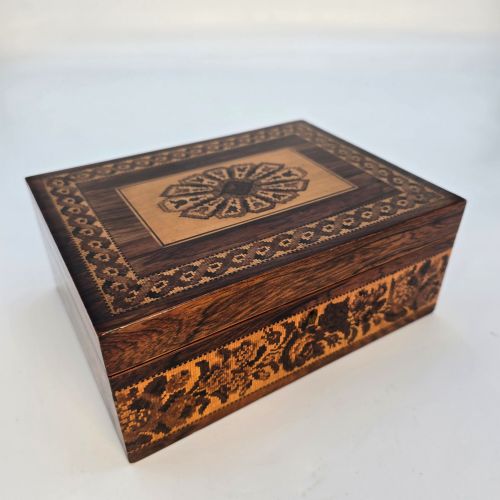
- Tunbridge Ware
- A distinct form of woodworking originating in Kent involving thousands of tiny tinted woodblocks assembled into mosaic patterns. Geometric bands and floral pictures are typical.
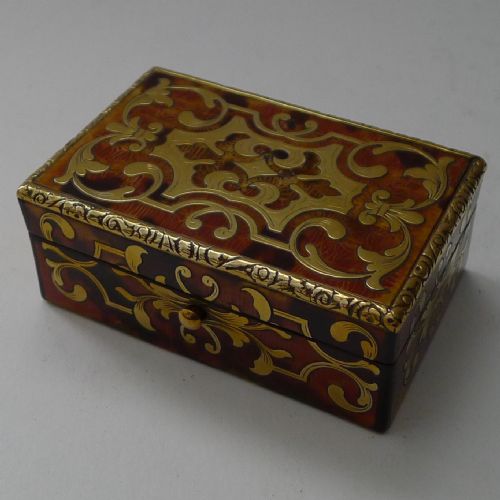
- Boulle
- A decorative technique employing tortoiseshell inlaid with brass or pewter in ornate scrollwork. It is frequently associated with French furniture and boxes from the period.
- Writing Box
- A portable slant-front desk containing compartments for inkwells, pens, and stationery. Many include secret drawers concealed beneath secondary panels.
19th Century Marquetry Box: Frequently Asked Questions
What were tea caddies used for?
Tea caddies served as secure storage containers for expensive tea leaves during eras when tea was a luxury commodity. The boxes typically included separate internal compartments to keep different leaf varieties distinct.
Wealthy households kept these caddies locked to control domestic supplies. Many incorporated small glass mixing bowls for blending different leaves before brewing.
How do I care for a marquetry box?
Protect the veneered surfaces by keeping wooden boxes away from direct sunlight and steady heat sources that can dry out old timbers. Dust gently with a dry cloth and avoid harsh chemical polishes.
Maintain a stable room humidity to prevent the thin wood veneers from lifting or cracking. Wax can be applied sparingly if the finish requires nourishment.
How can I tell Tunbridge Ware apart?
Tunbridge Ware relies on mosaic tile construction where tiny cross-sections of coloured wood are bundled together to create a picture. Look for geometric borders made from thousands of microscopic wood squares.
These pieces often depict local castles, butterflies, or floral sprays on the lid. The base frequently carries the signature stamp of makers like Edmund Nye or Henry Hollamby.
What is a writing box?
A writing box is a portable desk featuring a hinged slope that folds down to create a firm writing surface. Interiors contain slots for pens, inkwells, and compartments for folded letters.
Travellers and military officers utilised these desks to maintain correspondence on the move. Secret drawers were frequently built into the lower sections to hide valuables.