


Marquetry Work Box
A marquetry work box brings intricate floral or geometric wood veneers and fitted interiors together to store needlework and small treasures.
Marquetry Work Box
When you search for a marquetry work box, you are looking at small wooden containers designed for sewing and needlecraft, featuring patterned veneer decoration on the lid and sides. These pieces date predominantly from the nineteenth century, including Victorian and Regency periods, alongside Edwardian and Georgian examples.
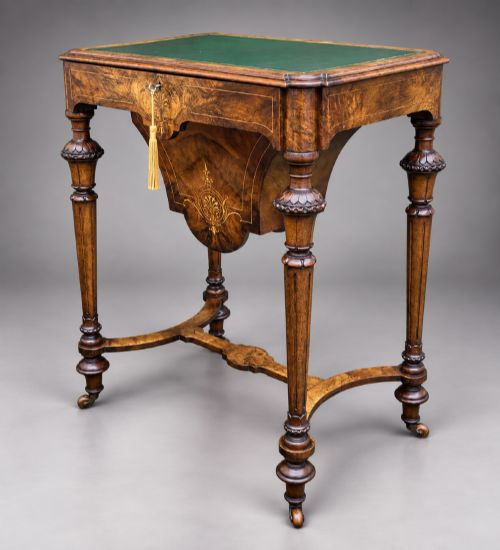
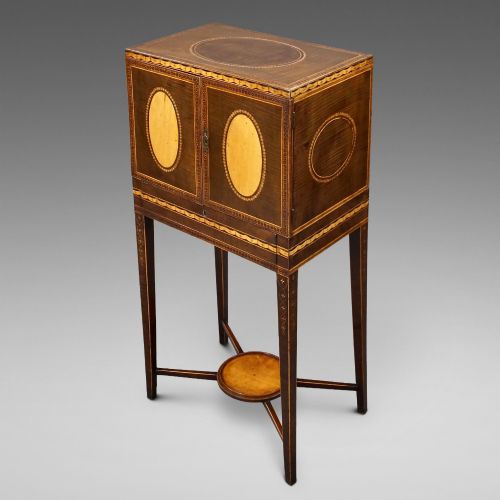
The versions you are most likely to meet on this page take the form of table-top boxes with hinged lids, fitted interior compartments, and sometimes small drawers. Alongside these portable caskets, the selection includes larger freestanding work tables, sewing tables, and games tables that incorporate the same inlaid surfaces.
Originating from English and continental workshops, these items utilise woods such as walnut, rosewood, burr walnut, satinwood, and harewood. The decoration relies on contrasting timbers and applied patterns rather than plain polished surfaces.
How they were made
Cabinet makers constructed the foundational carcase from solid secondary woods before applying decorative veneers to the exterior surfaces. Marquetry involves cutting thin sheets of contrasting timbers, such as boxwood, satinwood, and walnut, and fitting them together to form pictorial or geometric designs.
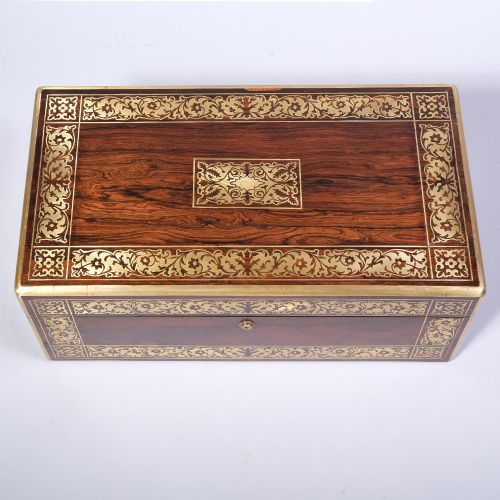
Alternative decorative techniques visible in the evidence include Tunbridge ware, which uses thousands of tiny coloured wood blocks to build up mosaic pictures, and brass inlay set directly into tortoiseshell or dark wood carcases. Makers also incorporated mother-of-pearl, bone, and fine stringing lines to accentuate the borders of the lid and panels.
Prisoners of war during the Napoleonic conflicts passed the time by constructing delicate decorative boxes using carved straw and bone.
What varies in quality
The standard of a marquetry work box depends on the precision of the veneer cutting and the choice of timbers used for the contrasting motifs. Finer examples display tight, seamless joints within the wood mosaic and make use of decorative grains like burr walnut or figured rosewood.
Interior fittings also distinguish the tiers of quality. Better boxes feature matching solid wood or veneered lift-out trays, lidded compartments, and original ivory or bone accessories, whereas simpler versions retain plain open spaces inside the carcase.
Lund Of Cornhill·Waring & Gillow
The Marquetry Work Box Glossary
- Marquetry
- The art of applying decorative veneer pieces to a wooden structure to create pictures or geometric patterns. This technique defines the surface decoration of many nineteenth-century caskets and tables.
- Tunbridge Ware
- A form of woodworking originating in Kent that creates mosaic designs from tiny prisms of naturally coloured woods. These patterns often depict flowers, butterflies, or architectural views on box lids.
- Boulle
- An ornamentation style involving tortoiseshell and engraved brass inlaid in counter-change patterns. It is frequently seen on nineteenth-century French desk sets and boxes.
- Harewood
- Sycamore wood that has been stained grey, commonly utilised in Georgian and Regency cabinet making for contrasting borders and inlay.
Marquetry Work Box: Frequently Asked Questions
What is inside a marquetry work box?
These boxes typically contain a fitted interior with small compartments, lidded wells, and sometimes lift-out trays designed to hold spools, needles, and threads.
Many examples retain their original miniature bone or ivory sewing tools, pin cushions, and small mirrors inset into the lid.
How do I date a work box?
Dating relies on the combination of timber choices, construction methods, and decorative styles visible across the piece. Victorian and Regency examples often feature rosewood or burr walnut with brass stringing.
Later Edwardian versions tend to utilise mahogany with simpler shell inlays, while Georgian pieces favour satinwood or harewood.
Were these boxes used only for sewing?
While primarily built to organise needlework supplies, many boxes served multiple domestic functions including writing and correspondence. Some incorporated removable trays or secret compartments for jewellery and keepsakes.
Larger freestanding variants combined sewing storage with chess or backgammon boards built into the table top.
How should I care for antique wood and inlay?
Keep the wood away from direct sunlight and strong heat sources to prevent the natural timbers from drying and splitting. Maintaining a stable indoor room temperature protects the delicate veneer and tiny inlay pieces from lifting.
Apply a light application of appropriate wax polish occasionally to nourish the polished surface without building up excessive residue.