


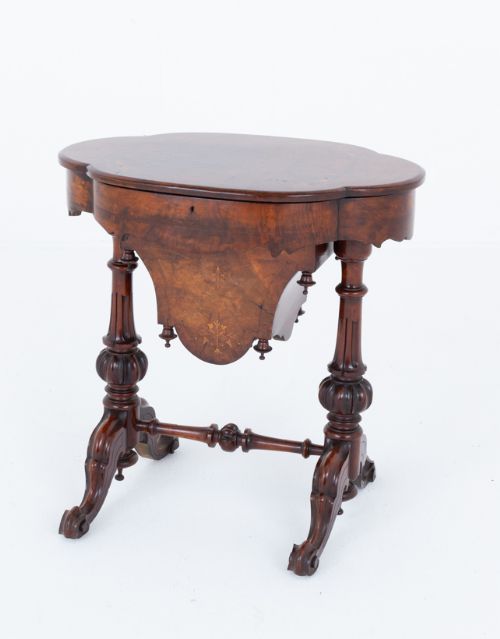


Inlaid Trumpet Table
These inlaid trumpet table pieces are striking Victorian work and sewing tables featuring characteristic flared pedestals, perfect for practical storage and display.
Inlaid Trumpet Table
When you search for an inlaid trumpet table, you encounter Victorian multipurpose furniture primarily designed as work tables, sewing tables, and games tables. The most common version met on this page is the walnut or burr walnut sewing table, often incorporating a fitted interior beneath the octagonal or cone-shaped lid.
Originating predominantly in the Victorian era from the mid to late nineteenth century, these pieces combine surface ornamentation with practical compartments. They function equally well as occasional tables or side tables in contemporary interiors.
What varies in quality
The distinction between ordinary and superior examples lies in the selection of timbers and the precision of the marquetry. Burr walnut veneers with intense figuring and intricate boxwood stringing indicate higher craftsmanship than plain timber surfaces.
Internal complexity also separates the grades, as fitted compartments with lidded boxes and well-preserved silk catchment bags reflect greater initial investment and higher workshop standards.
Many Victorian needlework tables still retain their original pleated silk catchment bags, designed generations ago to catch stray threads.
The Inlaid Trumpet Table Glossary
- Trumpet table
- A small freestanding table featuring a slender stem that expands downwards into a wide, flared octagonal or cone-shaped base resembling a musical instrument. This distinctive shape houses a deep interior compartment for sewing equipment.
- Burr walnut
- A highly prized wood veneer taken from the knotted growths of a walnut tree, displaying swirling, highly decorative grain patterns. Cabinet makers selected this material for the primary display surfaces of high-status Victorian furniture.
- Marquetry
- An elaborately patterned wood inlay technique using thin slices of various coloured timbers to create pictorial or geometric designs. Artisans arranged these pieces meticulously onto the surface of tables and box lids.
- Tunbridge ware
- A specialised form of decorative woodwork originating from Kent, featuring mosaic designs built from thousands of tiny coloured wood blocks. These geometric patterns adorn specific panels on nineteenth-century sewing tables.
- Work table
- A multi-functional item of Victorian furniture incorporating internal storage, trays, and fabric bags designed specifically for needlework and sewing implements. Many examples also double as chess or games tables through reversible lids.
Inlaid Trumpet Table: Frequently Asked Questions
What is a trumpet table used for?
These pieces served primarily as dedicated workstations for Victorian needlework, storing threads, needles, and fabric within their deep internal compartments. The upper surface frequently doubled as a writing desk or a chessboard.
Today, they function effectively as decorative side tables beside armchairs or sofas, keeping small items concealed while providing a stable surface for lamps.
Are these tables suitable for everyday use?
The sturdy timber construction and functional internal storage make these tables practical for holding modern accessories, remote controls, or reading materials. The hinged lids protect contents from dust.
Care involves placing them away from direct heat sources and using mild beeswax to nourish the antique polished wood surfaces.
What is the difference between a work table and a sewing table?
In nineteenth-century terminology, the terms are largely interchangeable, both referring to furniture designed to hold textile crafts and sewing tools. Some variations include specific compartments for chessboards or backgammon.
Both types typically feature the signature trumpet-shaped pedestal and a hanging fabric basket or internal wooden tray beneath the lid.