


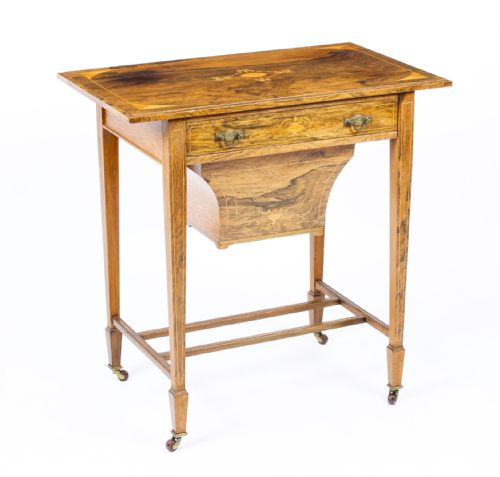


Inlaid Walnut Workbox
These inlaid walnut workbox pieces are Victorian sewing chests and tables combining rich timber with delicate ornamentation for domestic craft.
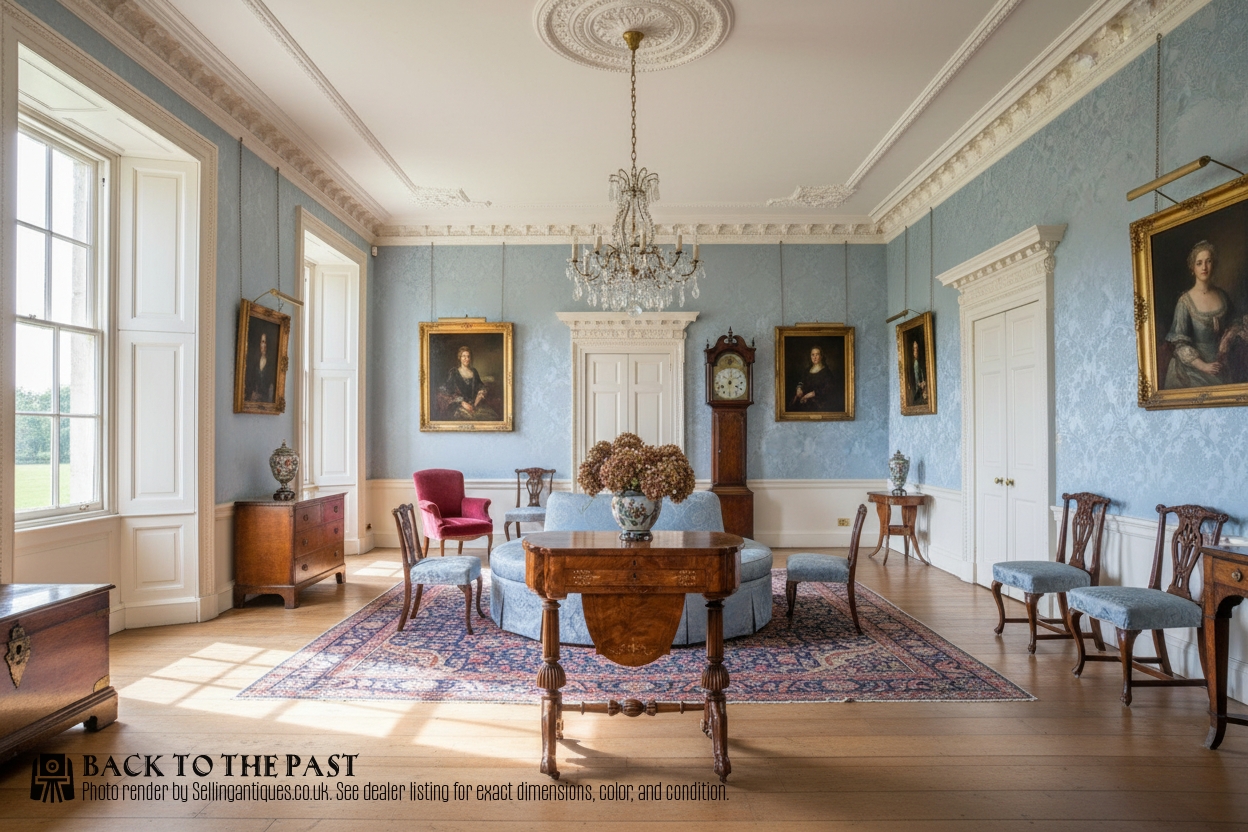
Inlaid Walnut Workbox
An inlaid walnut workbox is a domestic receptacle designed for sewing implements, needlework, and small valuables, predominantly appearing in Victorian forms from the mid to late nineteenth century. You will frequently encounter portable table-top boxes alongside larger sewing and occasional tables fitted with internal compartments.
The objects span simpler rectangular containers to trumpet-shaped pedestals and French Rococo Revival or Edwardian variants. These pieces served as functional furniture for the parlour and boudoir, combining storage with decorative display.
How they were made
Maker construction relies on solid timber carcases overlaid with burr walnut or figured walnut veneers, chosen for their distinctive grain patterns. These surfaces are frequently enhanced with marquetry inlay, wood veneer, boxwood, and brass details.
Craftsmen also utilised specialised techniques such as Tunbridge ware for mosaic decoration on smaller ladies boxes. Structural forms incorporate fitted internal trays, lidded compartments, and turned pedestal supports.
Inlaid Walnut Workbox Retail Price Guide 2026
Typical asking prices for inlaid walnut workbox among the pieces listed under this phrase on Sellingantiques today, from the lower quarter to the upper quarter. They describe what is for sale here now, not the wider market.
Some Victorian ladies stored miniature ivory knitting pins inside, proving that serious handwork required small-scale devotion.
What varies in quality
Quality rests in the selection of the burr walnut veneer and the precision of the marquetry and wood inlay work. Pieces displaying harmonious grain matching and intricate geometric or floral banding sit higher in the scale.
The internal organisation also dictates standard, where fitted compartments with original trays and intact linings outclass simpler utilitarian interiors. Joinery integrity and the retention of working locks and brass fittings complete the distinction.
The Inlaid Walnut Workbox Glossary
- Burr walnut
- A highly figured timber harvested from the wart-like growths on walnut trees, prized for swirling grain patterns. It creates a decorative surface texture on Victorian cabinet work.
- Marquetry
- The art of applying pieces of veneer to a structure to form decorative patterns and pictures. Craftsmen use contrasting woods like boxwood to achieve linear definition.
- Tunbridge ware
- A specific type of woodwork featuring mosaic decoration made from tiny wood blocks. This technique produces geometric or pictorial motifs on the lids of small ladies boxes.
- Trumpet workbox
- A sewing container featuring an octagonal or flared body widening toward the base, supported on a pillar and tripod feet. This pedestal form emerged during the Victorian period.
- Veneer
- A thin slice of superior wood applied over a secondary timber carcase. This method provides the appearance of solid figured walnut while ensuring structural stability.
Inlaid Walnut Workbox: Frequently Asked Questions
What is an inlaid walnut workbox?
An inlaid walnut workbox is a nineteenth-century container or table designed to hold sewing gear, threads, and personal items. They combine decorative wood veneers with practical internal compartments.
Most examples date from the Victorian era and reflect the domestic crafts of the period, ranging from portable desk boxes to pedestal sewing tables.
How were these boxes used?
Owners used them to store embroidery, needles, lace, and other haberdashery items required for daily needlework. The internal lift-out trays kept small tools organised.
They sat upon tables or functioned as independent occasional tables in sitting rooms, doubling as decorative objects when closed.
How do I date a walnut workbox?
Dating relies on stylistic clues, construction methods, and the specific form of the piece. Victorian examples often display characteristic pedestal bases, marquetry, or Tunbridge ware motifs.
Mid-nineteenth-century pieces commonly show distinct proportions and veneer choices compared to later Edwardian adaptations.
Are all workboxes fitted inside?
Many retain their original fitted wooden trays and lidded compartments designed for cotton reels and thimbles. Some interiors include pin cushions and miniature bone or ivory tools.
Over the decades, linings and internal trays were frequently removed or replaced according to the needs of successive owners.
How should I care for walnut veneer?
Walnut veneer requires protection from direct sunlight and excessive humidity to prevent warping or fading. Gentle dusting with a dry cloth maintains the timber surface.
Avoiding harsh chemical polishes preserves the original finish and the integrity of the delicate boxwood inlay.