
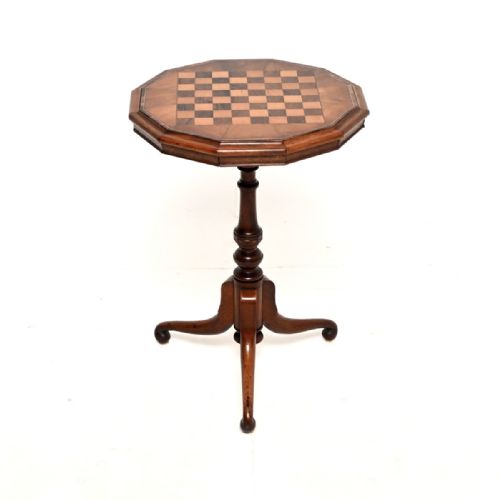

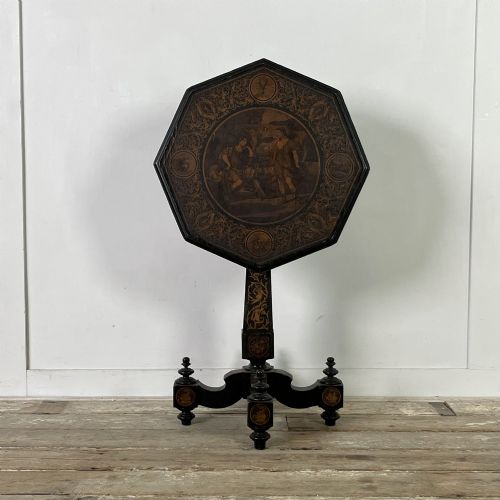
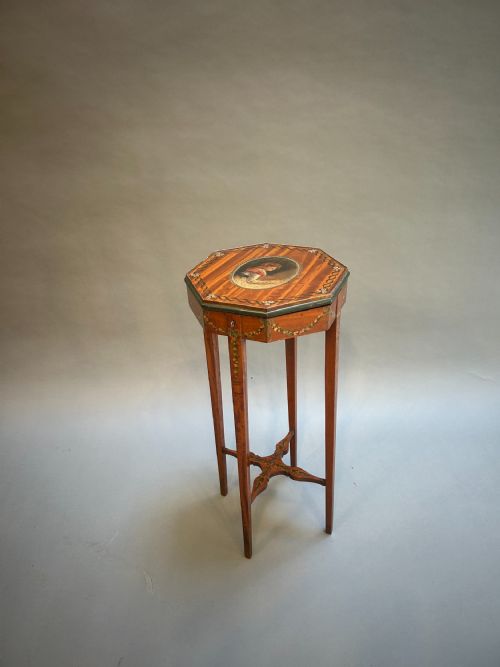

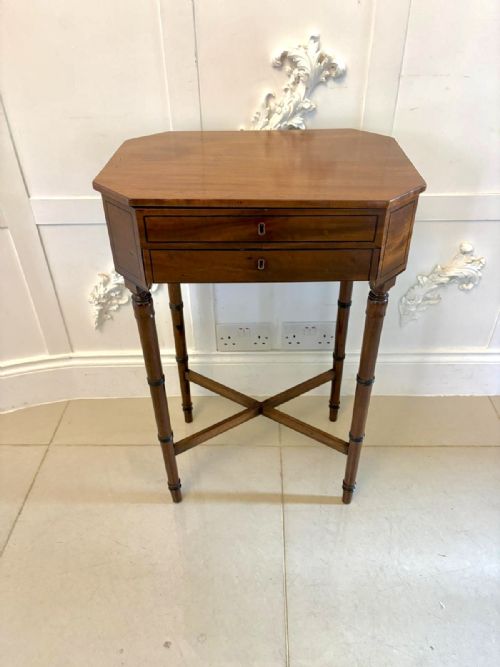


Octagonal Work Table
An octagonal work table is a neat, eight-sided piece designed for needlework and small crafts, offering clever storage and elegant proportions.
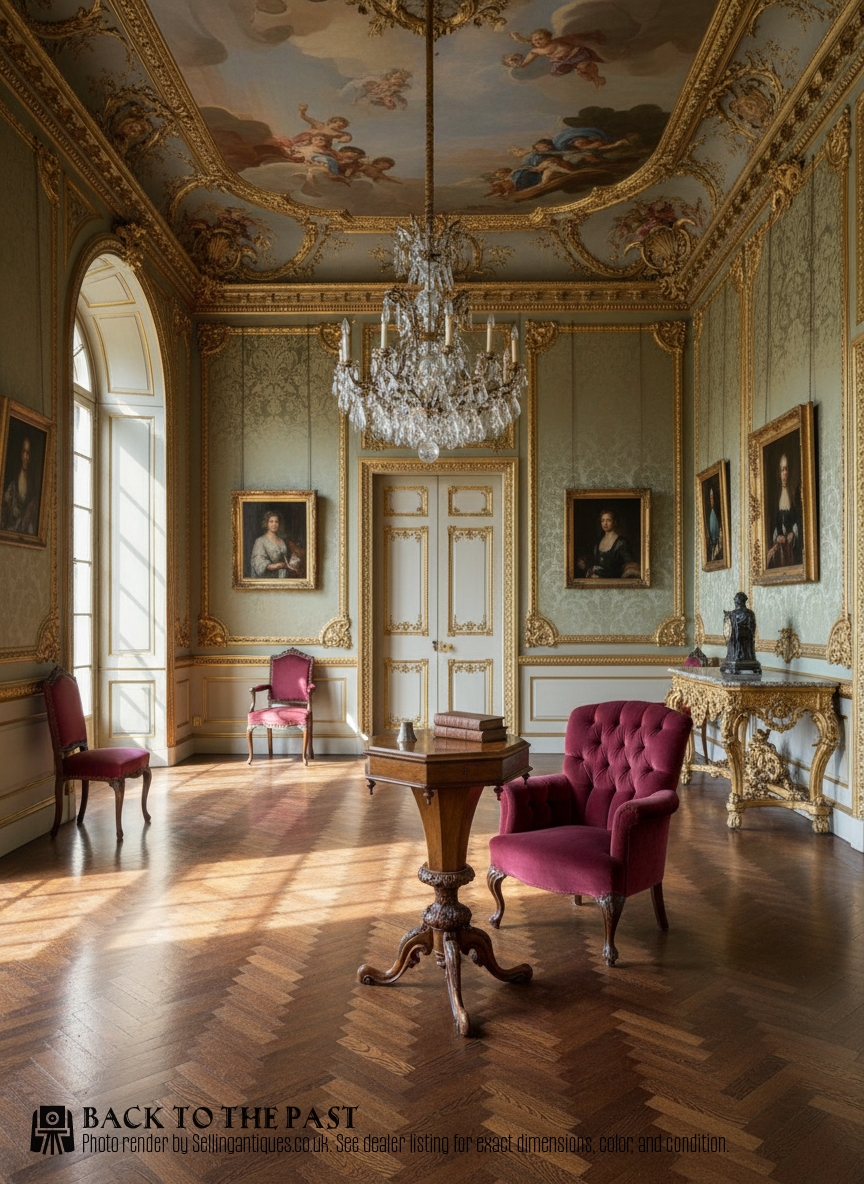
What an octagonal work table is
An octagonal work table combines practical storage for sewing and crafts with compact display surfaces. These multi-purpose pieces typically feature fitted interiors or fabric bags suspended beneath the top.
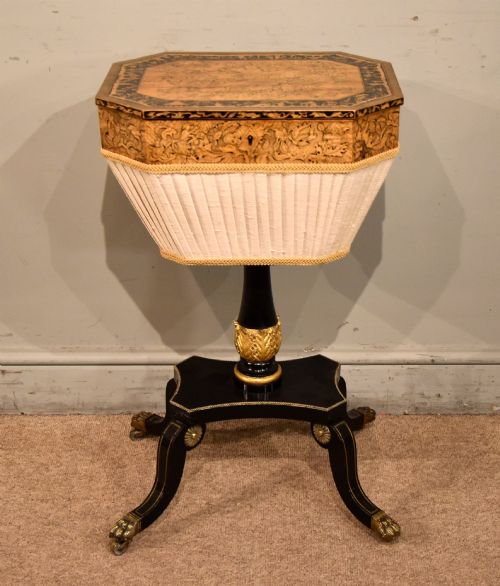
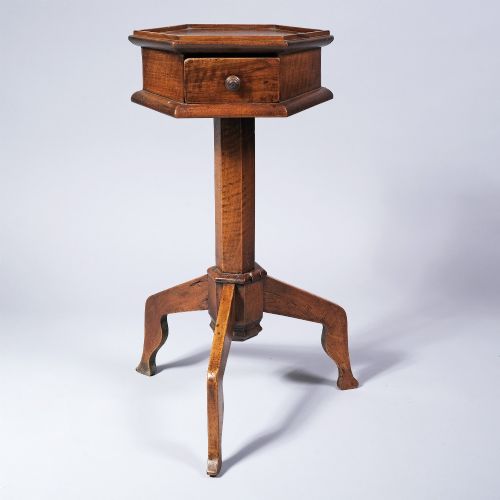
The octagonal work table appears across several distinct eras, spanning George III, Regency, Victorian, and Edwardian periods. Examples range from simple pedestal designs to elaborate trumpet-shaped cabinets.
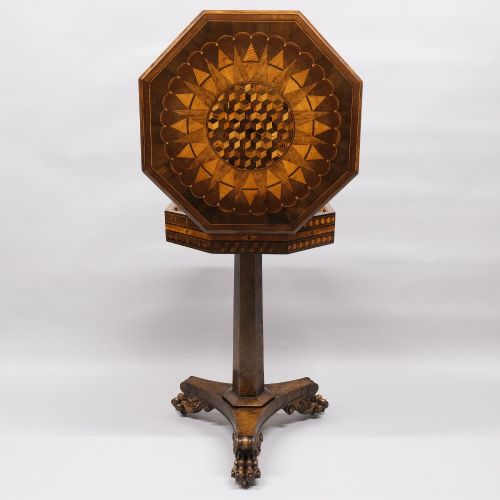
Makers utilised various timbers and decorative details such as cross-banding, carving, and wood inlay. The eight-sided top distinguishes these functional sewing pieces from standard occasional tables.
How they were made
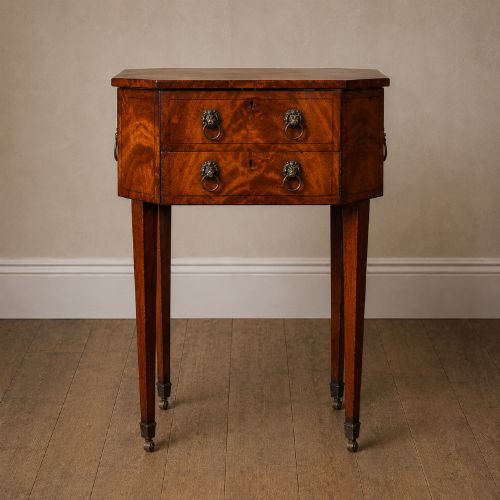
Cabinet makers constructed these tables from timbers including mahogany, satinwood, walnut, burr walnut, burr yew, and rosewood. Tops frequently feature decorative wood inlay or cross-banding to accentuate the eight-sided geometry.
Many examples incorporate specialised fittings such as brass handles, lion mask mounts, and fitted interior compartments for thread and needles. Trumpet work tables feature a flared octagonal body standing on carved pillar supports or tripod bases.
Retail Price Guide 2026
Typical UK retail prices for octagonal work table, calculated from the Sellingantiques database of over a million retail prices indexed since 2003. This retail price guide relies exclusively on Sellingantiques data; no external sources or auction records are used, so the figures do not describe the wider market.
Materials recorded across the inventory include satinwood, burr walnut, rosewood, and flame mahogany.
What varies in quality
Quality depends upon the choice of timber and the precision of the wood inlay or cross-banding. Richly figured grains like burr walnut and satinwood elevate the visual impact of the faceted top.
The sophistication of the internal compartments and the execution of carved details such as pedestal columns or brass mounts separate standard pieces from finer examples.
The Octagonal Work Table Glossary
- Cross-banding
- A strip of veneer laid perpendicular to the grain of the main surface, often seen framing the edges of an octagonal top.
- Satinwood
- A durable, yellowish timber prized for its smooth sheen and often utilised in decorative furniture veneers.
- Trumpet work table
- A Victorian form featuring a flared octagonal body resembling a trumpet, usually resting on a pedestal and tripod base.
- Workbox on stand
- A portable or fitted sewing box elevated on a dedicated frame, serving a similar function to a sewing table.
Frequently Asked Questions
How do I date a work table?
Dating relies on identifying the prevailing style, timber choices, and construction methods associated with specific periods. Georgian and Regency pieces often feature straight legs or pedestal bases in mahogany or satinwood.
Victorian examples frequently showcase burr walnut veneer and trumpet-shaped bodies, while Edwardian versions tend toward lighter satinwood finishes and simpler lines.
What are trumpet work tables?
Trumpet work tables are a distinct Victorian form characterised by an octagonal body that flares outward from the base like a trumpet. They usually open to reveal fitted storage for sewing notions.
These pieces typically stand on a central pillar supported by carved feet, combining stability with a distinctive silhouette.
Were these tables only used for sewing?
While primarily designed for needlework, spinning, and small crafts, their flat tops made them suitable as occasional or lamp tables in a drawing room. The internal compartments kept clutter concealed while maintaining a tidy surface.
Owners frequently utilised them for writing letters or holding books when active sewing projects were put away.