


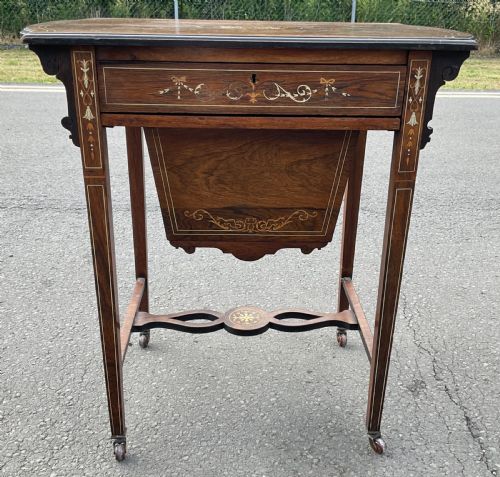


Sheraton Style Sewing Table
These Sheraton style sewing table examples bring refined late eighteenth-century lines and neat storage to the modern interior.
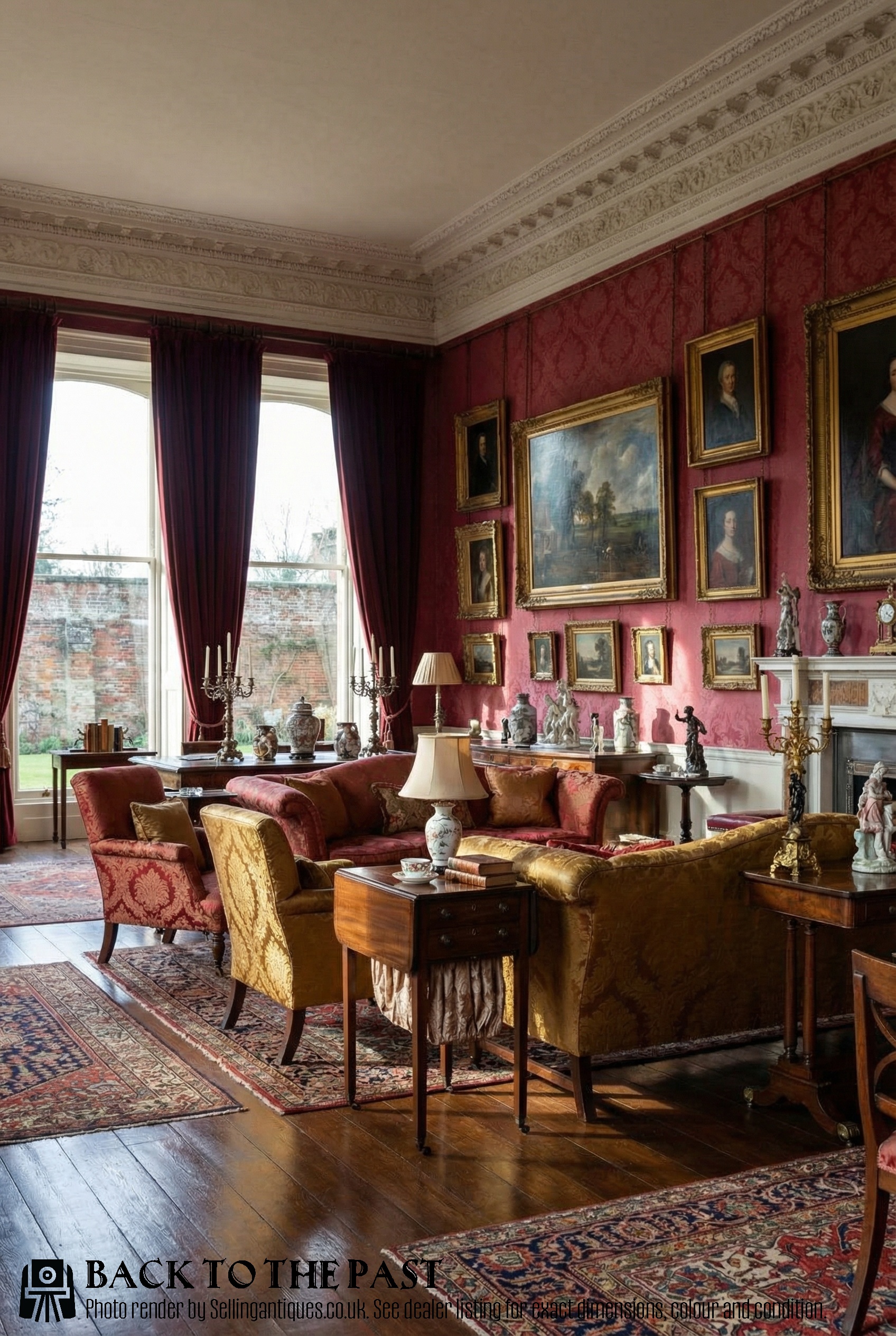
Sheraton Style Sewing Table
A sheraton style sewing table is a compact fitted piece designed for needlework and small domestic tasks, combining display surface with concealed storage. The selection here spans work tables, sewing tables, occasional tables, and side tables.
Most examples you encounter on this page belong to the Edwardian period or the Victorian era, drawing heavily on Sheraton Revival and Sheraton Neoclassical design vocabularies. Pieces date across several decades including eighteen hundred, nineteen hundred, and nineteen ten.
The primary forms include drawer-fitted side tables and compartmented work boxes, often featuring delicate proportions suitable for drawing rooms or bedrooms.
How they were made
Cabinet makers constructed these tables using solid mahogany and satinwood, frequently enhanced with contrasting stringing and borders in boxwood, ebony, and rosewood inlay. Surfaces occasionally display painted portrait decoration alongside traditional cabinet work.
Hardware consists chiefly of cast brass pulls and fittings, while the internal compartments and sewing wells often incorporate gathered fabric linings to house textiles and accessories securely.
Sheraton Style Sewing Table Retail Price Guide 2026
Typical asking prices for sheraton style sewing table among the pieces listed under this phrase on Sellingantiques today, from the lower quarter to the upper quarter. They describe what is for sale here now, not the wider market.
Listings feature pieces spanning the Edwardian and Victorian periods, alongside specific years including eighteen hundred, nineteen hundred, and nineteen ten.
What varies in quality
Quality rests on the crispness of the inlaid decoration and the choice of cabinet timbers, with finely figured satinwood and rich mahogany setting the better examples apart from simpler painted or plain pieces. The integration of portrait decoration and delicate stringing indicates a higher grade of workshop production.
Construction fidelity in the small drawers and internal compartment boxes dictates the overall standard, distinguishing standard commercial production from pieces finished with meticulous attention to detail.
The Sheraton Style Sewing Table Glossary
- Sheraton Revival
- A late nineteenth and early twentieth century design movement that reinterpreted the elegant, classical furniture forms of the eighteenth-century designer Thomas Sheraton. This style favours light proportions, tapered legs, and classical inlay motifs.
- Satinwood
- A lustrous, yellow-brown timber prized for its fine grain and ability to take a high polish. It was widely used for veneers and decorative banding on finer cabinet work.
- Stringing
- A narrow strip of contrasting wood inlaid into the surface of a piece to create decorative borders and geometric panels. Boxwood and ebony were frequently utilised for this purpose.
- Work Table
- A multi-functional small table equipped with drawers or a fabric bag underneath to hold needlework, yarn, and sewing implements. These items became essential furnishings in nineteenth-century domestic interiors.
- Inlay
- A technique where pieces of contrasting timber, shell, or other materials are fitted into recessions flush with the main surface to form decorative patterns.
Sheraton Style Sewing Table: Frequently Asked Questions
What is a Sheraton style sewing table used for?
These tables were originally designed to hold threads, needles, and textile projects while providing a convenient surface for writing or handwork in the parlour. Today, they function well as compact side tables or bedside units that offer discreet storage.
The fitted drawers and internal compartments keep small modern items tidy without cluttering the visible surface of the room.
How do I date an Edwardian sewing table?
Edwardian examples typically display lighter satinwood or mahogany timbers combined with delicate shell inlay and refined Edwardian craftsmanship. Examining the secondary woods inside the drawers helps confirm the period.
Construction methods and stylistic crossover with Victorian Sheraton Revival pieces provide further clues to the exact decade of manufacture.
What is the difference between mahogany and satinwood tables?
Mahogany pieces offer a deep, reddish-brown tone with a traditional formal presence, whereas satinwood provides a bright, golden-yellow aesthetic that lightens a room. Both timbers were favoured for high-status revival pieces.
Inlayers often paired mahogany with boxwood stringing, while satinwood allowed for striking contrast using darker ebony and rosewood borders.
Where should I place a sewing table in my home?
Their modest proportions make these tables ideal for tight spaces such as beside a sofa, in a hallway, or as a dressing table accessory. The flat top accommodates a lamp or decorative object while drawers hold everyday clutter.
Keeping them away from direct heat sources protects the delicate veneers and prevents the fine inlaid timbers from drying out.