





Satinwood Sewing Table
These satinwood sewing table examples are versatile compact pieces designed for needlework and small tasks, combining practical storage with fine timber surfaces.
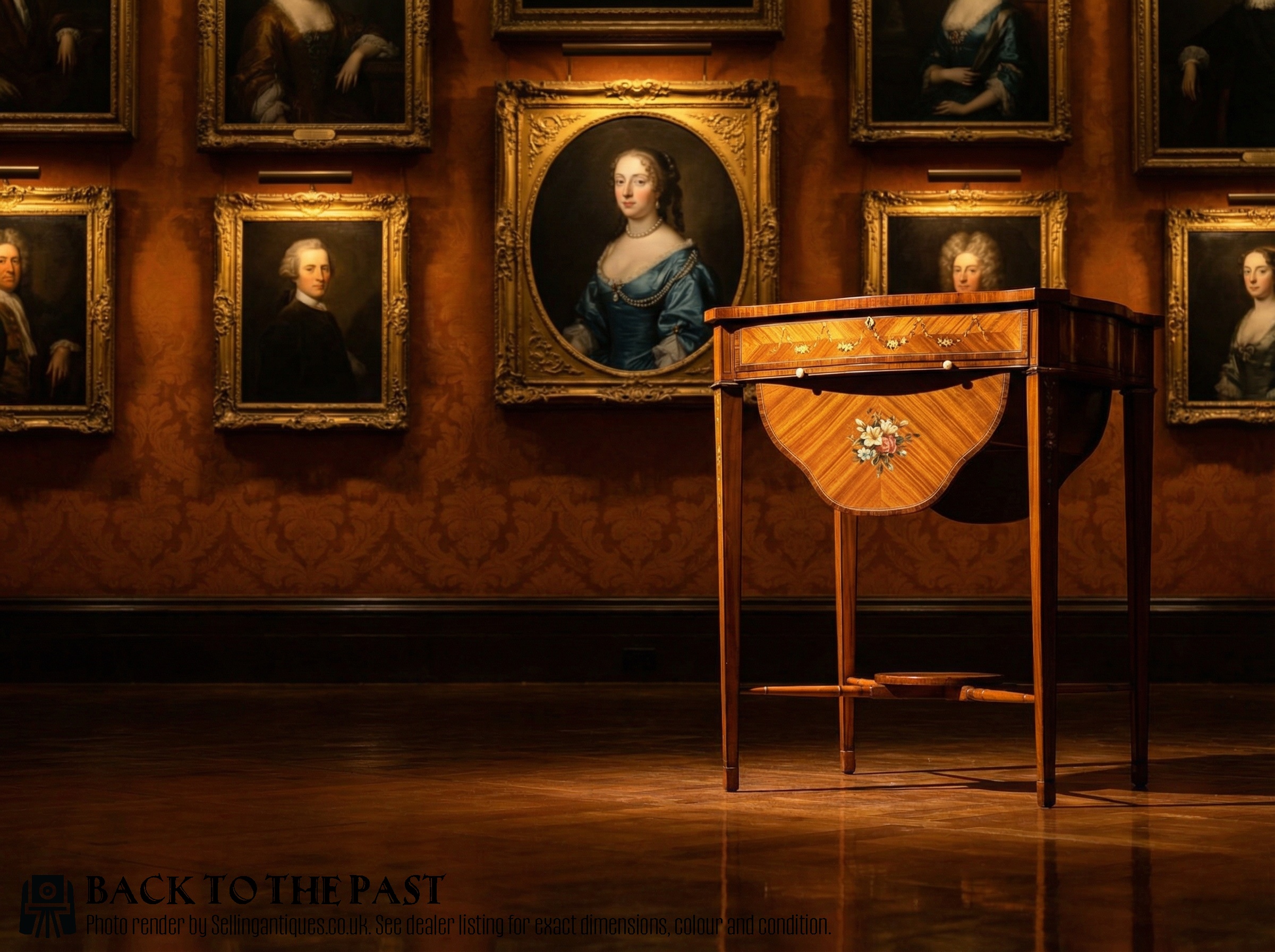
Satinwood Sewing Table
A satinwood sewing table serves as both a decorative occasional piece and a functional work station for domestic crafts. You will most frequently encounter Edwardian, Victorian, and Georgian examples spanning the eighteenth and nineteenth centuries.
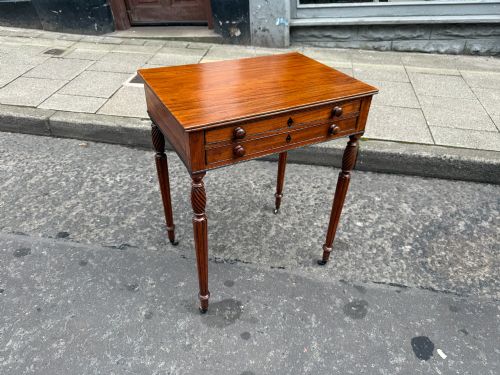
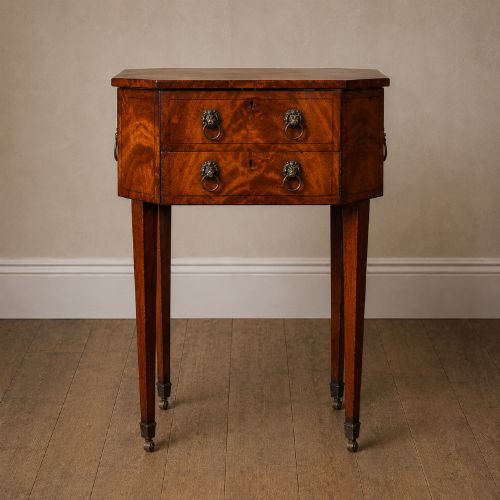
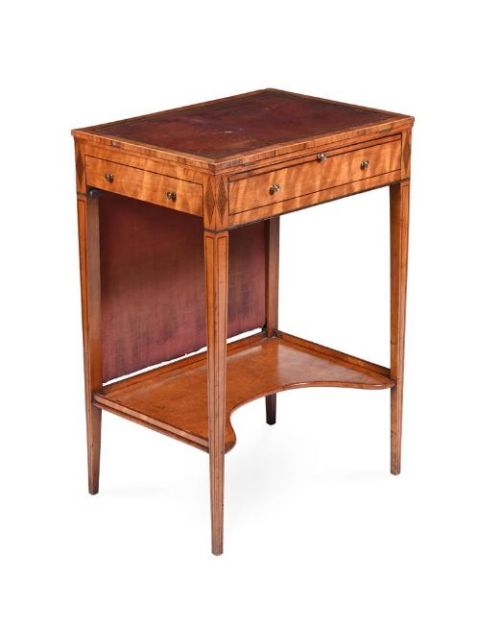
The primary forms on this page include drop leaf tables, octagonal work tables, and writing tables featuring internal compartments. These items function equally well as bedside units or compact side tables in modern rooms.
Makers utilised contrasting timbers such as mahogany and rosewood alongside satinwood to create varied surface patterns. The inclusion of compartments and silk bags distinguishes a sewing table from a standard occasional table.
Materials and construction methods
Craftsmen built these pieces using solid wood carcasses veneered with figured satinwood, often incorporating boxwood stringing and complex wood inlay. Marquetry and hand-painted decorative panels appear on select Edwardian and later nineteenth-century items.
Structural elements frequently feature secondary timbers like mahogany and rosewood, paired with brass handles and fittings. Interior compartments utilise lightweight joining techniques to house sewing implements and writing materials securely.
Satinwood Sewing Table Retail Price Guide 2026
Typical asking prices for satinwood sewing table among the pieces listed under this phrase on Sellingantiques today, from the lower quarter to the upper quarter. They describe what is for sale here now, not the wider market.
The listings on this site feature satinwood sewing tables spanning the Georgian, Regency, Victorian, and Edwardian periods, alongside Art Deco pieces.
Indicators of craftsmanship
Superior examples display precise matching of timber veneers across the top and sides, whereas lesser pieces rely on simpler painted decoration to mask plain wood. The tightness of the wood inlay and the crispness of marquetry define the tier of the piece.
Mechanisms for rising compartments and drop leaves operate smoothly in higher quality items, showing careful cabinetmaking. The weight and finish of brass hardware, such as lion mask handles, further distinguish workshop standards.
Gillows
The Satinwood Sewing Table Glossary
- Satinwood
- A hard, dense timber native to Ceylon and the West Indies, prized for its golden sheen and smooth grain. It forms the primary visible surface on these tables.
- Marquetry
- An elaborate technique of forming decorative patterns by fitting together thin veneers of various woods. It appears frequently on tabletops from the nineteenth century.
- Drop leaf
- A hinged flap on the side of a table that can be raised to extend the surface area or lowered when space is restricted. Many work tables incorporate this feature to expand the working space.
- Work box
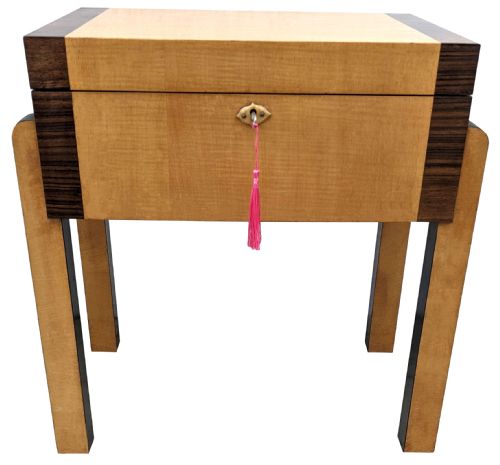
- A self-contained box, often set upon a stand or table base, fitted with compartments for sewing tools and threads. These often double as writing surfaces.
- Boxwood stringing
- A narrow strip of pale wood inlaid into grooves on table borders to create a contrasting geometric border. It is typical of Sheraton style furniture.
Satinwood Sewing Table: Frequently Asked Questions
What is a satinwood sewing table used for?
These tables were originally designed to hold needlework, threads, and small personal items while providing a stable surface for sewing or writing.
Today, owners utilise them as bedside cabinets or compact side tables where storage compartments conceal small objects.
How do I identify a Georgian satinwood sewing table?
Georgian and George III pieces typically exhibit restrained neoclassical lines, fine boxwood stringing, and symmetrical proportions associated with the Sheraton style.
They rely on the natural figure of the satinwood timber rather than heavy painted decoration, often featuring simple brass handles.
What is the difference between an Edwardian and a Victorian sewing table?
Victorian models tend to feature darker contrasting timbers, robust proportions, and occasional marquetry panels.
Edwardian interpretations often showcase lighter satinwood finishes, delicate shell inlays, and sometimes hand-painted floral motifs.
Can I use a sewing table as a bedside table?
The compact footprint and internal compartments make these tables well-suited for holding books, reading glasses, and bedside essentials.
Drop leaf versions allow the user to adjust the surface width according to the available space beside the bed.
How should I care for satinwood surfaces?
Satinwood benefits from regular dusting with a dry, soft cloth and occasional treatment with appropriate furniture wax to maintain the grain's lustre.
Avoid placing these items in direct sunlight or near heat sources to prevent the delicate veneers and boxwood inlays from drying out.