
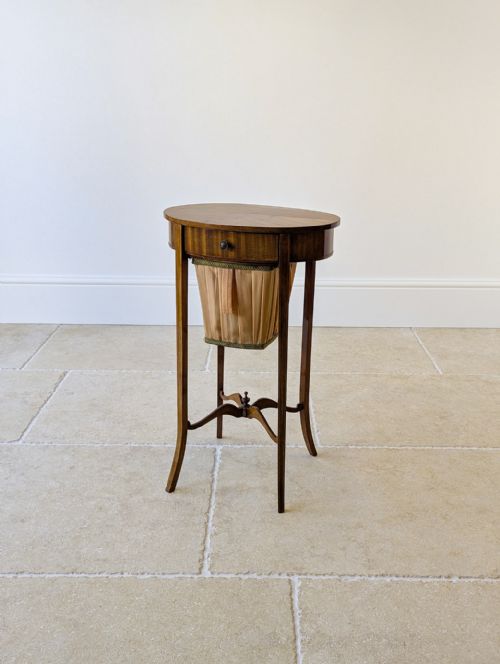


Edwardian Needlework Table
An edwardian needlework table is a compact, elegant piece designed for domestic craft, combining fitted compartments with refined timber marquetry.
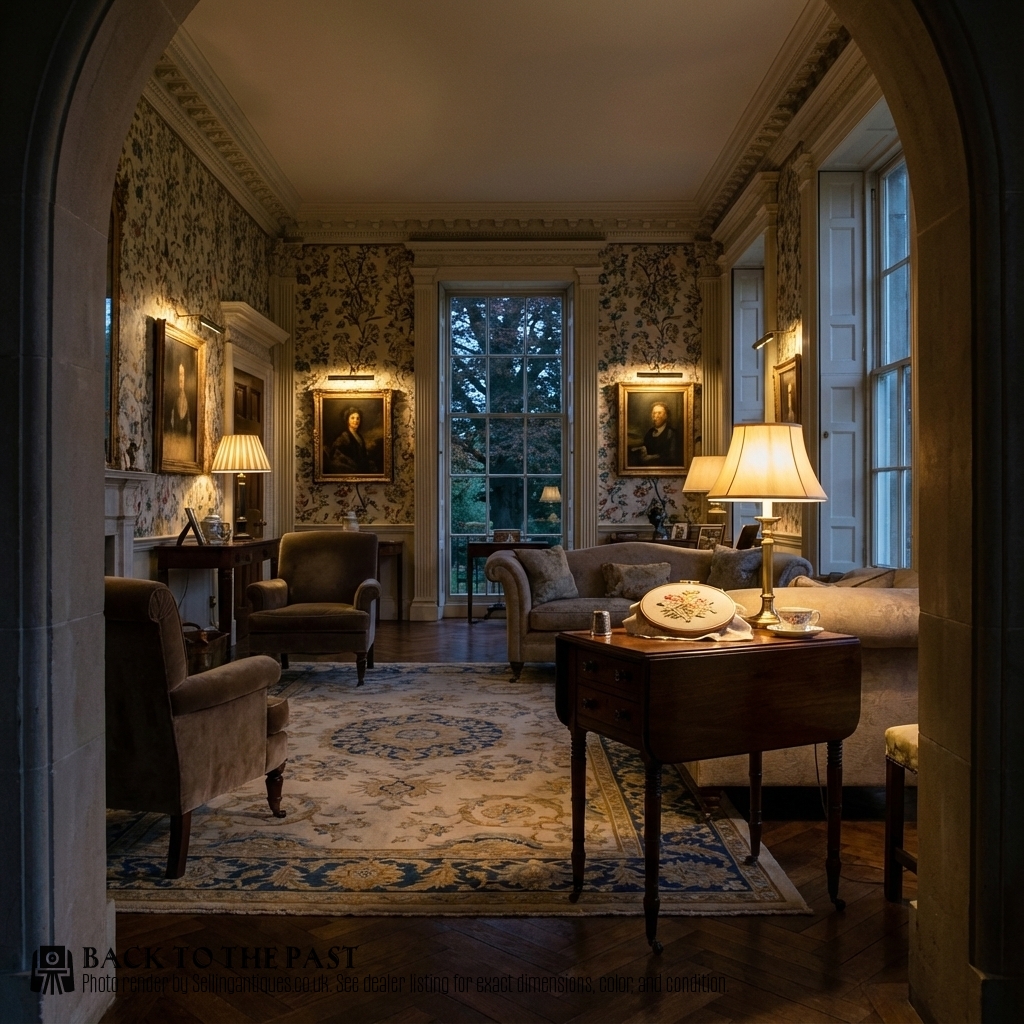
Edwardian Needlework Table
When you search for an edwardian needlework table, you encounter domestic furnishings built for ladies to store thread, fabric, and implements. These pieces serve multiple functions as sewing stations, occasional tables, or small lamp stands.
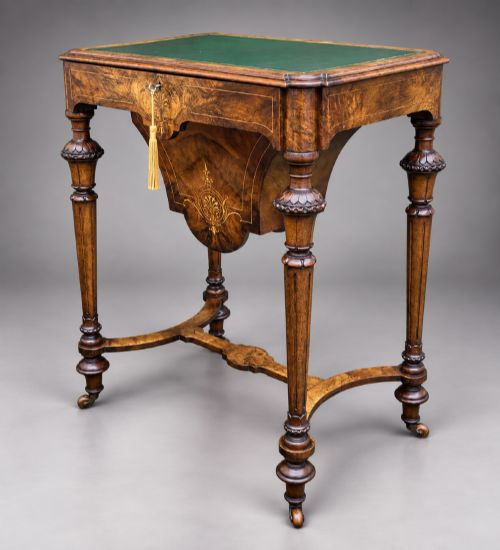
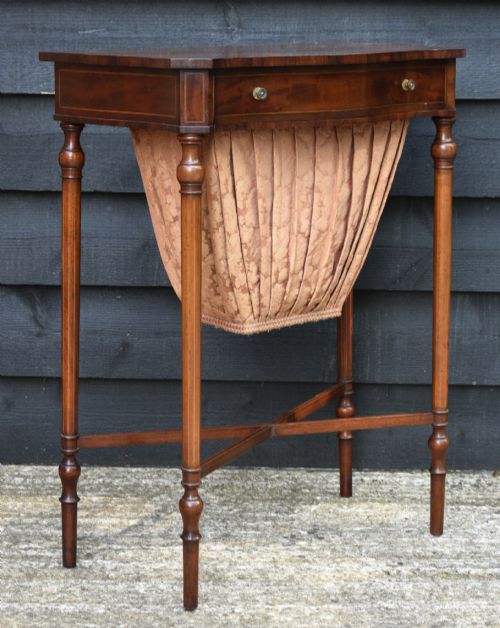
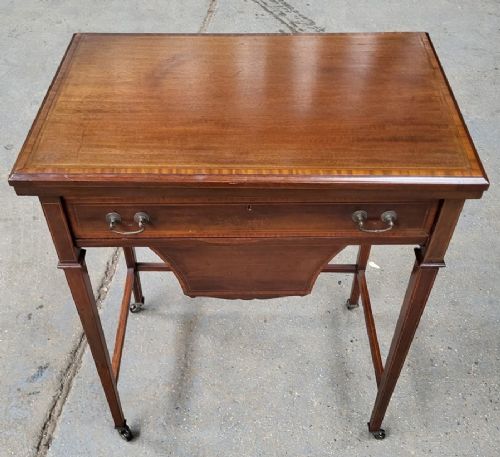
The version you are most likely to meet on this page dates from the Edwardian period or the late nineteenth century, frequently constructed in mahogany, satinwood, or walnut. Many examples incorporate hinged tops, fitted interiors with small compartments, and hanging silk baskets or fabric bags underneath.
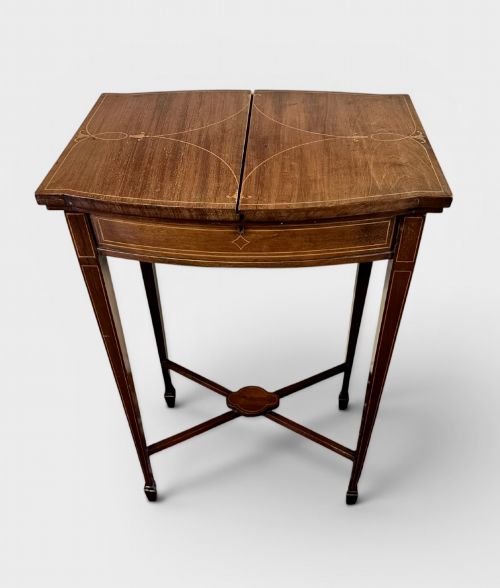
Formations vary from serpentine fronts and octagonal tops to simple rectangular box shapes. While the search phrase points specifically to the Edwardian era, similar Victorian and Regency work tables share the same fundamental purpose and proportions.
Materials and Construction
Cabinet makers utilised choice timbers including solid mahogany, rosewood, and kingwood, often embellished with satinwood cross-banding, boxwood stringing, and elaborate floral marquetry. Secondary woods provide structural stability inside the hidden compartments and drawers.
Silk, fabric, and pleated textiles form the drop-down bags that suspend beneath the work surface to hold wool and materials. Delicate brass fittings, hinges, and occasional hand-painted portrait decorations finish the exterior.
Edwardian Needlework Table Retail Price Guide 2026
Typical asking prices for edwardian needlework table among the pieces listed under this phrase on Sellingantiques today, from the lower quarter to the upper quarter. They describe what is for sale here now, not the wider market.
Some sewing tables hide tiny lidded compartments intended for secret letters alongside the spools.
Distinctions in Quality
The standard of timber selection and complexity of inlay mark the division between standard examples and finer pieces. Burr walnut veneers and intricate shell or floral marquetry require skilled handcrafting that elevates the visual depth of the furniture.
Internal complexity also defines the grade of the piece, where fully fitted wooden trays with individual lidded compartments demonstrate superior craftsmanship compared to plain open boxes. The crispness of the serpentine or octagonal lines and the condition of the integrated fabric bag further separate workshop tiers.

The Edwardian Needlework Table Glossary
- Marquetry
- Decorative patterns formed by fitting small pieces of veneer into a wooden background. This technique creates detailed floral or geometric motifs across the table top.
- Cross-banding
- A narrow strip of veneer applied to the border of a table top with the grain running perpendicular to the centre. It provides a neat framing effect on mahogany and walnut surfaces.
- Stringing
- Thin inlaid lines of contrasting wood, such as boxwood, set flush into the primary timber. It outlines drawers and panels to add definition.
- Serpentine
- A curved shape consisting of a concave centre flanked by convex ends. This flowing contour appears on the edges of finer tables.
- Killarney Ware
- Decorative wooden objects produced in Ireland, typically featuring arbutus wood and intricate marquetry scenes. These pieces represent a distinct regional specialty found within nineteenth-century work tables.
Edwardian Needlework Table: Frequently Asked Questions
What is an edwardian needlework table used for?
These tables served as dedicated workstations for women managing household sewing, embroidery, and mending tasks. The upper compartment held spools, needles, and tools, while the suspended fabric bag gathered loose wool and fabric.
Today, collectors utilise them as versatile side tables, lamp stands, or bedside cabinets where concealed storage proves useful.
How do I tell an Edwardian table from a Victorian one?
Edwardian examples generally display lighter timbers such as satinwood, simpler proportions, and refined neoclassical or Sheraton Revival inlay. Victorian pieces tend to feature darker rosewood or burr walnut with heavier, more elaborate carvings and Rococo Revival influences.
Examining the internal construction and secondary woods helps confirm the manufacturing era.
What is inside a needlework table?
Lifting the main lid typically reveals a shallow wooden tray divided into numerous small compartments for bobbins, pins, and thimbles. Some interiors retain original velvet linings or small lidded boxes.
Beneath the main body, a sliding drawer or a pleated silk basket provides deeper storage for unfinished needlework.
Are these tables sturdy enough for daily use?
Despite their delicate appearance and slender legs, these tables were built by skilled cabinet makers using durable hardwoods. They easily withstand holding a lamp, books, or decorative objects.
Care should be taken with the hinged lids and suspended fabric bags to avoid straining the original joinery and antique textiles.