

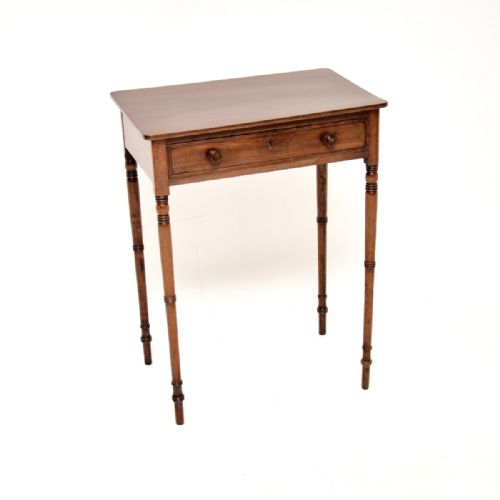
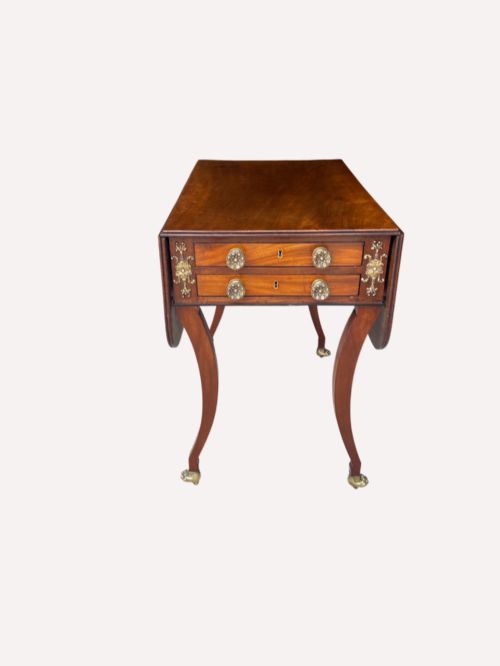
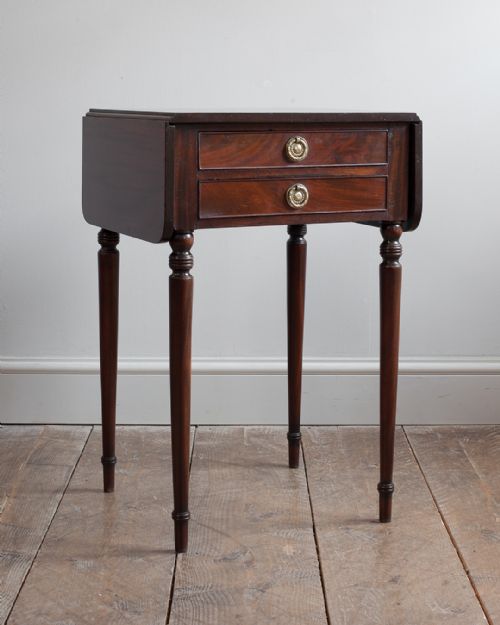
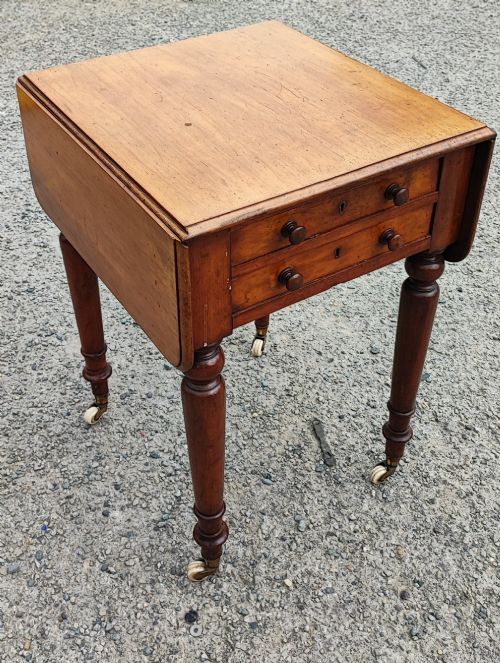
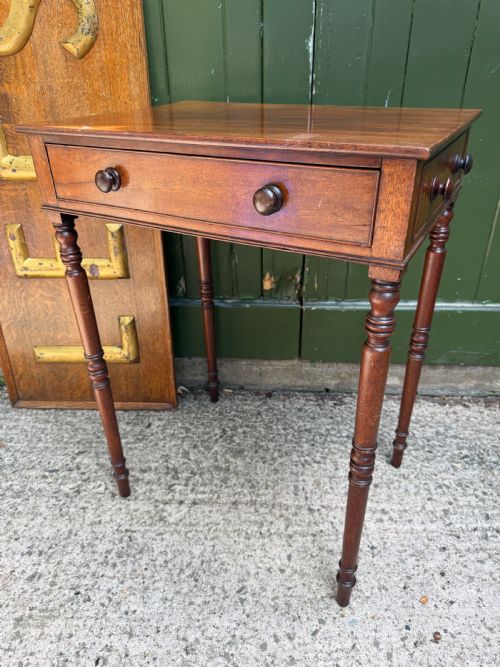
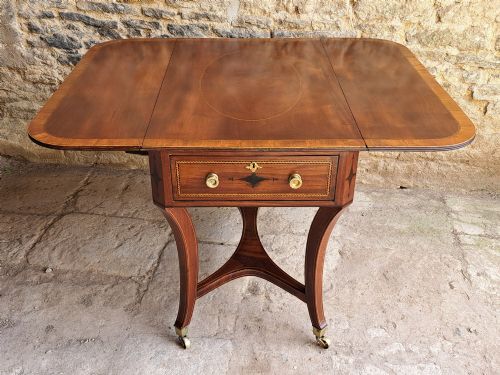
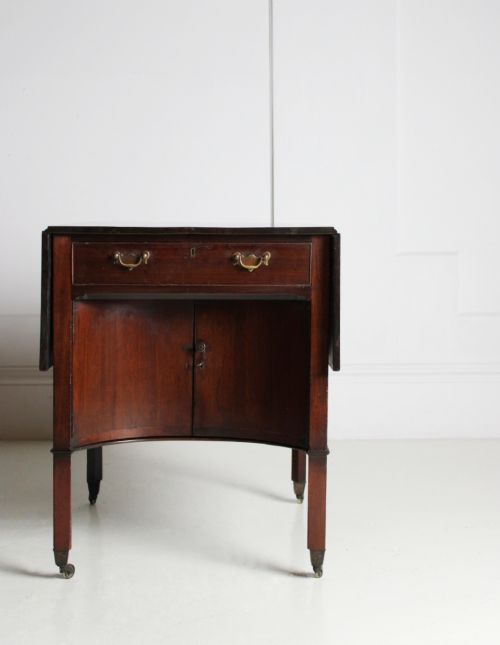
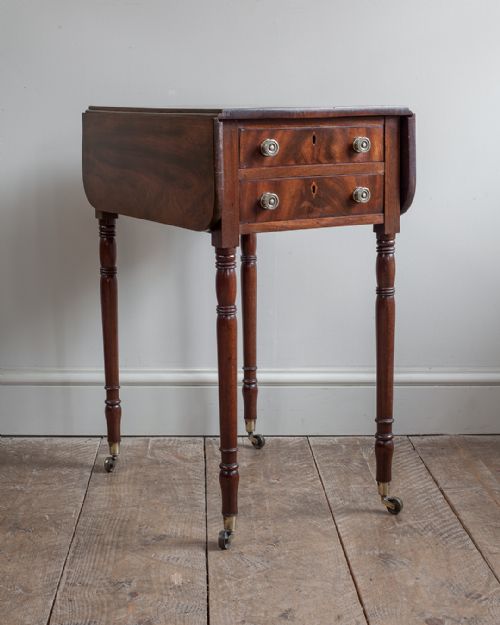
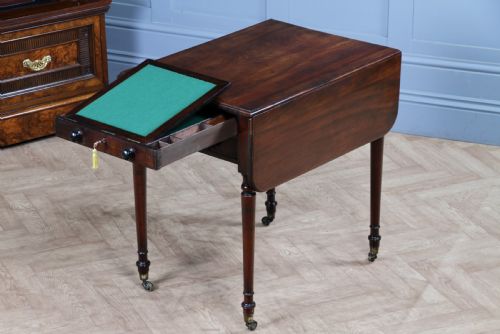
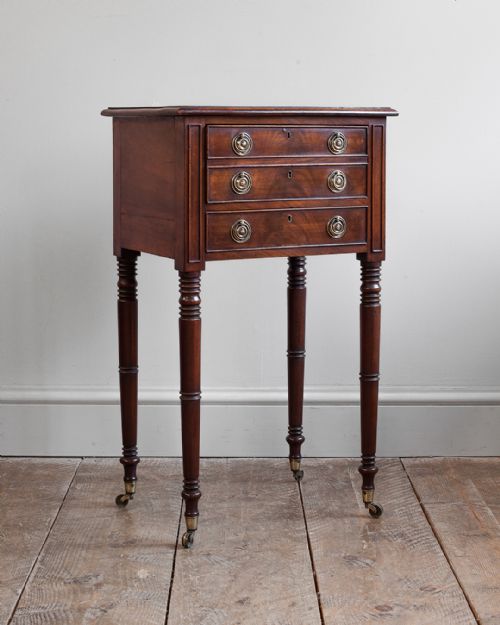

Georgian Mahogany Work Table
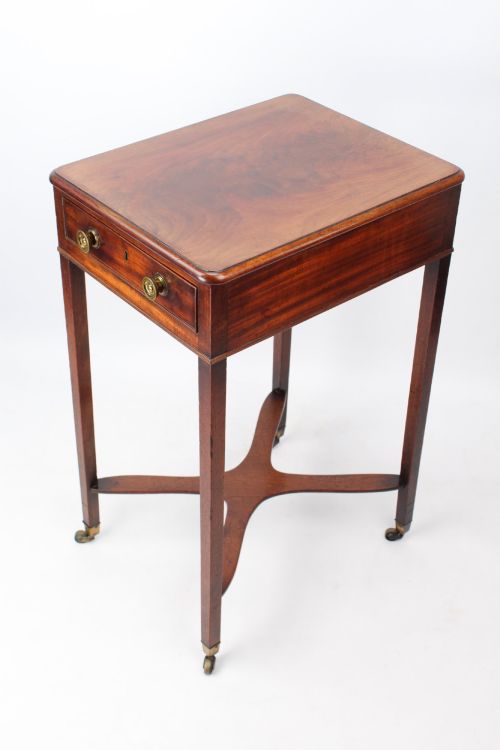
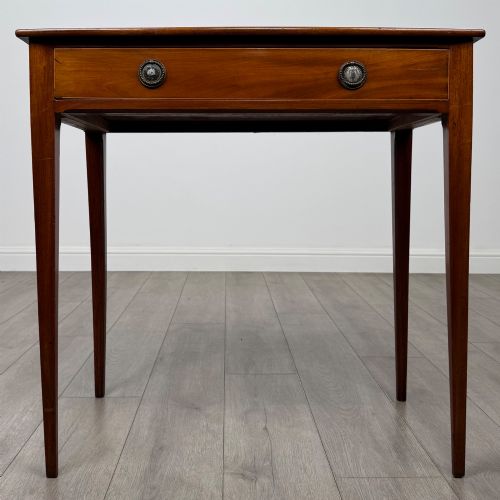
These georgian mahogany work table examples offer refined small-scale storage and writing surfaces crafted during a period of exceptional domestic cabinetmaking.
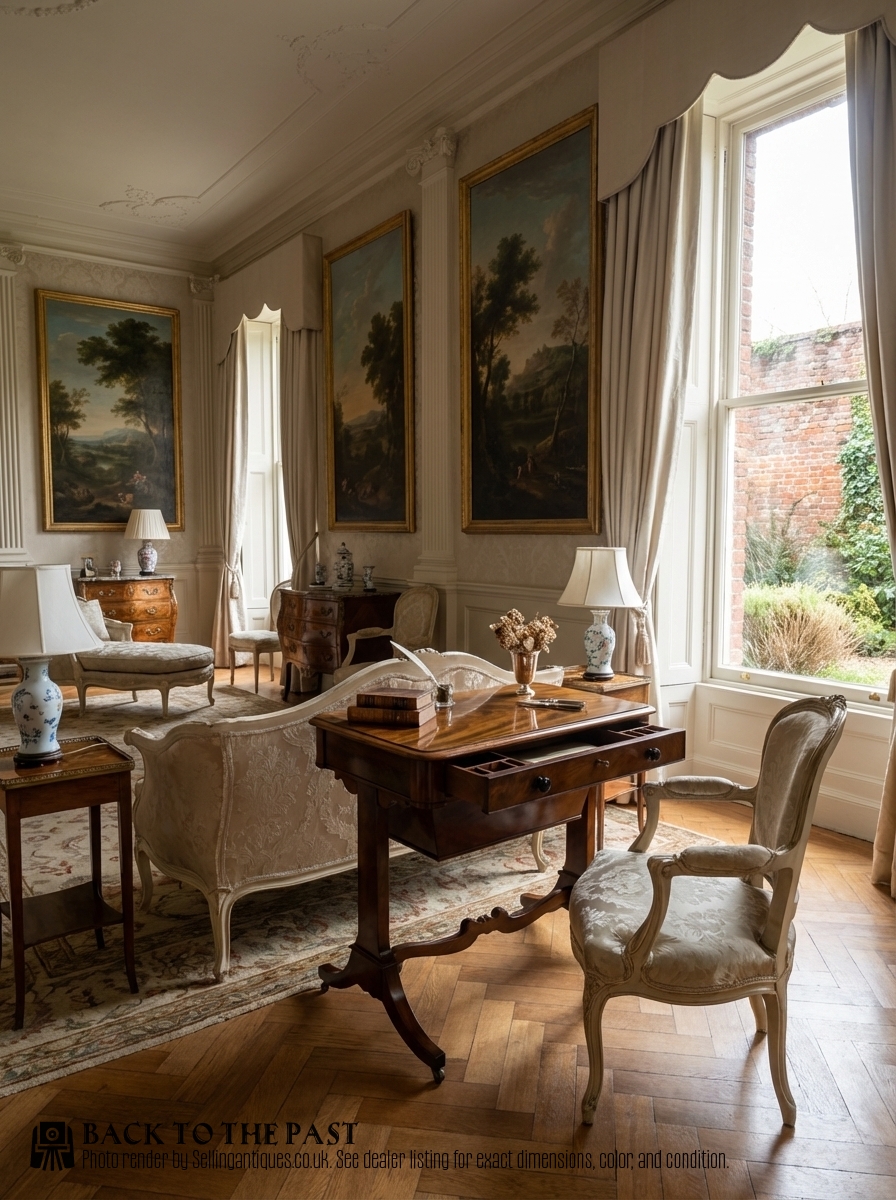
What They Are
A georgian mahogany work table provides a compact surface for sewing, needlework, and correspondence within period interiors. These pieces typically combine small drawers or textile bags with sturdy side and occasional table forms.
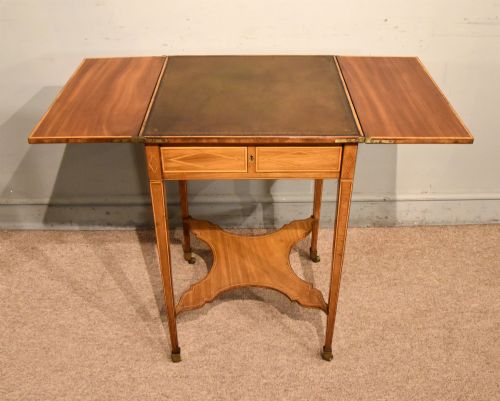
The surviving examples range from simple Pembroke and drop-flap formats to more elaborate pedestal designs featuring fitted interiors. Buyers encounter numerous variations spanning the Georgian, Regency, and early nineteenth-century eras.
Cabinetmakers designed these items for versatility, allowing them to function easily as lamp tables or bedside stands in smaller rooms. Their enduring appeal lies in this combination of decorative presence and practical compartment storage.
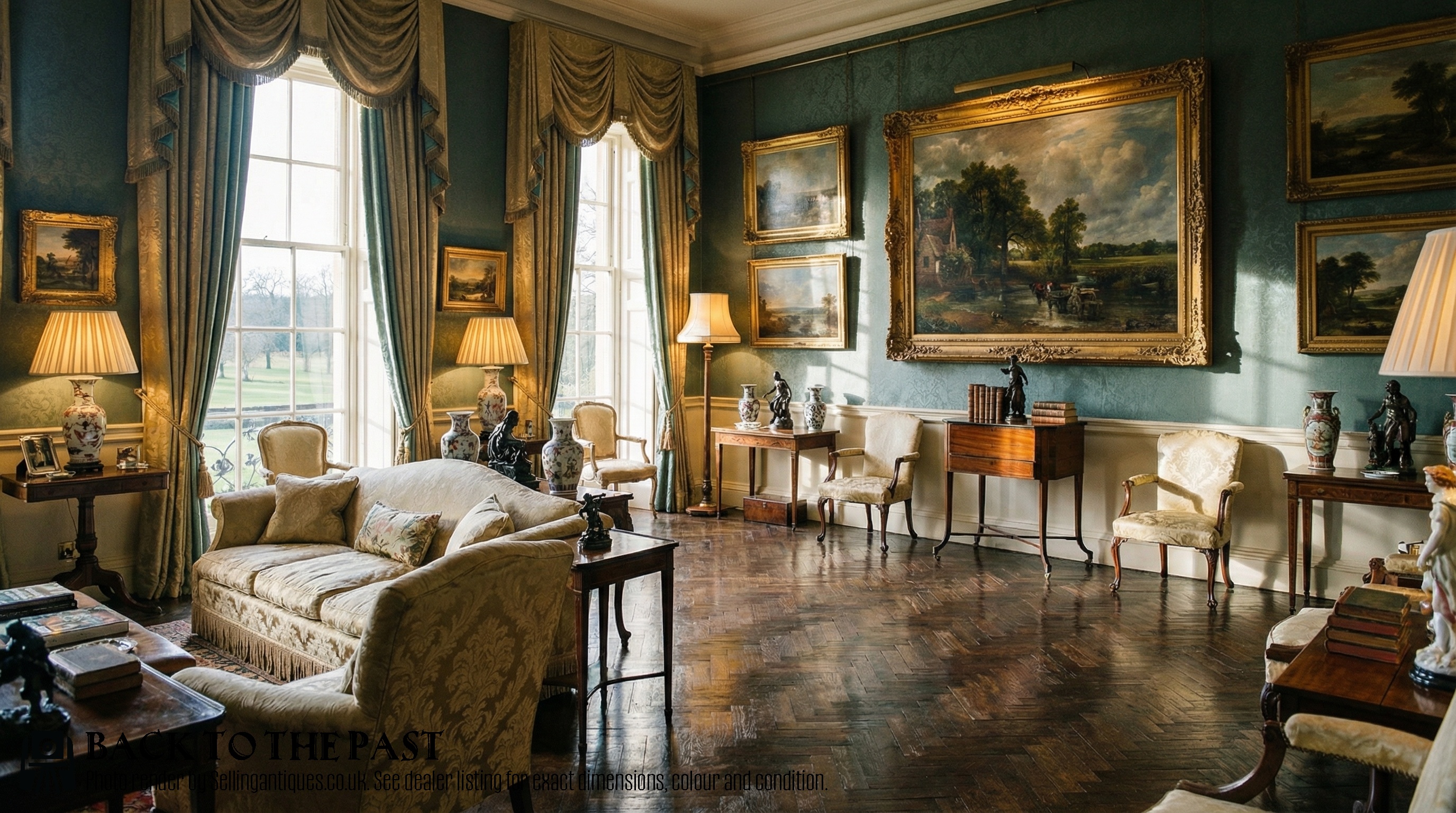
How They Were Made
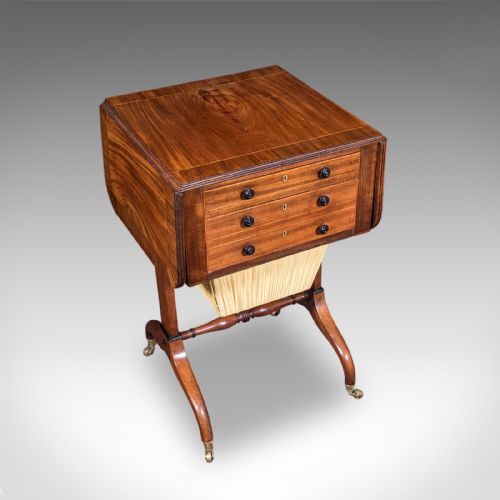
Cabinetmakers utilised dense mahogany timber, sometimes enhanced with contrasting satinwood or rosewood banding and delicate inlay. Construction often involved drop flaps, hinged lids, and freestanding pedestals supported by branching legs.
Makers integrated brass castors and fittings to ensure these functional tables remained easily movable around the principal rooms of a house. Interiors frequently featured divided compartments specifically organised for sewing implements and writing materials.
Retail Price Guide 2026
Typical UK retail prices for georgian mahogany work table, calculated from the Sellingantiques database of over a million retail prices indexed since 2003. This retail price guide relies exclusively on Sellingantiques data; no external sources or auction records are used, so the figures do not describe the wider market.
Listings demonstrate that these tables frequently incorporate drop flaps, Pembroke configurations, and pedestals.
What Varies in Quality
The distinction between standard domestic items and superior examples rests upon the selection of figured mahogany and the crispness of any inlay or fretwork. Master workshops invested greater care in the internal fittings and the precise alignment of drop-flap leaves.
Proportion and stability dictate the overall success of a design, with finer pieces maintaining elegant lines even when fully extended or opened. The integration of original brass hardware and well-executed turning elevates the visual weight of the piece.
The Georgian Mahogany Work Table Glossary
- Pembroke table
- A small occasional table featuring hinged drop leaves on two opposing sides. These flaps allow the surface area to expand quickly when required.
- Work table
- A multi-purpose small table equipped with drawers or a fabric bag underneath for storing sewing and needlework. They became essential household furnishings during the Georgian period.
- Drop flap
- A hinged leaf attached to the main top that supports extended surface use when raised. It folds down neatly to save space when the table is not in active service.
- Inlay
- A decorative technique where contrasting woods or other materials are inserted into recessed cavities within the primary surface. This adds subtle pattern and framing to tabletops and drawer fronts.
Frequently Asked Questions
What is a work table?
A work table is a compact domestic furniture piece designed primarily for needlework, sewing, and small writing tasks. They typically include internal compartments, drawers, or hanging fabric bags beneath the top.
During the Georgian era, these tables offered ladies a portable and elegant station for pastime crafts within the drawing room. Their practical storage makes them equally useful in modern interiors as bedside or lamp tables.
How do I date a Georgian table?
Dating relies upon stylistic markers, timber characteristics, and structural methods associated with specific reigns and decades. Pieces from the George III period often display sharper carving and classical inlay.
Later Regency and George IV examples frequently incorporate heavier pedestal bases or distinct brass mounts. Comparing the secondary timbers inside drawers helps confirm the period of construction.
Where were they used?
These tables were designed for principal reception rooms, parlours, and private chambers where domestic tasks took place. Their modest footprint allowed them to sit beside seating areas without crowding the space.
Today, their flexible proportions suit similar roles as side tables in living rooms or hallways. They fit easily beside sofas or chairs while providing concealed storage for modern clutter.
Are drop flaps original?
Drop flaps are a defining feature of many Pembroke and work tables designed to offer expandable surface space. Inspecting the underside reveals the original hinge placements and joint construction.
Careful observation shows whether the leaves and supporting brackets belong to the primary build era. Original mechanisms ensure the flaps drop smoothly and align evenly when raised.