




Sheraton Occasional Table
When you search for a sheraton occasional table, you encounter light, graceful furniture designed for flexible use in eighteenth-century and revival parlours.
Sheraton Occasional Table
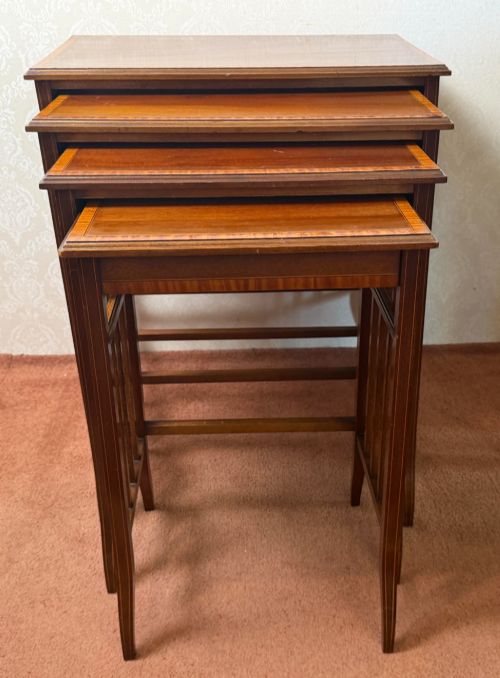
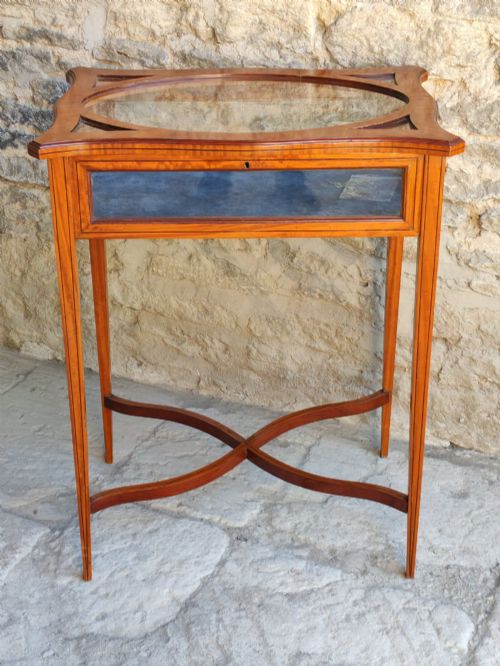
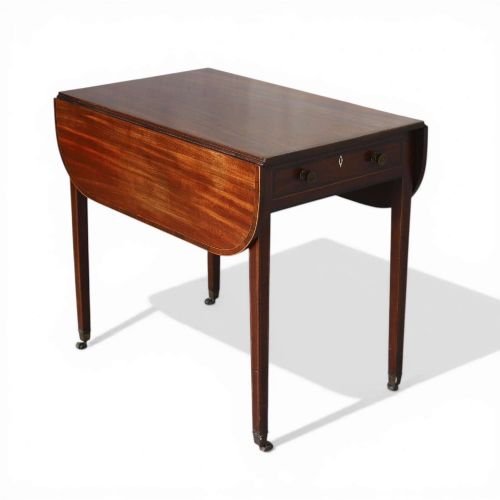
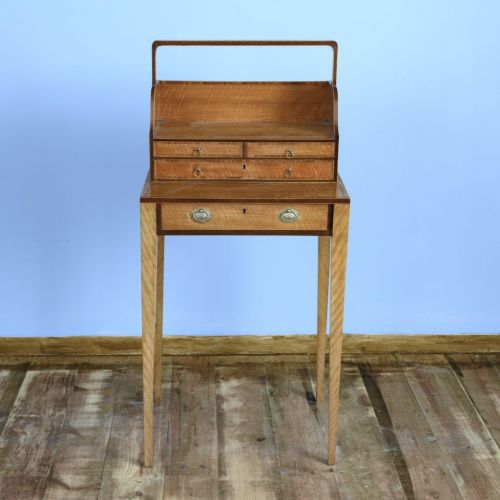
A sheraton occasional table covers a diverse range of light movable furniture types, including pembroke tables, nests, lamp tables, and side tables designed to serve multiple functions around a room. The items found here divide between authentic pieces from the eighteenth and early nineteenth centuries and later Victorian or Edwardian interpretations executed in the Sheraton Revival style.
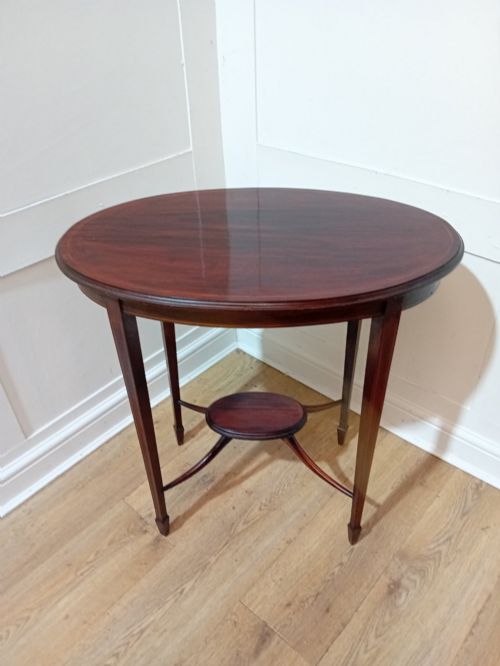
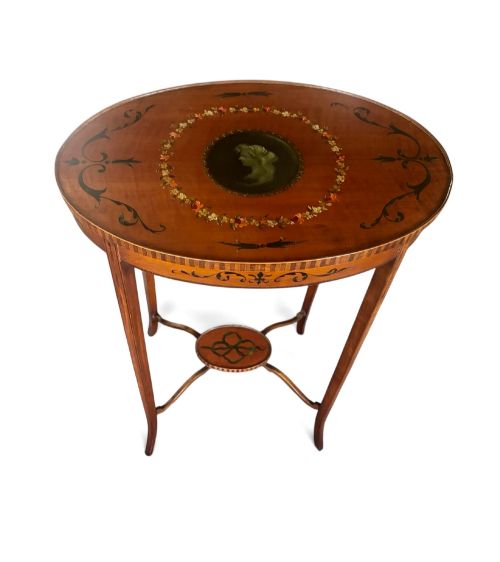
The forms span simple rectangular or oval side tables to ingenious dropping-leaf pembroke tables, nests of quartetto tables, and delicate painted display pieces. Buyers most frequently meet Edwardian revival examples and late nineteenth-century satinwood or mahogany pieces bearing characteristic inlay and tapering supports.
Originating in the late Georgian period under the influence of Thomas Sheraton's neoclassical design books, these pieces prioritise lightness and elegance over heavy mass. The survival of both original period furniture and subsequent revival interpretations provides a broad spectrum of domestic tables suitable for modern placement.
How they were made
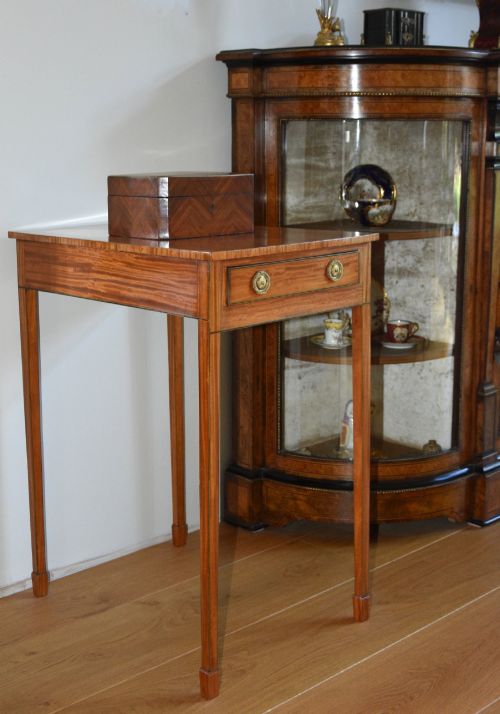
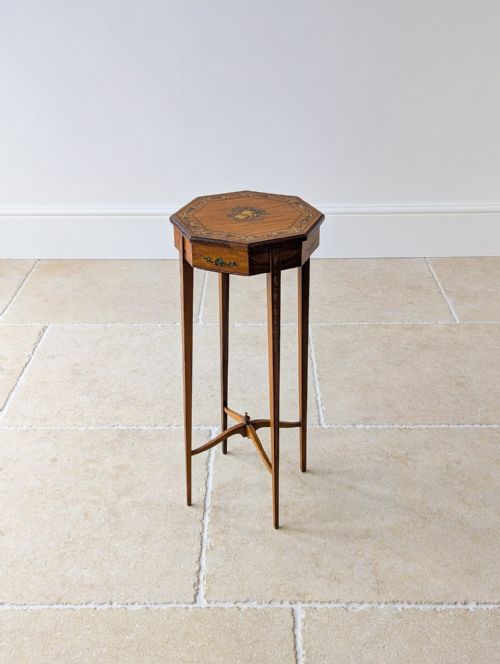
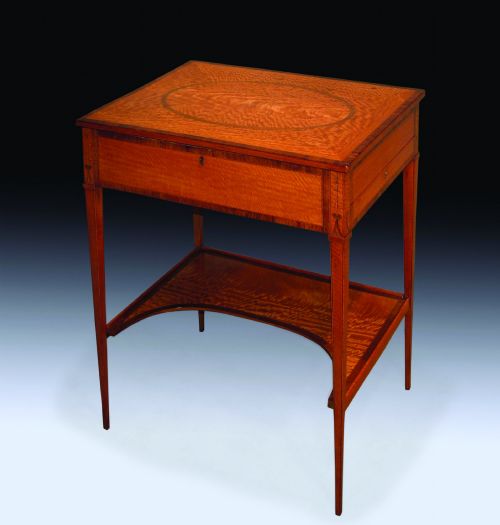
Cabinetmakers constructed these tables using a foundation of solid mahogany, harewood, or rosewood, frequently veneered with highly figured satinwood to create luminous contrasting surfaces. Artisans incorporated delicate boxwood inlay, bone details, and fine hand-painted floral or neoclassical decoration to enhance the visual lightness of the timber.
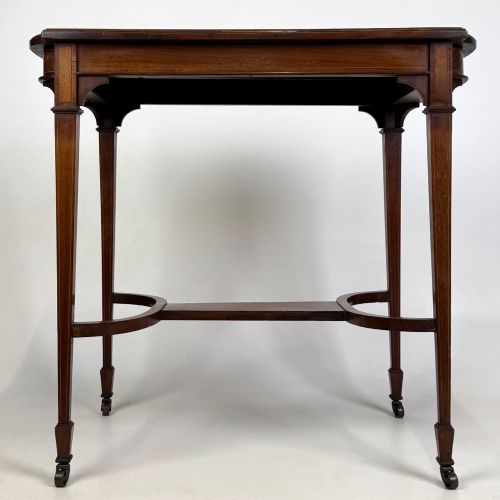
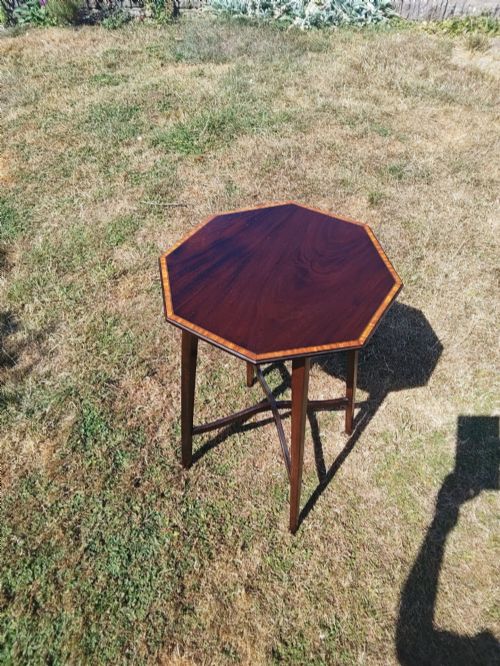
Structural integrity relied upon slender, square-tapered legs that typified the style, joined deftly to small frames designed to bear light domestic burdens without bulk. Cross-banding in contrasting woods like partridge wood or darker mahogany framed the primary panels, requiring high precision in timber selection and joinery.
Several tables include clever drop-leaves or nest together in sets of four like polite wooden stacking dolls waiting for tea.
What varies in quality
Quality reveals itself in the crispness of the boxwood inlay and the depth of figure in the satinwood veneer, where superior examples exhibit seamless matching and hand-painted motifs of exceptional precision. Inferior pieces often rely on crude transfer printing or mechanical stamping rather than skilled brushwork for their surface decoration.
The structural refinement of the underframe marks the distinction between ordinary and exceptional tables, particularly in the taper of the legs and the tightness of the joinery on pembroke flaps or nesting sets. Woods selected for secondary framing and the longevity of the polished surface further separate utilitarian production from fine cabinetwork.
The Sheraton Occasional Table Glossary
- Pembroke table
- A small rectangular table with two hinged drop leaves on opposite sides, typically featuring a single drawer and slender tapered legs.
- Satinwood
- A lustrous, hard timber native to Ceylon and India that yields a golden-yellow surface highly prized for decorative neoclassical veneering.
- Quartetto
- A set of four graduating tables designed to nest neatly beneath one another when not in use around the drawing room.
- Cross-banding
- A decorative border of veneer laid with the grain running perpendicular to the central panel to frame the top of a table.
- Marquetry
- The art of forming decorative patterns using fitted pieces of various coloured woods, veneers, and occasionally bone or shell.
- Etagere
- A movable set of open shelves or trays used for displaying small objects or serving refreshments within a formal interior.
Sheraton Occasional Table: Frequently Asked Questions
How do I spot a true revival piece?
Revival items dating from the Edwardian period or late nineteenth century display secondary timbers, hardware styles, and construction techniques characteristic of mass machine production rather than eighteenth-century workshop methods. Examining the underside and drawer linings often reveals the true age of the timber and assembly.
Makers working in the Sheraton Revival style adopted earlier neoclassical motifs with great enthusiasm, yet their finishing varnishes and softwood framing typically differ from original Georgian production. Comparing the patination and wear patterns helps clarify the actual period of manufacture.
Where were these tables placed?
Original owners positioned occasional tables beside seating groups, against drawing room walls, or near windows to hold lamps, books, or writing materials. Their lightweight construction allowed servants or residents to move them about the room as social demands shifted.
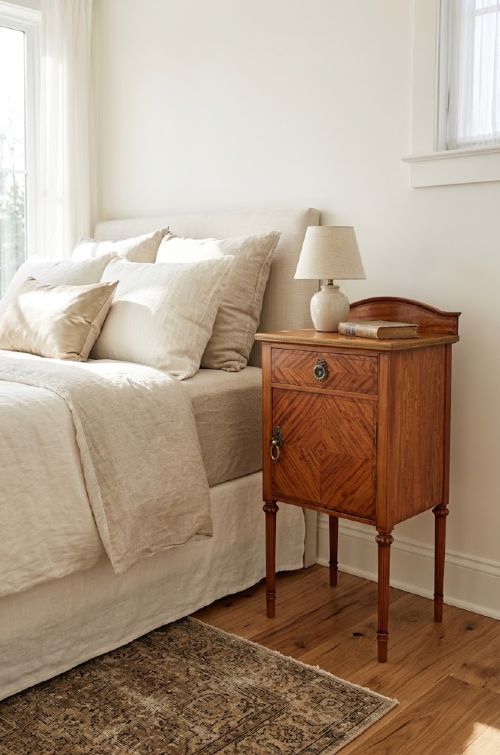
In modern rooms, their modest scale suits bedside use, hallway placement, or functional display spaces where bulky furniture would overwhelm the floor plan.
Can I use an occasional table daily?
These delicate pieces were built for light domestic utility rather than heavy burdens, meaning they suit gentle daily tasks like holding a lamp, book, or teacup. Placing extremely heavy objects upon them risks straining the slender tapered legs and delicate veneered surfaces.
Protecting the polished satinwood or mahogany tops from moisture and direct heat preserves the antique finish while allowing regular enjoyment in a living space.
What is satinwood cross banding?
Cross banding involves framing a central tabletop veneer with a contrasting strip of timber arranged so the grain runs at right angles to the middle panel. This technique creates a neat geometric border that accentuates the shape of the table.
On better quality pieces, boxwood and ebony stringing lines often accompany the cross banding to add further linear definition to the design.