
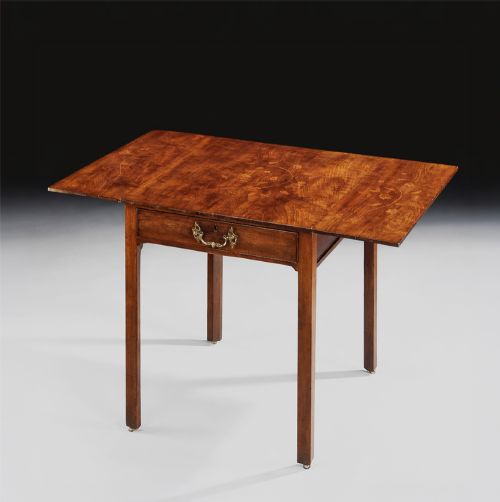

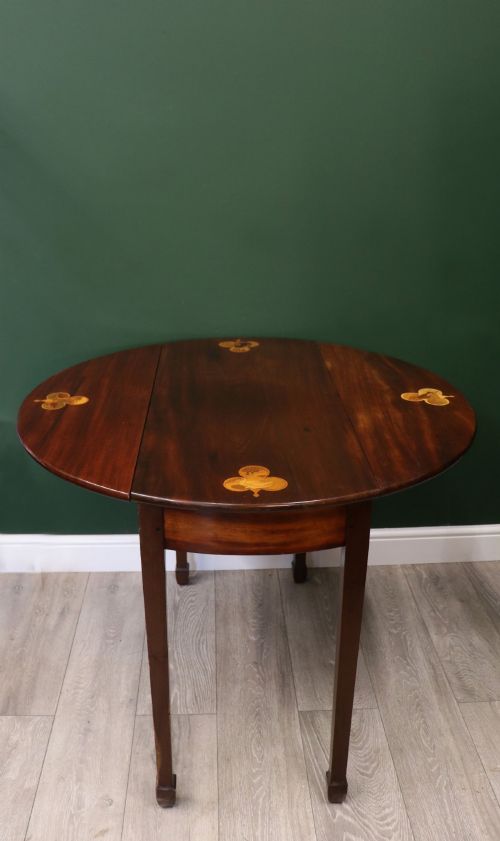
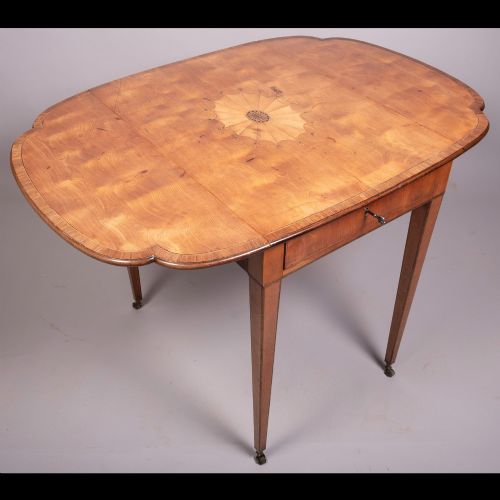
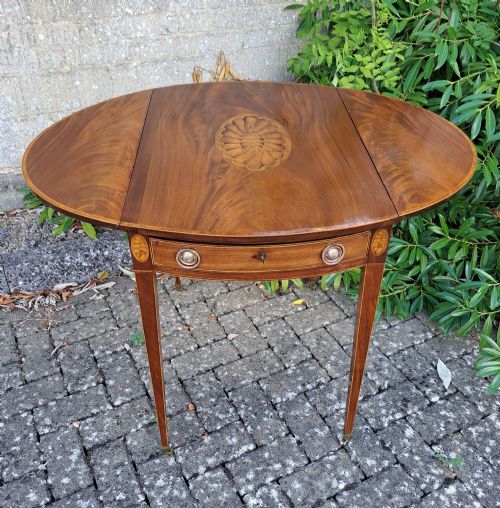
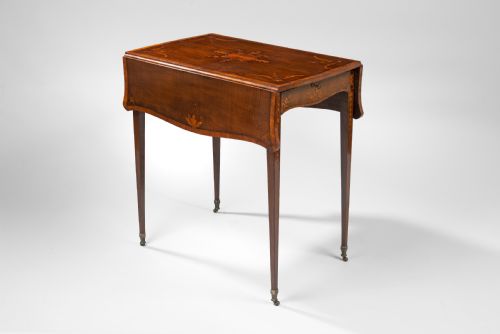


Marquetry Pembroke Table
A marquetry pembroke table is a drop-leaf occasional piece defined by detailed wood inlay, combining practical proportions with decorative surface work.
Marquetry Pembroke Table
A marquetry pembroke table is a versatile drop-leaf side table characterised by its hinged flaps and decorated top surface. When you examine the pieces available here, you find examples originating from the Georgian and Edwardian periods, alongside items dating around 1800. These tables served traditionally as breakfast or writing desks, easily tucked away when not in use.
Makers utilised various timbers to create distinct visual borders and central motifs on the folding leaves. The construction balances structural stability with delicate ornamentation, making these tables practical for modern interior placement. Buyers often seek them for their compact footprint and intricate surface decoration.
How they were made
Craftsmen built the primary carcase using dense hardwoods such as mahogany and rosewood, providing a sturdy framework for the folding leaves. Secondary timbers supported internal framing and drawer construction where applicable. These foundational woods offered durability and stable movement for the hinged mechanisms.
Makers applied decorative veneers and wood inlay using contrasting species like satinwood, tulipwood, harewood, and kingwood. Artisans cut thin sections of coloured woods to form floral or geometric marquetry panels set into the table top. Brass fittings were frequently added to castors and handles to complete the construction.
Dating spans from the eighteenth century and the Georgian era through the Sheraton period to Edwardian interpretations.
What varies in quality
The standard of a marquetry pembroke table depends heavily on the complexity of the wood inlay and the choice of timbers used for the veneers. Pieces featuring a wider palette of exotic woods like satinwood, rosewood, and kingwood generally represent a higher grade of craftsmanship. Simpler versions rely on basic mahogany with minimal stringing rather than detailed pictorial marquetry.
Execution of the drop-leaf mechanism and the neatness of the joinery distinguish finer examples from standard workshop production. The precision in cutting and fitting individual pieces of veneer dictates the visual sharpness of the tabletop design over time. Original brass hardware and well-preserved structural framing further elevate the standing of a piece.
The Marquetry Pembroke Table Glossary
- Marquetry
- Decorative veneer work forming pictures or patterns by assembling tiny pieces of various coloured woods. This technique requires immense precision to fit the elements flush.
- Pembroke table
- A small drop-leaf table with hinged flaps on either side, introduced during the eighteenth century. It typically includes one or more small drawers.
- Satinwood
- A durable, lustrous timber native to India and the West Indies, prized for its pale yellow colour. It was frequently utilised for fine veneering in Georgian furniture.
- Harewood
- Sycamore wood that has been stained grey using chemical processes, popular in eighteenth-century marquetry. It provides a cool, silvery contrast to darker tropical timbers.
- Kingwood
- A dense, richly figured Brazilian hardwood with dark violet-brown tones and golden streaks. Cabinet makers utilised it primarily for banding and decorative highlights.
Marquetry Pembroke Table: Frequently Asked Questions
What is a pembroke table used for?
These tables functioned originally as versatile breakfast tables, small writing desks, or occasional side tables in polite rooms. The hinged leaves allowed the footprint to expand or contract depending on daily requirements.
Today, they suit placement beside a sofa or as a decorative console in a hallway. Their compact size makes them practical for modern living spaces without sacrificing antique character.
How do I identify a Georgian pembroke table?
Georgian examples usually display hand-cut mahogany or satinwood framing with traditional joinery methods visible underneath. They date roughly from the eighteenth to the early nineteenth century and often incorporate subtle stringing or marquetry.
Examining the underside of the leaves and the drawer construction helps confirm the period. Original brass castors and block feet are common indicators of authentic eighteenth-century manufacture.
What distinguishes Sheraton style?
Sheraton pieces are characterised by restrained neoclassical lines, tapering legs, and sophisticated contrasting veneers. The style relies on geometric symmetry and delicate inlay work rather than heavy carving.
Tables from this design tradition frequently utilise satinwood, harewood, and tulipwood to create refined borders. The overall silhouette remains light and elegant.
How should I care for an inlaid tabletop?
Inlaid surfaces require protection from direct sunlight, excessive heat, and moisture to prevent the delicate veneers from lifting. Regular dusting with a soft, dry cloth maintains the finish without chemical buildup.
Applying a quality wax polish occasionally nourishes the timber and preserves the sheen of the marquetry. Avoid placing hot or wet items directly onto the wood.