


Inlaid Mahogany Tables
Inlaid mahogany tables bring warmth and refined detail to a room, spanning compact nests of quartetto pieces and paired lamp tables.

Forms and origins of inlaid mahogany tables
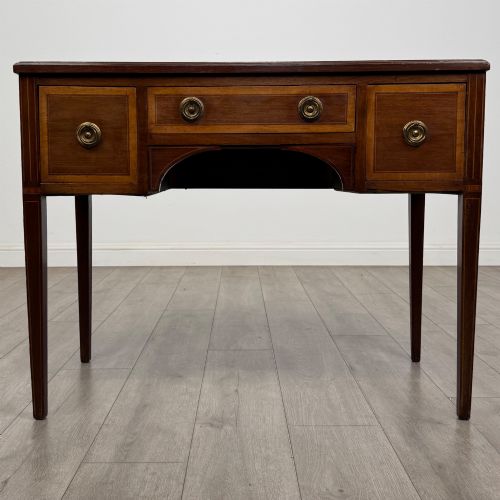
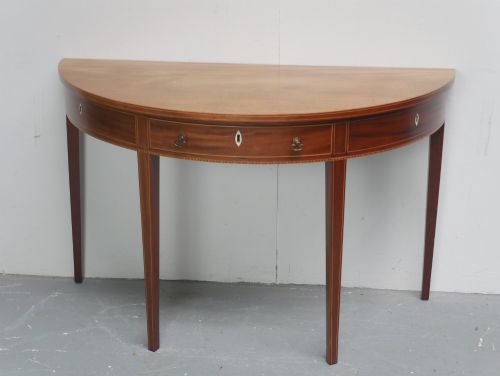
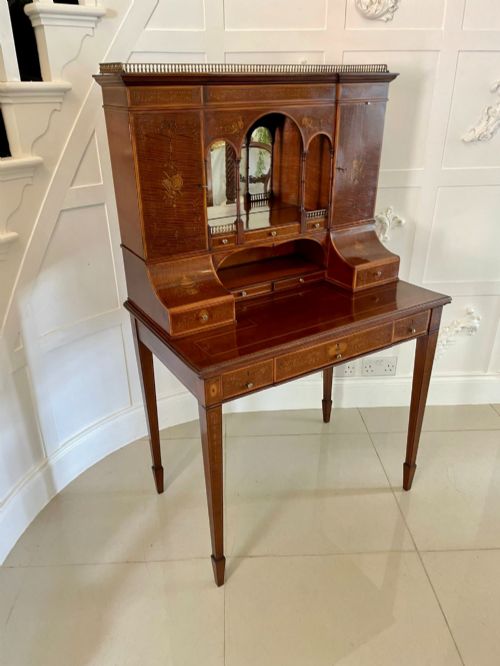
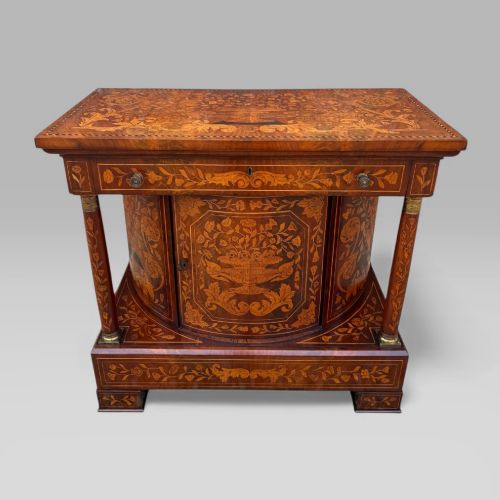
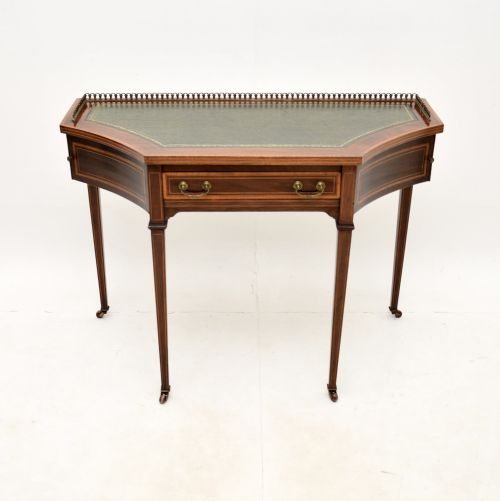
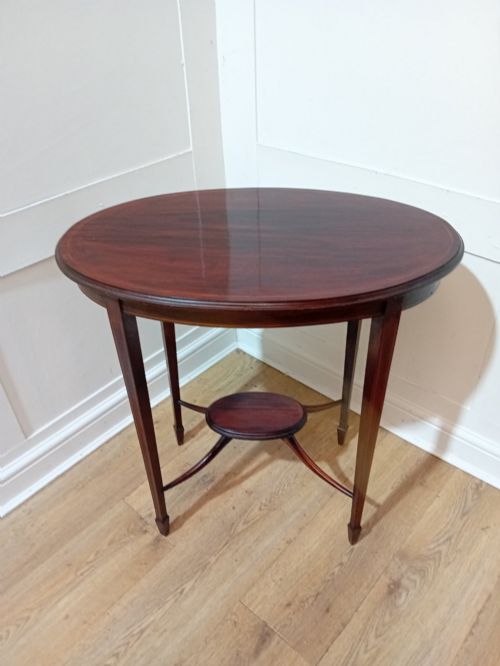
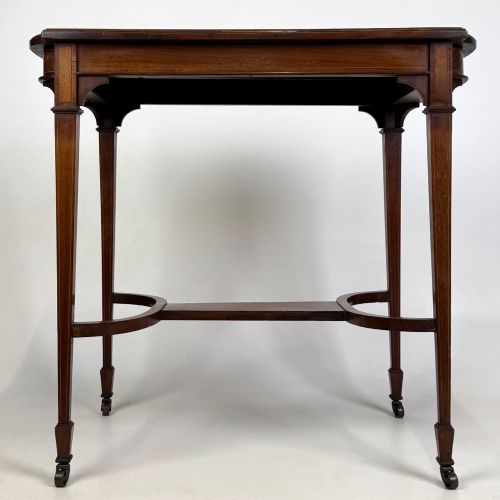
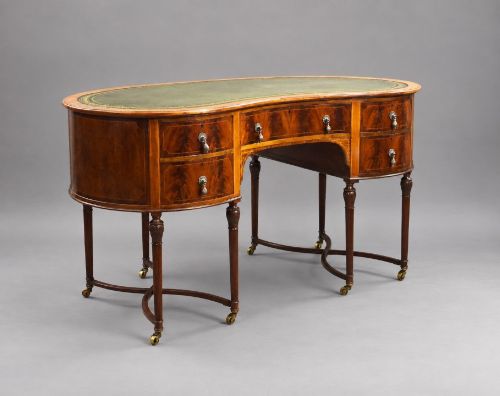
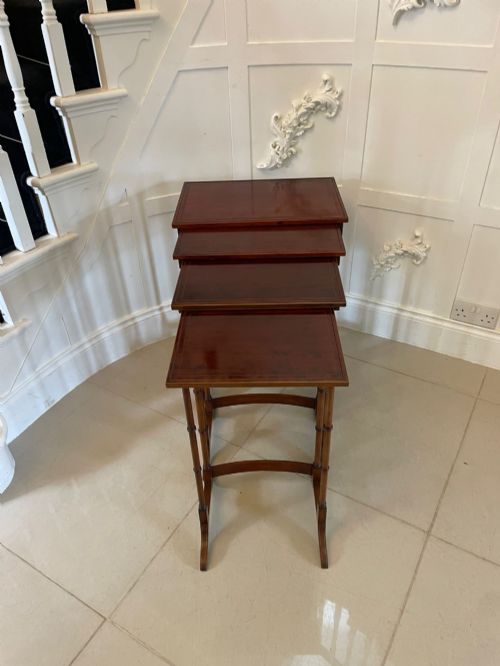
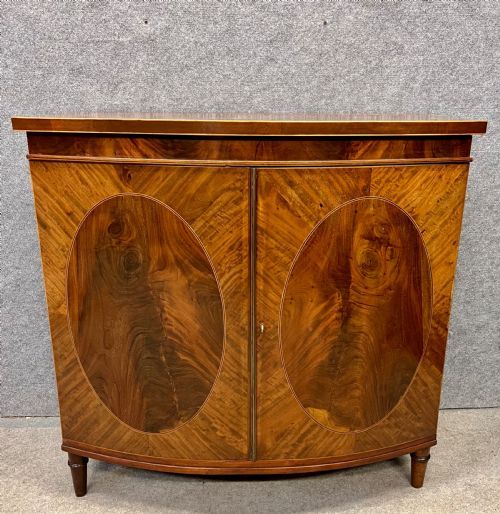
When you search for inlaid mahogany tables, you encounter an array of domestic furniture spanning the eighteenth century, the Victorian era, the Edwardian period, and the nineteen-thirties. The most frequent forms on this page are nests of tables, often called quartetto tables, alongside bedside cabinets, side tables, and card tables.
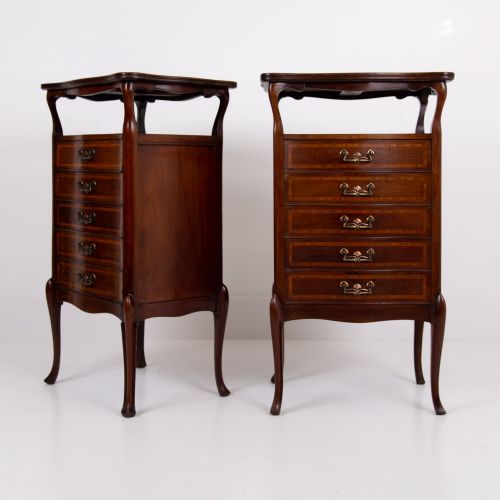
These items originate predominantly from English workshops, including Edwardian interpretations of earlier styles and Georgian originals. Buyers regularly select nesting sets for their versatility in living spaces, while pairs of side and lamp tables suit drawing rooms and bedrooms.
Materials and construction
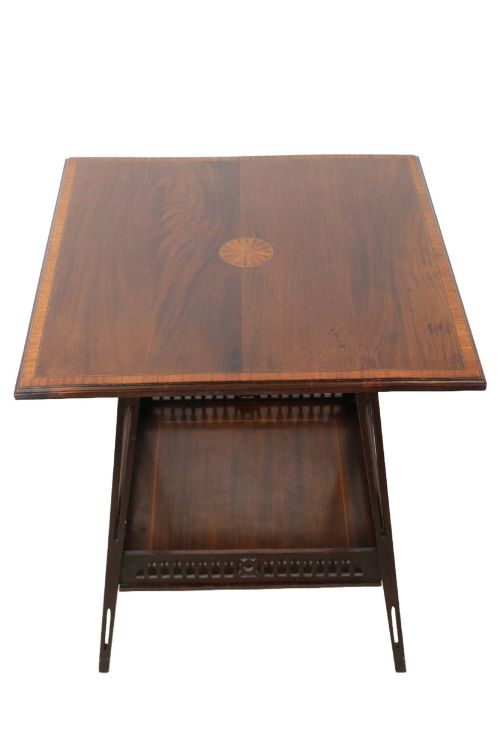
The primary timber across these pieces is mahogany, sometimes figured, complemented by contrasting woods such as satinwood, rosewood, and walnut. Artisans employed boxwood inlay and marquetry inlay to create linear borders, classical motifs, and decorative banding upon the timber surfaces.
Construction techniques include cabinet-making methods suited to small occasional tables, folding card tables, and multi-tiered nesting sets. Individual pieces incorporate delicate tray tops, pie crust edges, and slender supports designed to fit compactly together.
Retail Price Guide 2026
Typical UK retail prices for inlaid mahogany tables, calculated from the Sellingantiques database of over a million retail prices indexed since 2003. This retail price guide relies exclusively on Sellingantiques data; no external sources or auction records are used, so the figures do not describe the wider market.
Listings feature mahogany, satinwood, and boxwood inlay across Edwardian nests, Georgian card tables, and bedside cabinets.
Judging the range of quality
The standard of execution in inlaid mahogany tables rests upon the crispness of the contrasting woodwork and the depth of the mahogany grain. Pieces featuring finely articulated boxwood inlay and balanced marquetry demonstrate a higher tier of workshop practice than simpler, unadorned surfaces.
Structural harmony also dictates standing, where nesting tables slide smoothly into one another and card tables maintain rigid joints. The selection of figured timber veneers and the preservation of original surfaces separate standard examples from finer productions.
Waring and Gillow
The Inlaid Mahogany Tables Glossary
- Quartetto
- A set of four graduating tables designed to nest inside one another. This form became particularly popular during the Edwardian period.
- Marquetry inlay
- Decorative patterns formed by fitting contrasting veneers into the primary mahogany surface. This technique creates pictorial or geometric designs.
- Boxwood
- A pale, dense timber utilised for fine stringing and inlay work. It provides sharp contrast against dark mahogany.
- Demi-lune
- A half-moon shape characteristic of console and side tables. Such pieces fit flush against a wall.
- Card table
- A folding table designed for gaming or writing, featuring a hinged top that opens to reveal a baize-lined surface.
Frequently Asked Questions
What is a quartetto table?
A quartetto table is a set of four nesting tables designed to stack neatly beneath the largest top. They were widely produced in the Edwardian era for convenience in smaller drawing rooms.
Each table graduates in size, allowing the full set to occupy the floor space of just one small occasional table when not in use.
How do I date an inlaid mahogany table?
Dating relies on stylistic clues, timber characteristics, and construction methods. Edwardian pieces often display lighter satinwood banding and boxwood stringing.
Eighteenth-century and Georgian examples generally show heavier timber construction with hand-cut joints and simpler, deeper mahogany tones.
Where should I place a nest of tables?
A nest of tables suits sitting rooms beside armchairs or sofas where surface space is frequently needed. The individual tables can be distributed around the room when guests visit.
They also function effectively in bedrooms as bedside surfaces or in studies for holding lamps and small items.
Are card tables still functional?
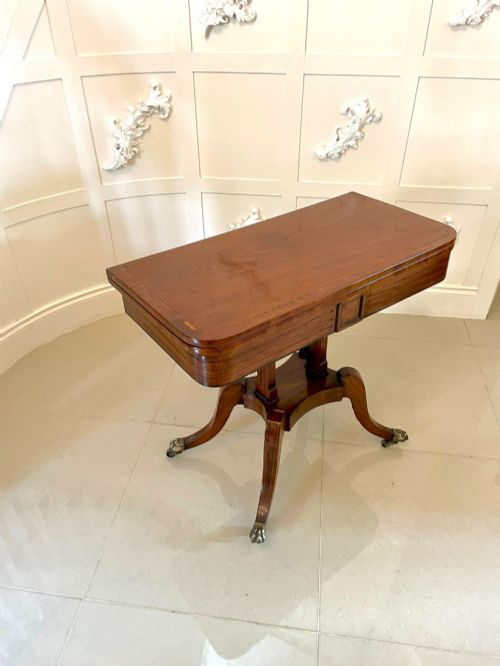
Card tables retain their folding mechanism and can be opened to serve as side desks or display surfaces. The hinged tops typically unfold to create a stable flat area.
While originally built for eighteenth-century card games, they adapt well to modern interiors as console tables placed against a wall.