


Vintage Nest of Tables
These vintage nest of tables stack together to save space while offering multiple surfaces for everyday living.
Vintage Nest of Tables
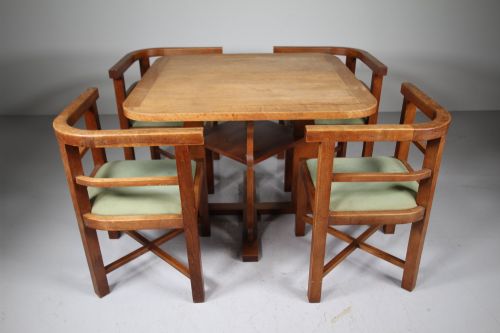
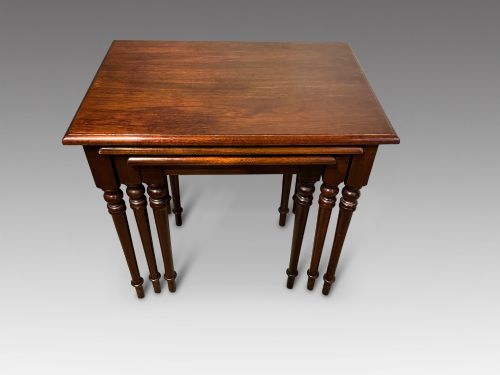
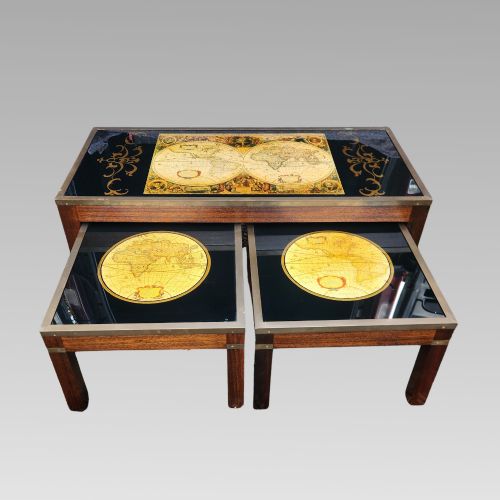
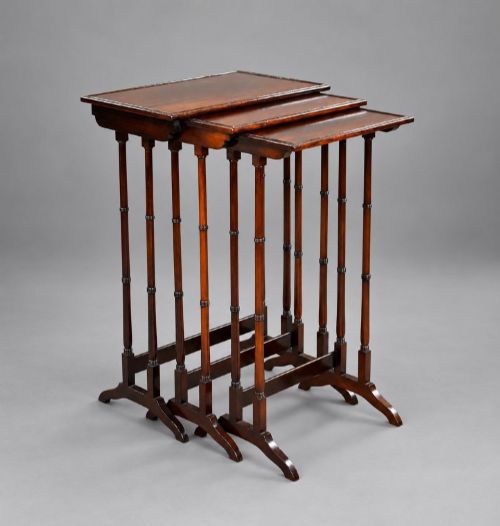
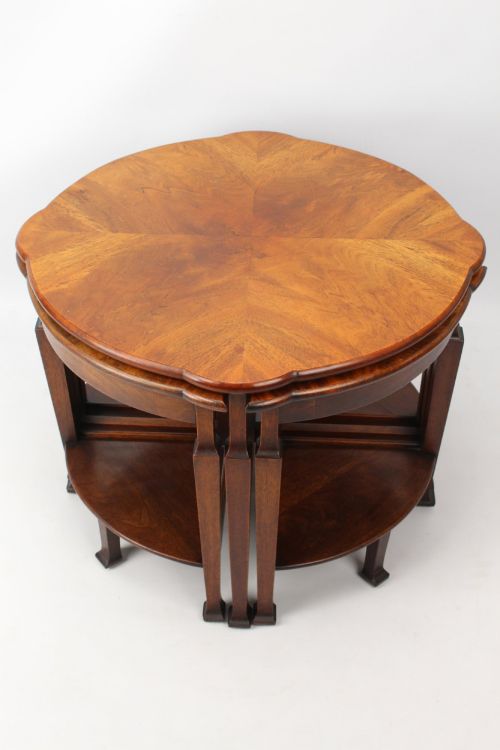
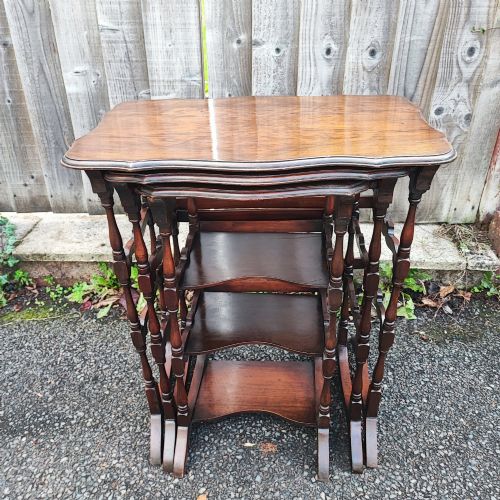
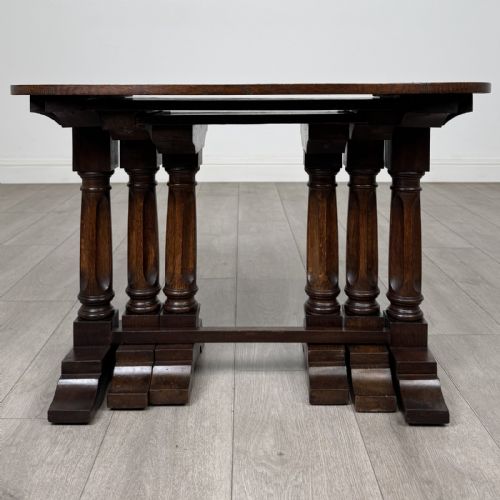
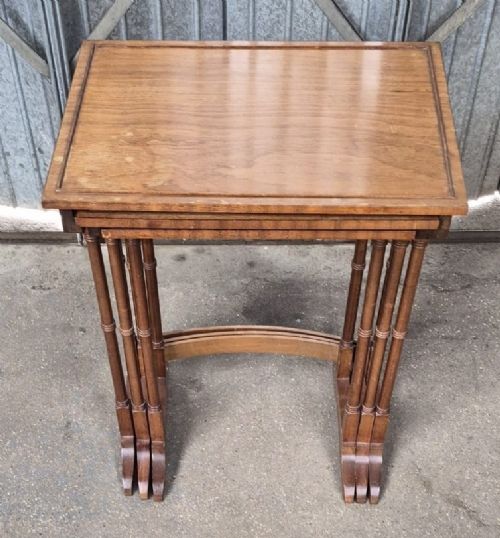
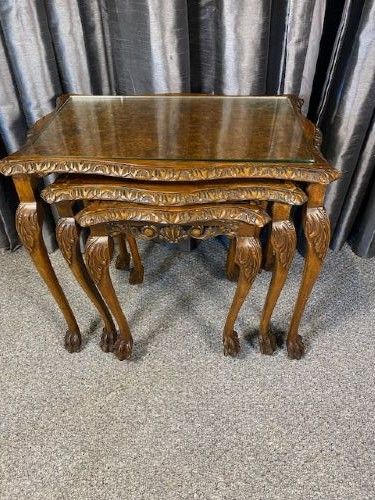
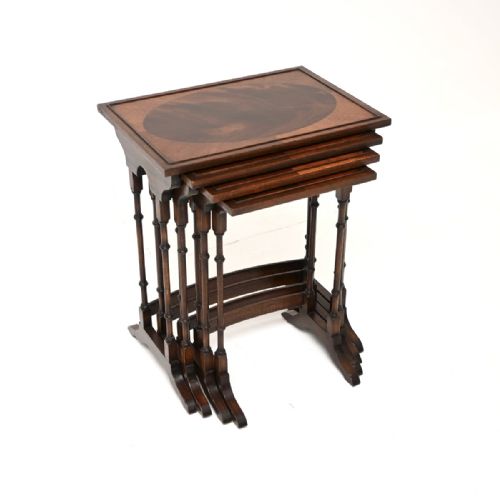
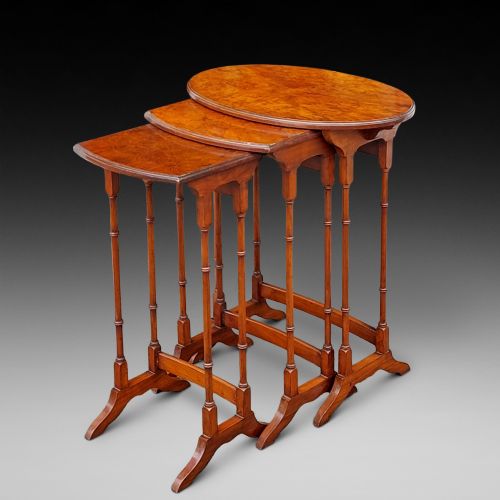
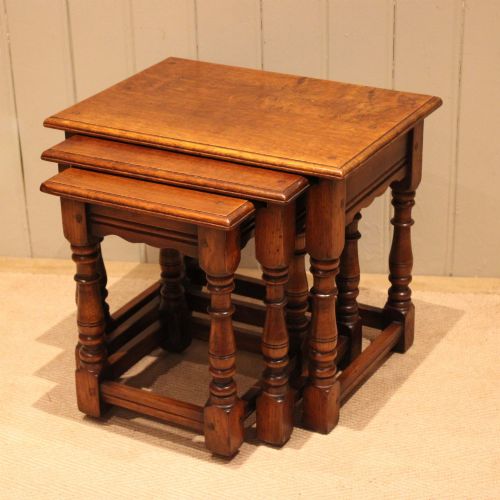
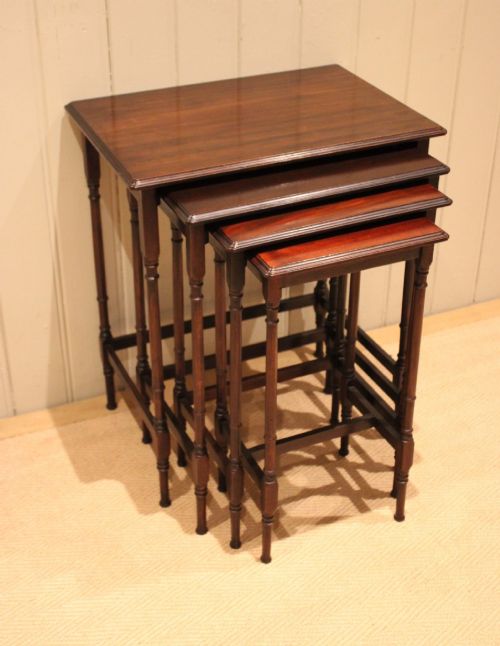
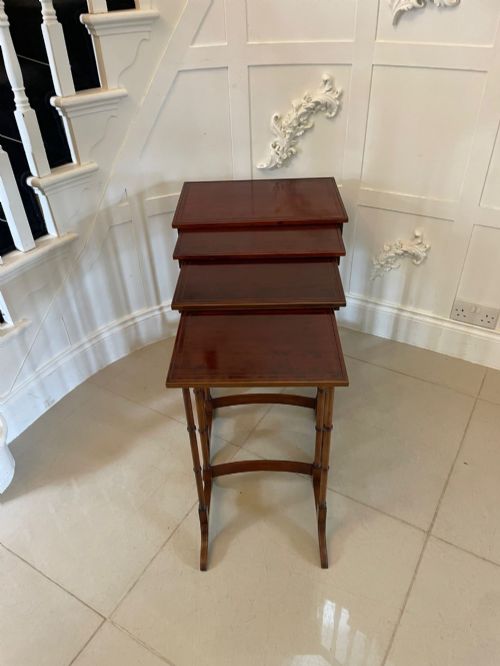
A vintage nest of tables consists of graduated tables designed to fit neatly beneath one another when not in use. You will most frequently encounter Edwardian and Art Deco examples alongside pieces drawing on Georgian, Regency, and Victorian styles.
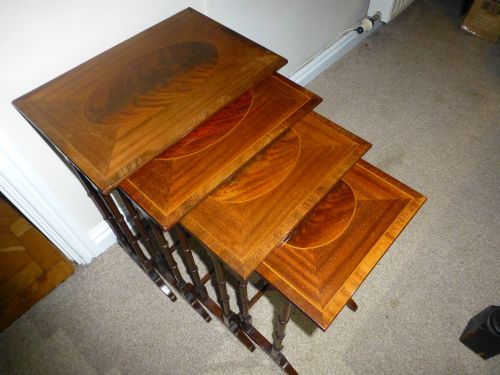
Sets commonly comprise three or four tables, though circular and larger configurations also appear. The materials span mahogany, walnut, oak, and rosewood, often enhanced with contrasting timbers or decorative finishes.
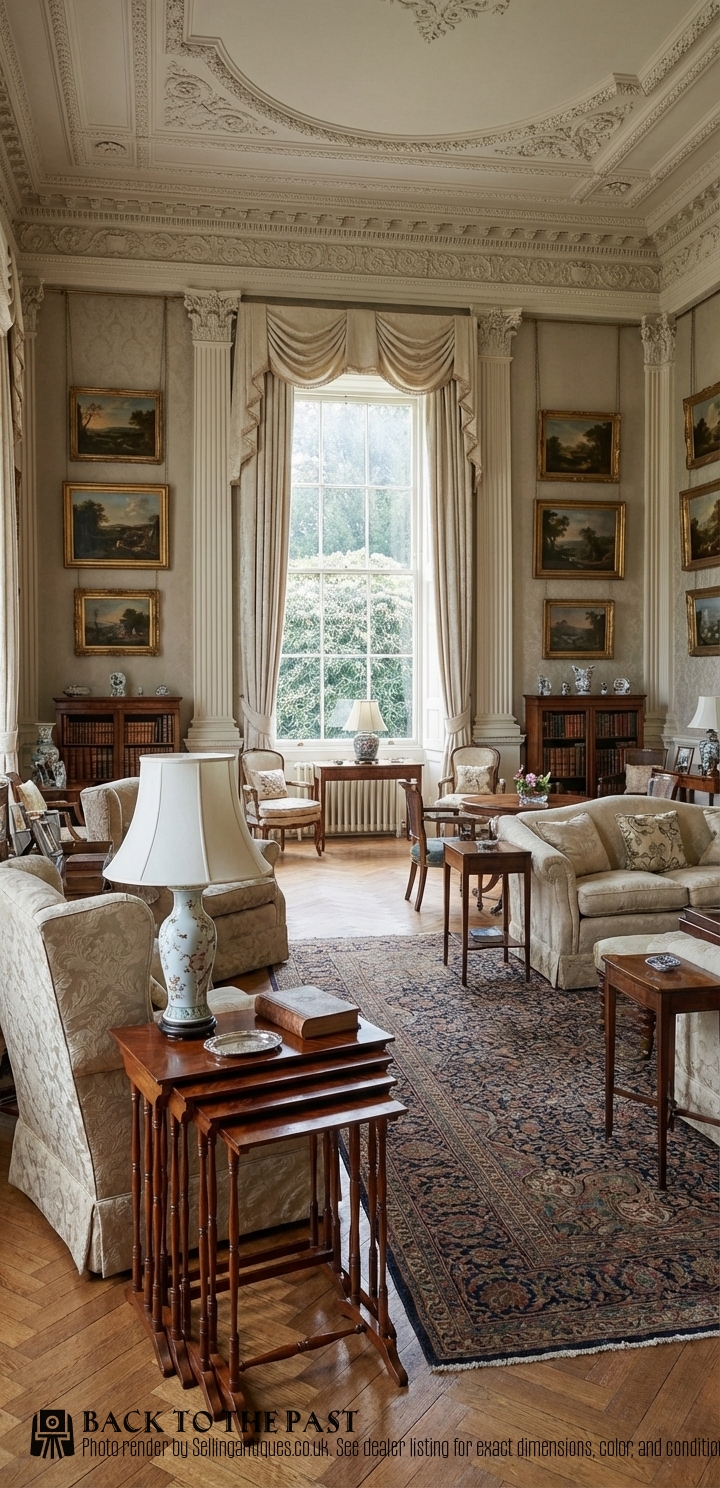
Assessing Quality and Execution
Quality rests in the precision of the nesting mechanism, ensuring each smaller table slides smoothly into place without binding or excessive clearance. The choice of timber grain and the crispness of any inlaid banding reveal the maker's hand.
Richer examples display thoughtful design details such as integrated chess boards, structural corner blocks, and harmonious proportions across all component tables.
Vintage Nest of Tables Retail Price Guide 2026
Typical asking prices for vintage nest of tables among the pieces listed under this phrase on Sellingantiques today, from the lower quarter to the upper quarter. They describe what is for sale here now, not the wider market.
The listings span eight distinct periods, from nineteenth-century origins through the Edwardian era to Art Deco and mid-century modern design.
Émile Gallé·Harry and Lou Epstein·The Hille Furniture Company·Heal's·Easden's
The Vintage Nest of Tables Glossary
- Quartetto
- A matched set of four nesting tables originating from the nineteenth or early twentieth century.
- Cross-banding
- A decorative border of veneer laid with the grain running perpendicular to the central panel.
- Stringing
- Thin inlaid lines of contrasting timber used to outline table edges and legs.
- Chinoiserie
- European decorative style employing imitation Chinese motifs, often executed in lacquer.
- Burl
- A distorted wood growth yielding highly figured, swirling veneer patterns.
Vintage Nest of Tables: Frequently Asked Questions
How were nesting tables used historically?
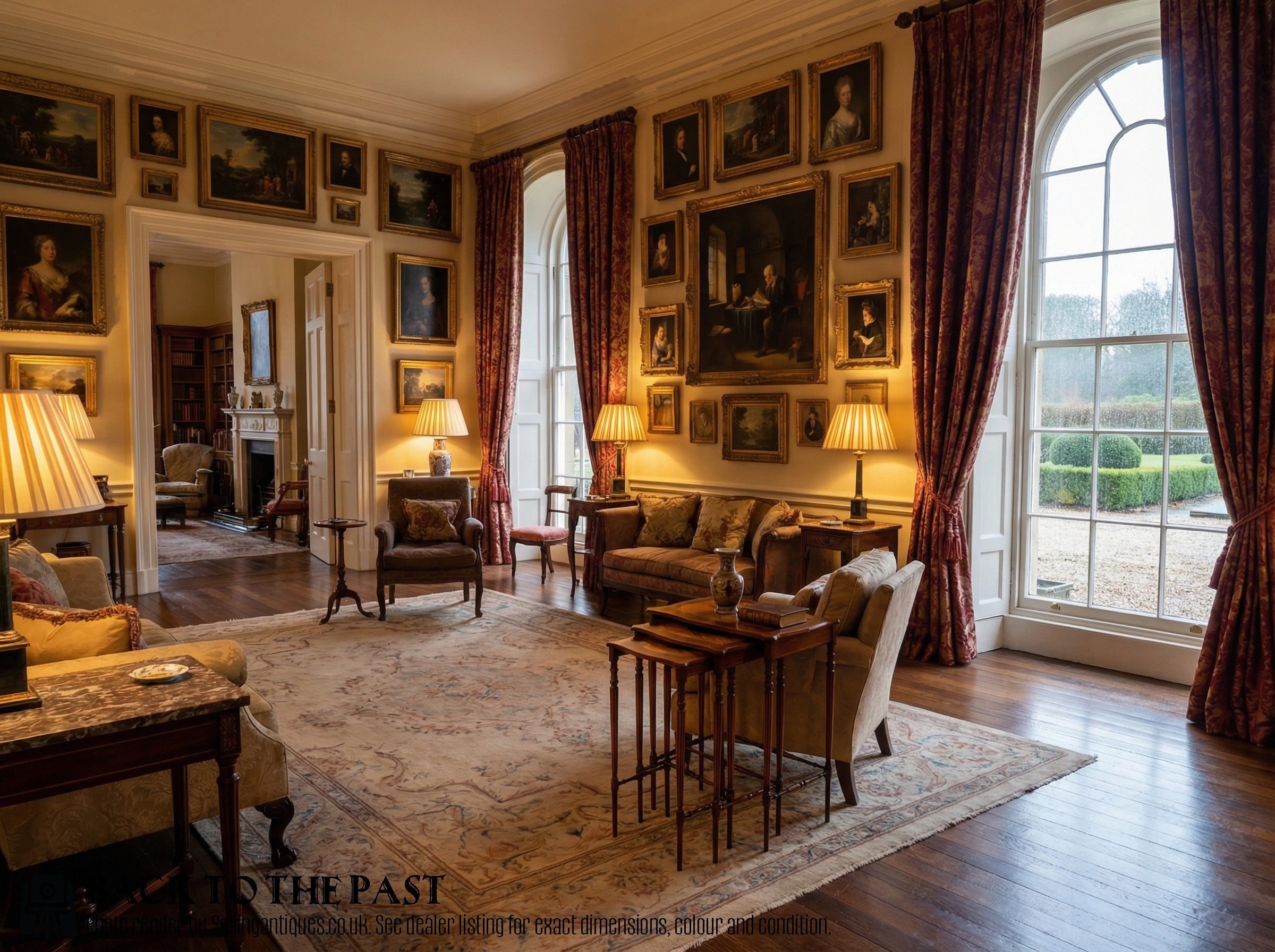
These sets served primarily for serving tea, holding books, or providing extra surface space during gatherings in parlours and drawing rooms.
Because they stack into the footprint of a single piece, owners could easily deploy them around a room as needed and stow them away afterward.
What defines a quartetto nest?
A quartetto specifically denotes a set of four graduating tables designed to slide one inside the other.
Originating strongly in the Regency period and revived during the Edwardian era, these sets represent a more substantial configuration than standard three-table groups.
How do I identify Art Deco examples?
Art Deco versions often feature geometric forms, streamlined silhouettes, and exotic timbers such as Indian rosewood or contrasting burr veneers.
Maker attributions and construction techniques characteristic of the interwar period help distinguish these from earlier revival pieces.
Are these tables suitable for daily use?
Their compact nature makes them practical for modern living spaces requiring flexible surface areas without permanent clutter.
Careful placement away from direct heat sources helps preserve the polished wood finishes and delicate veneer work.