




Art Deco Nesting Tables
Art deco nesting tables pack multiple surfaces into a single footprint, offering practical tiers of timber and glass for modern living.
Art Deco Nesting Tables
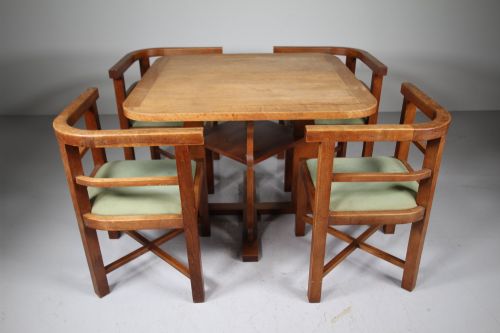
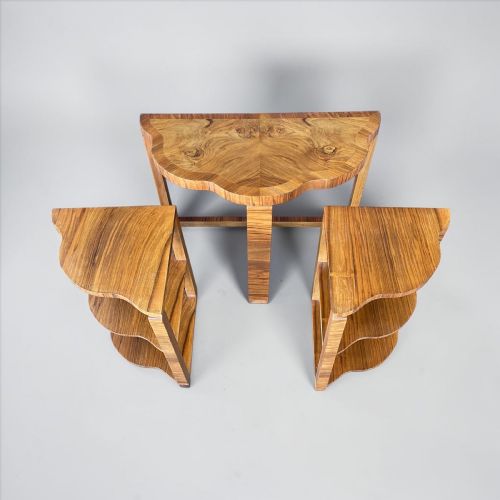
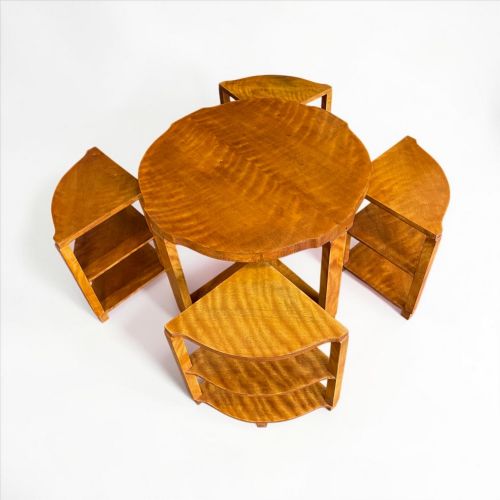
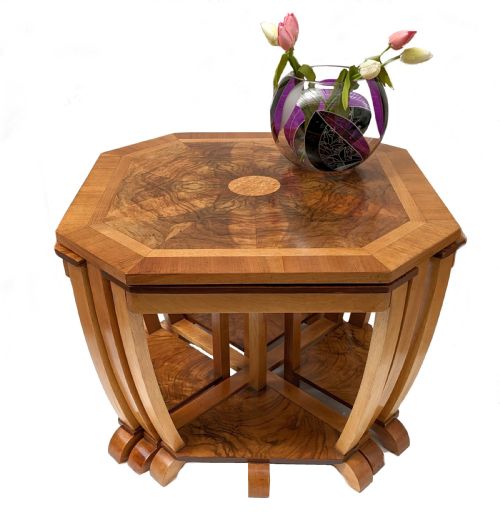
When you search for art deco nesting tables, you encounter sets of graduated tables designed to slide neatly beneath one another when not in use. These pieces appear primarily as sets of three, four, or five tables, functioning variously as coffee, side, wine, or lamp tables.
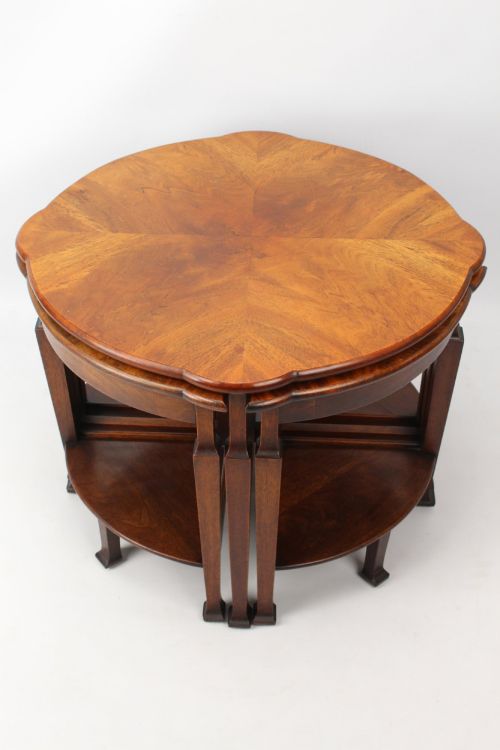
The selections on this page stem predominantly from the 1930 period, alongside examples from 1920 and 1940. Forms range from standard rectangular nests to specialised designs such as the round nest, the J nest, and the Quintetto model.
Originating largely from English workshops alongside French examples, these sets provide flexible surface area without crowding a room. Buyers most frequently meet walnut veneer versions alongside pieces utilising oak, teak, and exotic hardwoods.
How they were made
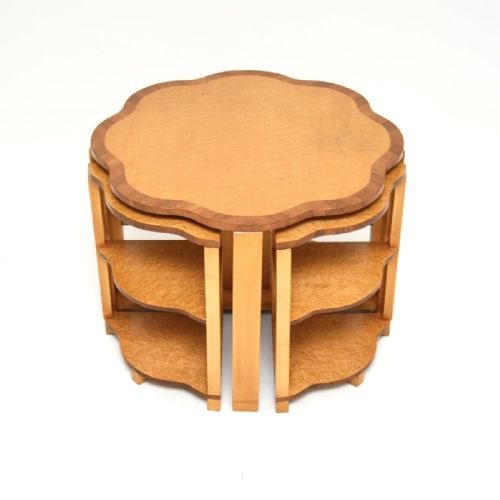
Cabinet makers constructed these tables using solid foundational timbers overlaid with decorative veneers such as walnut, burr walnut, birds eye maple, and satinwood veneer. Indian rosewood and teak also appear, occasionally featuring carved elements like elephants.
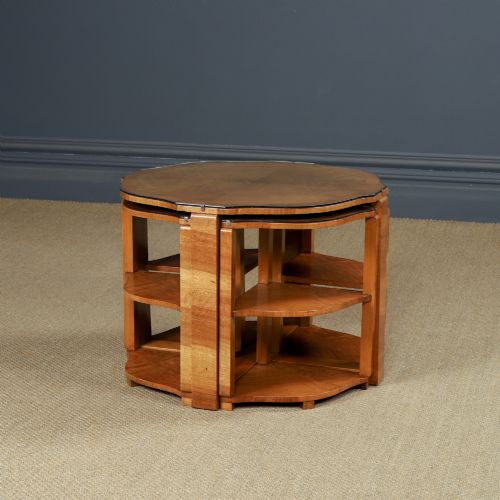
Glass panels are integrated into certain designs to create contrasting tabletops alongside the polished wood surfaces. The construction relies on precise sizing so each smaller table slides smoothly into the frame of the next.
Art Deco Nesting Tables Retail Price Guide 2026
Typical asking prices for art deco nesting tables among the pieces listed under this phrase on Sellingantiques today, from the lower quarter to the upper quarter. They describe what is for sale here now, not the wider market.
What varies in quality
The grade of timber veneer and the complexity of the set structure determine the standing of individual pieces. Sets featuring specialised configurations like the Quintetto or round nests demonstrate higher ambition than standard rectangular frames.
The reputation of the maker heavily influences the standing of a set, with pieces originating from recognised firms commanding distinct attention. The crispness of the fit when the tables slide together also marks the standard of the original craftsmanship.
Harry and Lou Epstein·The Hille Furniture Company·Heal's
The Art Deco Nesting Tables Glossary
- Nest of tables
- A group of graduated tables designed to fit closely together under the largest surface. This arrangement saves space while providing multiple accessible tabletops.
- Walnut veneer
- A thin layer of walnut timber applied over a secondary wood base. This technique allows makers to display striking grain patterns across the primary surfaces.
- Birds eye maple
- A figured timber showing small, swirling dots resembling birds eyes. It provides a pale, decorative contrast in art deco furniture.
- Quintetto
- A specific configuration comprising five tables grouped together. This form offers an expanded tiered arrangement within a compact footprint.
- Side table
- A small occasional table designed to sit beside seating. These pieces form the individual tiers within a nesting set.
Art Deco Nesting Tables: Frequently Asked Questions
How do art deco nesting tables work?
These tables are built in graduating sizes so the smaller pieces slide underneath the main table. This design allows you to store multiple surfaces in the space of one.
Users pull out the individual tables as needed for drinks, lamps, or books, then return them to the stack when floor space is required.
What woods were used for art deco nests?
Makers utilised a variety of timbers, most notably walnut and burr walnut veneer. Lighter woods like birds eye maple and satinwood veneer also appear alongside oak, teak, and Indian rosewood.
Some tabletops incorporate glass inserts to vary the texture and appearance of the set.
How many tables are in a set?
Sets typically consist of three, four, or five tables. The evidence shows numerous variations, including round nests and specialised configurations like the Quintetto.
Each table in the set is proportioned to slide precisely beneath the next largest one.
Are these tables English or French?
The listings include both English and French examples from the interwar period. English pieces often bear the marks of notable London firms and workshops.
Both origins share the characteristic geometric lines and decorative wood veneers associated with the style.