




1930s Walnut Nest Tables
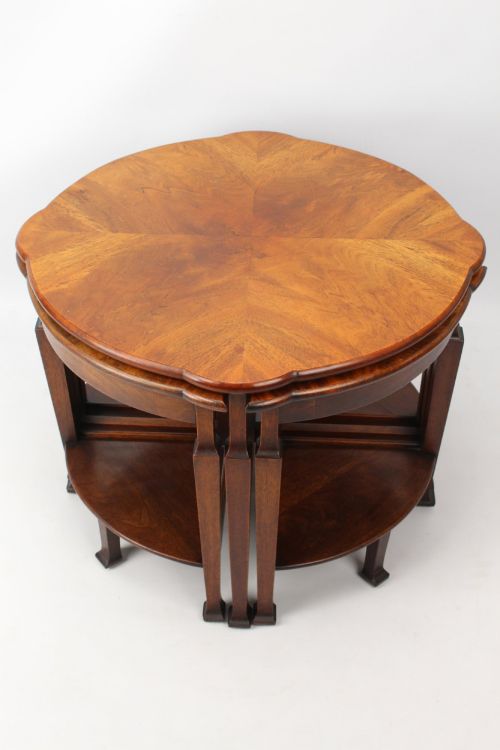
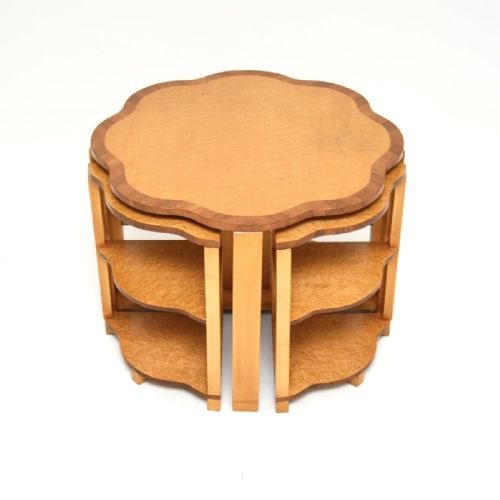
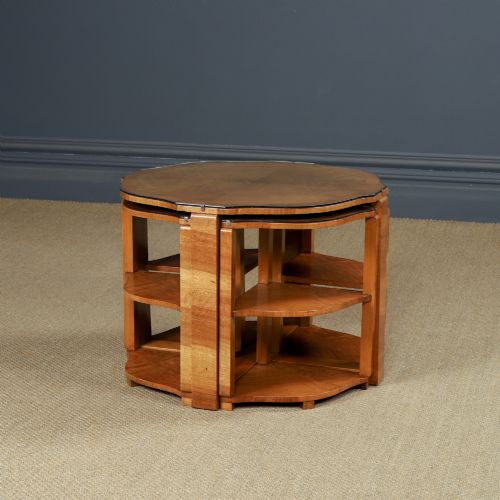
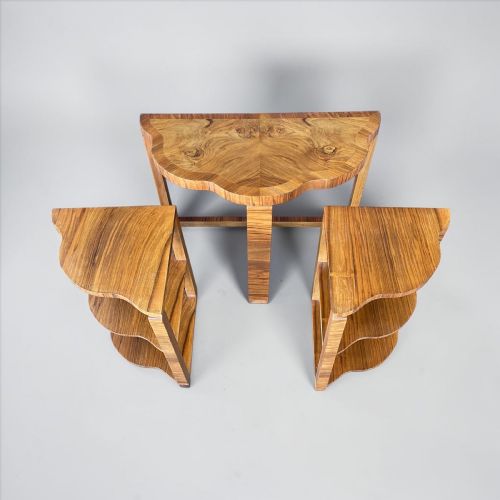
These 1930s walnut nest tables offer clever multi-tiered surface space in rich figured woods, making them a practical centrepiece for any Art Deco interior.
1930s Walnut Nest Tables
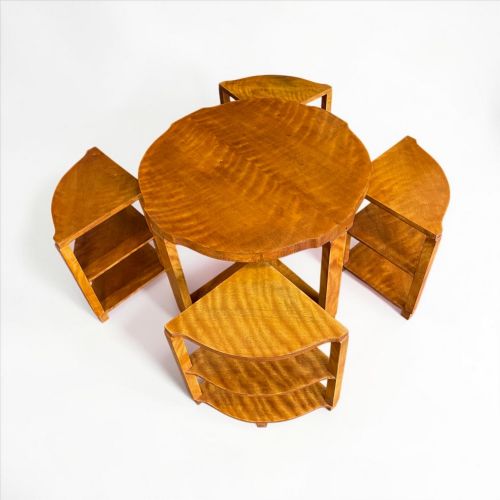
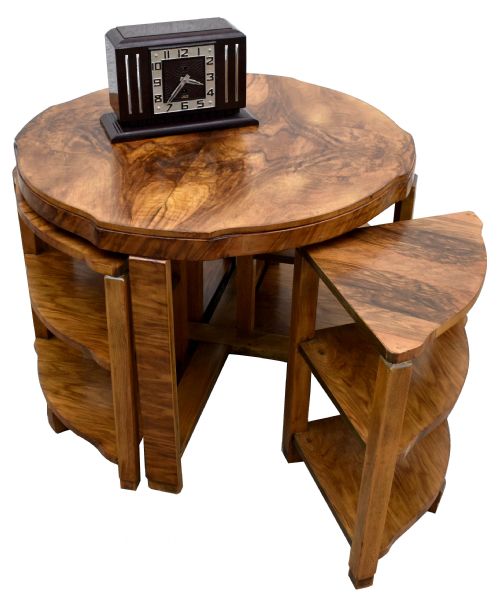
A 1930s walnut nest of tables consists of graduated small tables that slide neatly beneath one another when not in use. These pieces belong firmly to the Art Deco period, spanning the years from nineteen-thirty to nineteen-forty. Most examples found on this page take the form of nests containing three or five tables designed for coffee, side use, or lamps.
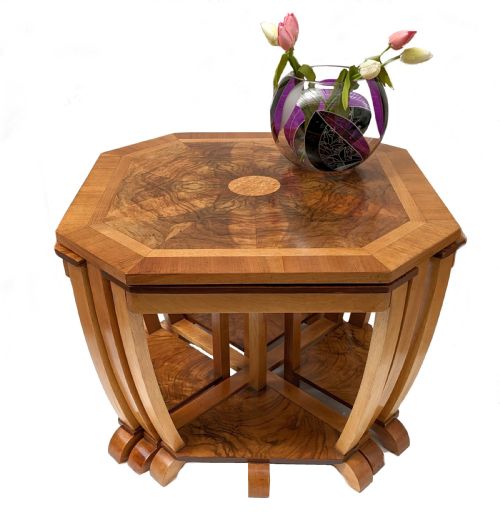
Makers and designers of the period produced variations such as round configurations and the quintetto format. Alongside plain walnut, surfaces frequently incorporate burr walnut, walnut veneer, figured wood, and contrasting satinwood veneer or birds eye maple details. Their compact stacking design provided maximum surface utility for interwar homes without cluttering the floor space.
What varies in quality
The distinction between standard production pieces and those of higher standing rests primarily on the choice of timber and the ambition of the design. Nests featuring highly figured burr walnut, birds eye maple, or satinwood veneer display superior visual depth compared to plain walnut versions. Pieces originating from known workshops command greater attention due to the sophistication of their cabinet work.
The complexity of the set also plays a role, with larger configurations like nests of five tables or round formats requiring greater joinery skill than standard three-table sets. The crispness of the Art Deco lines and the seamless fit of the stacked tiers separate ordinary utility tables from finer examples.
1930s Walnut Nest Tables Retail Price Guide 2026
Typical asking prices for 1930s walnut nest tables among the pieces listed under this phrase on Sellingantiques today, from the lower quarter to the upper quarter. They describe what is for sale here now, not the wider market.
Listings for this phrase feature walnut, burr walnut, and birds eye maple, demonstrating the preference for figured veneers during the nineteen-thirties.
Harry and Lou Epstein·Heal's·Hille
The 1930s Walnut Nest Tables Glossary
- Nest of tables
- A set of graduated small tables designed to fit one beneath another to save floor space. This form became particularly popular during the Art Deco era.
- Burr walnut
- A prized timber harvested from walnut tree growths, featuring swirling, knotty grain patterns. Cabinet makers used its decorative figure on the prominent surfaces of high-end tables.
- Veneer
- A thin slice of superior wood applied over a more stable secondary timber base. This technique allowed makers to display rich grains like walnut and satinwood efficiently.
- Quintetto
- A specific style of nesting table set comprising five pieces that stack together. This configuration offers multiple small surfaces while maintaining a compact footprint.
- Art Deco
- The dominant design style of the interwar period, characterised by sleek geometric lines, stylised motifs, and modern materials. It heavily influenced the silhouette of these tables.
1930s Walnut Nest Tables: Frequently Asked Questions
What is a quintetto nest?
A quintetto nest is a specific arrangement of five graduated tables designed to slide neatly beneath one another. This format provides maximum surface area while taking up the floor space of only a single small table.
Such sets showcase the space-saving ingenuity of nineteen-thirties furniture design. They allow users to pull out multiple resting places for drinks or books during gatherings and store them compactly afterwards.
How do I identify Art Deco tables?
Art Deco tables are characterised by clean geometric lines, streamlined silhouettes, and an emphasis on the natural pattern of wood veneers. They frequently utilise contrasting timbers like walnut, satinwood, and birds eye maple to create visual depth without heavy carving.
These pieces reflect the modern aesthetic of the nineteen-thirties, favouring functional elegance and architectural shapes. The absence of traditional Victorian ornamentation helps distinguish them from earlier styles.
Were these tables used for coffee?
These tables served multiple versatile purposes in the interwar home, functioning as lamp tables, side surfaces, and coffee tables. Their modular nature meant they could be distributed around a room as needed and gathered together when floor space was required.
The smaller tiers within a nest were particularly handy for holding cups or reading material close to seating. This multi-purpose utility made them a popular choice for urban living spaces.
How should I care for walnut veneer?
Walnut veneer requires protection from direct sunlight and excessive moisture to prevent fading and lifting of the wood surface. Regular dusting with a soft, dry cloth helps maintain the natural sheen of the figured wood without building up residue.
Avoiding placement near heat sources keeps the underlying timber stable and preserves the integrity of the joints. Gentle treatment ensures the decorative grain patterns remain vivid for years to come.