


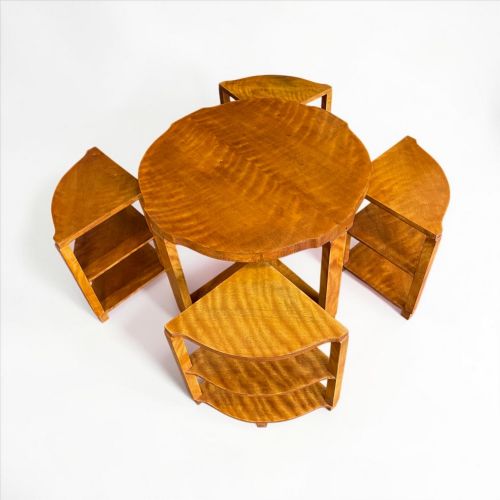


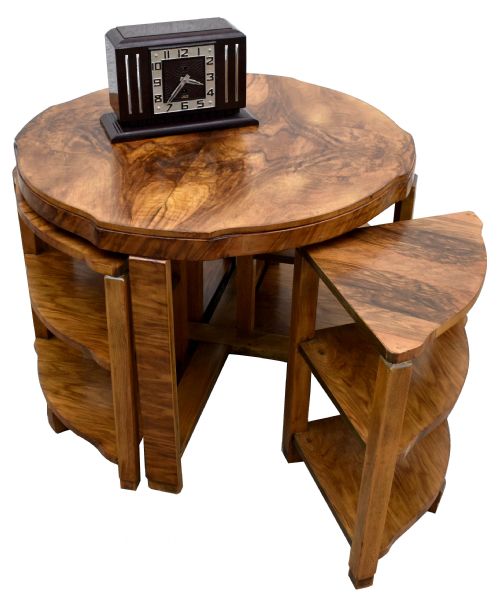

Circular Nest of Tables
A circular nest of tables offers clever tiered storage with classic style, bringing stepped wooden surfaces together in a compact footprint.
Circular Nest of Tables
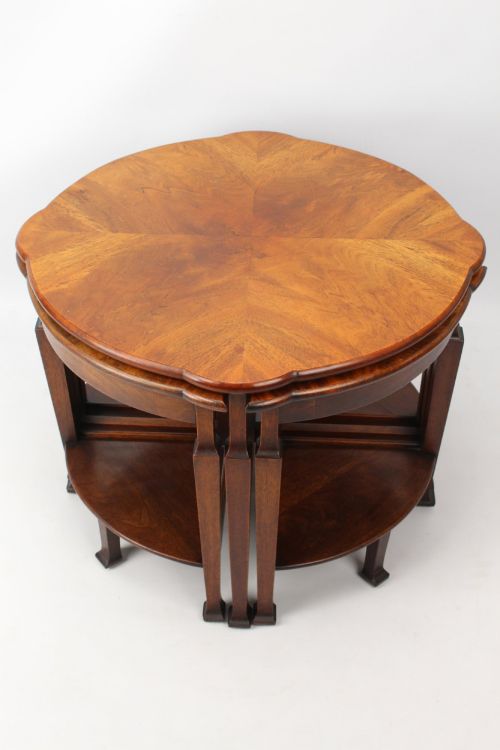
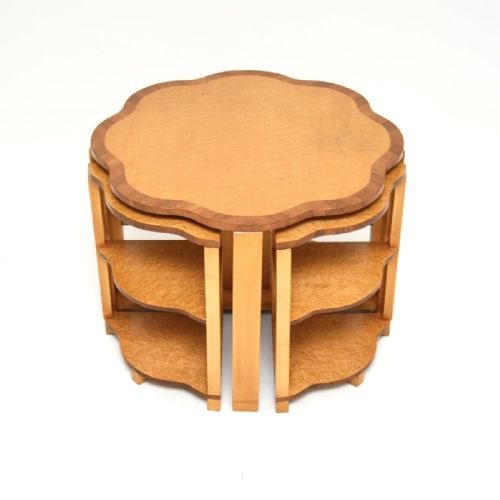
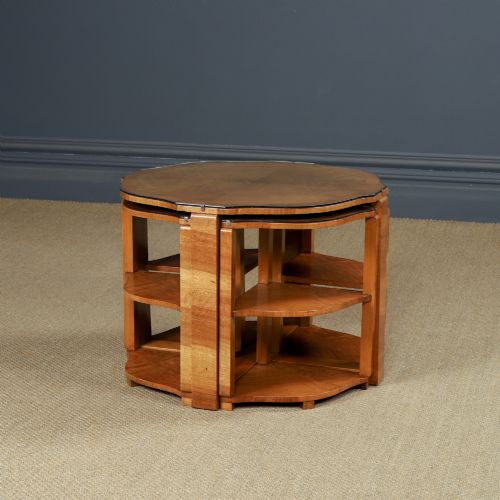
A circular nest of tables provides multiple round surfaces that slide neatly beneath one another when floor space is at a premium. These pieces appear primarily in Edwardian and Art Deco designs, dating from the early twentieth century around nineteen twenty to nineteen forty. The listings feature round configurations holding four or five smaller tables tucked beneath a larger top.
Most examples found here present classic timber builds from periods such as the Edwardian era and the nineteen thirties. Makers like Harry and Lou Epstein produced striking Art Deco variants using exotic veneers. Buyers encounter these versatile nesting tables functioning as coffee, side, wine, or lamp surfaces across living spaces.
How They Were Made
Cabinet makers utilised select timbers including walnut, burr walnut, mahogany, birds eye maple, and satinwood veneer over solid wood carcases. Figured wood accents brought striking natural patterns to the rounded table tops, often finished to a high sheen. Glass tops occasionally protected these delicate veneered surfaces from daily wear.
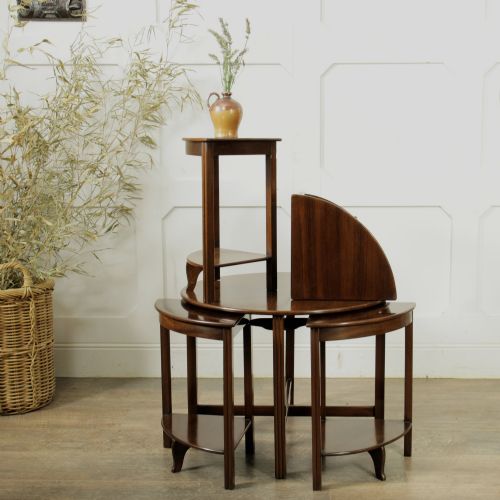
Joinery techniques focused on creating graduated frames that followed precise curves to allow smooth stacking. Artisans shaped each tier to fit flush within its neighbour, ensuring stability whether nested or arranged separately around a room.
Circular Nest of Tables Retail Price Guide 2026
Typical asking prices for circular nest of tables among the pieces listed under this phrase on Sellingantiques today, from the lower quarter to the upper quarter. They describe what is for sale here now, not the wider market.
Five tiny tables hiding under one big hat like wooden Russian dolls.
What Varies in Quality
Quality rests upon the choice of timber veneer and the precision of the curved joinery. Finer pieces display matched burr walnut or birds eye maple grains that flow continuously across the nested surfaces when stacked together.
Attribution to prominent makers like Harry and Lou Epstein elevates an Art Deco piece above standard commercial production. Heavier timber gauges and robust underframe construction distinguish superior Edwardian sets from simpler twentieth century alternatives.
Harry and Lou Epstein
The Circular Nest of Tables Glossary
- Burr walnut
- A highly figured wood veneer taken from the growth excrescences on walnut trees. It creates rich swirling patterns highly prized in twentieth century furniture design.
- Birds eye maple
- A figured timber showing small characteristic dots resembling tiny bird eyes within the grain. Cabinet makers utilised this decorative wood extensively during the Art Deco period.
- Nesting tables
- A set of graduated tables designed to fit one beneath another to save floor space. Edwardian and Art Deco examples frequently employ circular formats for this arrangement.
- Satinwood veneer
- A thin decorative layer of pale yellow timber applied to furniture surfaces. It provides a luminous contrast against darker woods in inlaid borders.
Circular Nest of Tables: Frequently Asked Questions
What periods do these circular nests date from?
The available pieces span from the Edwardian era through the nineteen twenties, nineteen thirties, and nineteen forties.
Art Deco designs from nineteen thirty dominate the selection alongside traditional Edwardian mahogany sets.
How many tables are typically in a set?
These circular nests most commonly comprise four or five individual tables.
Some configurations provide three round tiers, all designed to tuck compactly beneath the largest primary top.
What woods were used for these tables?
Cabinet makers built these sets using walnut, burr walnut, mahogany, birds eye maple, and satinwood veneer.
Figured wood varieties added decorative visual movement to the circular surfaces.
How were these tables used originally?
Households utilised them as versatile lamp, wine, coffee, or side tables in principal rooms.
The smaller tiers could be pulled out separately to serve guests before sliding neatly away.