


Georgian Style Nesting Tables
Georgian style nesting tables bring versatile surfaces into a room without clutter, stacked discreetly until you need them.
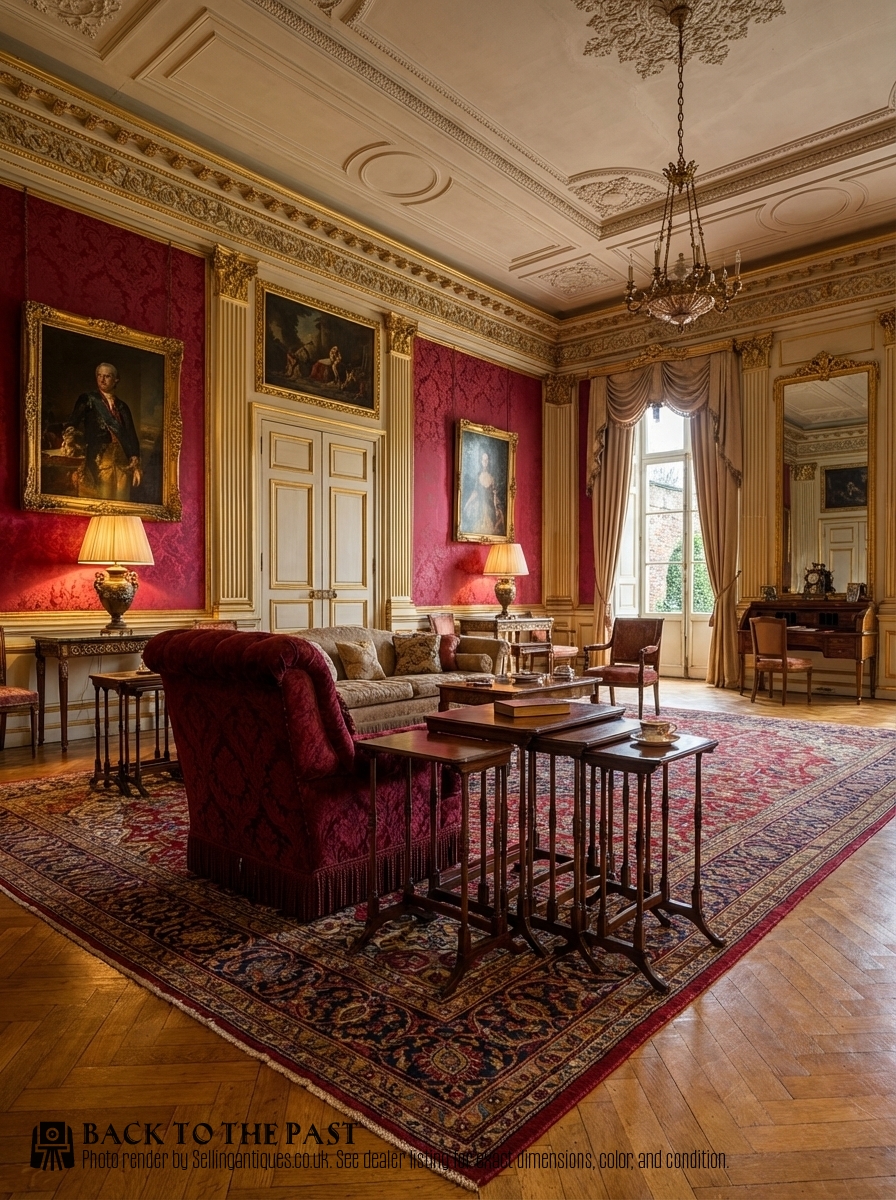
What Georgian style nesting tables are
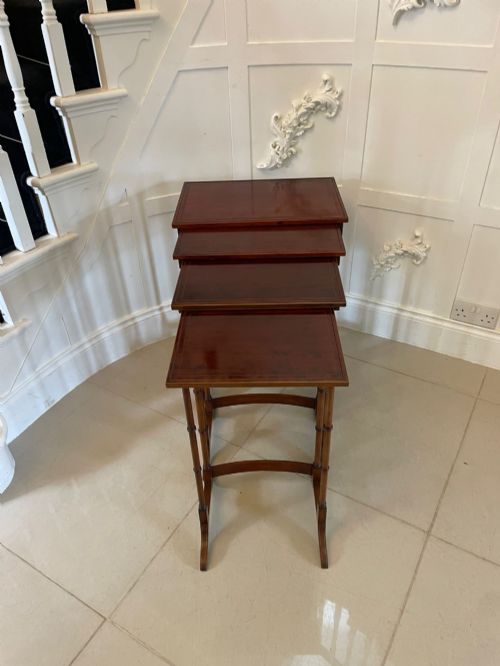
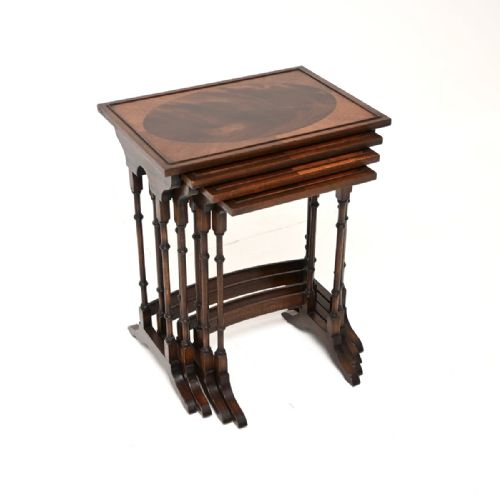
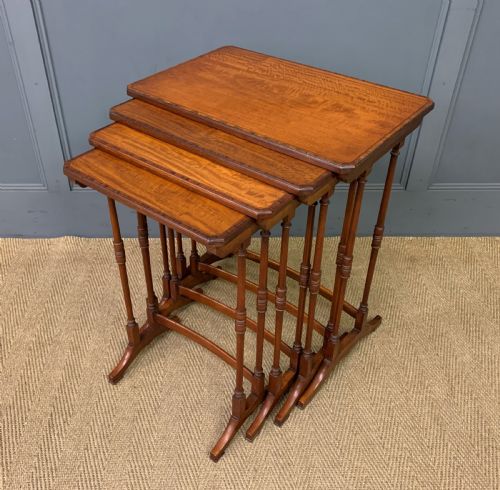
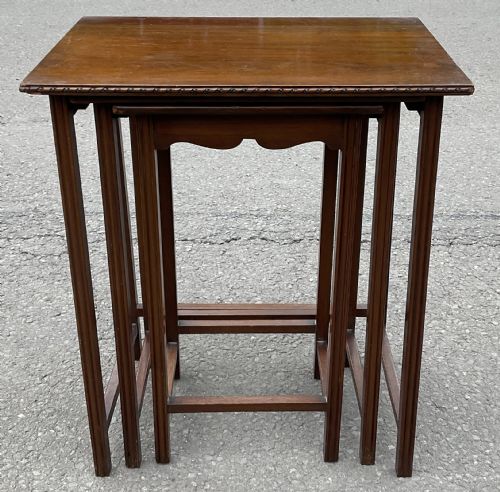
When you search for Georgian style nesting tables, you encounter matching sets of graduating tables designed to slide neatly beneath one another. These pieces emerge in materials like mahogany, yew, burr walnut, walnut, wood, and satinwood.
The selections here span the nineteenth century, the Edwardian era, and the nineteen-twenties, incorporating Edwardian, Regency, Queen Anne style, and Georgian revival aesthetics. Sets typically comprise groups of three, four, or five graduating tables.
You are most likely to meet mahogany versions from the Edwardian period or the early twentieth century on this page. These often feature inlaid details or contrasting veneer tops such as yew.
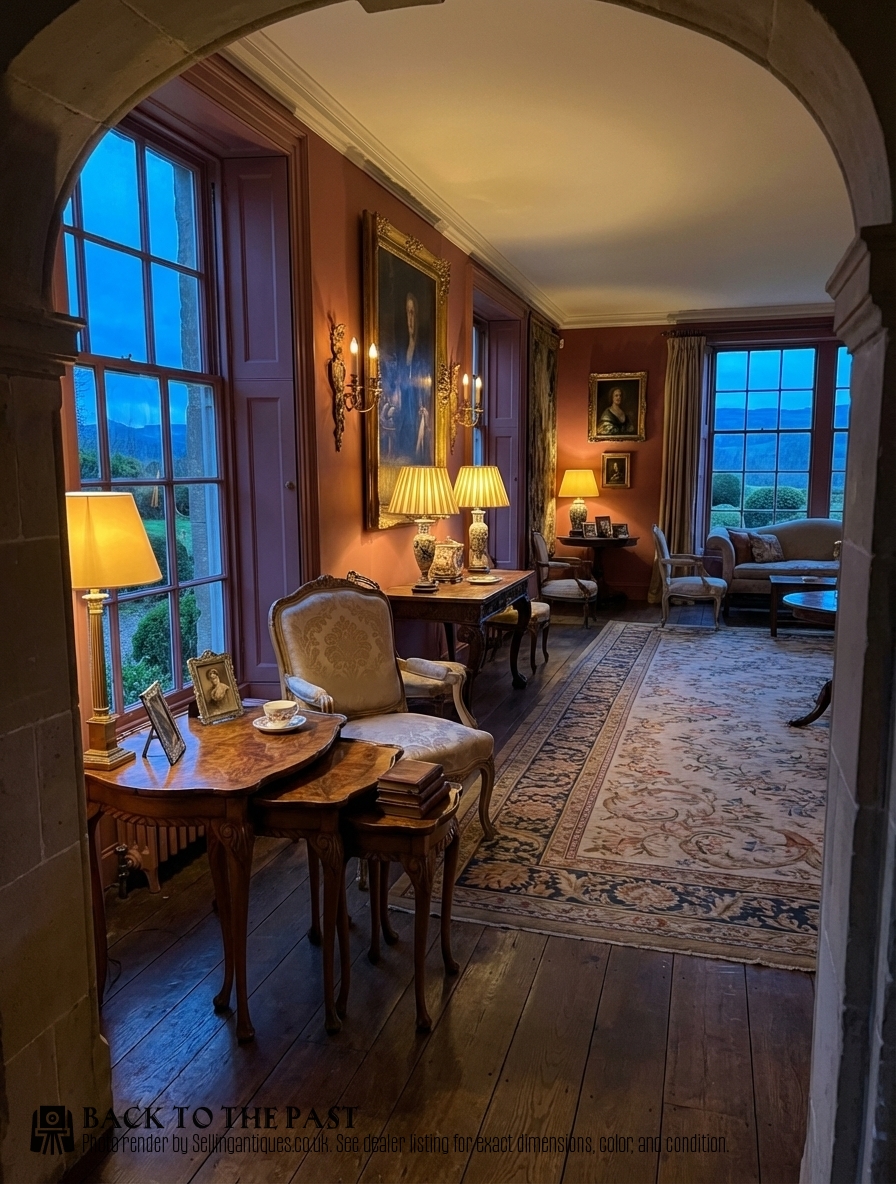
How they were made
Cabinetmakers constructed these tables using solid timbers and decorative veneers applied to secondary woods. The evidence records prominent use of mahogany alongside burr walnut, yew, and satinwood for visual contrast on the tops.
Joining techniques and surface treatments reflect the Edwardian and early twentieth-century periods in which many of these sets were produced. Inlaid decoration appears on specific coffee table forms to enhance the timber grain.
Retail Price Guide 2026
Typical UK retail prices for georgian style nesting tables, calculated from the Sellingantiques database of over a million retail prices indexed since 2003. This retail price guide relies exclusively on Sellingantiques data; no external sources or auction records are used, so the figures do not describe the wider market.
Listings feature mahogany, yew, burr walnut, walnut, wood, and satinwood across the nineteenth century, Edwardian era, and nineteen-twenties.
What varies in quality
The hierarchy of these sets rests upon the choice of timber and the precision of the cabinetwork. Finer examples employ striking veneers such as burr walnut or yew on the upper surfaces, paired with select mahogany frames.
Construction rigidity and the smoothness of the sliding action define the better pieces. Tables that fit together snugly without undue friction demonstrate superior workshop execution.
Waring & Gillow
The Georgian Style Nesting Tables Glossary
- Nest of tables
- A set of graduated tables designed to fit one beneath another to save floor space. They function individually as tea or coffee surfaces.
- Veneer
- A thin layer of decorative wood applied to a base timber to provide a figured surface. Burr walnut and yew commonly appear in this form.
- Edwardian
- Dating from the reign of King Edward VII, this period favoured lighter furniture forms and revivals of earlier eighteenth-century aesthetics.
- Regency
- An English design style spanning the early nineteenth century, noted for classical restraint and clean geometric lines.
- Inlay
- A technique where contrasting materials are set into the surface wood to create decorative patterns, often seen on Edwardian coffee tables.
Frequently Asked Questions
What is a nest of tables?
A nest of tables consists of a set of graduating occasional surfaces that slide neatly underneath the largest table. This design provides extra table space for drinks or books while occupying a minimal floor footprint.
Historically utilised in drawing rooms and parlours, these sets combine practical utility with decorative cabinetmaking across various historical periods.
How do I date a set?
Dating relies on identifying the timber selection, construction methods, and stylistic markers present in the pieces. Edwardian sets often exhibit lighter framing and specific inlay work compared to nineteenth-century examples.
Examining the underside and secondary woods further clarifies the manufacturing era of the set.
How were they used?
These tables served primarily for serving afternoon tea, holding reading material, or displaying decorative objects in domestic interiors. Owners deployed individual tables as guests arrived and stacked them away afterward.
Their modular nature made them adaptable furniture for entertaining in smaller spaces.
Are they sturdy?
Sturdiness depends on the joinery quality and the condition of the individual frames. Well-constructed sets maintain stability across all graduating sizes despite their slender proportions.
Heavier timbers like mahogany and walnut provide a solid foundation for daily use.