

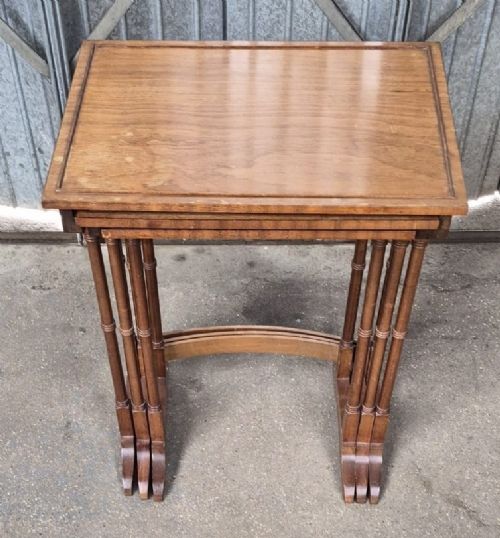
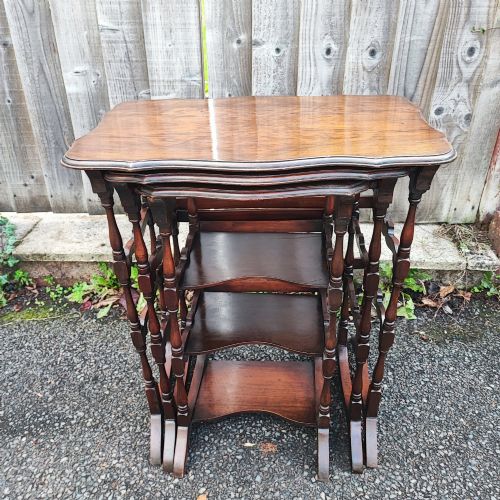
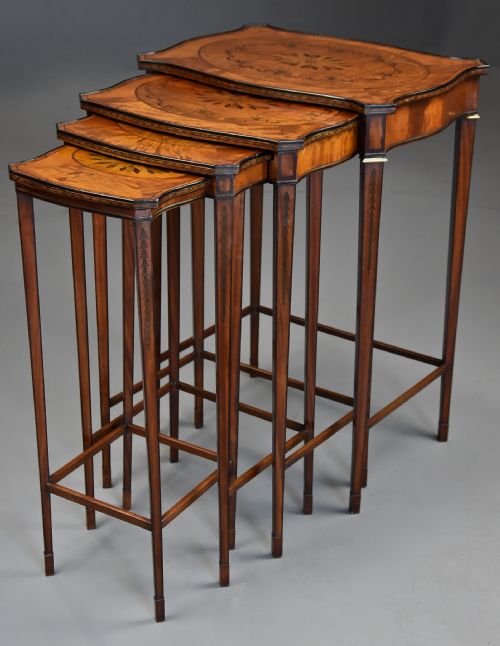
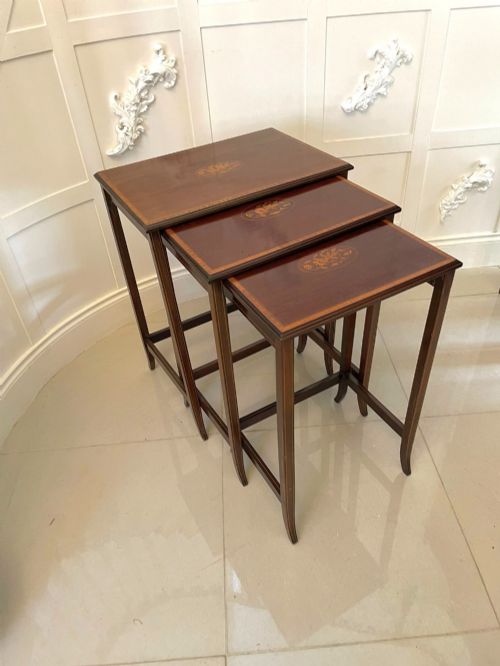




Brown Wooden Nesting Tables
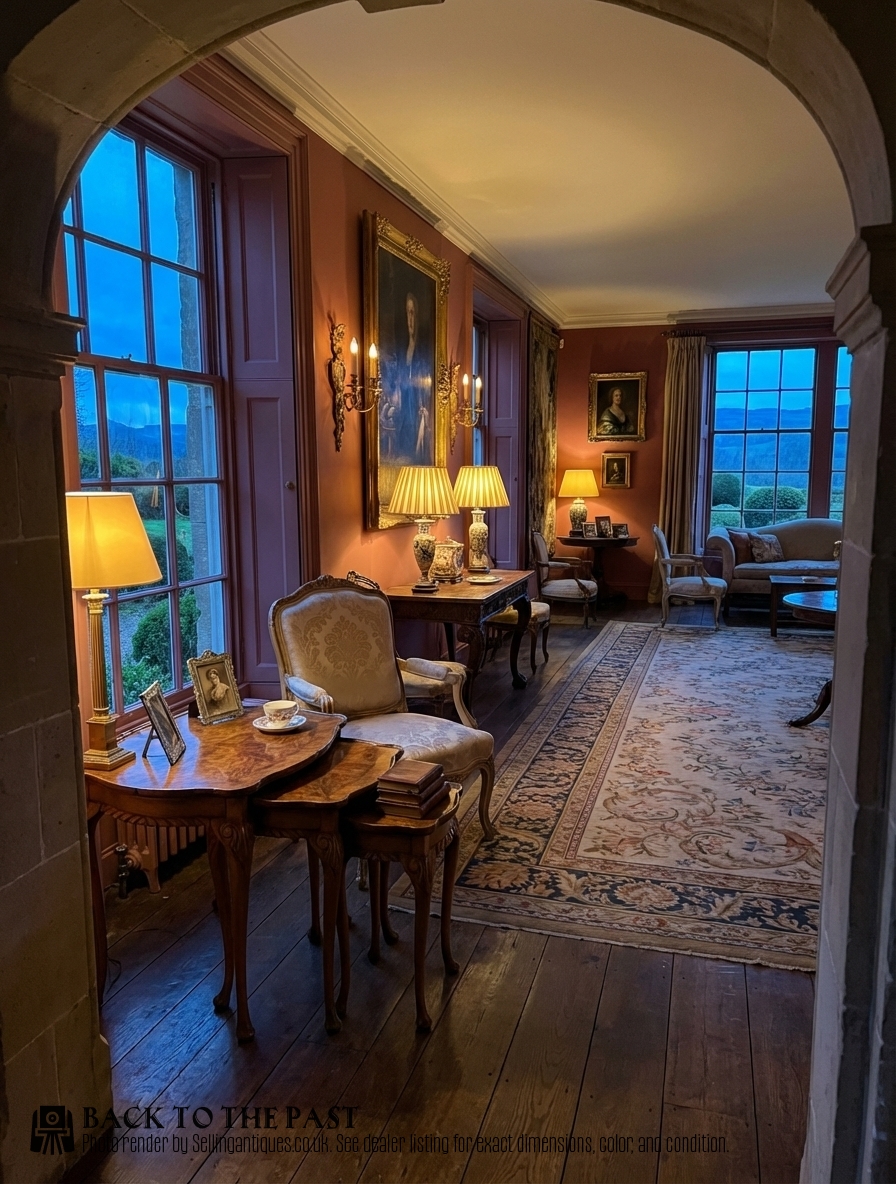
Brown wooden nesting tables deliver tiered utility through graduated surfaces sliding neatly together when floor space matters.
Brown Wooden Nesting Tables
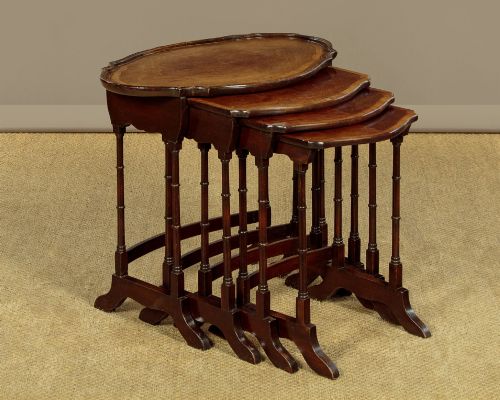
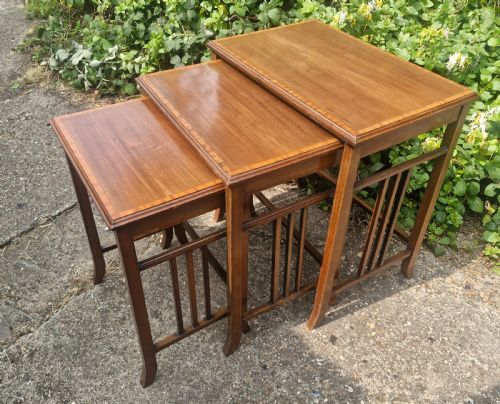
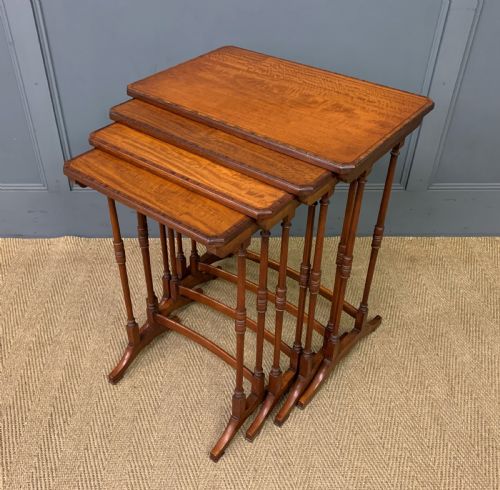
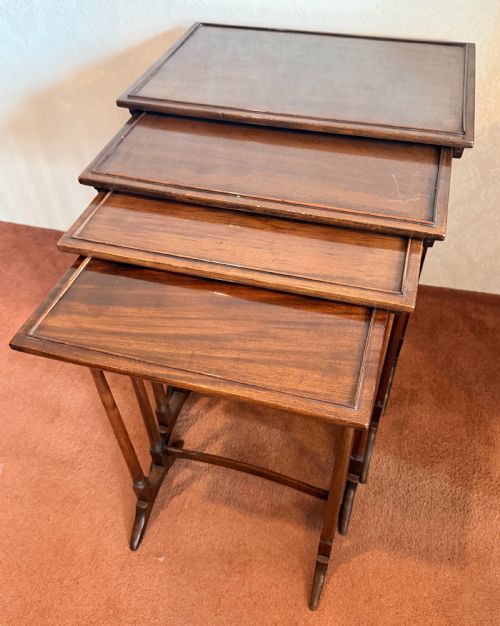
Brown wooden nesting tables appear primarily as sets of three or four occasional surfaces, frequently known historically as quartetto tables, designed to slide one beneath another. Buyers encounter these most often in Edwardian mahogany and satinwood incarnations, alongside nineteenth-century examples and twentieth-century walnut or teak variations.
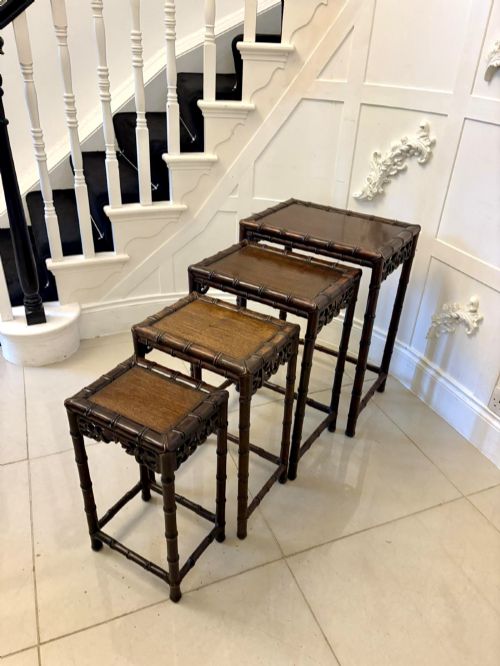
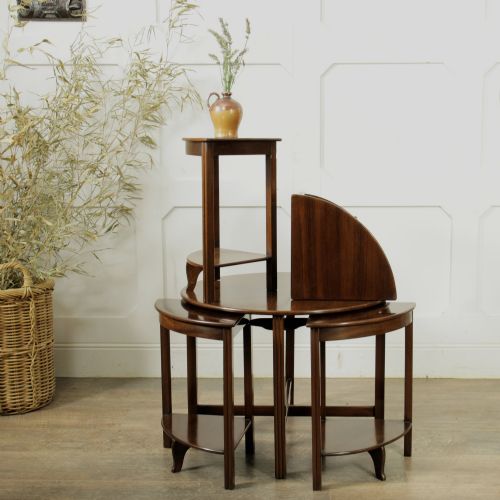
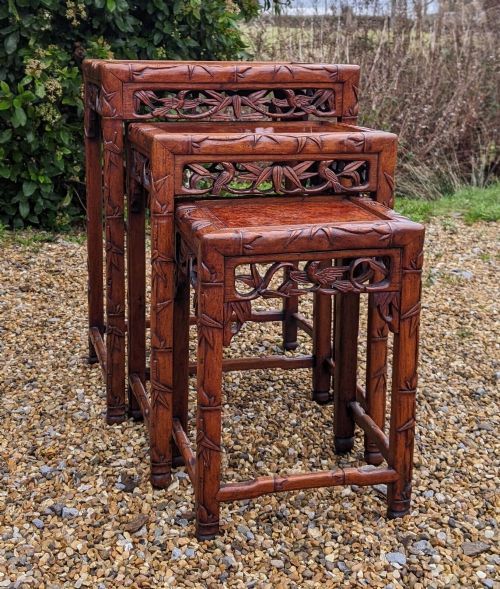
The physical form spans simple rectangular coffee table formats, circular five-tier arrangements, and serpentine silhouettes influenced by Sheraton designs. Origins range from British domestic workshops to Chinese export studios utilising huanghuali or carved faux bamboo.
Period examples stretch from late Victorian iterations through nineteen-thirty Art Deco sets, offering flexible surfaces that function independently across a room before consolidating into a single compact footprint.
Materials and construction methods
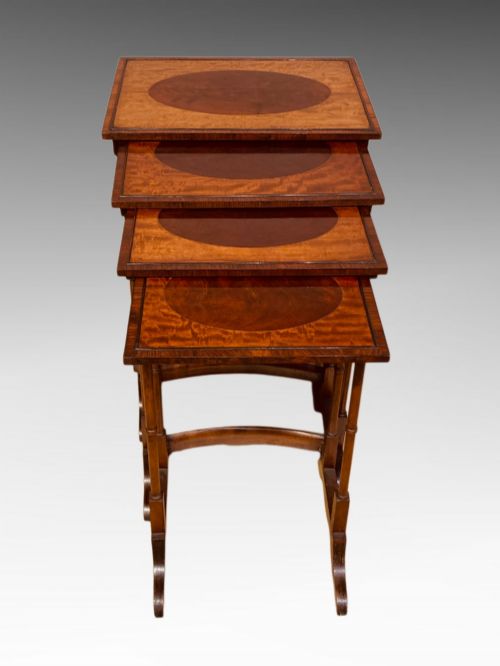
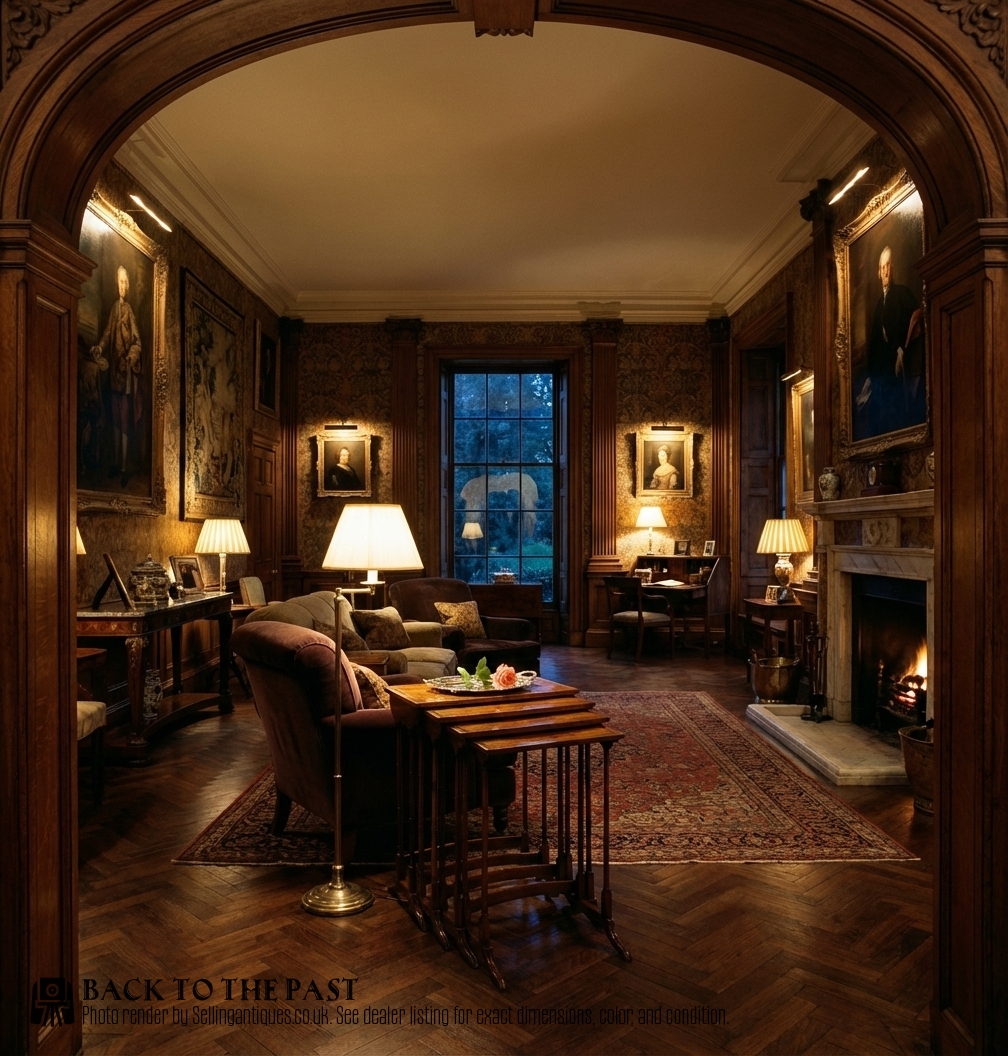
Cabinetmakers constructed brown wooden nesting tables using solid timbers and veneered surfaces over hardwood carcases, relying predominantly on mahogany, walnut, oak, and satinwood. Finer pieces incorporate contrasting stringing, boxwood or satinwood inlay, brass mounts, and embossed leather top inserts.
Structural integrity relied on slender turned or column supports joined by stable feet, allowing smaller tables to clear the aprons of the larger frames above them. Marquetry, hand-carved elements such as elephants or faux bamboo, and contrasting yew veneer tops demonstrate the varied surface techniques applied across different eras.
Brown Wooden Nesting Tables Retail Price Guide 2026
Typical asking prices for brown wooden nesting tables among the pieces listed under this phrase on Sellingantiques today, from the lower quarter to the upper quarter. They describe what is for sale here now, not the wider market.
Listings feature woods including mahogany, satinwood, walnut, oak, teak, and huanghuali across periods spanning the Victorian era through Art Deco.
Distinctions in craftsmanship and design
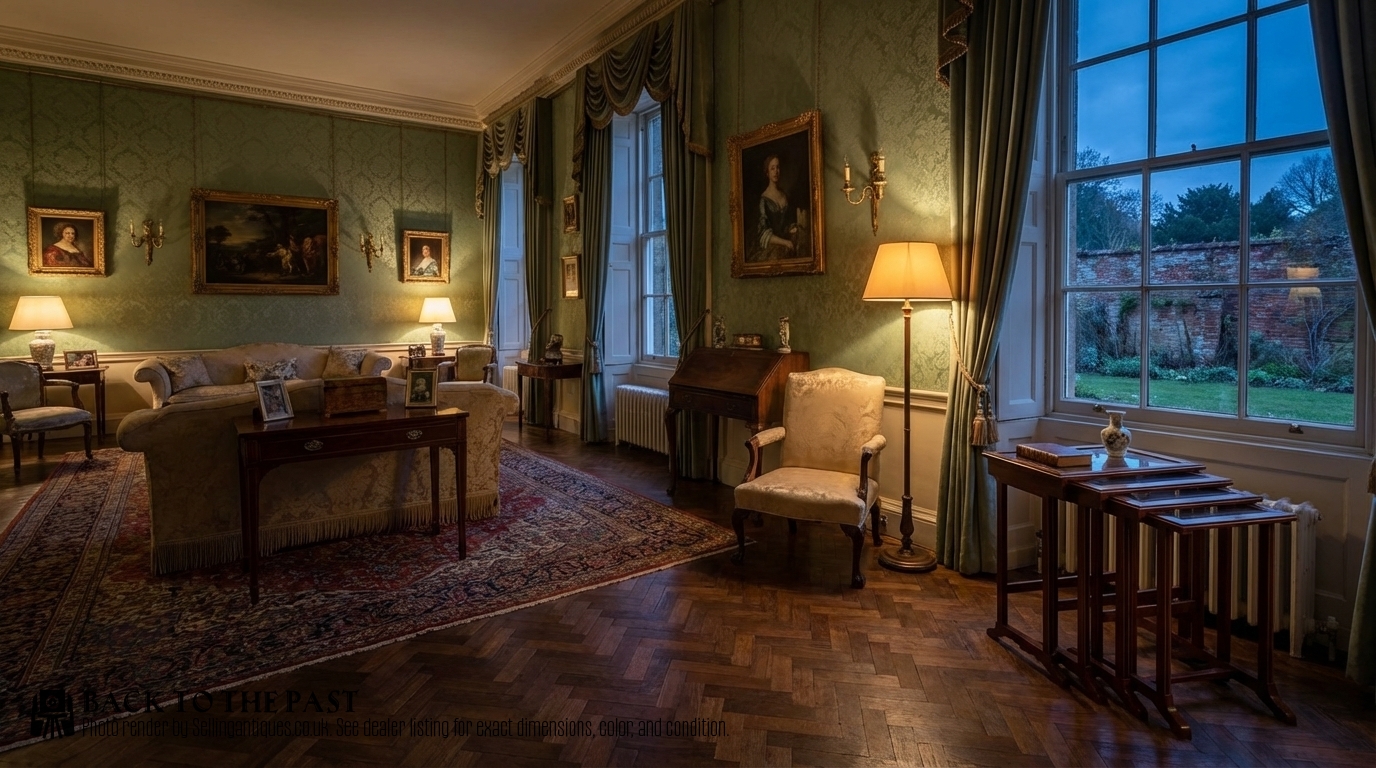
Quality in brown wooden nesting tables rests upon the precision of the graduated sizing and the smoothness with which each table glides into its neighbour without binding. Superior sets maintain structural rigidity across all frames despite the slender dimensions required for the nesting mechanism.
The choice of timber and secondary decoration dictates the upper tier of the range, distinguishing simple utility pieces from those featuring fine satinwood inlay, exceptional grain figure, or attributed workshop origin.
Heal's·Gillows
The Brown Wooden Nesting Tables Glossary
- Quartetto tables
- A matching set of four graduated occasional tables designed to slide together. This term appears frequently in nineteenth-century and Edwardian cataloguing.
- Inlay
- A decorative technique where contrasting materials such as satinwood or boxwood are inserted into recesses within the primary wood surface. It defines much of the Edwardian output.
- Marquetry
- The art of applying veneer pieces in decorative patterns to form pictorial or geometric designs. This technique marks high-status Victorian pieces such as Killarney ware.
Brown Wooden Nesting Tables: Frequently Asked Questions
How were brown wooden nesting tables used historically?
These sets served nineteenth-century and Edwardian drawing rooms by providing extra temporary surfaces for tea, writing, or needlework without permanently cluttering the floor.
Servants or hosts pulled out the graduated tables as needed and slid them back into a single compact stack once guests departed.
How do I distinguish Edwardian sets from nineteenth-century ones?
Edwardian examples tend to feature lighter satinwood inlay, slender legs, and Sheraton revival proportions. Earlier nineteenth-century sets often display heavier mahogany construction or deeper walnut tones.
Examining the underside, timber shrinkage, and secondary wood choices helps clarify the manufacturing period.
Can these tables support everyday modern weight?
Most sets were engineered for light occasional use rather than heavy daily loading. The smaller tiers possess delicate frames that suit drinks, books, or lamps rather than heavy objects.
Placing them on level flooring prevents undue strain on the joints where the legs meet the tabletop.
What is a quartetto set?
A quartetto set specifically designates four tables built to graduate in height and width so they nest completely beneath the largest main table. The term derives from musical quartets and gained popularity during the Victorian and Edwardian periods.
Finding all four original tiers together indicates a complete surviving ensemble.