




Traditional Nest of Tables
A traditional nest of tables offers clever space-saving utility through graduated tiers that slide neatly together when floor space matters.
Traditional Nest of Tables
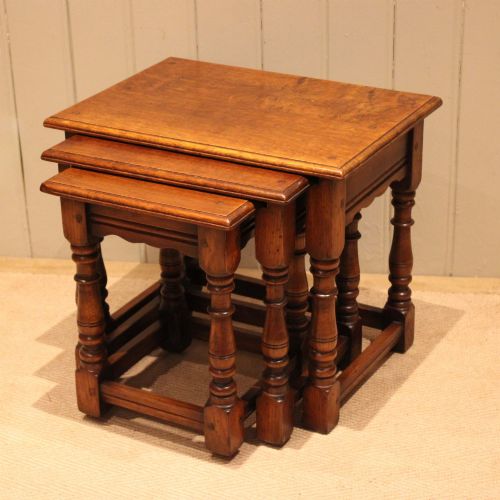
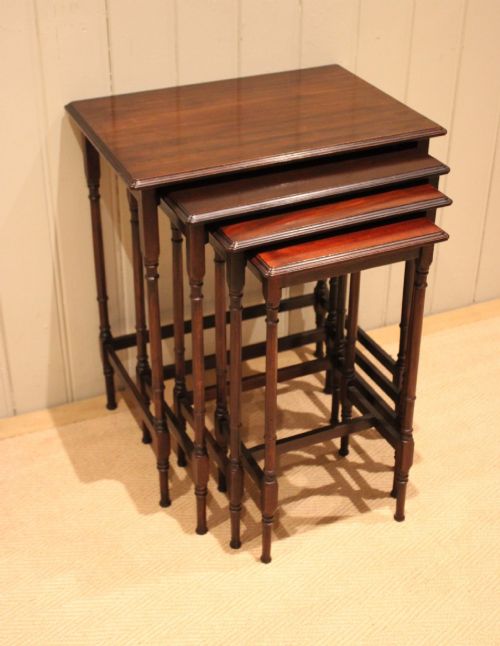
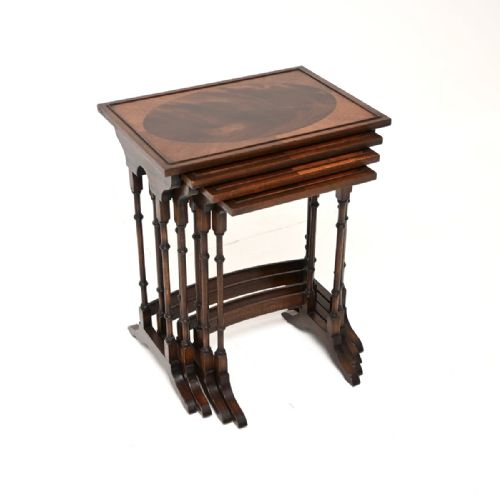
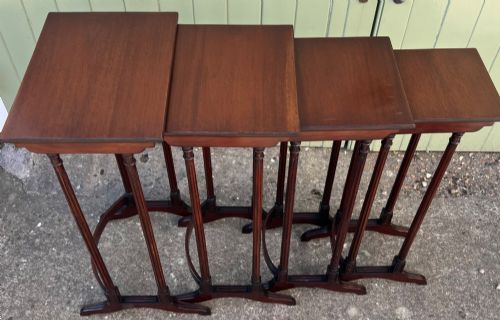
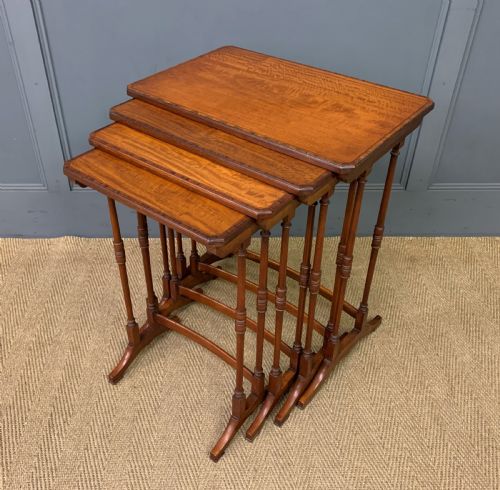
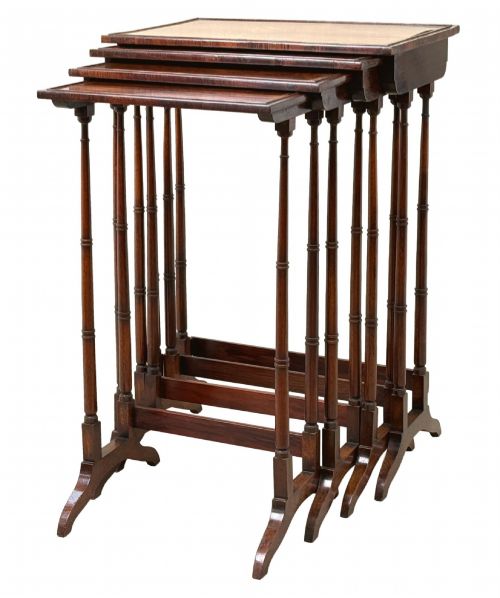
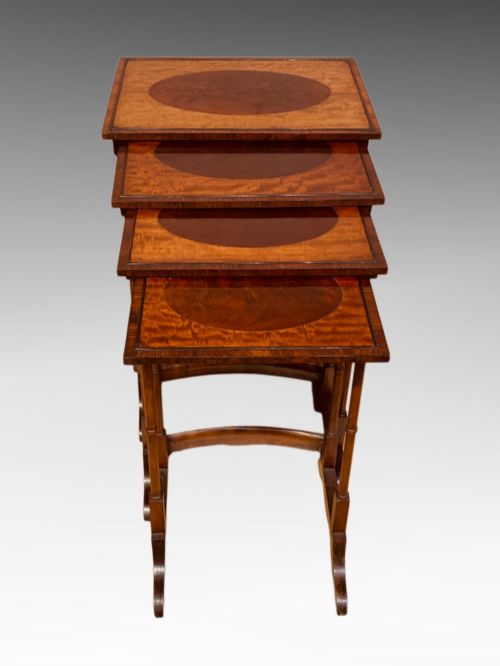
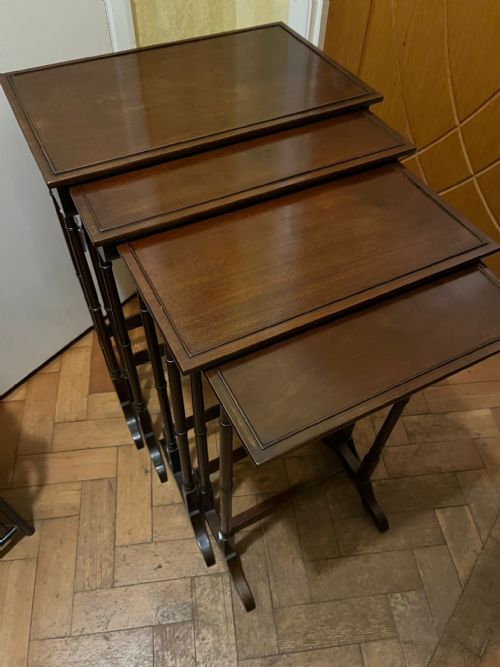
A traditional nest of tables comprises a set of graduated pieces designed to stack beneath one another into the footprint of the largest single surface. This category spans sets of three or four tables, alongside related forms such as quartetto sets and occasional coffee tables.
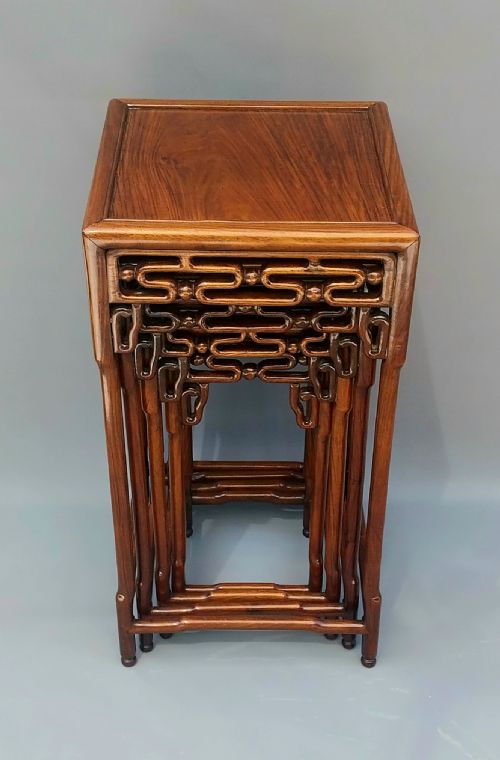
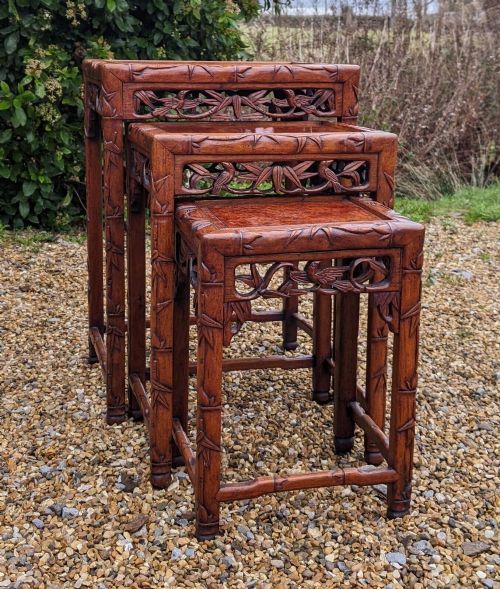
The selections on this page run from the nineteenth century through the Edwardian period and into the nineteen-twenties and thirties. Buyers encounter English iterations in mahogany, oak, and walnut, alongside Chinese export rosewood, huanghuali, and hongmu examples.
Stylistic influences range from straightforward Edwardian and Victorian designs to Georgian style, Queen Anne style Chinoiserie, and Jacobean Revival. These pieces function equally as bedside surfaces, tea tables, or flexible living room furniture.
How they were made
Cabinetmakers constructed these sets using timbers like mahogany, walnut, oak, satinwood, and rosewood, frequently applying decorative veneers or timber inlays to enhance the visual grain. Hardwoods provide the structural strength needed to support repeated daily withdrawal and stacking.
Construction techniques involve tightly joined frames and shaped tops, with specific examples featuring specialised elements like barley twist legs or lacquer finishes. Chinese export pieces demonstrate skilled carving in traditional hardwoods such as hongmu and huanghuali.
Traditional Nest of Tables Retail Price Guide 2026
Typical asking prices for traditional nest of tables among the pieces listed under this phrase on Sellingantiques today, from the lower quarter to the upper quarter. They describe what is for sale here now, not the wider market.
One set even includes seven lacquer sake cups, proving that nesting principles occasionally stray far beyond conventional furniture.
What varies in quality
Quality reveals itself in the crispness of the timber grain, the depth of colour in polished surfaces, and the precision of any inlay work or parquetry. Superior sets display carefully selected figured mahogany or exotic rosewood with rich natural variation.
The underlying joinery determines how smoothly the graduated tables slide into one another and whether the frames maintain structural integrity over decades of use. Finer examples balance delicate proportions with sturdy construction across every tier in the set.
The Traditional Nest of Tables Glossary
- Quartetto
- A set of four matching occasional tables designed to nest together. This term appears frequently on nineteenth-century and Edwardian pieces.
- Hongmu
- A traditional Chinese term for dense, heavy hardwoods used in fine Asian furniture. It translates directly to red wood.
- Parquetry
- A geometric mosaic of wood pieces used for decorative inlay on tabletops. This technique creates intricate patterned surfaces across the wood.
- Chinoiserie
- European decorative style reflecting Chinese artistic influences. It often appears on Queen Anne style furniture through lacquered or painted motifs.
Traditional Nest of Tables: Frequently Asked Questions
How do I use a nest of tables?
These tables sit stacked together as a single compact unit until you need extra surface area. You simply pull out the individual tiers to hold drinks, books, or lamps around a room.
When guests depart or you require more floor space, the smaller tables slide back underneath the largest top in strict graduated order. This makes them practical for smaller rooms or versatile living spaces.
What periods do these tables come from?
The available pieces span the nineteenth century, the Victorian era, the Edwardian period, and into the nineteen-twenties and thirties. Styles range from plain oak and mahogany designs to decorative Chinese export pieces from the eighteen-eighties onward.
Earlier nineteenth-century versions often carry the quartetto label, while later Edwardian and nineteen-twenties examples frequently feature inlaid satinwood or walnut construction. Revival styles mimicking Georgian and Queen Anne aesthetics also appear across these decades.
Are Chinese export nests different from English ones?
Chinese export nests utilise distinct dense hardwoods like rosewood, hongmu, and huanghuali rather than standard European timbers such as oak or mahogany. They often feature intricate carved detailing or polished lacquer surfaces distinct from British cabinetmaking traditions.
Both traditions, however, share the core mechanical principle of graduated sizes designed to stack within a single compact footprint. The choice between them depends purely on whether you prefer carved oriental hardwoods or polished British veneer.
How do I tell Edwardian sets from Victorian ones?
Victorian examples generally rely on solid figured mahogany with heavier proportions and straightforward structural framing. Edwardian pieces often introduce lighter satinwood inlays, delicate stringing, and more refined, slender legs.
Examining the underside, the joinery methods, and the timber selection helps clarify the manufacturing era. Both periods maintained high standards of cabinetmaking, but Edwardian furniture typically favours lighter visual grace.