
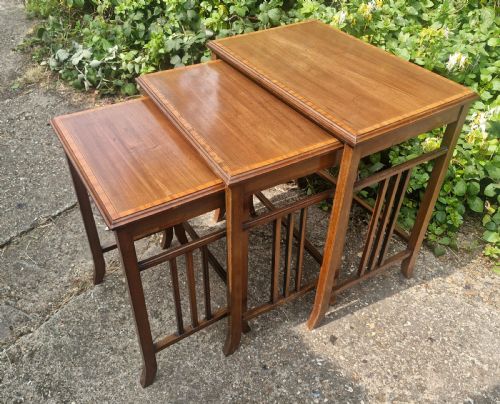


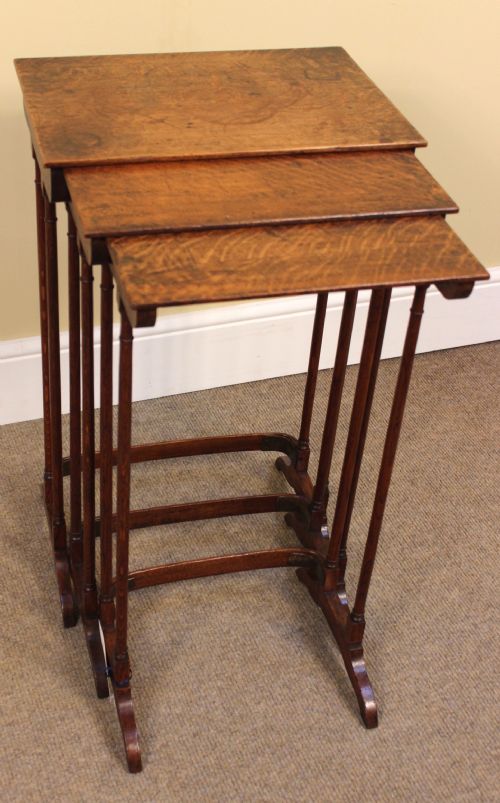
Trio of Side Tables
A trio of side tables offers a practical arrangement of graduated surfaces that slide neatly together when floor space matters.
Trio of Side Tables
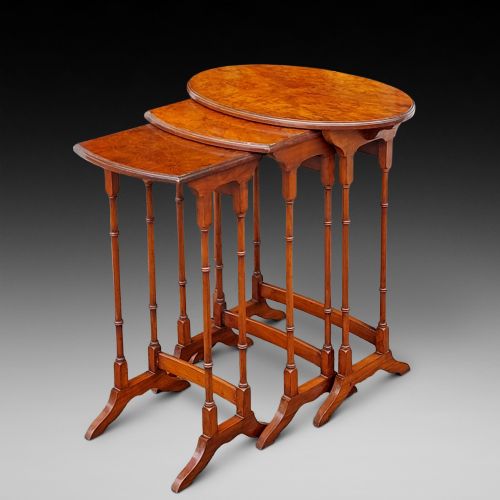
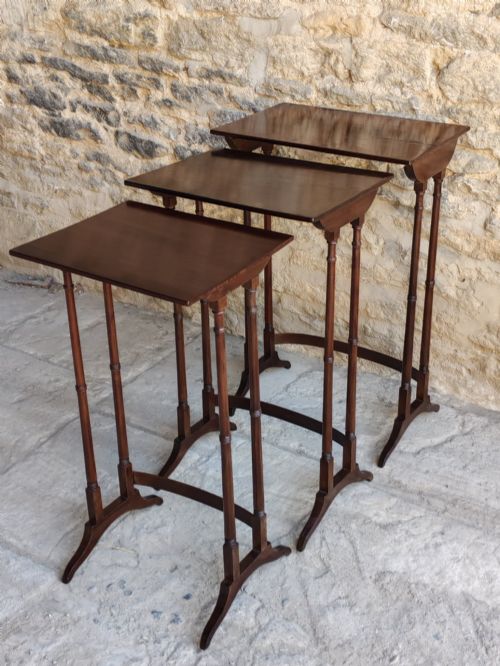
When you search for a trio of side tables, you are looking at sets of three graduated tables designed to nest within one another. The most common version you will meet on this page is the Edwardian or late nineteenth-century nest in mahogany, often enhanced with wood inlay or a polished surface.
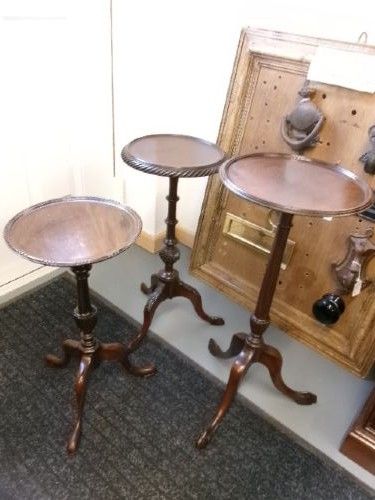
These pieces also appear under descriptions such as nests of tables, occasional tables, or wine tables. Origins range from the Regency period through to the Georgian era and the 1940s, with Edwardian examples forming the largest share of the current selection.
How they were made
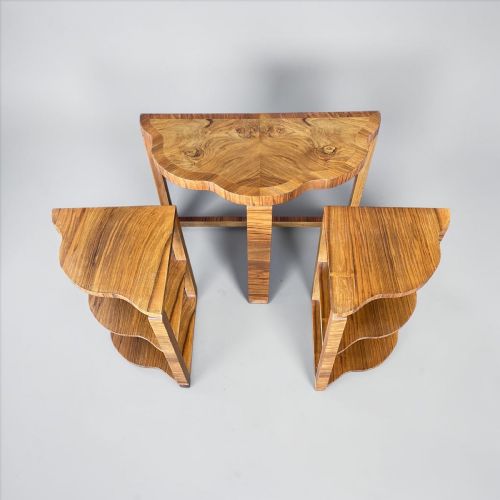
Cabinet makers constructed these tables primarily from timbers such as mahogany, rosewood, satinwood, walnut, and oak, frequently employing burr walnut and walnut veneer for decorative grain effects. Wood inlay and embossed leather tops provided further surface ornamentation on finer examples.
Construction techniques focused on creating graduated frames that allowed the smaller tables to slide beneath the largest one cleanly. Turning, shaping of tops, and joinery suited to stacking side pieces characterised the production across the Georgian, Regency, Victorian, and Edwardian periods.
Trio of Side Tables Retail Price Guide 2026
Typical asking prices for trio of side tables among the pieces listed under this phrase on Sellingantiques today, from the lower quarter to the upper quarter. They describe what is for sale here now, not the wider market.
Listings feature woods including mahogany, rosewood, satinwood, walnut, oak, and burr walnut across periods from the Georgian era to the 1940s.
What varies in quality
The distinction between ordinary and superior pieces rests on the choice of timber and the crispness of the cabinet work. Dense rosewood, figured burr walnut, and finely detailed satinwood elevate a set well above standard mahogany or plain oak versions.
Refinement in the proportions of the graduated frames and the precision of any wood inlay or leather top separation also mark out better examples. The handling of shaped tops and turned supports dictates the overall presence of the set in a room.
W&C Wilkinson London·Gillows
The Trio of Side Tables Glossary
- Nest of tables
- A set of graduated tables designed to slide neatly beneath one another to save floor space when not in use. These assemblies typically consist of three pieces.
- Inlay
- A decorative technique where contrasting woods or other materials are fitted into depressions carved into the primary surface. This method creates geometric or floral patterns.
- Barley twist
- A spiral turning resembling the shape of a twisted barley sugar stick, commonly used for the legs or supports of tables. It gained popularity during various revival periods.
- Veneer
- A thin layer of figured wood applied over a more stable secondary timber to present a decorative exterior. Burr walnut and mahogany veneers are frequently encountered on these tables.
- Graduated
- Describing a set where each table scales down in height and width to fit inside the next. This sizing enables the compact stacking characteristic of these pieces.
Trio of Side Tables: Frequently Asked Questions
How do I use a trio of side tables?
These tables stack together as a single unit to save space when floor area is limited. You can pull them apart to place drinks or books around a room when guests visit.
They function well beside armchairs, sofas, or beds as flexible occasional surfaces. Their graduated sizes allow different heights to serve various seating arrangements.
Are these tables sturdy enough for daily use?
Most sets are constructed from durable timbers like mahogany, oak, or walnut designed for regular weight bearing. The interlocking frames provide solid support when the tables stand independently.
Heavier items should be kept to the main table, while the smaller sliding sections suit lighter objects. Careful handling of the joints preserves their stability over time.
How do I distinguish Regency from Edwardian tables?
Regency tables date from the early nineteenth century and frequently feature rosewood, satinwood, or simulated rosewood finishes. They often display leaner proportions and classical design influences.
Edwardian pieces date from around 1900 and commonly utilise mahogany, sometimes with decorative wood inlay. They reflect a revival of earlier styles combined with practical domestic sizing.
What maintenance do wood nest tables need?
Regular dusting with a soft, dry cloth keeps the polished timber surfaces free from grit. Occasional application of appropriate wax polish maintains the lustre of the wood.
Keep the tables away from direct heat sources and strong sunlight to prevent the timber or veneer from drying out. Avoid placing wet items directly on unsealed wooden surfaces.