


Mahogany Occasional Table Set
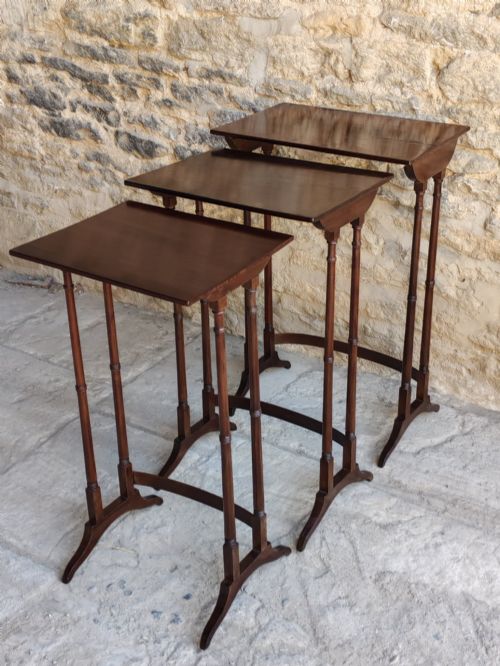
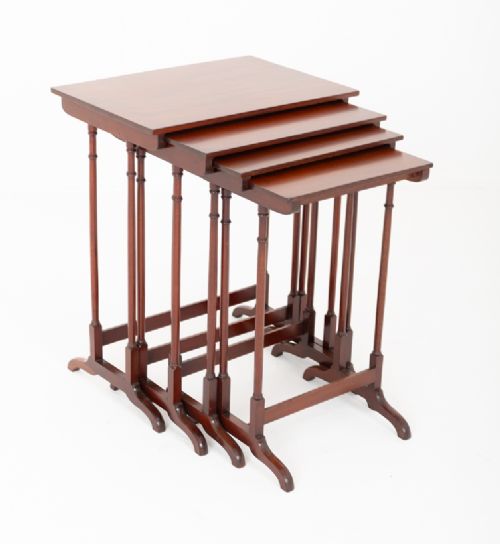
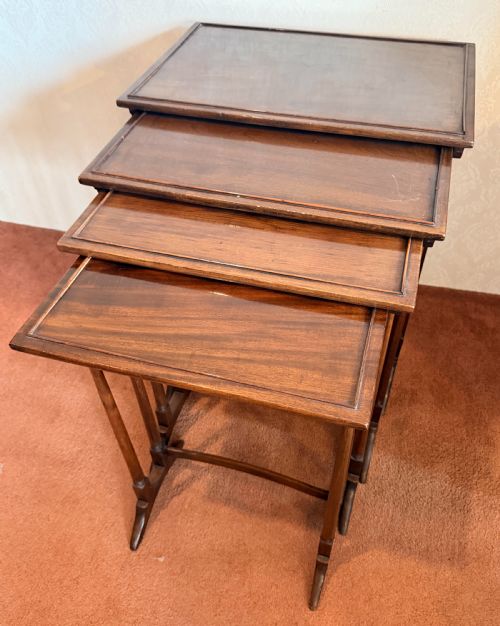
A mahogany occasional table set provides flexible surface space through a graduated nest of stacking tables, making them practical for entertaining.
Mahogany Occasional Table Set
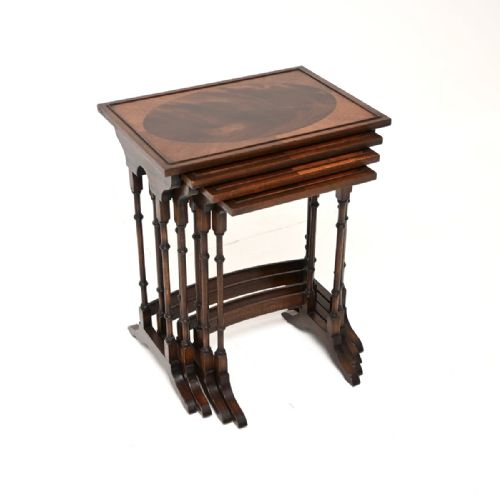
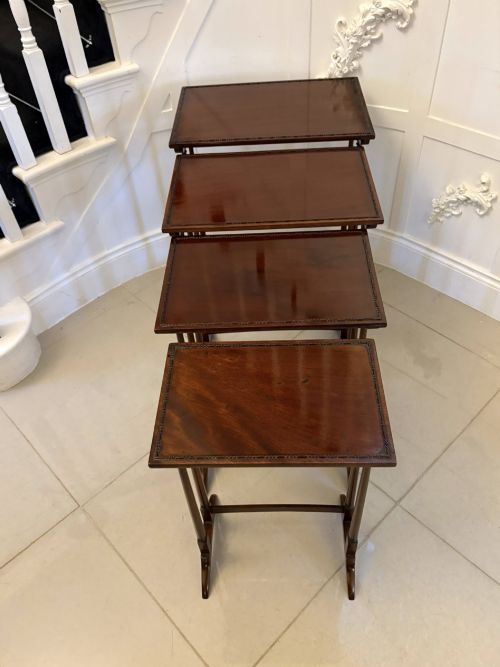
A mahogany occasional table set typically comprises a nest of three or four stacking tables designed to pull out when needed and store compactly together. These pieces appear most frequently in Edwardian interpretations alongside 19th century, Georgian, and Regency examples.
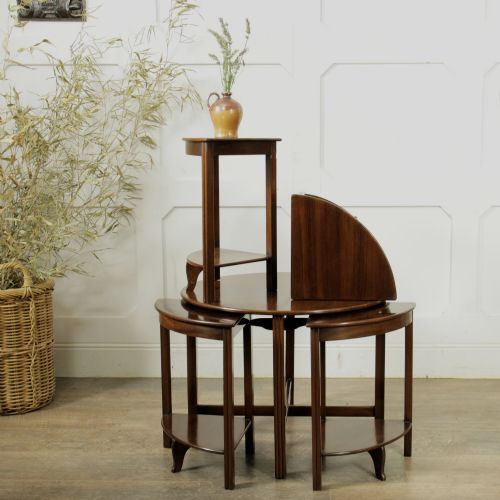
The primary forms found in this category include quartetto sets, circular tables, and nested side tables used as lamp or coffee surfaces. Pieces originate predominantly from English workshops spanning the Georgian era through the early 20th century.
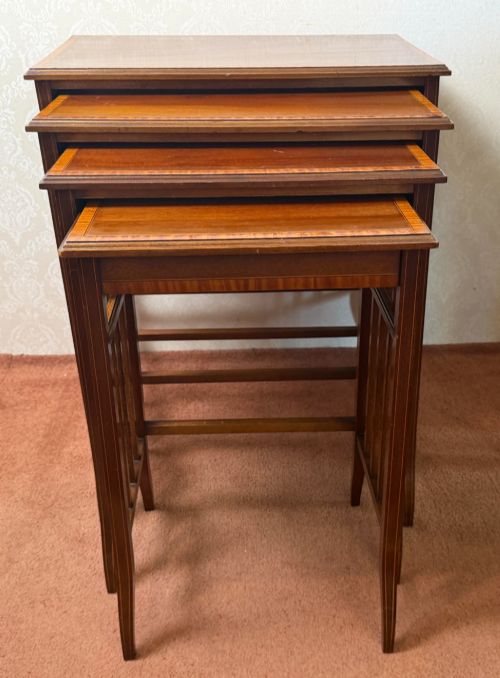
Makers often constructed these sets in graduating sizes so that smaller tables slide neatly beneath the largest top table. This configuration allows a mahogany occasional table set to occupy the floor space of a single small table while providing multiple surfaces.
Materials and Construction
Makers built these tables primarily using solid timber and mahogany veneer, frequently incorporating figured mahogany to create patterned tabletops. Secondary woods and framing elements provide structural stability for the nested framework.
Surface decoration relies heavily on contrasting stringing and banding using satinwood, boxwood, and ebony. Inlaid details define the edges and corners of tabletops, particularly on Edwardian and Sheraton Revival pieces.
Mahogany Occasional Table Set Retail Price Guide 2026
Typical asking prices for mahogany occasional table set among the pieces listed under this phrase on Sellingantiques today, from the lower quarter to the upper quarter. They describe what is for sale here now, not the wider market.
Satinwood inlay and boxwood stringing appear frequently across Edwardian mahogany tables, accentuating square tapered leg forms.
Design and Execution
Quality separates along the precision of the joinery and the selection of timber figures on the primary surfaces. Superior examples display carefully matched veneer grains and crisp inlay work that remains flush with the surrounding wood.
The stability of the nested arrangement and the smoothness of the slide action indicate the care taken during construction. Heavier timber scantlings and refined leg profiles, such as square tapered designs, distinguish better-executed sets from simpler production pieces.
The Mahogany Occasional Table Set Glossary
- Quartetto
- A set of four matching tables designed to nest together. This term appears frequently in Edwardian cataloguing.
- Cross banding
- A border of veneer laid perpendicular to the grain of the main tabletop. It frames the central panel using contrasting timber.
- Satinwood
- A durable, light yellow exotic wood utilised for inlay and stringing. It provides sharp contrast against dark mahogany surfaces.
- Stringing
- Thin inlaid lines of contrasting wood used to edge panels and legs. This technique defines geometric patterns on table tops.
Mahogany Occasional Table Set: Frequently Asked Questions
How do I use a nest of tables?
These tables stack vertically into one compact footprint when floor space is required. Individual tables pull out easily to hold drinks, books, or lamps.
They distribute around a room during gatherings and return to a single stack afterward.
What is a quartetto set?
A quartetto set specifically designates a group of four tables that scale down in size to nest inside one another.
Cabinetmakers applied this term particularly during the Edwardian period for stacking mahogany sets.
How do I identify Edwardian mahogany tables?
Edwardian pieces often feature delicate satinwood inlay and slender square tapered legs. They date from the early 1900s and frequently utilise lighter mahogany framing.
Construction methods from this era differ from heavier 19th-century or Georgian prototypes.
Can these tables support heavy items?
Smaller tables in the nest possess lighter frames intended for lamps, drinks, or small decorative objects. The larger top table offers greater structural capacity.
Avoid placing excessively heavy loads on the smallest subordinate tables.