


Three Tier Nesting Tables
These three tier nesting tables are space-saving arrangements of graduated surfaces that slide neatly together when not in use.

Three Tier Nesting Tables
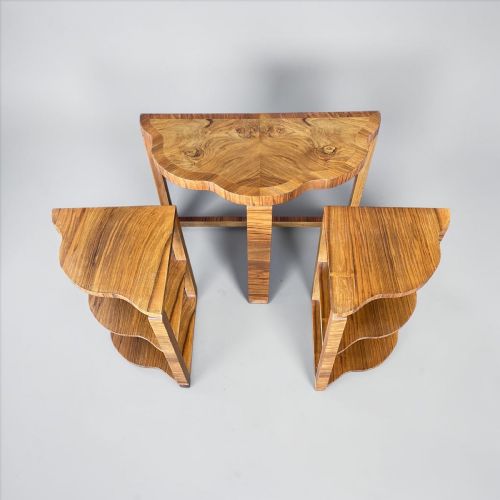
When you search for three tier nesting tables, you find sets of graduated tables designed to slide beneath one another to save floor space. The form appears across several periods, including Edwardian and 1920 examples, as well as a 1940 Art Deco piece.
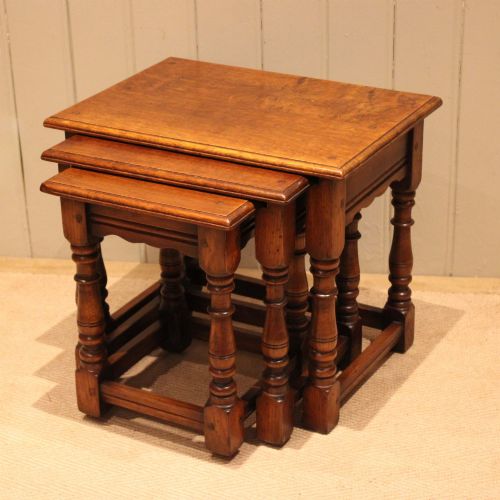
Mahogany is the material you meet most often on this page, appearing in Edwardian pieces and 1920 coffee table formats with shaped or oval tops. Oak, walnut, and kingwood also feature among the listings.
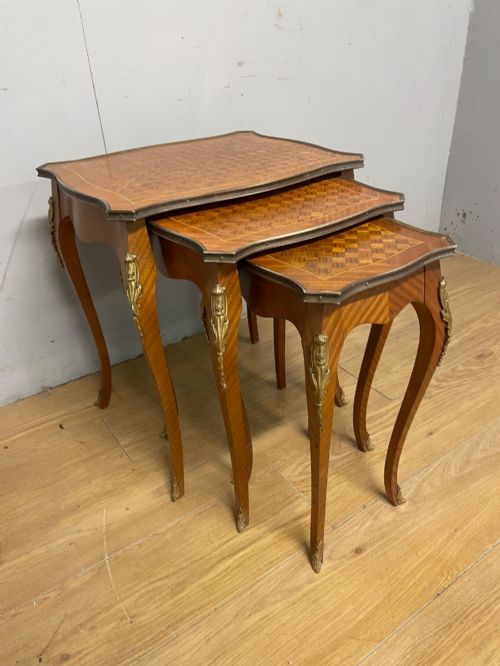
The styles range from English Country oak and Edwardian designs to Louis XV Revival and Louis XVI Revival pieces with ormolu mounts. Parquetry tops and timber veneer variants also appear in the selection.
Construction and Materials
Cabinet makers utilised solid timbers such as mahogany and oak alongside walnut and kingwood veneers to build these surfaces. Timber veneer and walnut veneer provide decorative grain patterns across the tabletops.
Selected examples incorporate ormolu mounts for decorative effect, particularly within Louis-inspired revival pieces. Parquetry decoration creates geometric patterns on specific walnut tabletops.
Three Tier Nesting Tables Retail Price Guide 2026
Typical asking prices for three tier nesting tables among the pieces listed under this phrase on Sellingantiques today, from the lower quarter to the upper quarter. They describe what is for sale here now, not the wider market.
Several coffee table variants feature oval tops designed to soften the corners of a busy sitting room.
Assessing Quality
The distinction between standard and superior pieces rests on the choice of timber and decorative technique. Plain oak or mahogany tables sit at the simpler end, while kingwood and parquetry tops demand greater joinery skill.
Ormolu mounts and shaped or oval tops elevate the decorative ambition of the design. The precision of the graduated fit when the tables slide together marks the standard of the construction.
The Three Tier Nesting Tables Glossary
- Nest of tables
- A set of graduated tables designed to fit one beneath another. This arrangement saves floor space in smaller rooms.
- Ormolu
- Gilt bronze mounts applied to furniture for decoration. This technique appears on revival pieces.
- Parquetry
- Geometric wood veneer patterns inlaid into a tabletop. Walnut versions show this decorative surface.
- Timber veneer
- A thin layer of finer wood glued over a base timber. This method provides visual grain patterns.
- Louis XV Revival
- A decorative style imitating mid-eighteenth-century French curves. Pieces in this style use kingwood and ormolu.
Three Tier Nesting Tables: Frequently Asked Questions
What are three tier nesting tables?
These pieces consist of sets of graduated surfaces designed to slide neatly beneath one another when floor space is required.
They appear in various timber finishes and styles ranging from Edwardian mahogany to Art Deco designs.
How were these tables used?
Owners deployed the individual surfaces around a room for serving tea or holding small objects as needed during gatherings.
When the occasion ended, the smaller tables slid back into the main frame to clear the room.
How do I identify Edwardian examples?
Edwardian pieces frequently utilise mahogany timber in straightforward occasional table formats. They reflect the domestic interior trends of the early twentieth century.
Plain construction contrasts with the more ornate revival styles found in other decades.
What styles are available?
The selection includes English Country oak, Edwardian designs, and Art Deco interpretations. Revival styles mimicking Louis XV and Louis XVI also appear.
These diverse aesthetic approaches utilise materials from simple oak to kingwood and ormolu.