




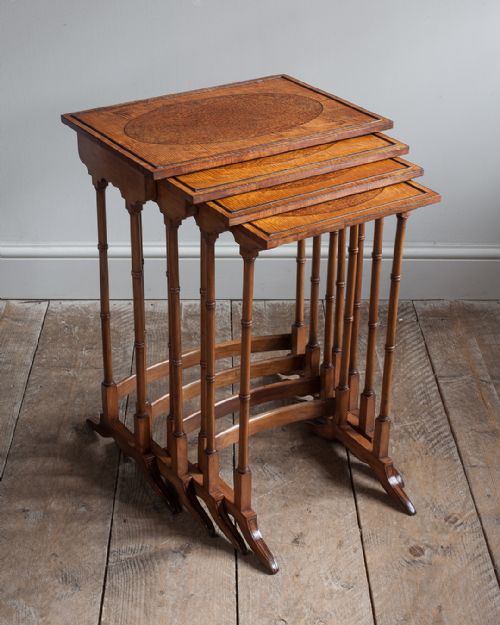


Stacking Coffee Tables
Stacking coffee tables are clever nested sets offering multiple surfaces that slide away neatly.

Stacking Coffee Tables
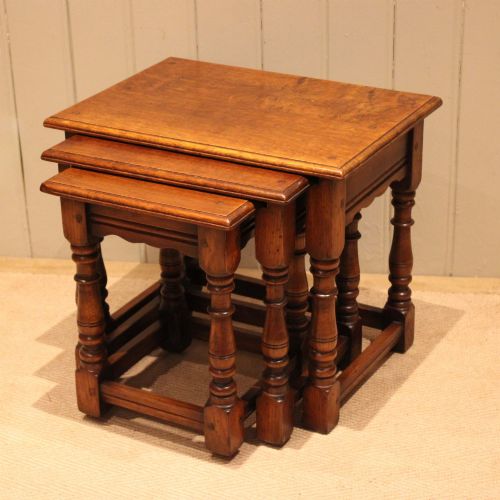
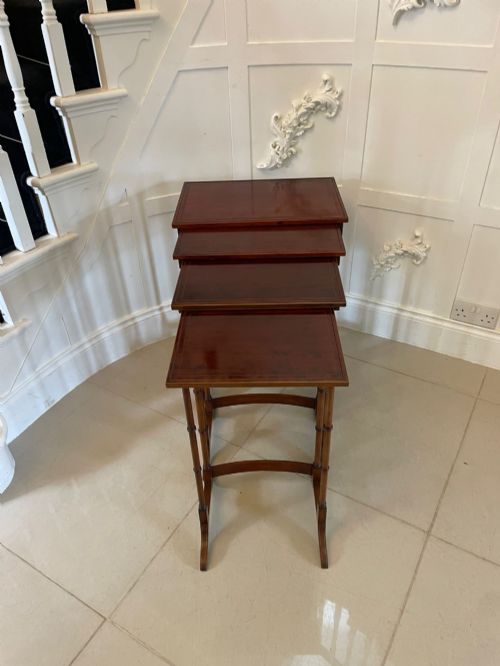
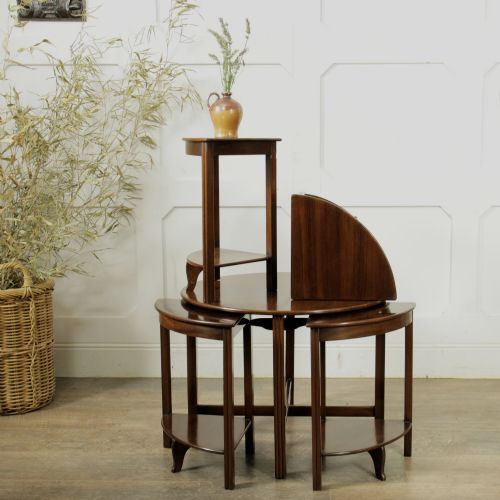
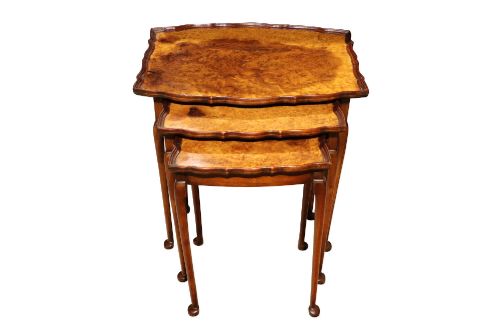
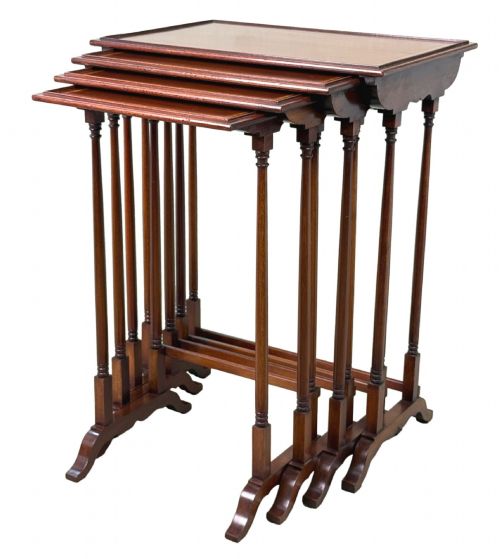
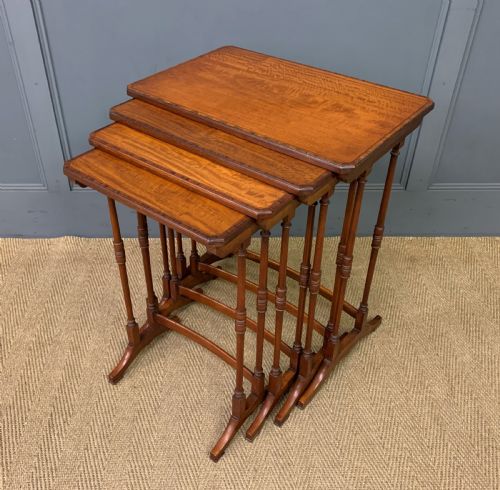
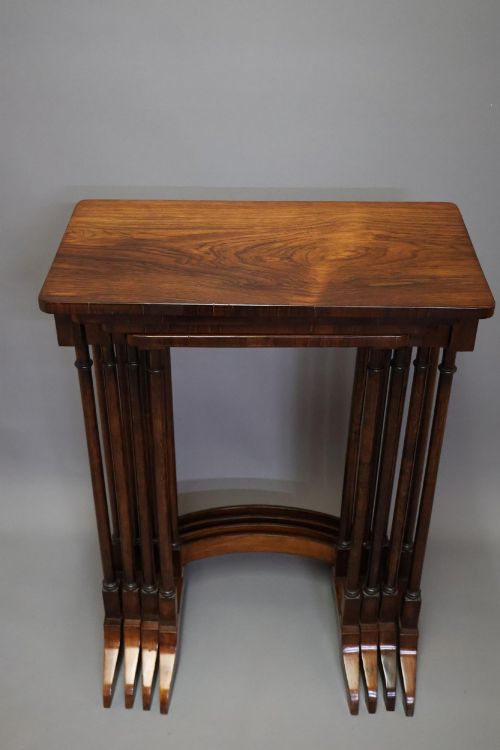
Stacking coffee tables, appearing as nests of tables or nesting tables, provide multiple surfaces that fit neatly inside one another when not in use. These pieces accommodate drinks, lamps, and books without crowding a room.
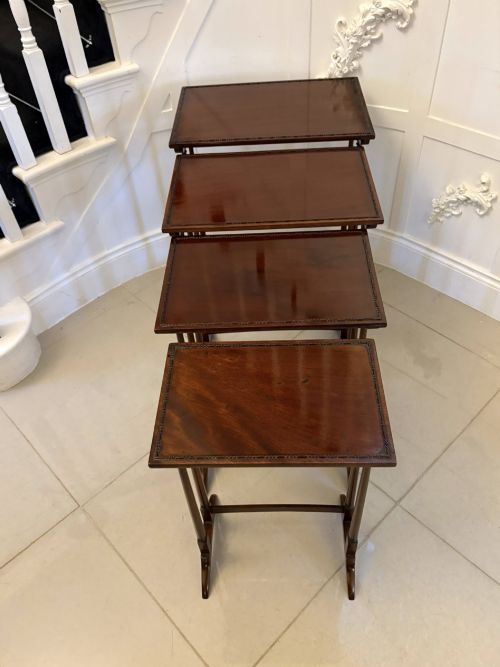
Edwardian and nineteenth-century examples dominate the selection, frequently taking the form of a quartetto set of four tables. Walnut, mahogany, and satinwood versions appear regularly, reflecting traditional cabinet-making priorities.
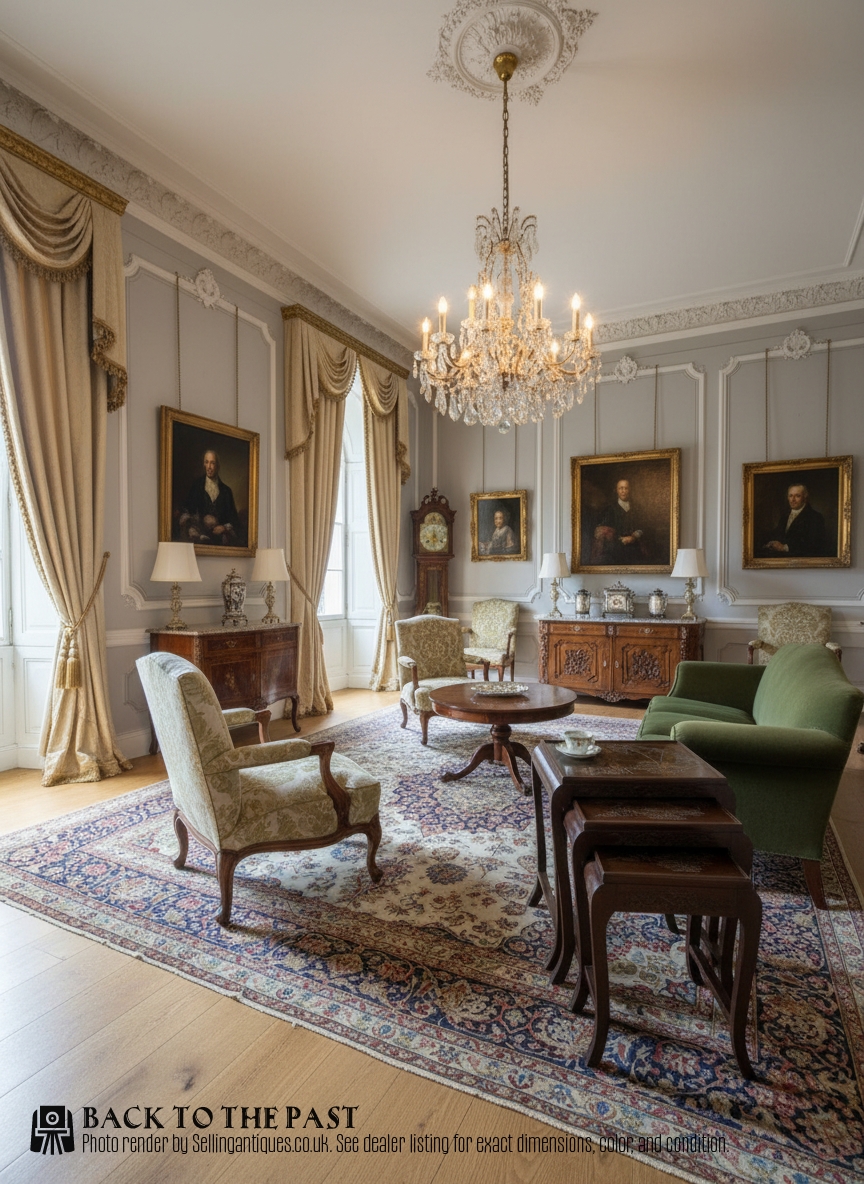
How they were made
Cabinet makers utilised dense hardwoods like mahogany, walnut, and rosewood to construct frames capable of withstanding the friction of daily sliding and stacking. Satinwood and burr walnut veneers provided decorative contrasting surfaces on table tops.
Inlay work, such as stringing or floral motifs, enhanced many Edwardian and nineteenth-century examples. Specialised techniques like French polishing sealed the timber and highlighted the natural grain.
Stacking Coffee Tables Retail Price Guide 2026
Typical asking prices for stacking coffee tables among the pieces listed under this phrase on Sellingantiques today, from the lower quarter to the upper quarter. They describe what is for sale here now, not the wider market.
Some Edwardian sets include up to five tables, requiring a remarkable amount of patience to slide back home.
What varies in quality
The precision of the joints determines how smoothly the smaller tables slide into the main frame without sticking or wobbling. Superior sets maintain tight tolerances so the stacked profile remains flush and compact.
The choice of timber grain and the delicacy of the inlay separate standard production from exceptional examples. Finer pieces feature figured mahogany, well-matched burr walnut, and hand-cut satinwood details.
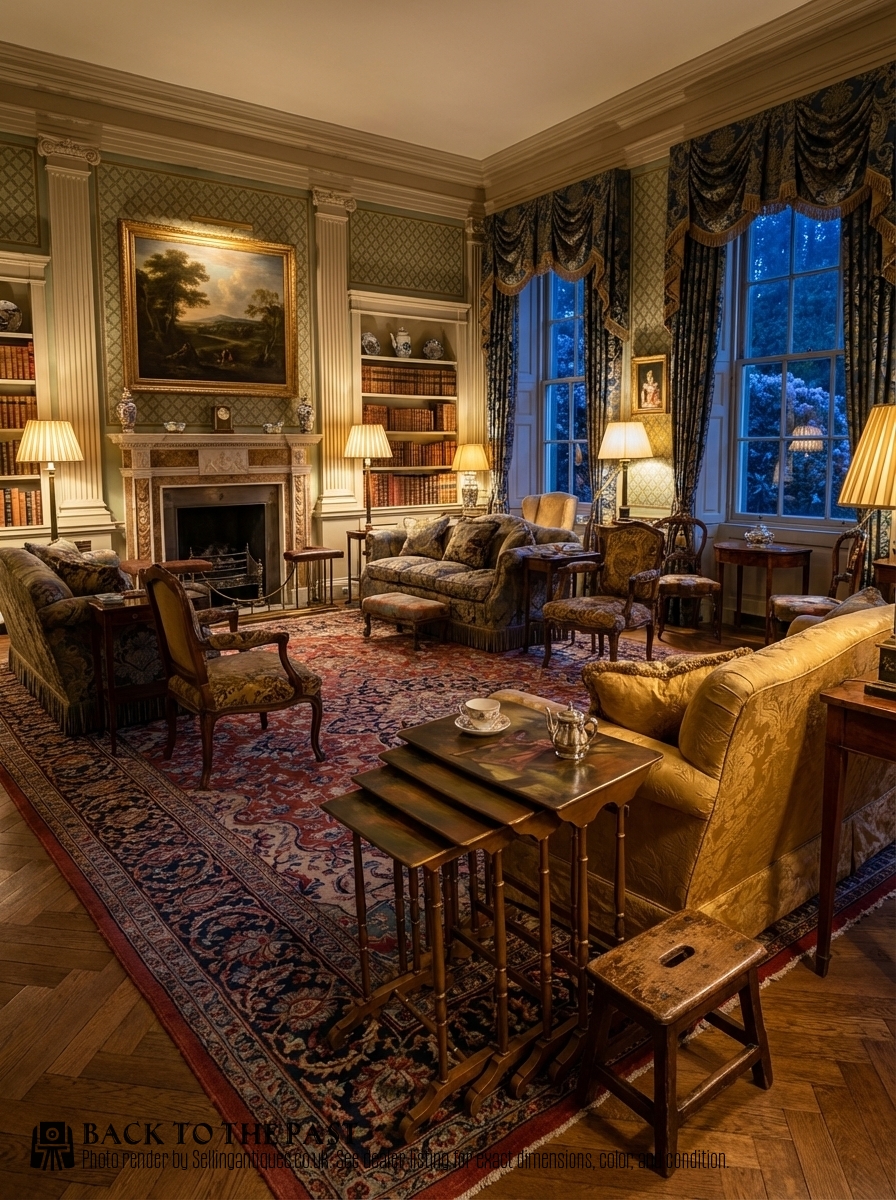
Heal's·Gillows
The Stacking Coffee Tables Glossary
- Quartetto
- A set of four matching tables designed to nest together. This term appears frequently in nineteenth-century and Edwardian furniture records.
- Inlay
- A technique where pieces of contrasting wood or shell are inserted into depressions in the base timber to form decorative patterns. Satinwood is commonly used for this purpose.
- Nesting tables
- A group of graduated tables built to fit one beneath another. They serve as a space-saving arrangement for entertaining.
- Parquetry
- Geometric wood mosaics used for surface decoration on table tops. This technique appears on French walnut examples.
- Occasional table
- A small, light table intended for sporadic use around a room rather than a permanent central position.
Stacking Coffee Tables: Frequently Asked Questions
How do stacking coffee tables work?
These tables are built in graduated sizes so that each smaller piece slides entirely beneath the one preceding it. This design allows four or five surfaces to occupy the floor space of a single small table.
When guests arrive, the tables lift out individually to place beside chairs or sofas. Afterwards, they slide back together into a compact block.
What periods do these tables come from?
The available selection spans from the nineteenth century through the Edwardian era and into the early twentieth century. Victorian and Edwardian examples are particularly common.
Earlier pieces from the Regency period also appear occasionally in archives. Stylistic details help distinguish between these periods.
What woods were used for these tables?
Mahogany is the most frequent timber found in these sets, valued for its strength and rich reddish tone. Walnut, satinwood, and rosewood also appear regularly.
Some examples incorporate exotic hardwoods or feature decorative burr walnut and marquetry veneers. Oak and teak are also represented in specific listings.
How do I style them in a room?
They function well beside a sofa or armchair where surface space is needed intermittently. Keeping them stacked as a single unit creates a sculptural focal point.
When separated, they distribute functionality across the room while maintaining a cohesive look through matching timber and design.