
Stacking Occasional Tables
Stacking occasional tables offer clever multi-tiered surface space that slides neatly away when floor area matters.
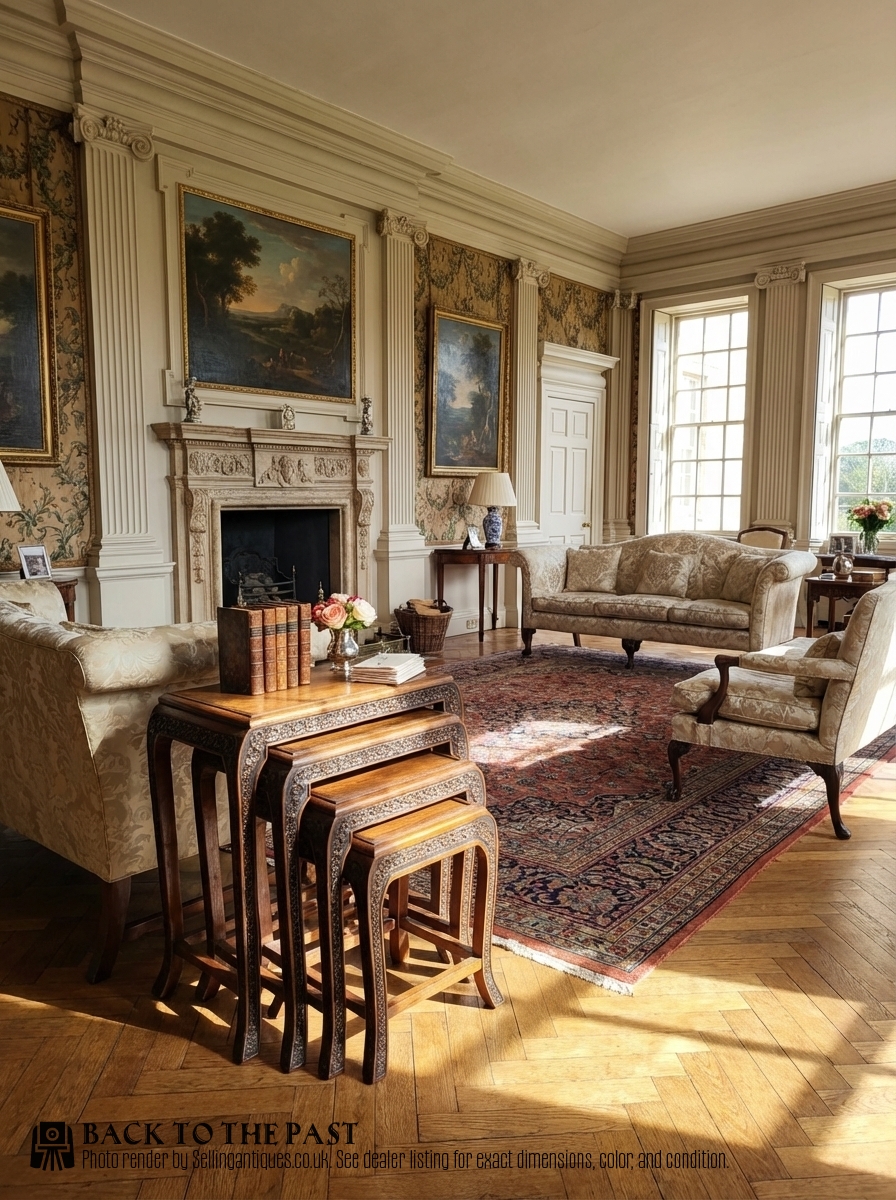
Stacking Occasional Tables
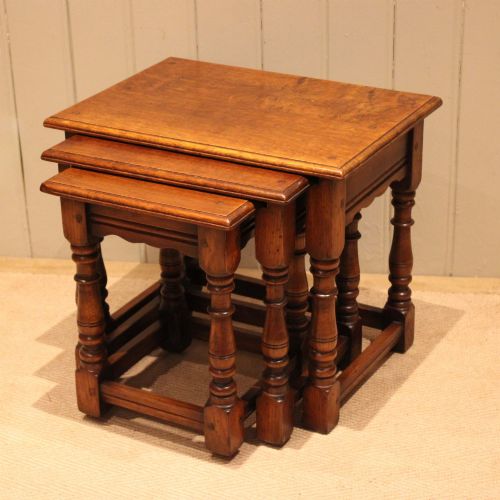
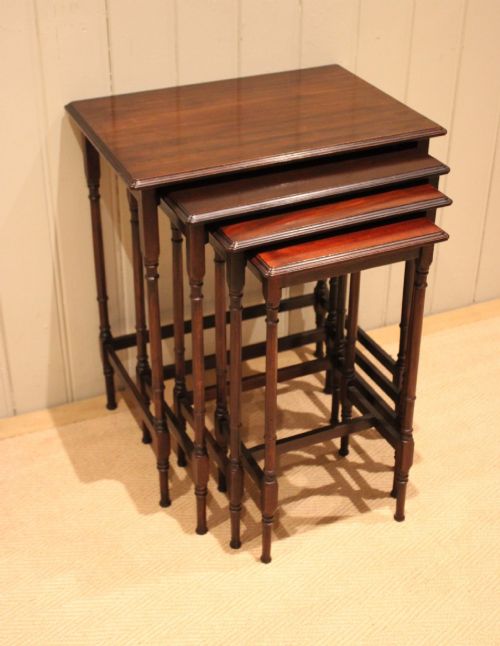
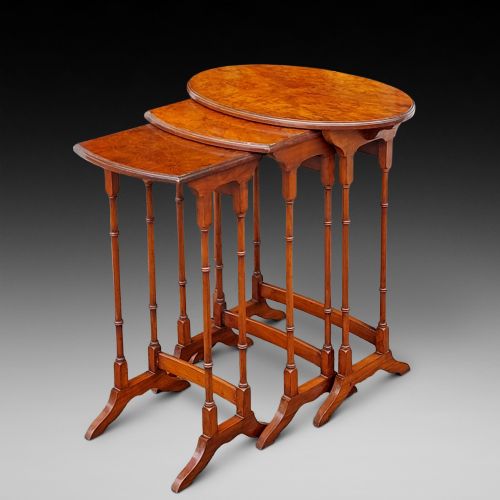
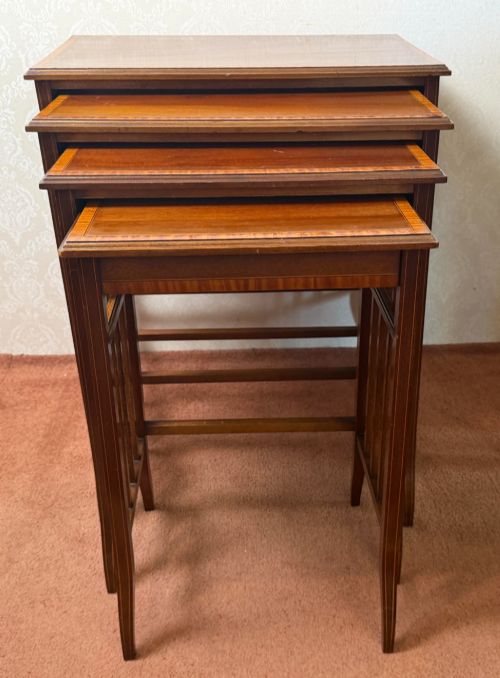
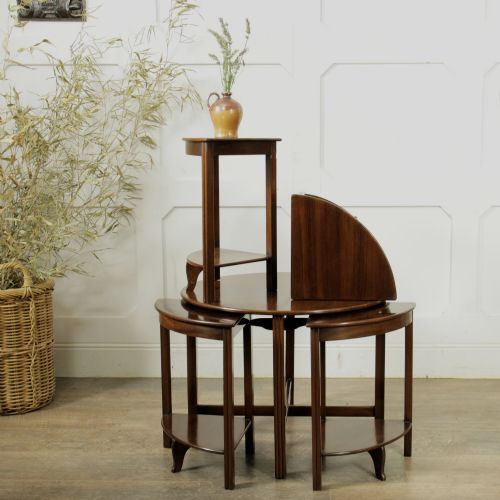
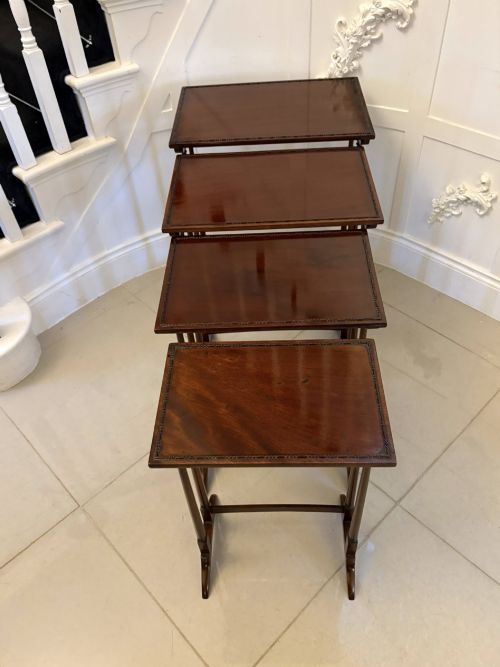
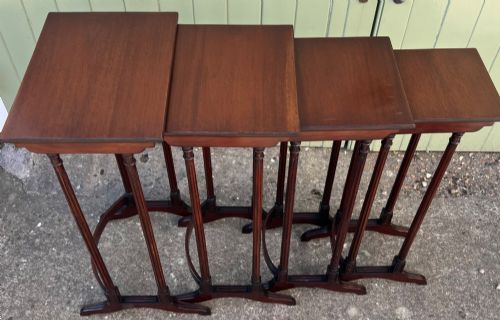
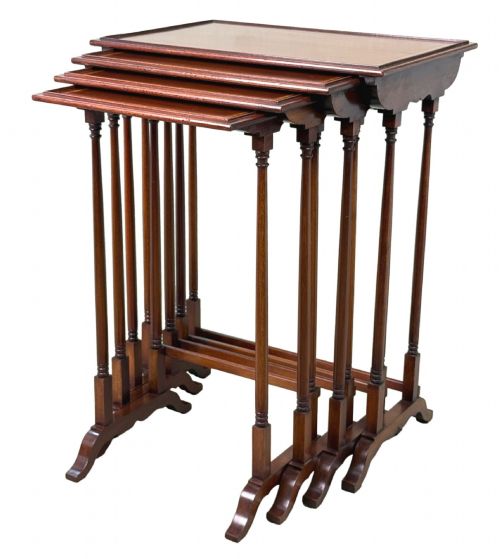
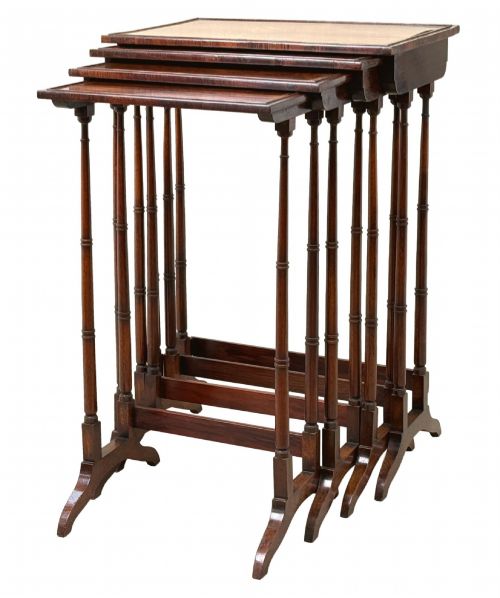
Stacking occasional tables, also catalogued as nests or quartetto sets, comprise groups of graduated tables designed to slide beneath one another into a single footprint. When searching this phrase, a buyer meets sets spanning three or four pieces, though circular groups of five and individual sets of two also appear.
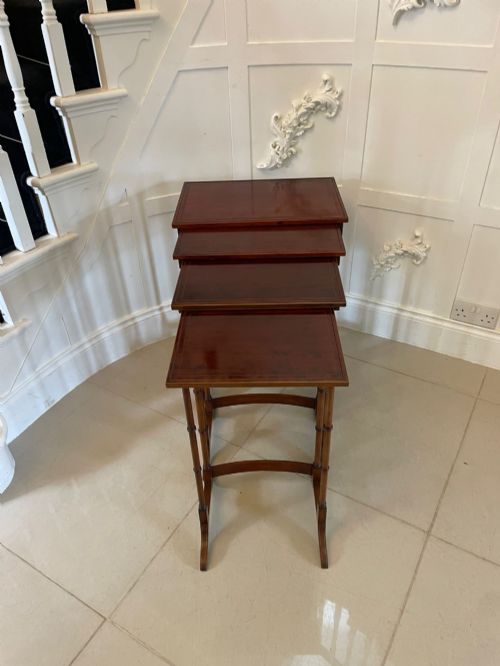
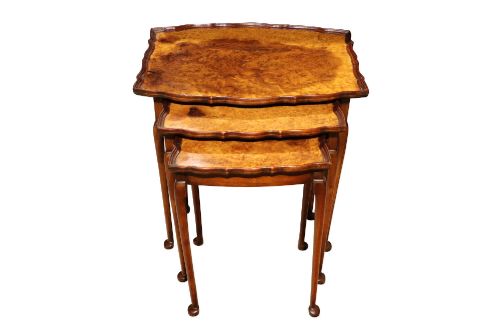
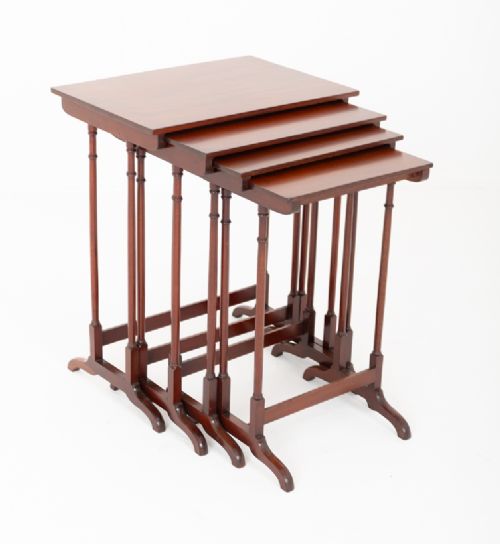
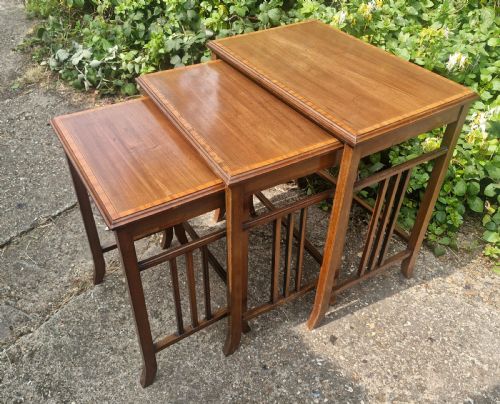
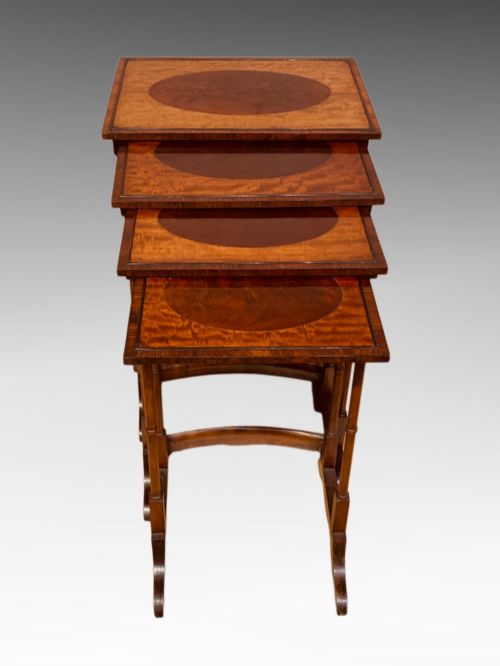
Edwardian mahogany examples with inlaid satinwood details form the backbone of this selection, alongside heavier 19th Century models and occasional 1920s burr walnut iterations. Forms range from rectangular nests to circular tops and specialised quartetto sets intended for lamps, side drinks, or casual coffee placement.
How they were made
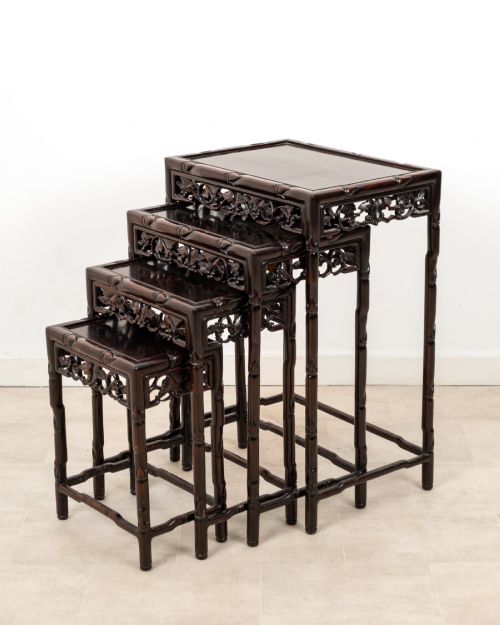
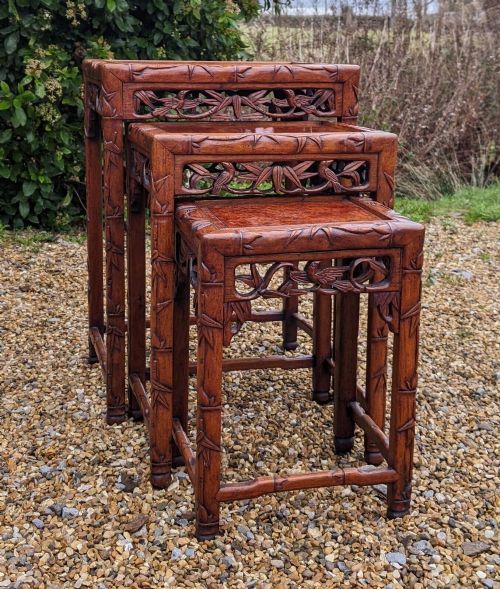
Cabinet makers utilised solid timbers and fine veneers, building frames in mahogany, walnut, burr walnut, rosewood, oak, and satinwood with boxwood inlay accents. Chinese hardwood and huanghuali pieces demonstrate alternative regional joinery and carving traditions.
Construction relies on graduated dimensions so each smaller table clears the aprons and legs of the next size up. Square tapered legs, shaped tops, lacquer, and floral painted finishes denote the diverse construction periods from the Regency era through to Art Deco designs.
Stacking Occasional Tables Retail Price Guide 2026
Typical asking prices for stacking occasional tables among the pieces listed under this phrase on Sellingantiques today, from the lower quarter to the upper quarter. They describe what is for sale here now, not the wider market.
The inventory includes periods ranging from Regency and Victorian through Edwardian up to Art Deco.
What varies in quality
Quality rests upon timber selection and how cleanly the graduated frames nest together without binding or excessive clearance. Uniform grain matching across the set and crisp cross-banding or inlay elevate an example above standard utility pieces.
The integrity of the leg joints and the stability of the smallest table determine everyday utility. Superior sets maintain structural rigidity even when fully separated across a room.
Heal's
The Stacking Occasional Tables Glossary
- Quartetto
- A matched set of four stacking tables designed to slide neatly into one another. This term originates from 19th-century cabinet making terminology.
- Cross-banding
- A narrow strip of veneer laid across the grain direction around the perimeter of a table top. This technique creates a distinct decorative border.
- Inlay
- Contrasting wood, such as satinwood or boxwood, fitted into recessed channels within the primary timber. It defines Edwardian and Georgian decorative schemes.
- Huanghuali
- A fragrant, highly figured Chinese hardwood utilised in traditional furniture manufacturing. Pieces in this material display exceptional natural grain patterns.
Stacking Occasional Tables: Frequently Asked Questions
How were stacking occasional tables used originally?
These pieces served as flexible surfaces in Victorian and Edwardian drawing rooms, pulled out to hold tea cups, reading material, or lamps when guests visited.
Once entertaining finished, the smaller tables slid back beneath the largest one to preserve floor space in crowded urban or country homes.
Can I use these tables on modern wood floors?
Yes, but contemporary felt pads attached to the base of each leg will protect polished timber or delicate flooring from friction marks.
Because the smaller tables move frequently during daily use, checking the footings prevents unnecessary scratching.
How do I tell Edwardian nests from 19th-century ones?
Edwardian versions frequently lean towards lighter mahogany with delicate satinwood stringing and boxwood inlay, reflecting neoclassical revival tastes.
Nineteenth-century examples often employ heavier dense timber grains, deeper rosewood tones, or structural quartetto configurations without surface stringing.
What is the difference between a nest and a quartetto?
A nest is a general descriptor for any grouping of graduated tables that store one beneath another, regardless of quantity.
Quartetto specifically denotes a set of exactly four tables built to interlock as a matched stacking family.