




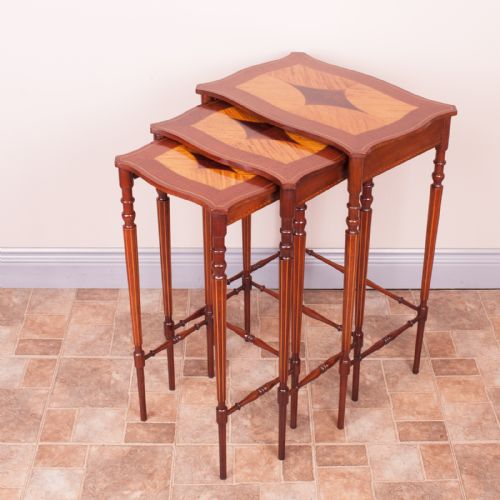


Mahogany Stackable Tables
Mahogany stackable tables offer a practical tiered surface arrangement that slides away neatly when floor space matters.
Mahogany Stackable Tables
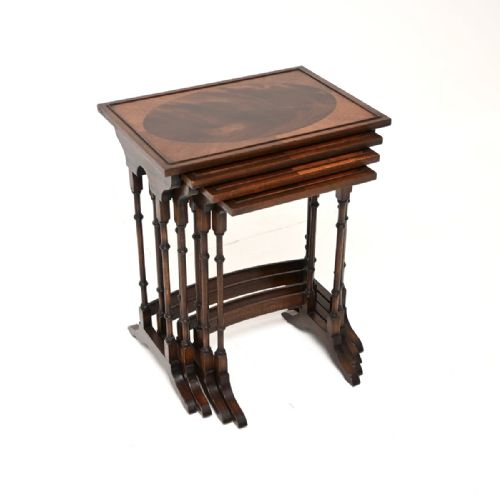
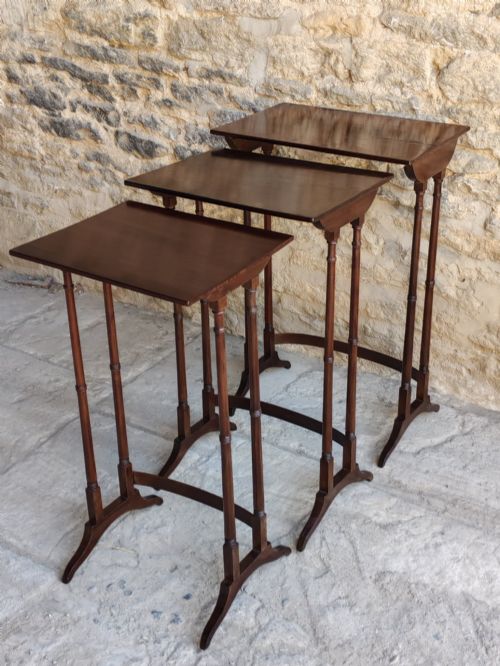
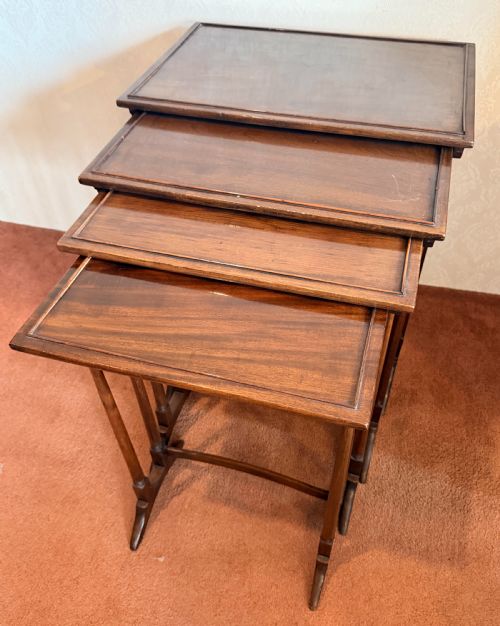
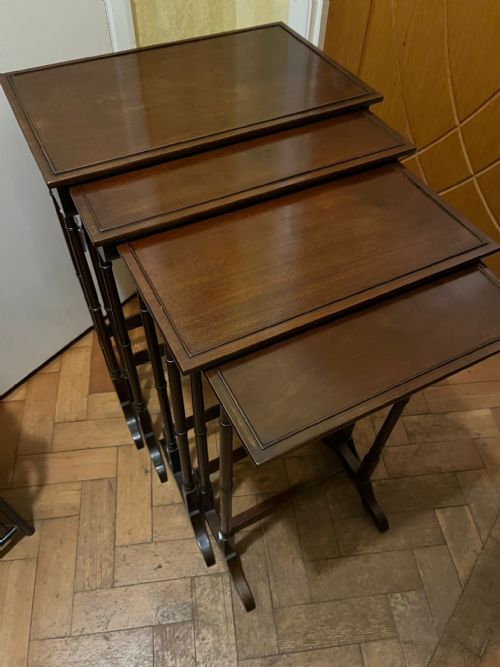
Mahogany stackable tables comprise nested sets of graduating sizes that slide beneath one another for compact storage. These pieces appear most frequently in Edwardian and Victorian forms, alongside Georgian styles and early twentieth-century interpretations.
The format usually includes three or four surfaces designed to be pulled out independently for tea, reading materials or display. Examples range from rectangular tables to oval top coffee tables and quartetto sets.
How they were made
Carpenters constructed these tables using solid mahogany and mahogany veneer over supportive timber carcases. Many specimens incorporate delicate stringing and contrasting details in satinwood, boxwood, ebony and marquetry inlay.
Individual tables within a nest share proportional framing so the smaller legs clear the underframes of the larger tiers. Joinery relies on traditional framing techniques to maintain rigidity across slender uprights and small-scale tops.
Listings feature mahogany stackable tables spanning the Victorian, Edwardian and Georgian periods alongside early twentieth-century examples.
What varies in quality
Quality rests upon the selection of timber figures and the precision of the inlay work across the tops. Finer examples display crisp boxwood and ebony stringing, balanced grain patterns and careful attention to the underframe stability of every tier.
Lesser pieces often rely on plain timber without contrasting bandings or feature heavier structural proportions that diminish the elegance of the nested stack.
The Mahogany Stackable Tables Glossary
- Quartetto
- A set of four small tables designed to nest together. This term appears frequently in Edwardian and nineteenth-century descriptions.
- Inlay
- A decorative technique where contrasting woods such as satinwood or ebony are set flush into the mahogany surface. This adds geometric or floral detail to the tabletop.
- Veneer
- A thin layer of superior mahogany applied over a secondary wood base. It allowed makers to utilise attractive grain patterns efficiently.
- Nesting tables
- A group of graduated tables built to slide one beneath another. They provide multiple surfaces while occupying the floor space of just one table.
Mahogany Stackable Tables: Frequently Asked Questions
How were nesting tables used?
These tables served as versatile movable surfaces in period drawing rooms and sitting rooms. Occupants pulled out individual tiers as needed for afternoon tea or needlework without cluttering the floor.
When not in use, the smaller tables slid securely beneath the largest frame. This arrangement kept rooms tidy while maintaining accessible surfaces throughout the day.
How do I spot an Edwardian set?
Edwardian examples often feature slender turned legs and delicate satinwood or boxwood stringing along the tabletop edges. Makers of this period favoured lighter proportions compared to earlier Victorian iterations.
Many Edwardian sets are specifically designated as quartetto tables comprising four graduating pieces. Their construction reflects the decorative requirements of homes around nineteen hundred.
Are these tables sturdy enough for daily use?
The smaller tiers possess slender frames by design so they slide into the main structure. Gentle placement of cups and books suits their original engineering.
Heavier loads or rough placement can strain the narrow joints over time. Careful handling preserves the original timber framing and tight nesting alignment.
What is the difference between Victorian and Georgian style?
Victorian sets often incorporate richer timber tones and occasional inlay work within nineteenth-century dimensions. They prioritise functional domestic convenience for contemporary parlours.
Georgian style pieces produced later in the twentieth century emulate earlier eighteenth-century cabinetmaking lines. They carry traditional proportions while maintaining twentieth-century manufacturing signatures.