





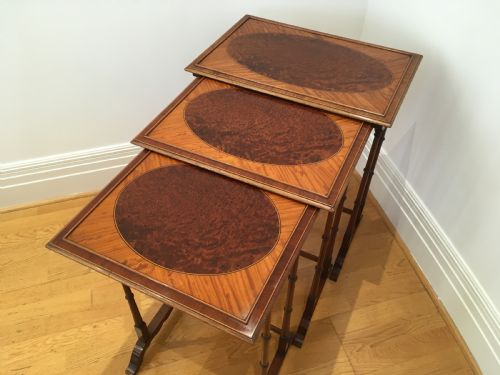

Marquetry Nest of Tables
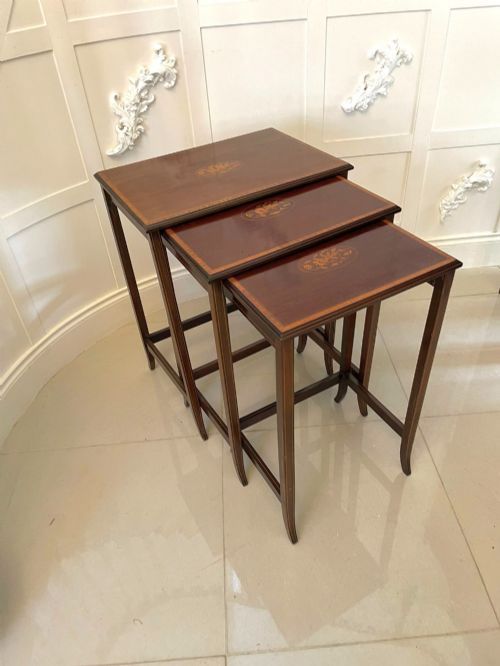
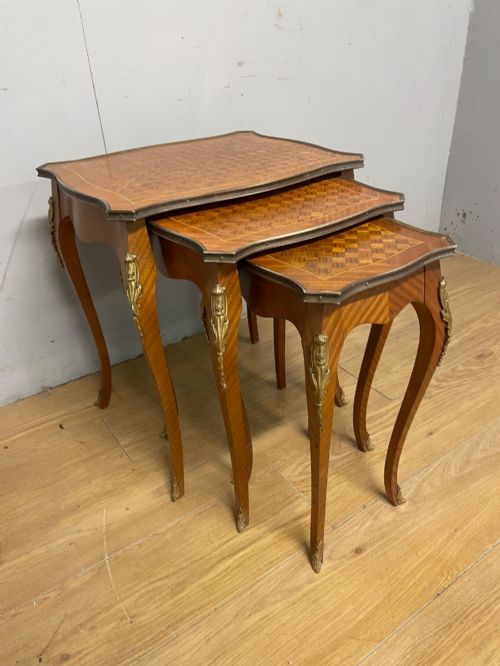
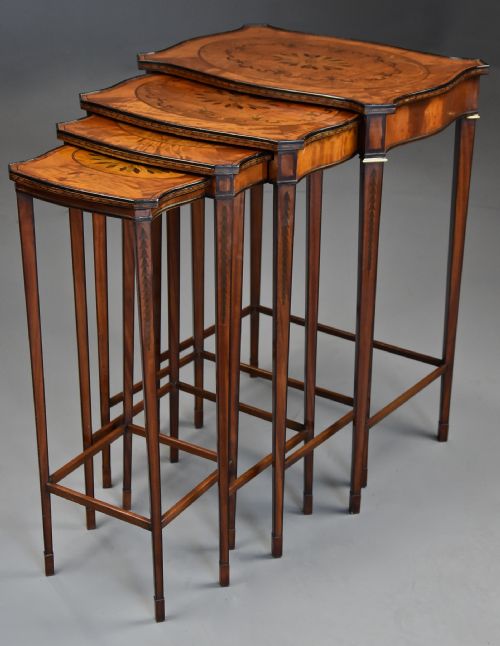
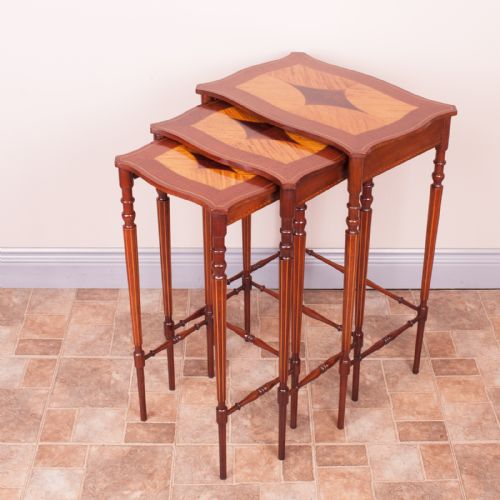
A marquetry nest of tables delivers multiple surfaces with intricate inlaid wood designs that slide away neatly when floor space matters.
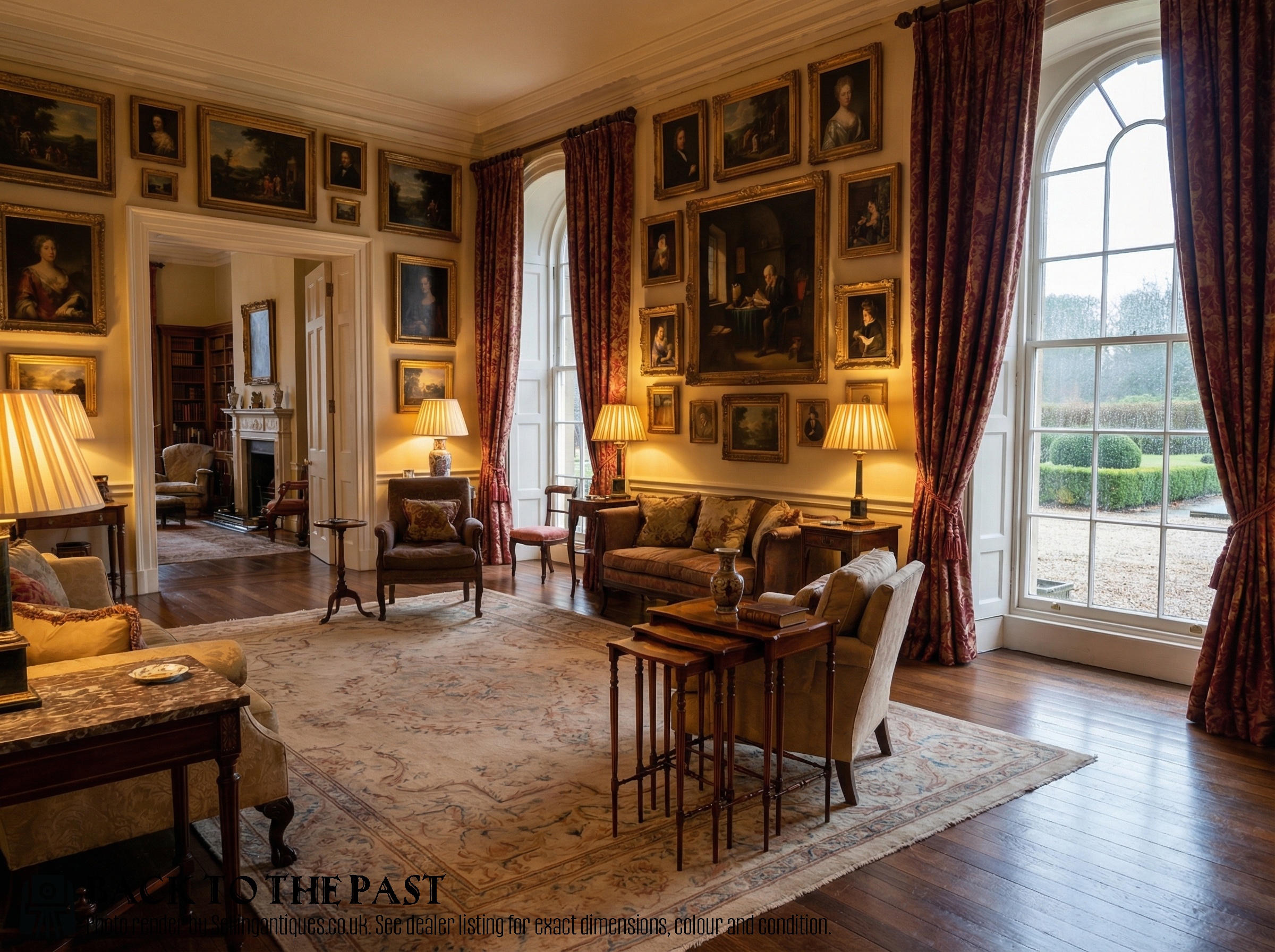
Marquetry Nest of Tables
A marquetry nest of tables consists of graduated tables that stack neatly beneath the largest top surface, saving space while offering multiple tiers for daily use. When buyers search for a marquetry nest of tables, they encounter interlocking sets designed to slide together into a single footprint.
The pieces span the Victorian, Edwardian, and early twentieth-century periods, reaching from eighteen-eighty through nineteen-thirty. French Provincial, French Country, Art Nouveau, and Sheraton styles appear alongside standard forms.

What varies in quality
The precision of the wood inlay sets the finest tables apart from simpler workshop output. Crisp botanical or geometric joins indicate skilled hand-cutting rather than hurried assembly.
Timber selection dictates the overall presence of each set. Richly figured rosewood, amboyna, or satinwood elevates the piece far beyond plain mahogany frames.
Structural integrity through the graduated sizes determines daily utility. Tables that slide smoothly without binding demonstrate careful initial fitting by the cabinetmaker.
Marquetry Nest of Tables Retail Price Guide 2026
Typical asking prices for marquetry nest of tables among the pieces listed under this phrase on Sellingantiques today, from the lower quarter to the upper quarter. They describe what is for sale here now, not the wider market.
Periods represented span from Victorian and Edwardian eras through nineteen-thirty, including Art Nouveau French workshop pieces.
Émile Gallé
The Marquetry Nest of Tables Glossary
- Marquetry inlay
- Decorative patterns formed by fitting contrasting wood veneers onto a structural surface. This technique creates detailed floral or pictorial designs across the tabletop.
- Quartetto
- A traditional term for a set of four nesting tables. These pieces slide one beneath the other into a single compact unit.
- Parquetry
- Geometric wood inlay arranged in regular patterns like cubes or herringbone. It differs from marquetry by relying on angular shapes rather than curving botanical motifs.
- Killarney Ware
- Nineteenth-century Irish decorative woodwork featuring marquetry scenes of local landmarks and flora. Arbutus and other native timbers often form the composition.
Marquetry Nest of Tables: Frequently Asked Questions
How were nesting tables used historically?
Victorians and Edwardians utilised nesting sets for serving tea, holding books, or displaying ornaments in drawing rooms. The tables separated easily around a room when visitors arrived.
Once the gathering ended, the smaller tiers stacked neatly beneath the largest table to clear floor space. This practical design made them popular in formal sitting rooms and parlours.
How do I tell Victorian from Edwardian sets?
Victorian sets often feature heavier mahogany or rosewood frames with deep tones and robust construction. Late Victorian and Irish Killarney examples tend to display denser, more traditional floral marquetry.
Edwardian pieces frequently incorporate lighter satinwood, serpentine shapes, and Sheraton styling. Art Nouveau influences from nineteen hundred to nineteen-ten introduce flowing plant motifs and French craftsmanship.
Where did Dutch marquetry tables originate?
Dutch marquetry pieces emerged from cabinetmaking traditions in the Netherlands during the nineteenth century. These items typically showcase elaborate floral and bird inlay across every available surface.
荷兰 craftsmen utilised various contrasting wood veneers to achieve high pictorial detail. Their work often contrasts with simpler British mahogany designs through bold, all-over pattern coverage.