
Stacked Occasional Tables
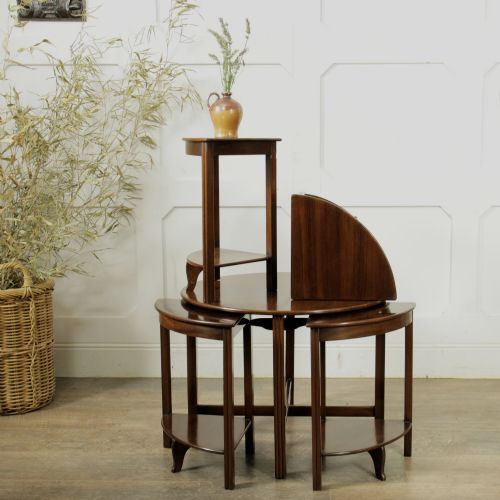
Stacked occasional tables offer a clever space-saving solution, sliding together neatly when not in use and separating for service around the room.
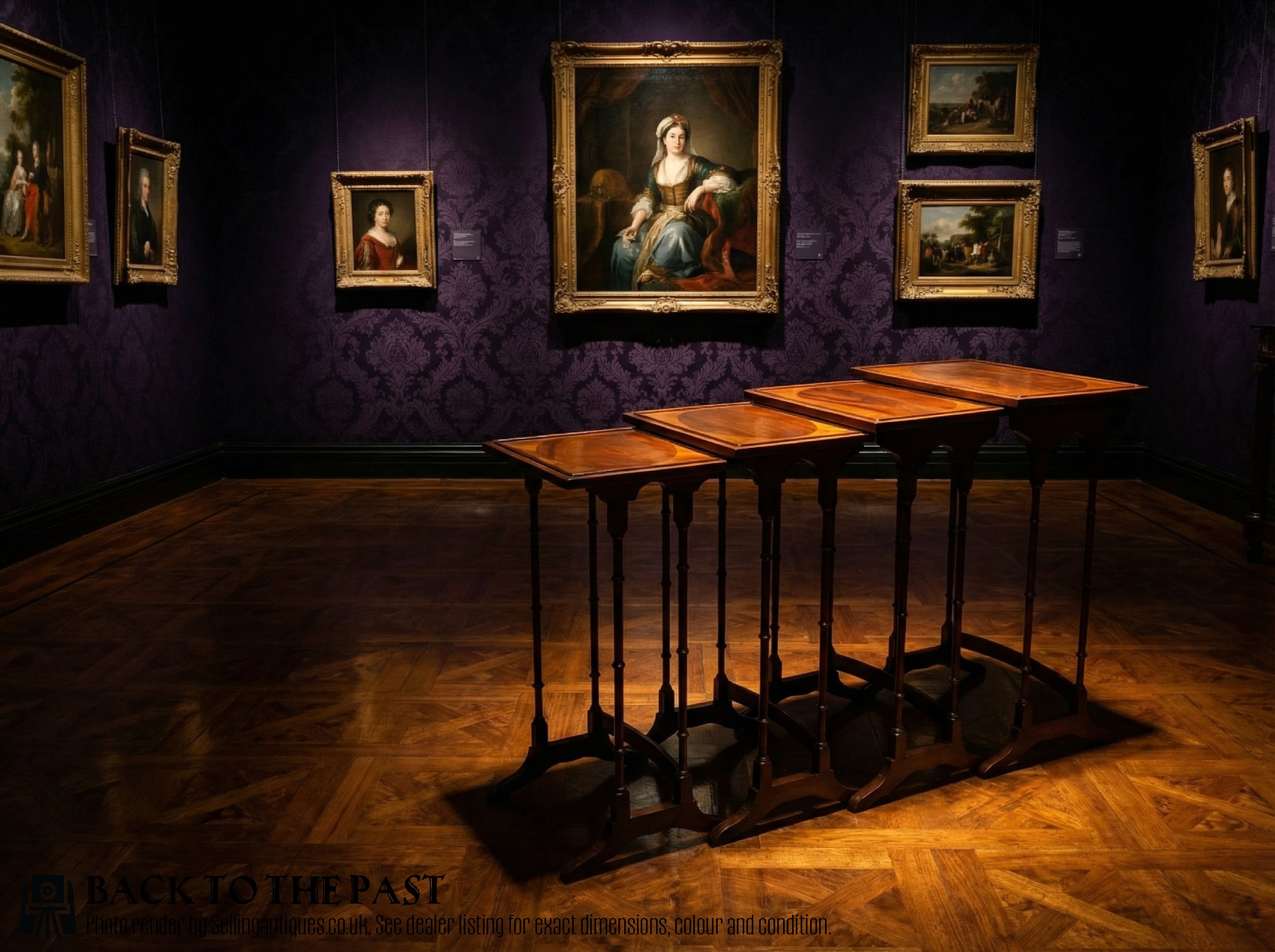
Stacked Occasional Tables
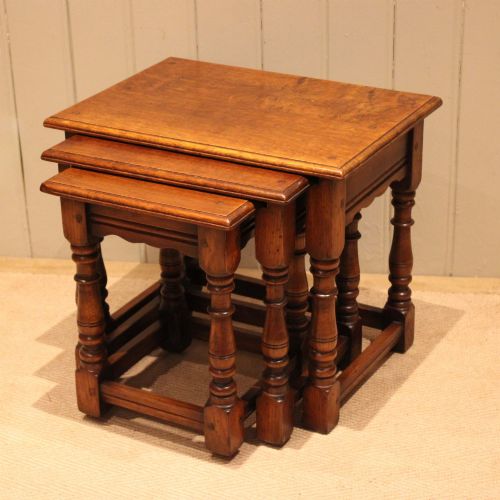
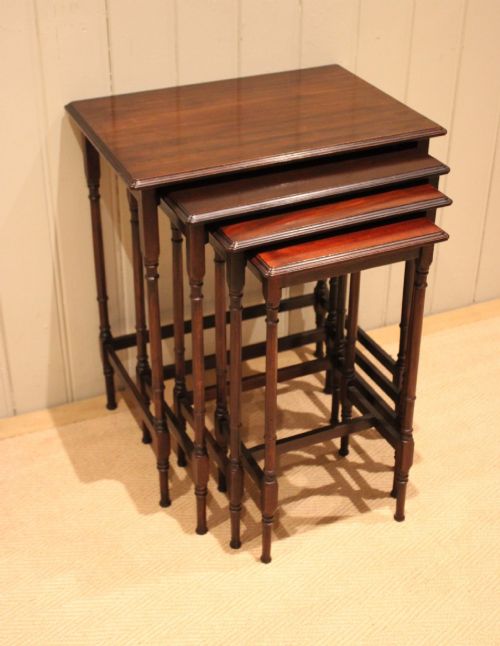
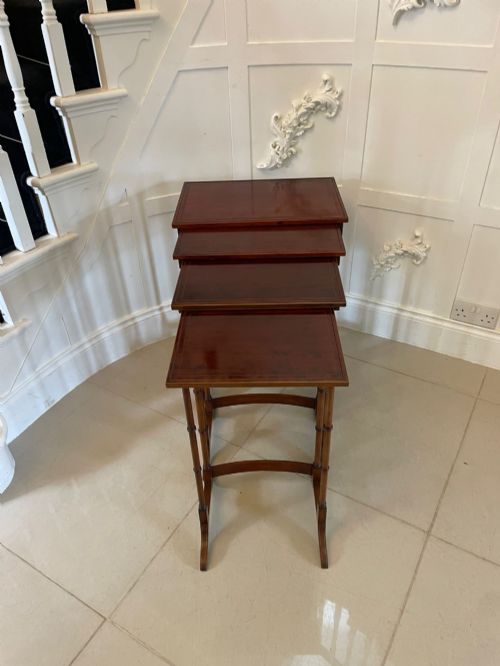
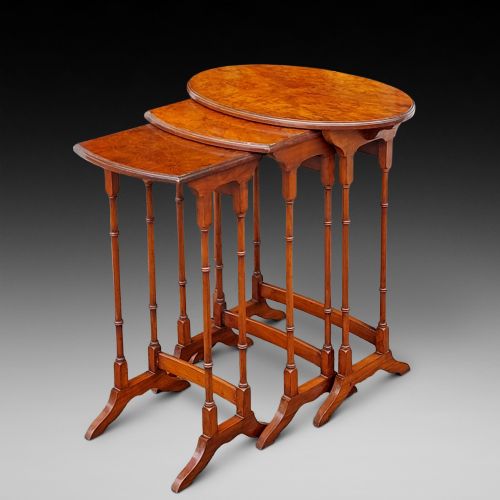
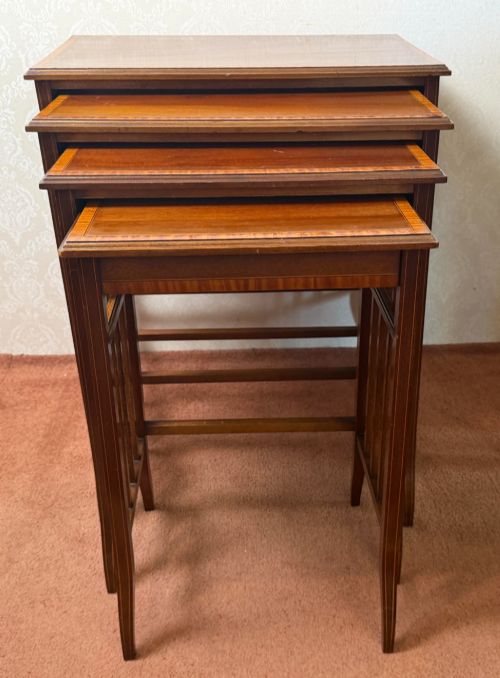
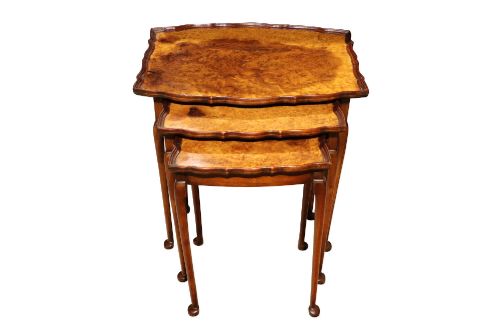
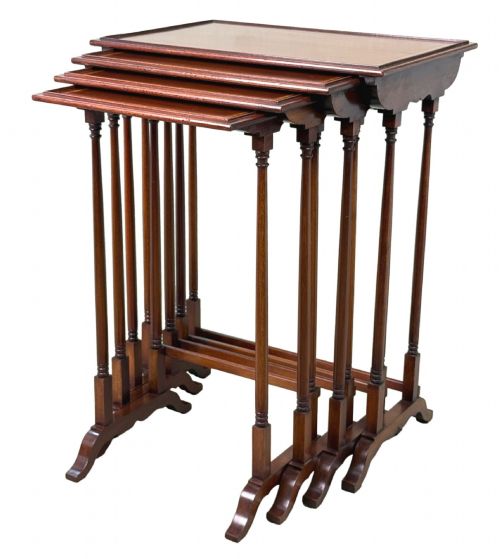
Stacked occasional tables, appearing primarily as nests of tables or nesting tables, comprise sets of graduated pieces designed to fit flush within one another. Buyers seeking these items encounter numerous Edwardian and nineteenth-century examples alongside specific forms from the 1920s and 1930s.
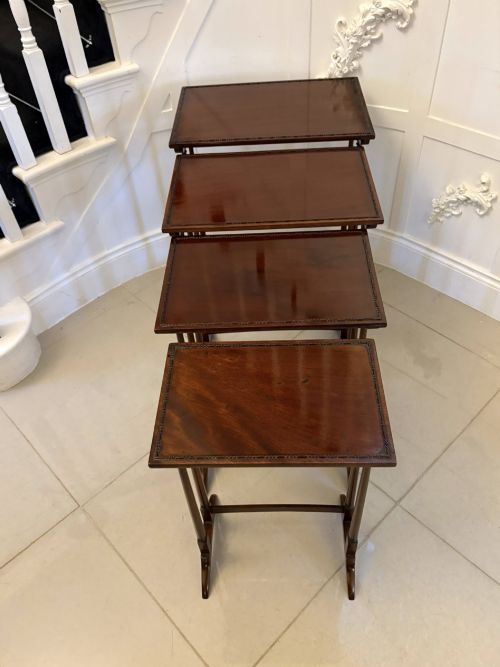
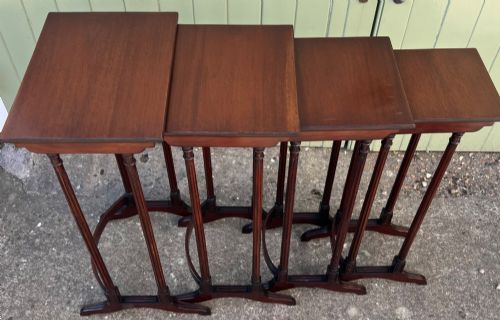
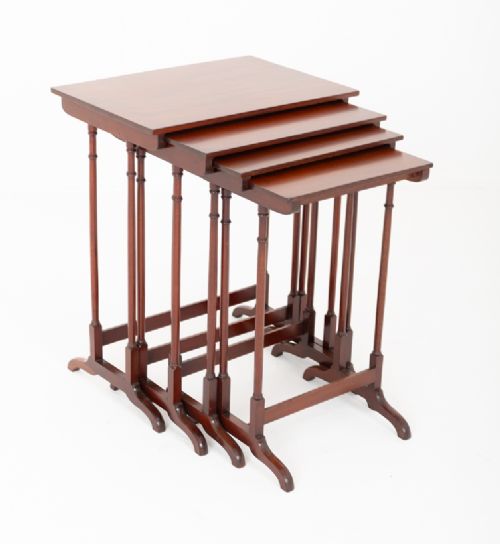
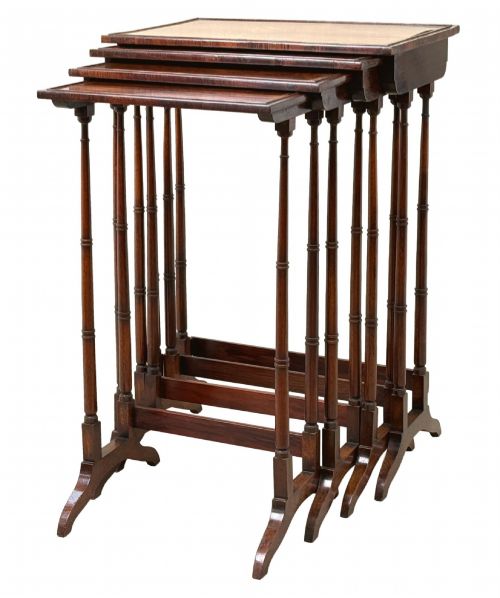
The configurations span sets of three, four, or five tables, with four-piece sets frequently designated as quartetto tables. These objects function as flexible side surfaces, moving easily from a compact single footprint to multiple tables distributed across a room.
How they were made
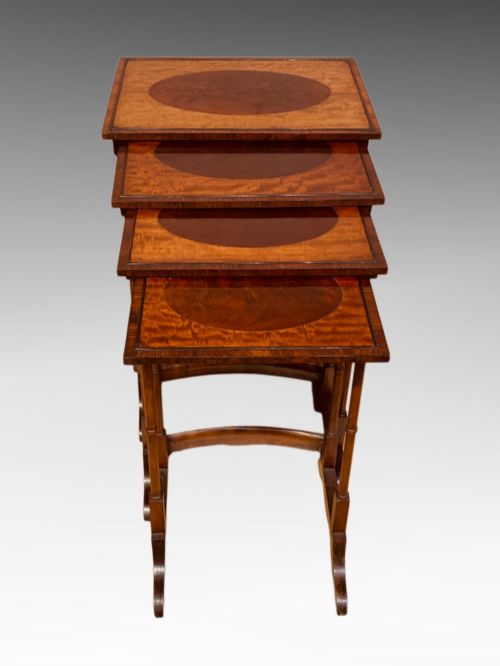
Cabinetmakers utilised a range of dense timbers, predominantly mahogany, walnut, rosewood, and hardwood, often enhancing the surfaces with burr walnut or satinwood veneers and crossbanding. Construction relied on precise sizing so each smaller table slid smoothly beneath the one above without binding.
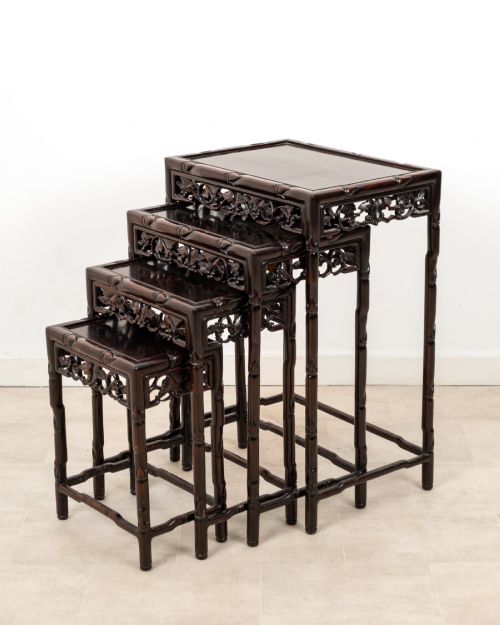
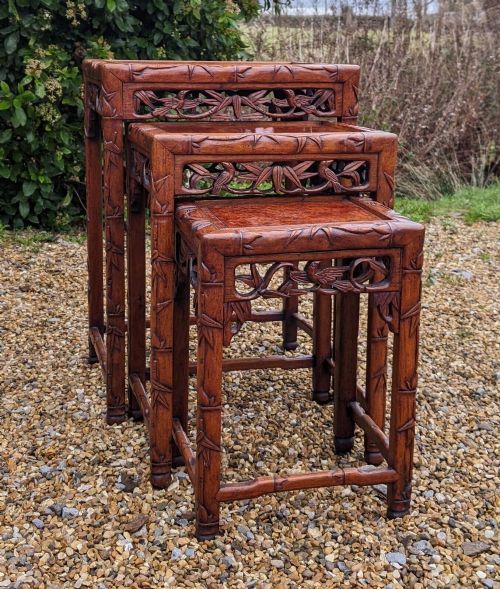
Decorative techniques included boxwood inlay, floral painting, lacquering, and carved detailing, particularly visible on Chinese hardwood and Chinoiserie pieces. Legs varied from square tapered supports to circular and shaped designs suited to the period.
Stacked Occasional Tables Retail Price Guide 2026
Typical asking prices for stacked occasional tables among the pieces listed under this phrase on Sellingantiques today, from the lower quarter to the upper quarter. They describe what is for sale here now, not the wider market.
Some Edwardian sets scale up to five tables, demanding considerable patience to stack them in the correct sequence.
What varies in quality
Quality rests in the precision of the graduated sizing and the integrity of the timber selection, such as figured mahogany or rich burr walnut veneers. Superior examples display refined inlay work, such as fine satinwood or boxwood lines, and maintain structural stability across all tiers.
The handling of secondary details, from the crispness of carved hardwood to the execution of floral painted decoration on French and Chinoiserie versions, separates standard production from finer workshop output.
Heal's
The Stacked Occasional Tables Glossary
- Quartetto
- A set of four tables designed to nest together. The term appears frequently in nineteenth-century and Edwardian descriptions.
- Cross banding
- A border of veneer laid with the grain running perpendicular to the main surface. It frames the top of the table.
- Inlay
- Contrasting timber or material fitted into depressions in the wood surface. Satinwood and boxwood feature often in this role.
- Hardwood
- Dense timber from broad-leaved trees, encompassing mahogany, walnut, rosewood, and oak. It provides the structural body for these tables.
Stacked Occasional Tables: Frequently Asked Questions
How were stacked occasional tables used?
These tables served primarily in sitting rooms and parlours for holding drinks, books, or writing materials. The smaller tables were pulled out individually when guests visited and stacked back together afterward.
This arrangement allowed households to maximise floor space without sacrificing surface area when entertaining.
What is a quartetto nest?
A quartetto nest consists specifically of four tables graded in size to slide completely under one another. The term gained common usage during the nineteenth century.
Cabinetmakers applied this label to both English rosewood and mahogany sets produced across the Victorian and Edwardian eras.
How do I identify Edwardian examples?
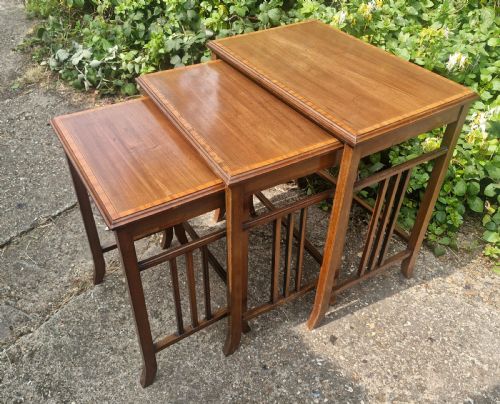
Edwardian stacked tables often feature light mahogany frames combined with satinwood or boxwood inlay. The legs tend to be slender and square tapered.
They frequently appear as sets of three or four tables dating around the turn of the twentieth century.
Are there Asian styles available?
Listings include Chinese hardwood and Huanghuali nests featuring carved details and graduated side tables. These pieces date from the nineteenth century.
They offer distinct carved surfaces and timber grains compared to standard European mahogany or walnut models.