


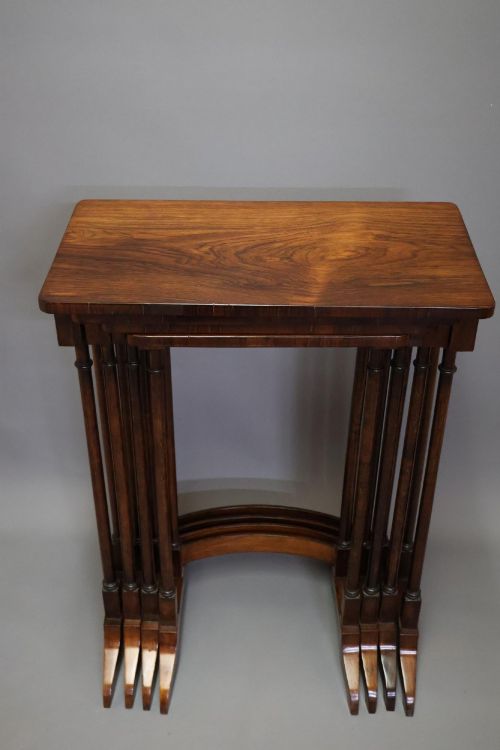


Georgian Nest of Tables
A georgian nest of tables offers clever stacking practicality, bringing versatile surfaces for lamps or tea into a room without cluttering the floor.
Georgian Nest of Tables
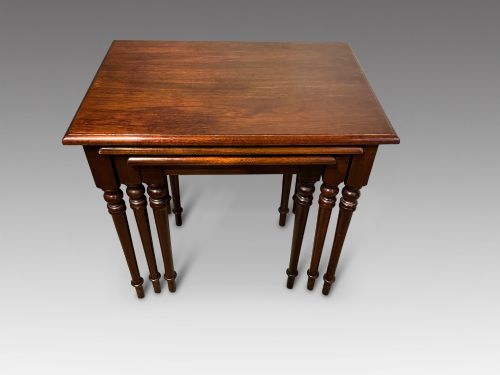
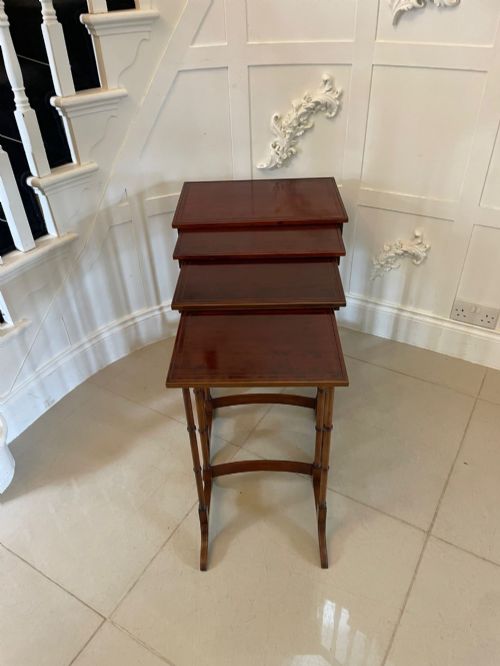
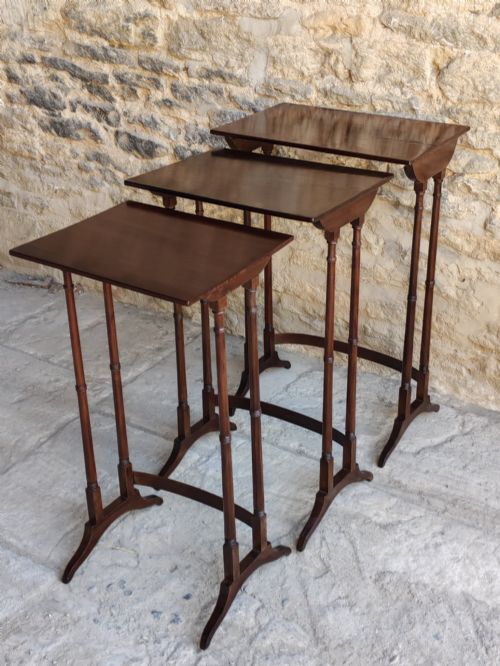
A georgian nest of tables comprises graduated stacking tables designed to fit neatly one beneath another when not in active use. The selection spans authentic early pieces alongside later revivals from the nineteenth and twentieth centuries.
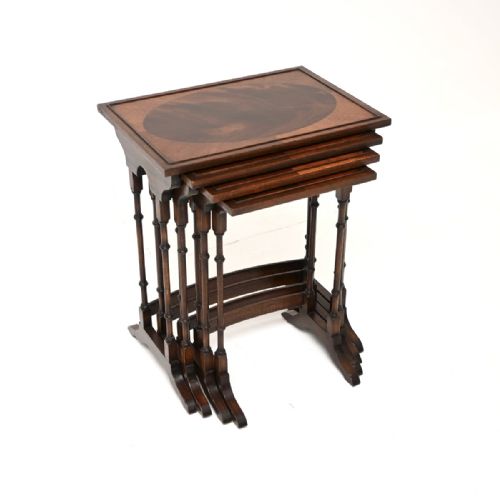
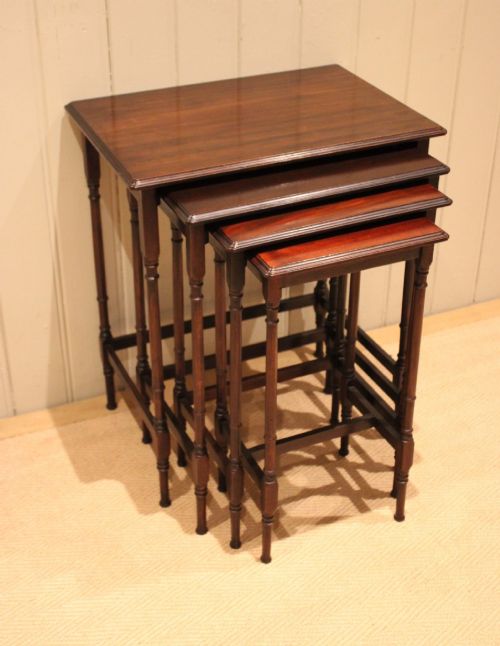
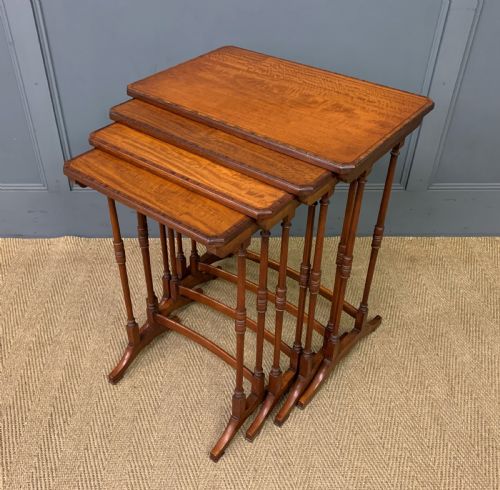
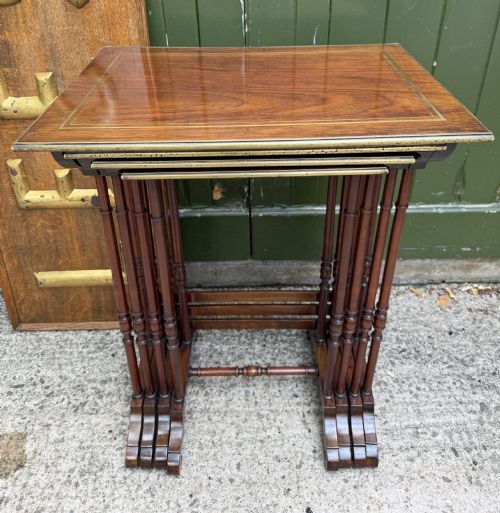
Most examples encountered here follow the quartetto format of four tables, though sets of three appear frequently across various eras. The design bridges formal entertaining needs with compact domestic economy.
Makers drew upon Georgian and Regency aesthetic traditions, producing occasional tables that served multiple functions around the drawing room or parlour.
Materials and construction
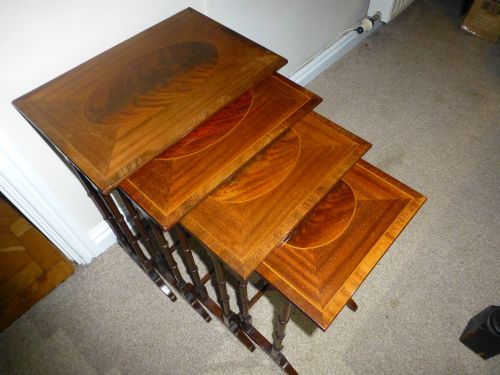
Timber selection prioritised rich grains, with mahogany forming the backbone of production alongside dramatic rosewood and lighter satinwood. Cabinet makers utilised fine veneers and contrasting boxwood inlay to create decorative borders along the table tops.
Structural integrity relied on slender turned or column supports that allowed each smaller table to slide smoothly into the frame above it. Joinery focused on balancing lightness of form with the daily wear of withdrawal and stacking.
Georgian Nest of Tables Retail Price Guide 2026
Typical asking prices for georgian nest of tables among the pieces listed under this phrase on Sellingantiques today, from the lower quarter to the upper quarter. They describe what is for sale here now, not the wider market.
Listings feature mahogany, rosewood, and satinwood alongside walnut and oak across multiple revival periods.
Craftsmanship and proportion
Graduation and fit define the upper tiers of production, where tables slide home with uniform clearance and minimal friction. Lesser examples show slight warping or clumsy tolerances that impede smooth operation.
The sophistication of secondary woods and the precision of inlaid stringing separate standard workshop output from exceptional cabinet work. Attention to detail on the smallest, lowest table reveals the maker's commitment to the entire set.
Gillows·Waring and Gillow·G T Rackstraw
The Georgian Nest of Tables Glossary
- Quartetto
- A matched set of four stacking tables designed to nest together. This term appears frequently in nineteenth-century descriptions.
- Veneer
- A thin layer of figured timber applied to a stable secondary wood surface. This technique allowed makers to display dramatic grain patterns without risking structural movement.
- Inlay
- Contrasting woods or materials set flush into the primary surface to form decorative borders. Boxwood and satinwood were common choices for these linear details.
- Regency
- A style period spanning the early nineteenth century defined by classical restraint and rich cabinet timbers. Pieces from this era often feature rosewood and brass detailing.
Georgian Nest of Tables: Frequently Asked Questions
What is a quartetto nest of tables?
A quartetto set consists of four graduated tables engineered to slide one beneath another into a single compact footprint. This format became popular for serving tea or holding small lamps.
The term distinguishes a four-piece nest from standard trios, reflecting traditional cabinet-making terminology seen in Regency and later revival periods.
How were these tables used originally?
Homeowners deployed the individual surfaces around a room during social gatherings for drinks, reading materials, or lighting. They provided extra table space on demand without requiring permanent floor space.
Once guests departed, the tables stacked back together neatly beside a sofa or against a wall.
How do I tell an original Georgian set from a later revival?
Examine the timber characteristics, construction methods, and secondary woods used beneath the primary surfaces. Revival pieces from the Edwardian era or the nineteen-twenties often employ different interior framing techniques.
Wear patterns and the ageing of the finish also offer clues to the actual decade of manufacture.
What woods should I expect to find?
Mahogany forms the majority of surviving examples, prized for its durability and warm reddish-brown tone. Rosewood and satinwood appear in more decorative pieces alongside contrasting inlay work.
Solid timber construction sits alongside high-quality veneer applications across the various periods represented.