



Graduated Nesting Tables
Graduated nesting tables offer a clever space-saving design, stacking neatly together when not in use.
Graduated Nesting Tables
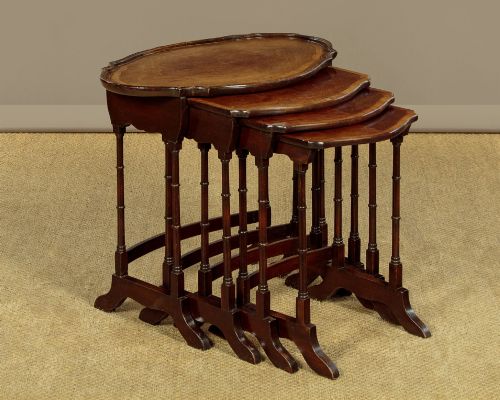
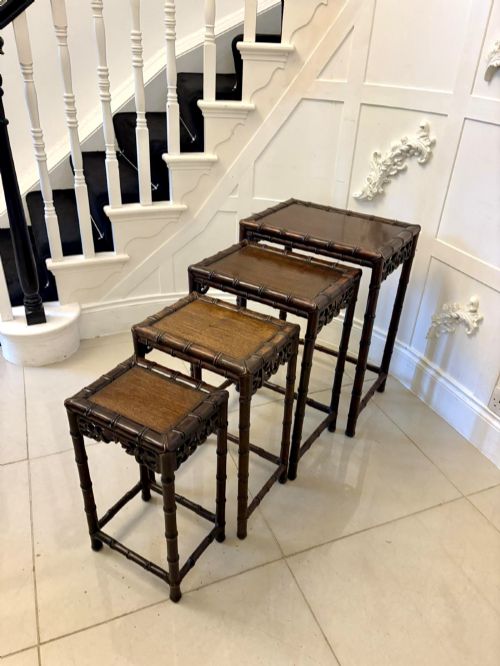
Graduated nesting tables form a practical set where each smaller table slides neatly beneath the next, saving valuable floor space in any room. These pieces appear in forms ranging from three to four tables, designed to pull out independently for serving or display.
The selections available here span several distinct periods, with Edwardian and nineteenth-century examples forming the majority of the choices. Buyers will frequently encounter mahogany and hardwood constructions, alongside traditional Chinese Qing Dynasty and Edwardian aesthetic styles.
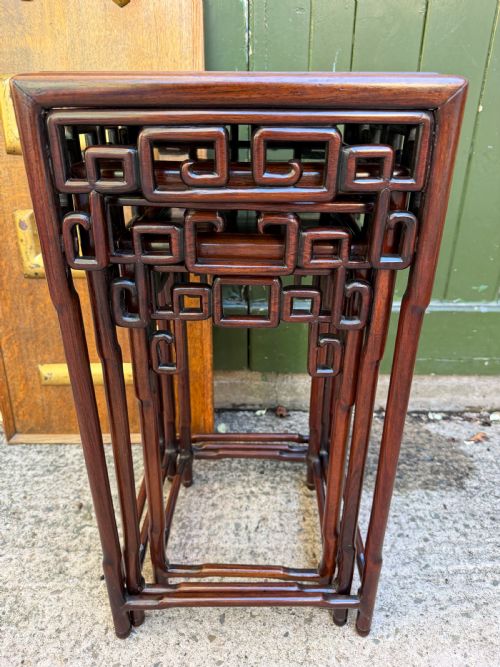
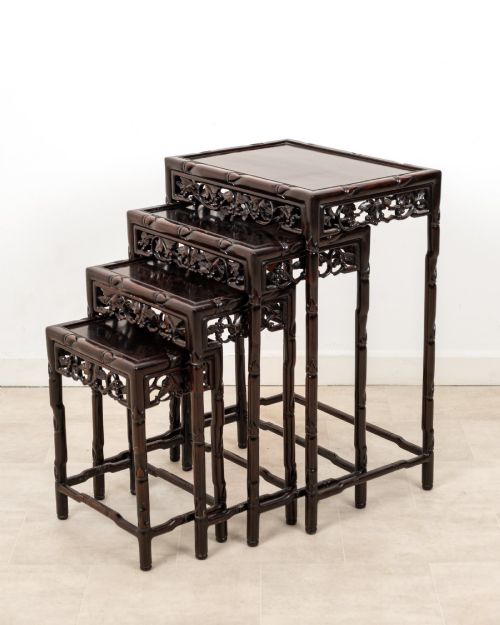
Originating both in British cabinet-making traditions and imported Chinese workshops, these sets demonstrate a shared pursuit of versatile furniture. Whether rendered in simple oak with barley twist legs or richly carved rosewood, the core function remains the same.
Materials and construction
Cabinet-makers relied on dense timbers such as mahogany, rosewood, walnut, and oak to build frames robust enough to withstand constant sliding and stacking. Satinwood inlay frequently provides decorative contrast on the table tops, while faux rosewood demonstrates the period practice of grain-painting secondary woods.
Graduated Nesting Tables Retail Price Guide 2026
Typical asking prices for graduated nesting tables among the pieces listed under this phrase on Sellingantiques today, from the lower quarter to the upper quarter. They describe what is for sale here now, not the wider market.
Chinese Qing Dynasty and Chinoiserie styles appear alongside traditional British Jacobean Revival forms.
Distinctions in craftsmanship
Quality separates sets through the precision of the graduated fit, ensuring each smaller table slides smoothly into position without binding or wobbling. Superior examples maintain structural integrity across all tables in the stack, avoiding the looseness that comes from heavy wear over decades.
The choice of materials and the execution of decorative elements also mark the divide between standard utility pieces and finer workshop output. Hand-carved details, carefully matched timber veneers, and subtle inlay work demonstrate a higher level of artisan skill during production.
The Graduated Nesting Tables Glossary
- Quartetto
- A set of four nesting tables designed to fit one beneath another. This term appears frequently in nineteenth-century British furniture records.
- Faux Rosewood
- A painted finish applied to a less costly wood to imitate the grain and colour of genuine rosewood. Artisans utilised this technique during the Regency period and later.
- Barley Twist
- A turned column resembling a twisted rope, commonly found on the legs of oak tables from the early twentieth century. This decorative turning adds vertical texture to the furniture.
- Satinwood Inlay
- Contrasting light-coloured wood inserted into the surface of a darker primary timber to create geometric or botanical patterns. It marks finer cabinet-making work from the Edwardian era.
- Hardwood
- Dense timber derived from broad-leaved trees, encompassing species such as mahogany and rosewood. These materials provide the durability required for frequent handling.
Graduated Nesting Tables: Frequently Asked Questions
What is a nest of four tables called?
A set of four nesting tables is historically referred to as a quartetto set. This term designates the graduating arrangement where four separate pieces slide into a single footprint.
Cabinet-makers throughout the nineteenth century produced these sets to serve multiple guests in compact drawing rooms.
How were nesting tables used historically?
These tables served as versatile furniture for entertaining, allowing hosts to pull out smaller surfaces for tea or writing as needed. When the gathering concluded, the tables stacked together to clear the room.
Their mobility made them essential items in formal Victorian and Edwardian sitting spaces.
Are all nesting tables British?
While many examples reflect British cabinet-making styles from the Victorian and Edwardian periods, a significant portion originate from Chinese workshops. These imported pieces often feature carved hardwood and Qing Dynasty styling.
Both traditions focused on graduating sizes to achieve efficient storage.
What woods were commonly used?
Makers utilised dense timbers including mahogany, rosewood, walnut, and oak to construct durable frames. Satinwood inlay and simulated faux rosewood finishes provided additional decorative appeal.
Selection depended on the period style and the workshop's intended market.