

Traditional Mahogany Side Tables
Traditional mahogany side tables bring warmth and functional surface space to a room, spanning periods from the 18th century through to the Edwardian era.
Traditional Mahogany Side Tables
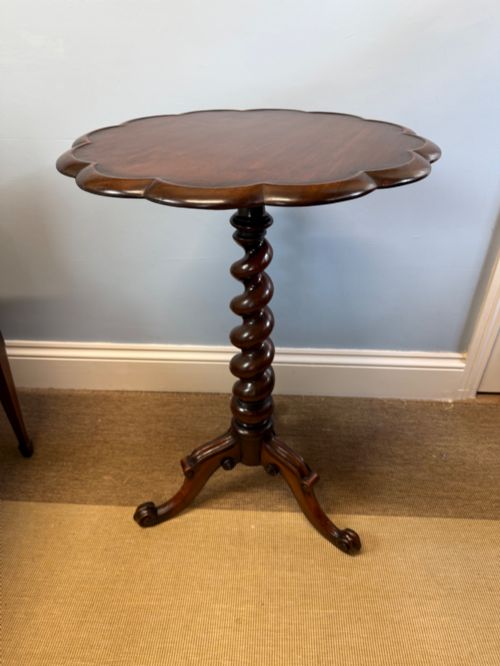
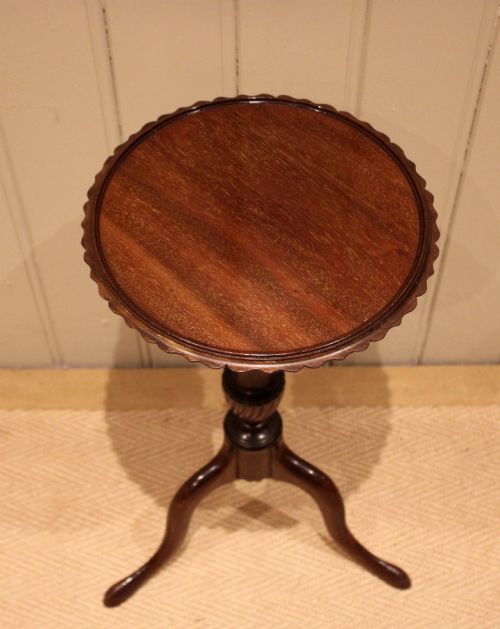
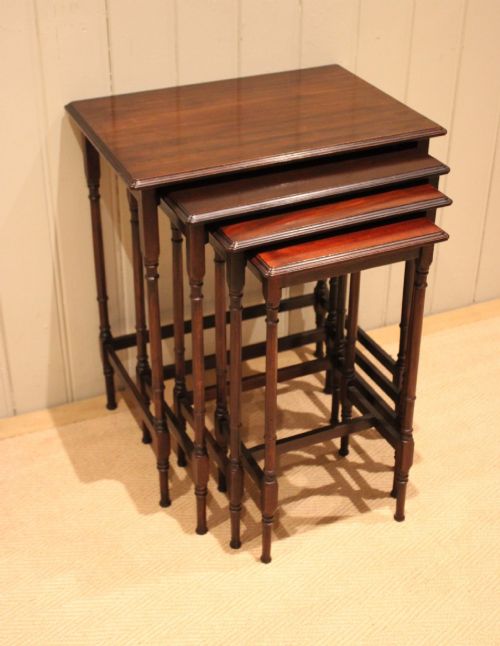
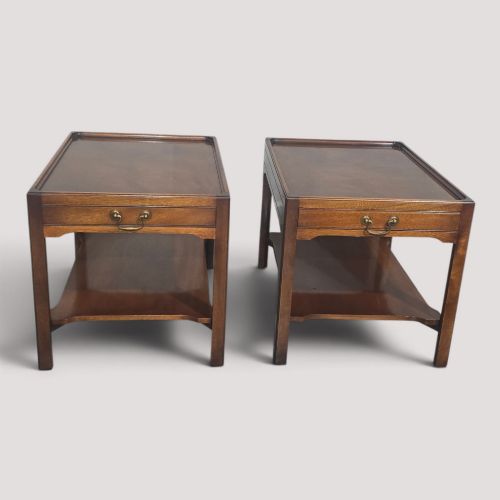
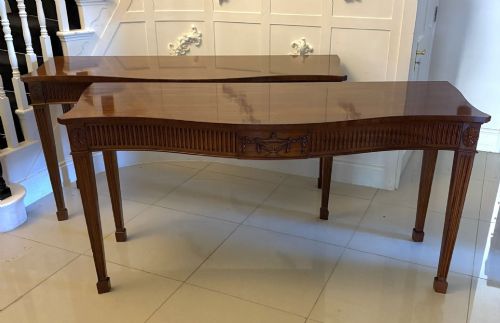
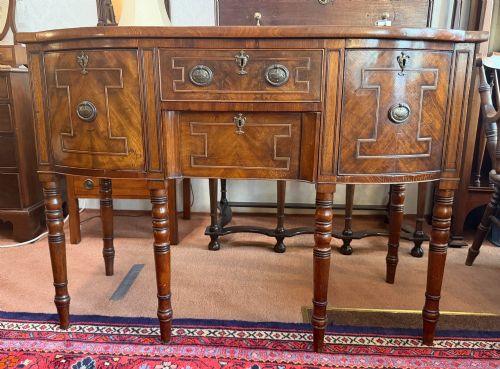
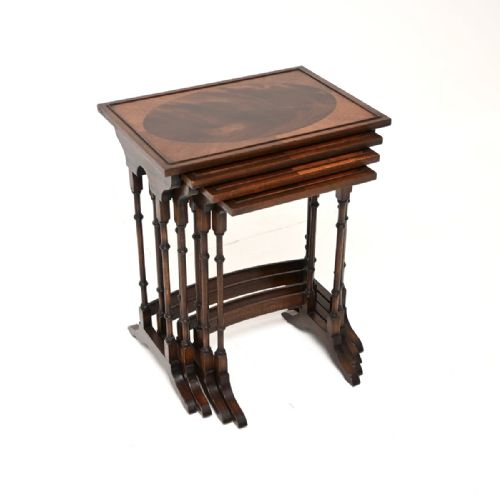
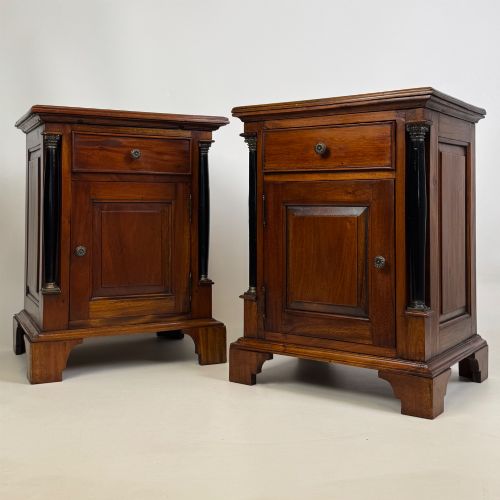
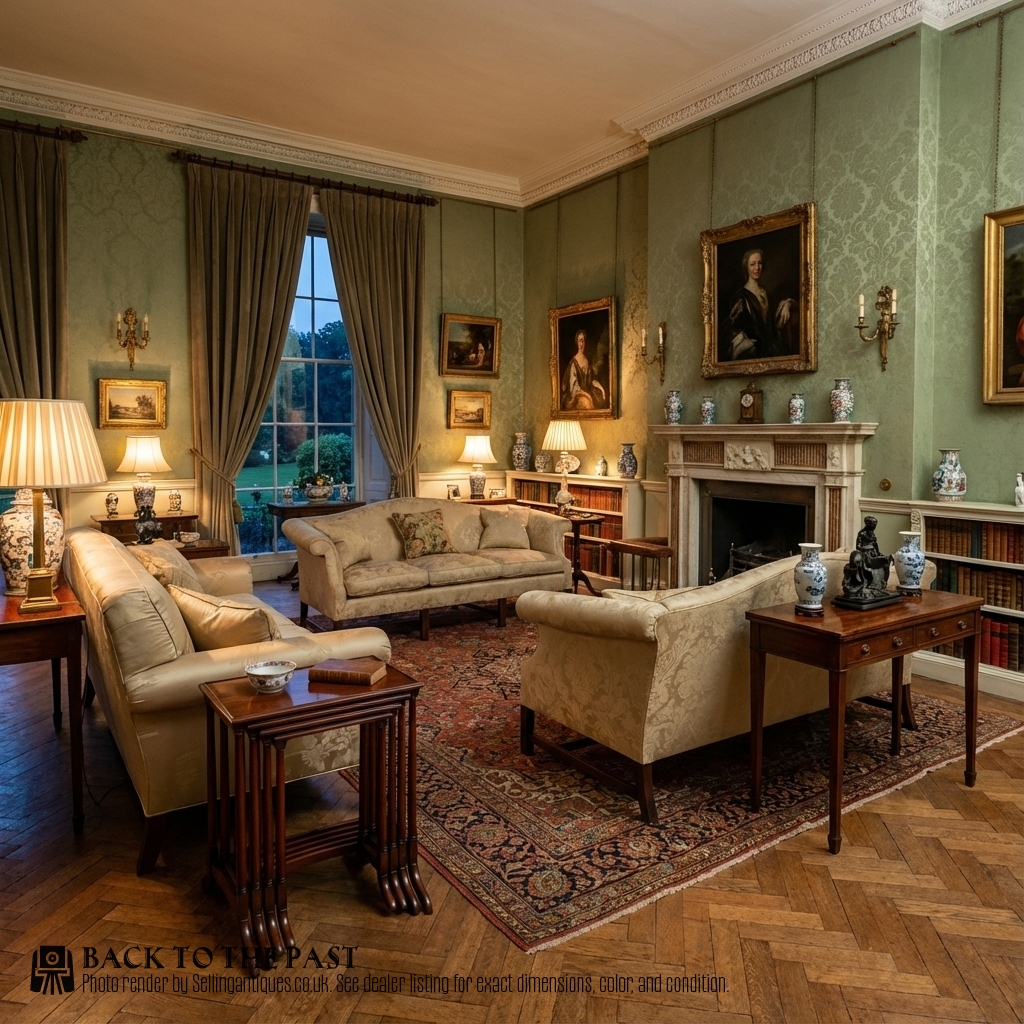
Traditional mahogany side tables cover a broad assortment of smaller utilitarian forms designed for domestic use, including wine tables, nests of tables, lamp tables, and bedside cabinets. These pieces emerge from periods such as the Georgian, Victorian, and Edwardian eras, reflecting changing domestic habits over two centuries.
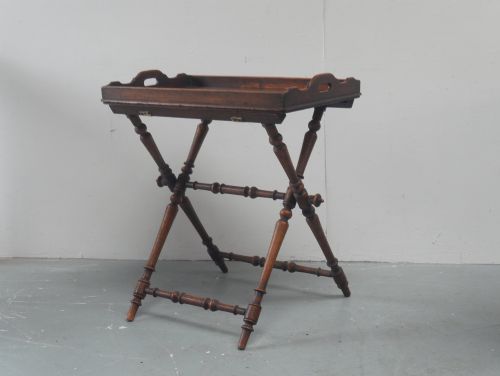
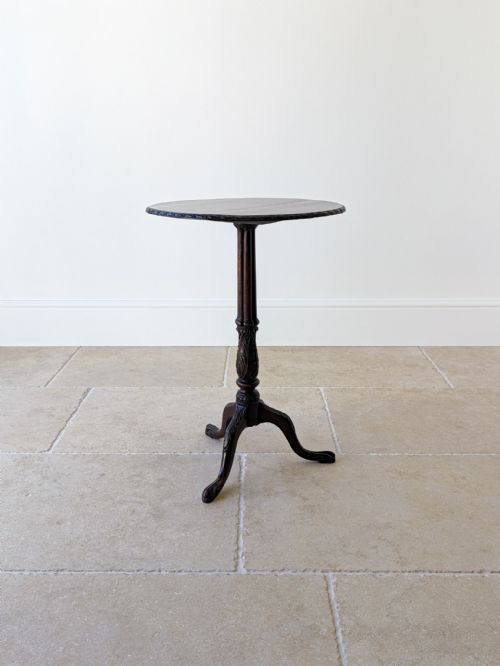
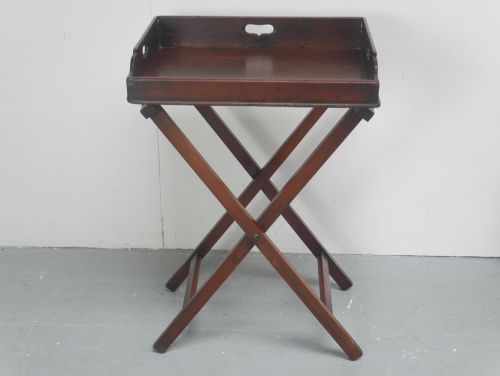
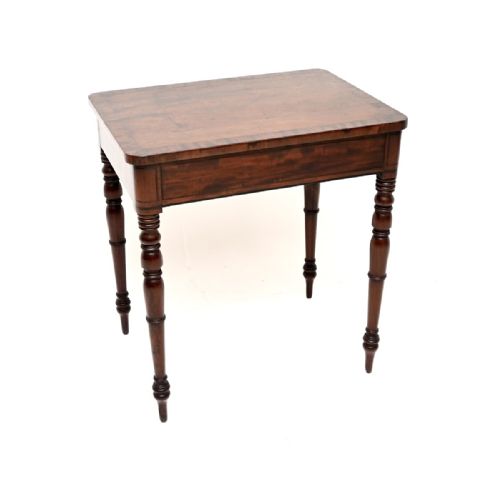
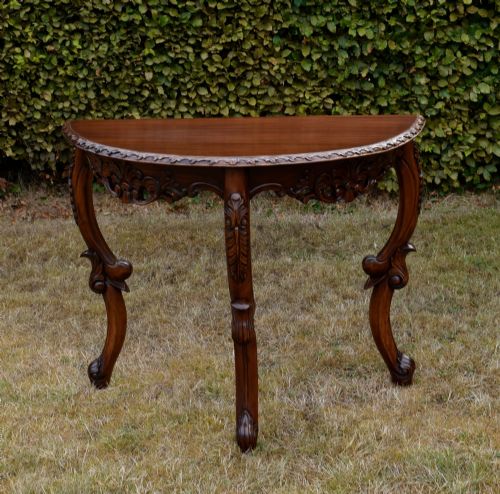
The pieces on this page lean heavily towards occasional and wine tables alongside nests of four and writing desks. A buyer encounters formats ranging from simple tripod bases to complex serpentine console tables and folding butler's trays.
Origins stretch across standard English craftsmanship of the 18th, 19th, and early 20th centuries. Whether built for formal Georgian reception rooms or compact Edwardian bedrooms, each piece served a specific daily purpose.
What varies in quality
Quality rests in the crispness of the carving, the selection of the mahogany grain, and the integrity of the original construction methods. Neoclassical carving, shaped pie crust rims, and intricate inlay separate standard utility items from finer workshop output.
Proportions and stability dictate the standing of a piece within its type. Small proportions and balanced tripod legs show a higher degree of cabinetmaking skill than bulkier, unrefined equivalents.
Some tables come fitted with birdcage mechanisms that allow the top to tilt and rotate simultaneously, ready to baffle modern guests.
Gillows
The Traditional Mahogany Side Tables Glossary
- Mahogany
- A durable tropical hardwood prized for its rich reddish-brown colour and stable grain. It forms the primary structural and visual material for these tables.
- Tripod table
- A small occasional table supported by a central pillar and three spreading legs. This form gained popularity during the Georgian period for flexibility.
- Wine table
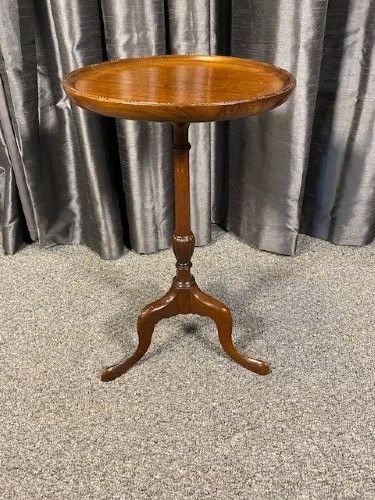
- A compact single-pillar table designed to hold a glass or bottle near a seating area. They often feature circular tops and tilting mechanisms.
- Butler's tray
- A removable wooden tray with raised sides, traditionally set upon a folding stand. It allows for portable serving and easy storage.
- Serpentine
- A gentle undulating curve shaping the front edge of a console or side table. This contour demands advanced woodworking precision.
- Veneer
- A thin layer of choice wood applied over a secondary timber base. It provides decorative grain patterns without excessive weight.
Traditional Mahogany Side Tables: Frequently Asked Questions
How do I use a wine table?
Wine tables suit placement beside armchairs or sofas as a compact surface for drinks or books. Their small footprints allow them to fit into tight corners without crowding a room.
Many examples feature tilt-top or birdcage mechanisms, enabling the top to fold flat against the central pillar when not in use for simple storage.
What is a spider leg table?
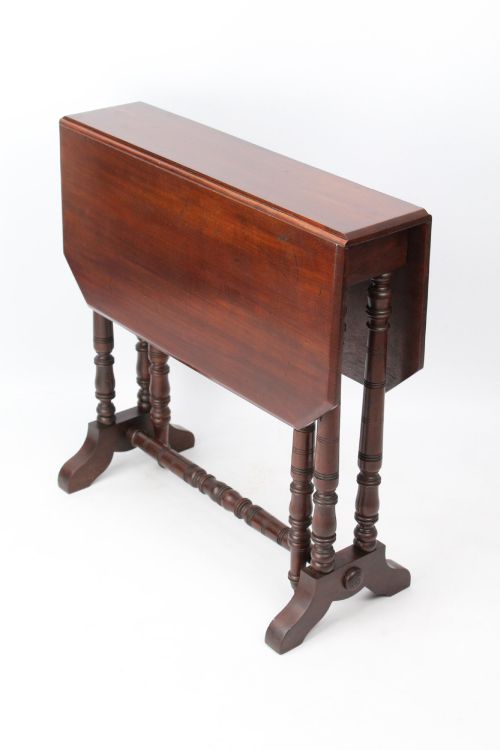
A spider leg table is an occasional piece characterised by exceptionally slender turned legs joined by delicate stretchers. This design maximises legroom while minimising visual bulk.
Originating in the 18th century, these tables often incorporate drop-leaf mechanisms to expand their surface area on demand.
Where do I place a nest of tables?
A nest of tables works best in a living room where surface space needs to adapt quickly. The smaller tables slide neatly beneath the largest one when floor space is required.
They function well beside seating areas to hold lamps or cups during gatherings before returning to a stacked arrangement.
How do I tell a Georgian table from a Victorian one?
Georgian tables typically display restrained classical proportions, elegant tripod bases, and minimal ornamentation rooted in Neoclassical or Chippendale styles. Woods tend to show deep, natural patination developed over centuries.
Victorian and Edwardian pieces often introduce heavier pedestals, revival motifs, or factory-produced details like stamped brass fittings and precise mechanical joinery.