




Nested Accent Tables
Nested accent tables pack several surfaces into the footprint of one, offering practical versatility across dining rooms and living spaces.
Nested Accent Tables
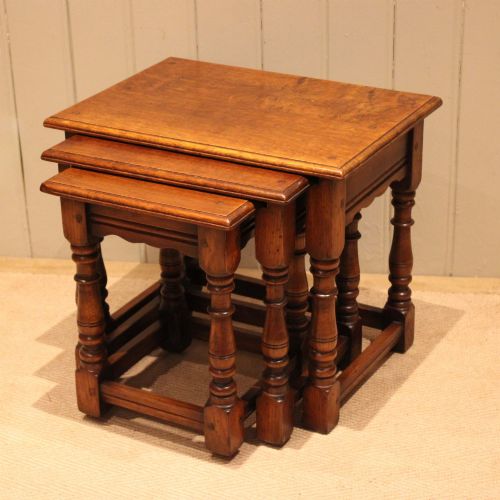
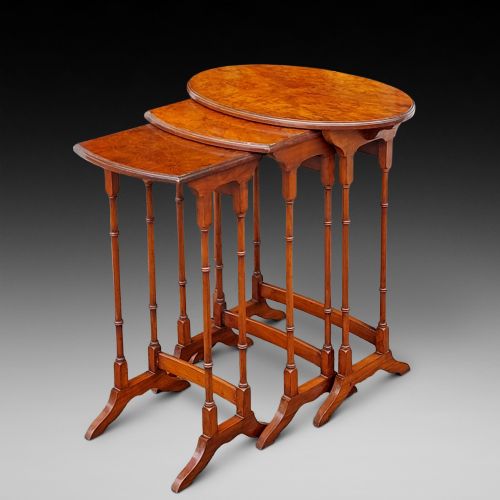
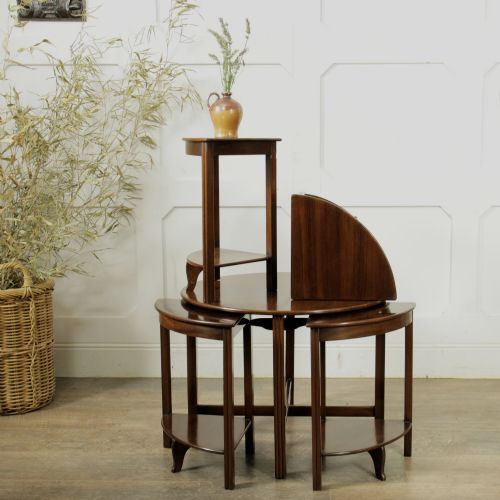
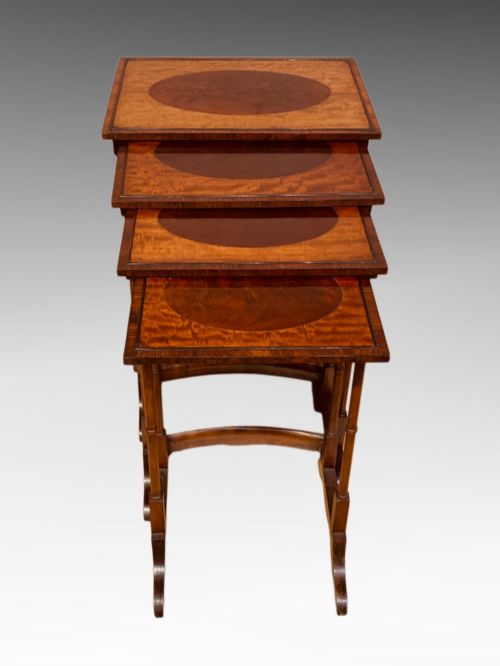
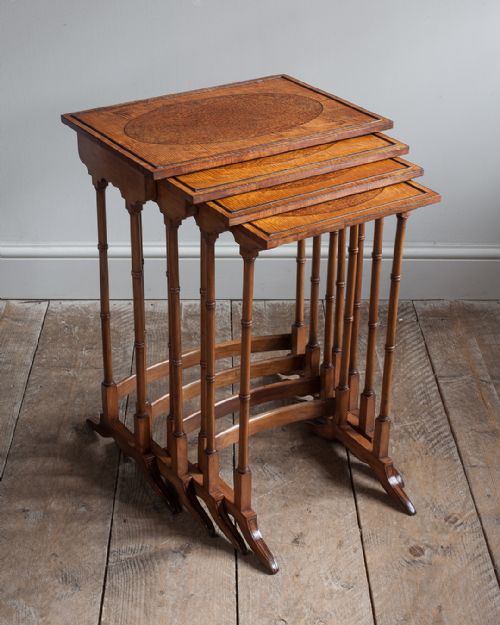
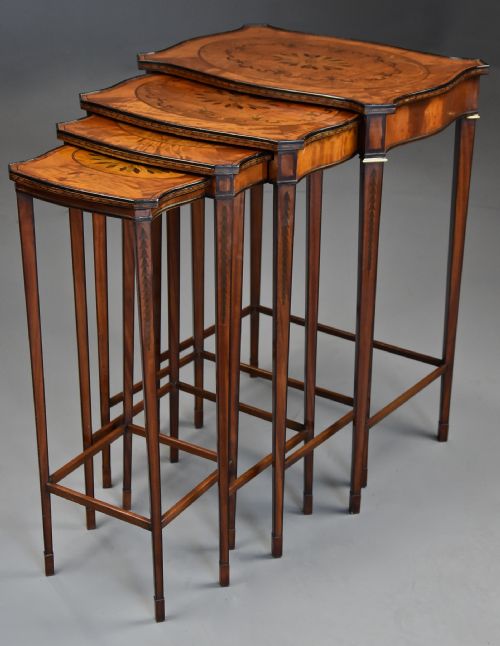
Nested accent tables combine practical utility with compact design by housing smaller auxiliary surfaces beneath a main tabletop. When searching for nested accent tables, buyers frequently encounter sets containing three or four individual pieces that slide neatly together when not in use.
The selections span multiple eras, including Victorian, Edwardian, and Regency periods, alongside 19th-century and early 20th-century creations. Common forms range from straightforward rectangular sets to circular, oval, kidney-shaped, and serpentine silhouettes.
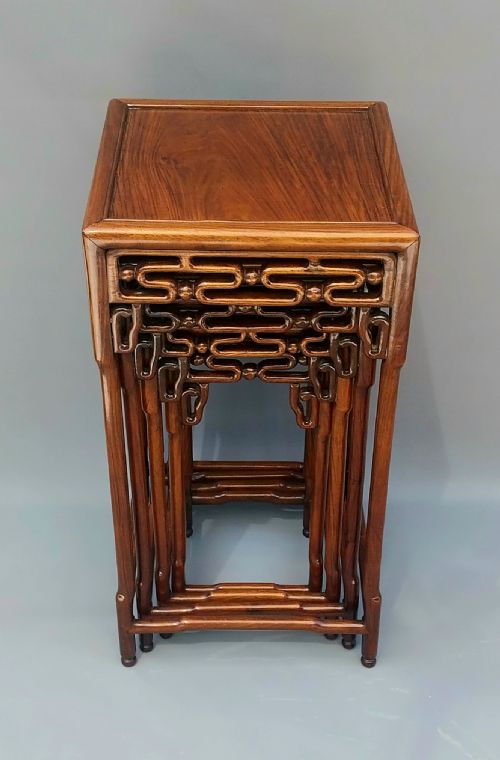
Origin and stylistic influences stretch from traditional English country and Sheraton designs to Chinese export, Chinoiserie, Qing dynasty, and French Art Nouveau traditions. Buyers discover formations made specifically as quartetto sets or multi-tiered groupings intended for flexible placement.
Materials and Construction
Cabinetmakers utilised a variety of solid timbers and fine veneers, predominantly selecting mahogany, rosewood, walnut, oak, teak, satinwood, and hardwood. Many examples incorporate decorative details such as marquetry, parquetry, floral inlay, yew veneer tops, and intricate carving.
Certain pieces display specialised finishing techniques, including French Art Nouveau shaping, Boulle-work, and black lacquer applied to Chinoiserie surfaces. Construction methods prioritized secure joints and graduated sizing to ensure each smaller table slides smoothly into position beneath the next.
Some sets slide together so smoothly they practically play hide and seek in your drawing room.
Assessing Quality and Execution
Quality rests heavily on the selection of timber and the precision of the underlying joinery, particularly where frames meet under frequent removal and replacement. Superior examples employ choice veneers, balanced grain matching, and crisp inlay work that remains flush with the surrounding wood.
The refinement of the carving, the integrity of specialised finishes like lacquer or parquetry, and the overall structural stability during stacking distinguish standard utilitarian sets from exceptional pieces produced by skilled workshops.
Émile Gallé
The Nested Accent Tables Glossary
- Quartetto
- A matched set of four small tables designed to nest inside one another. This term appears frequently in Edwardian and late Victorian cataloguing.
- Chinoiserie
- European decorative style incorporating Chinese artistic motifs and techniques. It often appears on black lacquer surfaces with gilt detailing.
- Parquetry
- Geometric mosaic woodwork used for decorative flooring or tabletops. Pieces are arranged in repeating patterns to create visual texture.
- Boulle-work
- Elaborate marquetry style utilising tortoiseshell and brass inlay. This technique adorns select high-status French and continental furniture.
Nested Accent Tables: Frequently Asked Questions
What are nested accent tables?
Nested accent tables are sets of graduated tables designed to fit neatly beneath one another to save floor space. They provide multiple surfaces that can be pulled out independently when entertaining or needing extra room for drinks and books.
Most sets comprise three or four tables of decreasing height and width. This smart engineering allows them to occupy the footprint of a single small table while offering surprising versatility.
How were nested tables used historically?
Historically, these tables served elite households as movable tea or work surfaces during the Victorian and Edwardian eras. Servants could easily transport the entire stack into a drawing room and distribute the smaller tables to seated guests.
As domestic spaces evolved, their utility shifted toward general living areas as flexible coffee table alternatives or side stands. Their space-saving design made them particularly popular in smaller drawing rooms and parlours.
How do I care for antique wood surfaces?
Antique timber surfaces require gentle maintenance using soft, dry cloths and occasional applications of appropriate wax polish. Avoid placing them in direct sunlight or near heat sources to prevent the wood or delicate veneers from warping and cracking.
Using coasters and placemats helps protect historic French polish and inlaid surfaces from moisture rings and heat damage. Regular, light dusting preserves the natural lustre of woods like mahogany, rosewood, and walnut.
How can I tell the period of a set?
Dating relies on examining the timber species, construction techniques, hardware, and stylistic markers such as inlay or leg profiles. Regency and Victorian sets often display heavier proportions and solid mahogany or rosewood construction, while Edwardian versions frequently feature lighter satinwood, delicate stringing, and kidney shapes.
Checking the underside and joints for hand-cut elements, screws, and glue blocks provides further clues about manufacturing era. Comparing the decorative vocabulary to known regional styles helps narrow down the decade of production.