
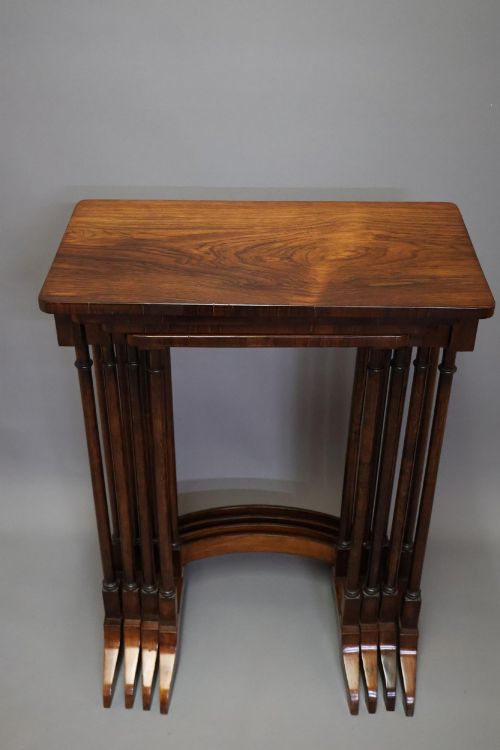


Turned Leg Nest Tables
Turned leg nest tables are practical sets of graduating tables that slide neatly inside one another, offering versatile surface space without crowding a room.
What turned leg nest tables are
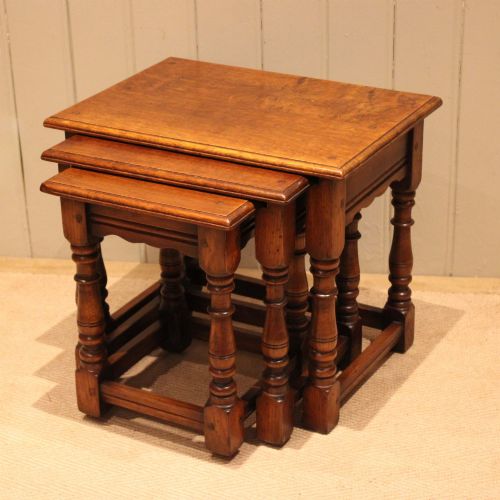
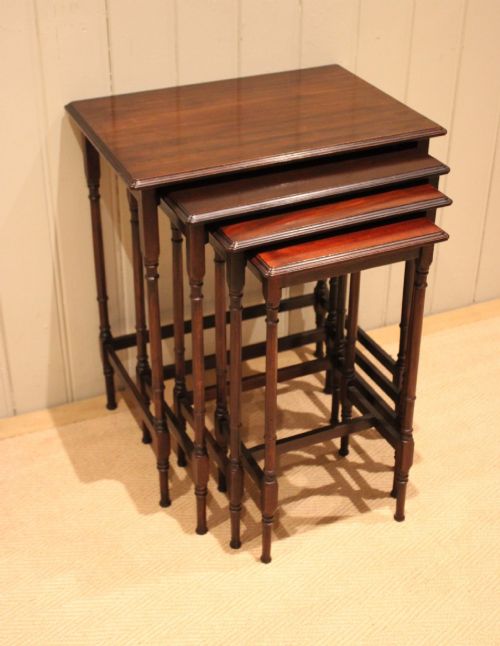
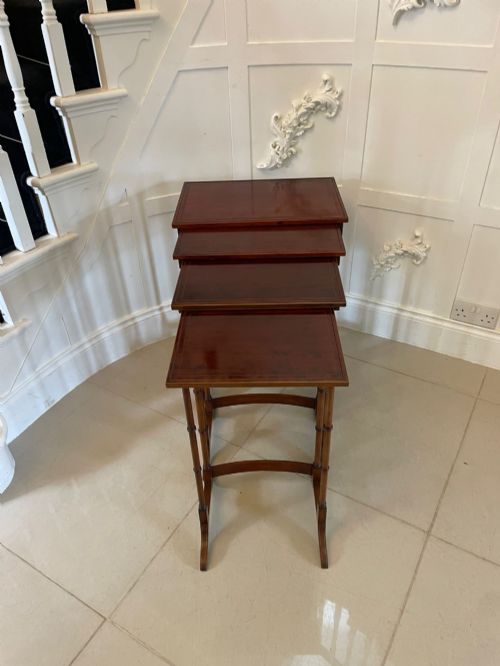
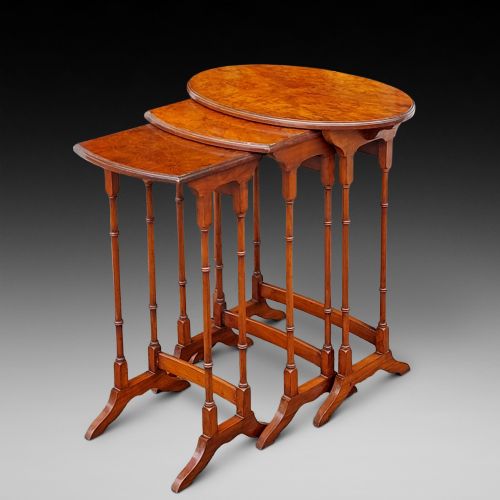
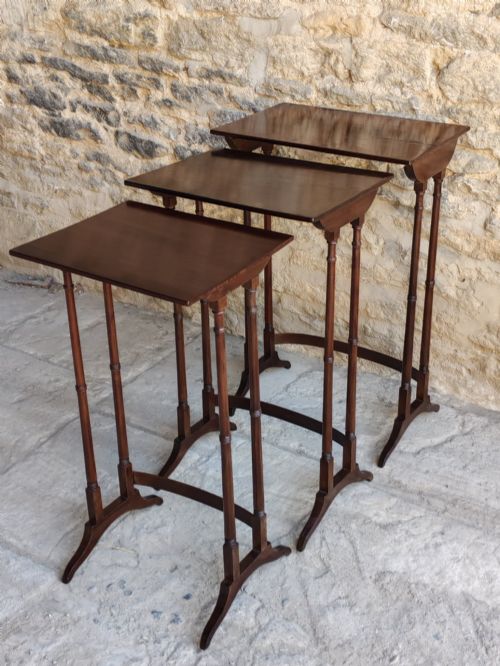
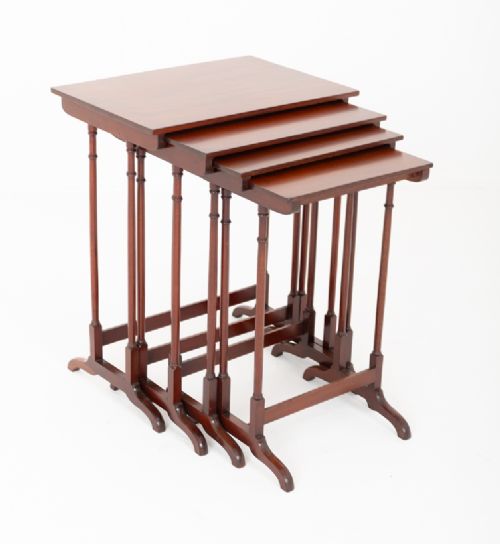
Turned leg nest tables comprise sets of graduating tables designed to slide neatly beneath one another to save space. When searching for turned leg nest tables, buyers encounter examples originating across the nineteenth and early twentieth centuries, spanning Georgian, Victorian, Edwardian, and Regency styles.
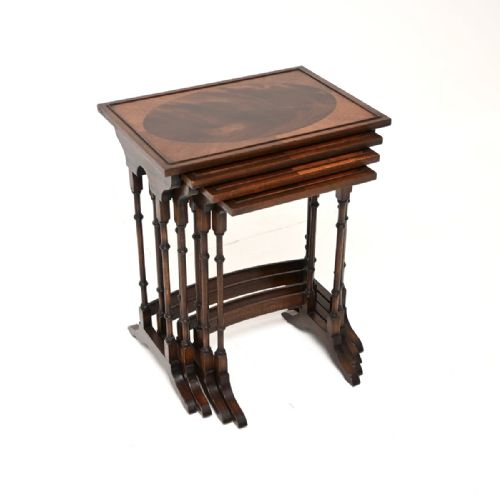
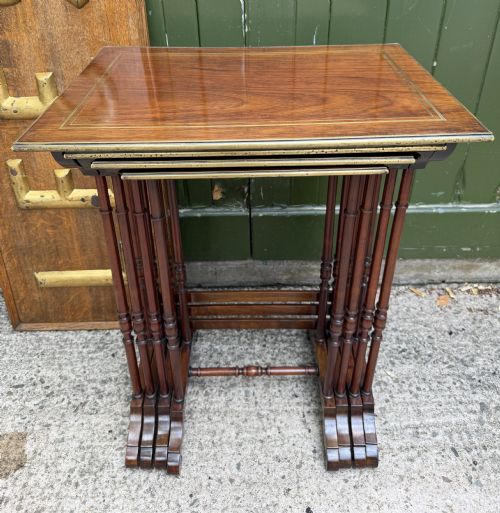
The pieces listed on this page appear in configurations of three or four individual tables. Materials span mahogany, oak, walnut, and occasional satinwood inlay, reflecting the predominant cabinet timbers of their respective periods.
How they were made
Cabinet makers utilised solid timbers and veneers of mahogany, oak, and walnut, often shaping the tops and incorporating decorative details such as satinwood inlay. The legs feature distinctive turned profiles, including ring-turned variations seen across nineteenth-century examples.
Construction methods focused on creating graduated dimensions so each smaller table fits snugly beneath the next. Joinery techniques of the period ensure stability across the nested tiers while maintaining lightweight frames for easy handling.
Retail Price Guide 2026
Typical UK retail prices for turned leg nest tables, calculated from the Sellingantiques database of over a million retail prices indexed since 2003. This retail price guide relies exclusively on Sellingantiques data; no external sources or auction records are used, so the figures do not describe the wider market.
Listings feature mahogany, oak, walnut, and satinwood across Georgian, Victorian, and Edwardian periods.
What varies in quality
Quality rests in the choice of timber and the precision of the turning on the legs. Sets featuring figured mahogany or walnut show superior selection of grain compared to plainer utility pieces.
The fit of the nest demonstrates the maker's skill. Finer sets slide together smoothly with minimal clearance gaps, maintaining uniform proportions from the largest table down to the smallest.
The Turned Leg Nest Tables Glossary
- Quartetto
- A set of four graduating tables designed to nest together. This term frequently appears in Edwardian and nineteenth-century descriptions.
- Ring turned
- A lathe-turned decorative detail on furniture legs featuring parallel circular grooves or rings. This technique creates texture and visual rhythm along the upright supports.
- Satinwood inlay
- Contrasting light-toned wood inserted into a darker primary timber to form decorative borders or motifs. It is often found on Edwardian pieces.
- Nesting tables
- A set of multiple tables of decreasing size that stack one beneath another. They provide flexible surface space in compact interiors.
Frequently Asked Questions
What are turned leg nest tables?
Turned leg nest tables are sets of graduating tables designed to slide neatly inside one another for compact storage. They provide multiple surfaces that can be separated as needed.
The examples on this page span the Georgian, Victorian, and Edwardian periods, constructed in timbers such as mahogany, oak, and walnut with distinctive turned leg supports.
How were nest tables used originally?
Originally, these tables served multi-purpose roles in entertaining, holding tea services, books, or sewing materials. When not required, they occupied minimal floor space.
The graduating design allowed households to pull out individual tables for guests without cluttering the room permanently.
How do I date a nest table?
Dating relies on timber selection, construction methods, and stylistic details associated with specific eras. Georgian and Regency pieces show different proportions compared to Edwardian examples.
Evidence on this page includes nineteenth-century pieces alongside Edwardian items from around nineteen hundred and nineteen ten, each displaying period-typical woods like satinwood inlay or oak.
Are nest tables sturdy?
Despite their lightweight frames and graduating sizes, well-constructed nest tables offer reliable stability for everyday items like cups and books. The smallest table in the set requires the most careful handling due to its slender proportions.
Solid timber construction in mahogany, walnut, or oak ensures durability across generations of use.