


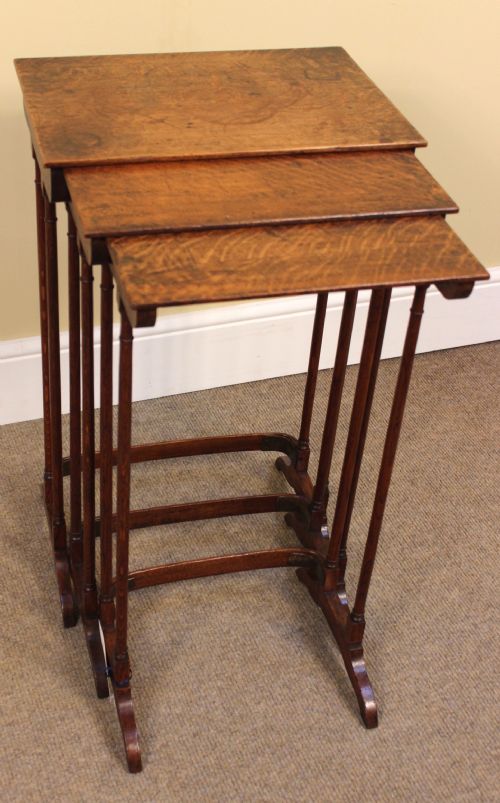
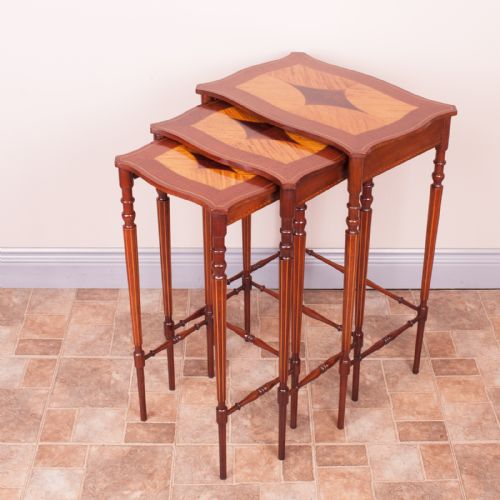
Trio of Nesting Tables
A trio of nesting tables offers clever, space-saving utility when entertaining, sliding neatly together until extra surfaces are required.
Trio of Nesting Tables
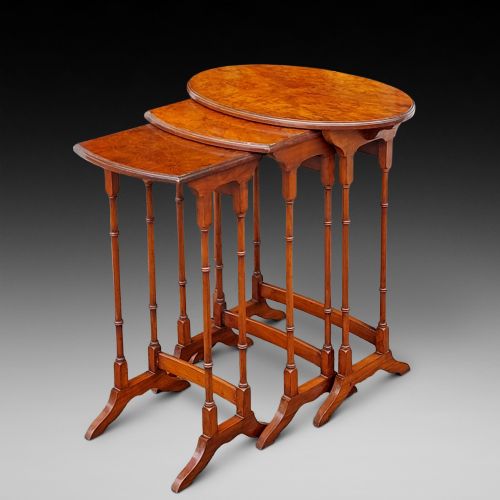
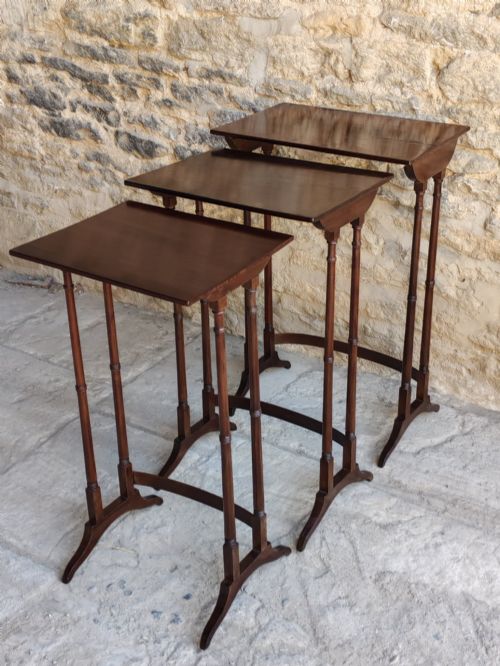
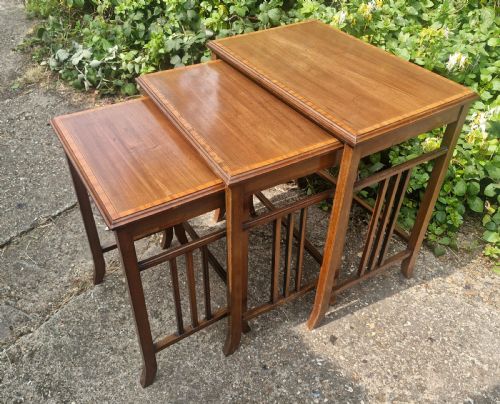
A trio of nesting tables consists of graduated surfaces designed to slide beneath one another for compact storage. Buyers searching for a trio of nesting tables most frequently encounter Edwardian and mahogany examples on this page.
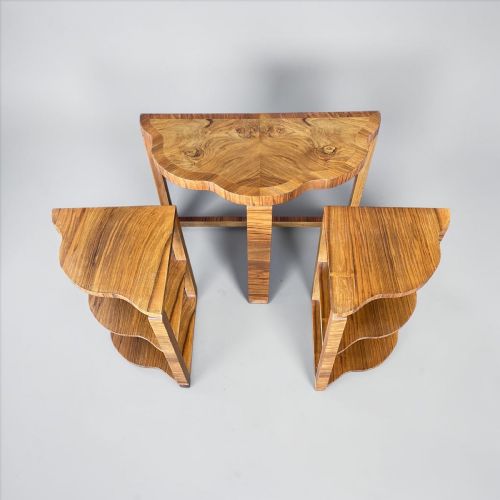
The form spans multiple eras, including Georgian, Regency, Victorian, and Art Deco periods. Pieces range from simple sets to elaborate designs featuring wood inlay, leather tops, and shaped surfaces.
Originating primarily as functional side furniture, these sets appear in woods such as oak, walnut, rosewood, and satinwood. The smaller tables tuck completely beneath the largest one to save floor space when not in use.
How they were made
Cabinetmakers utilised solid timbers and decorative veneers, applying mahogany, walnut, rosewood, and satinwood across various periods. Wood inlay added delicate geometric or floral patterns to table tops.
Structural techniques include turned legs, barley twist supports, and shaped tops tailored to fit graduated frames. Embossed leather inserts also appear on specific surfaces to provide a durable writing or display area.
Trio of Nesting Tables Retail Price Guide 2026
Typical asking prices for trio of nesting tables among the pieces listed under this phrase on Sellingantiques today, from the lower quarter to the upper quarter. They describe what is for sale here now, not the wider market.
What varies in quality
The standard of timber selection and veneer matching defines the upper tier of these tables. Finer sets employ rich burr walnut, rosewood, or carefully figured mahogany rather than plain secondary woods.
Joinery execution and the precision of the fit when tables slide together indicate superior craftsmanship. Subtle details such as refined edge moulding and crisp wood inlay separate standard production from exceptional work.
W&C Wilkinson London
The Trio of Nesting Tables Glossary
- Graduated
- Describing a set where each table diminishes in size so the smaller ones fit beneath the next largest. This arrangement allows the entire nest to occupy the footprint of a single small table.
- Inlay
- The technique of inserting pieces of contrasting wood into a recess to form decorative patterns. Sheraton Revival and Edwardian pieces frequently utilise this method.
- Barley twist
- A turned column resembling a spiral rope. This decorative leg style appears on oak sets from the early twentieth century.
- Veneer
- A thin layer of figured wood applied over a stable secondary timber base. Burr walnut and mahogany veneers create striking decorative surfaces on table tops.
Trio of Nesting Tables: Frequently Asked Questions
What is a trio of nesting tables?
A trio of nesting tables is a set of three graduated tables designed to slide inside one another. They provide multiple surfaces for drinks or books while occupying minimal floor space.
When separated, they function as individual side tables around a room. When combined, they store compactly as a single unit.
How were nesting tables used historically?
Historically, these tables served domestic needs in drawing rooms and parlours where space was at a premium. Servants or hosts could easily pull them out to serve tea or hold lamps.
Their versatility made them popular across the Georgian, Regency, Victorian, and Edwardian eras. They adapted readily to changing social habits in the home.
How do I date a set of nesting tables?
Dating relies on timber choice, decorative styles, and construction methods visible in the legs and tops. Regency and Georgian examples often feature rosewood or mahogany with understated elegance.
Edwardian pieces frequently display delicate wood inlay or satinwood details, while later twentieth-century sets incorporate oak barley twists or Art Deco geometric lines.
Can I use nesting tables daily?
These tables suit everyday domestic use for holding cups, books, or decorative objects. Their original construction in sturdy hardwoods like mahogany and oak ensures practical durability.
Care should be taken with polished or leather surfaces to prevent moisture marks. Sliding them gently avoids unnecessary wear on the internal runners.