


Inlay Mahogany Side Tables
These inlay mahogany side tables bring together fine cabinetmaking and decorative boxwood and satinwood detailing across periods from the eighteenth century to the twentieth.
Inlay Mahogany Side Tables
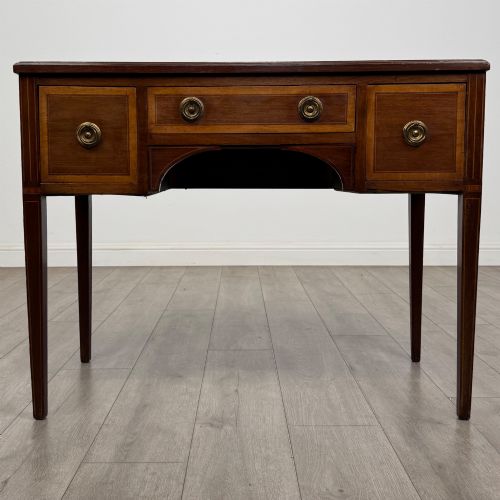
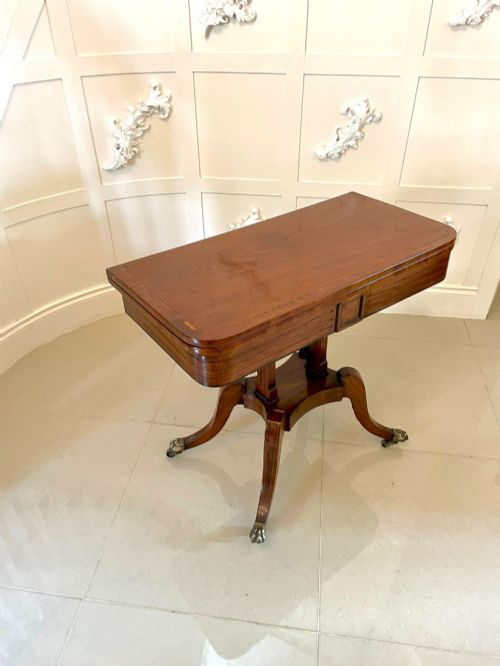
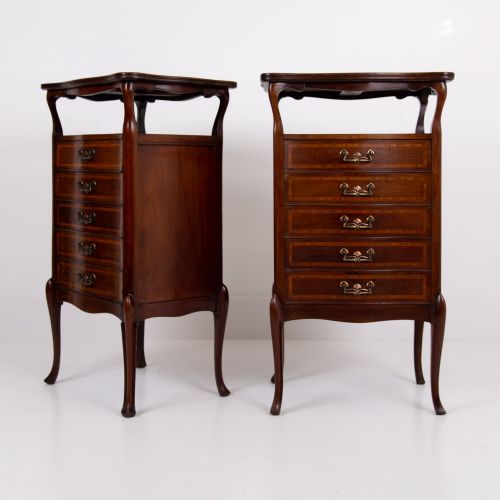
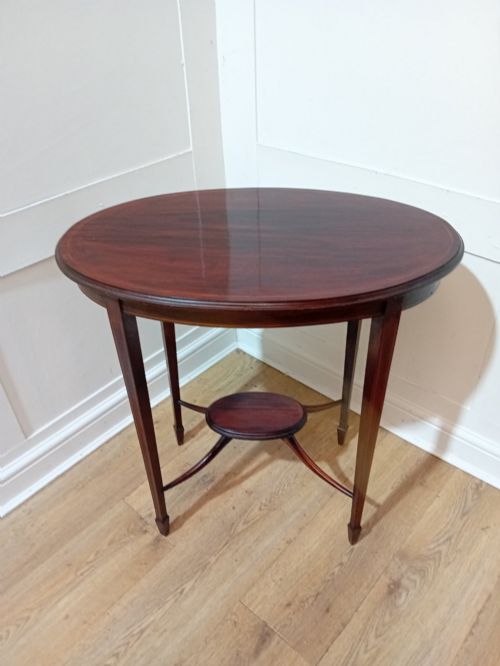
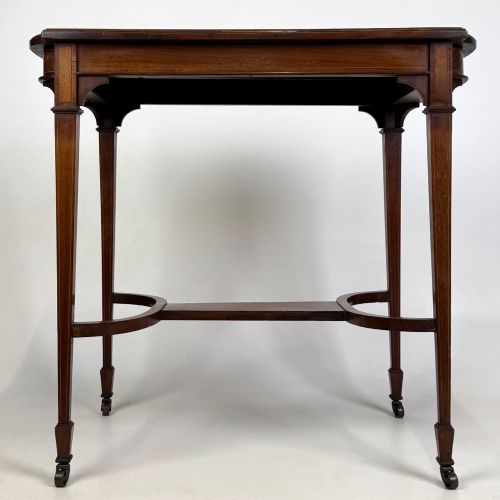
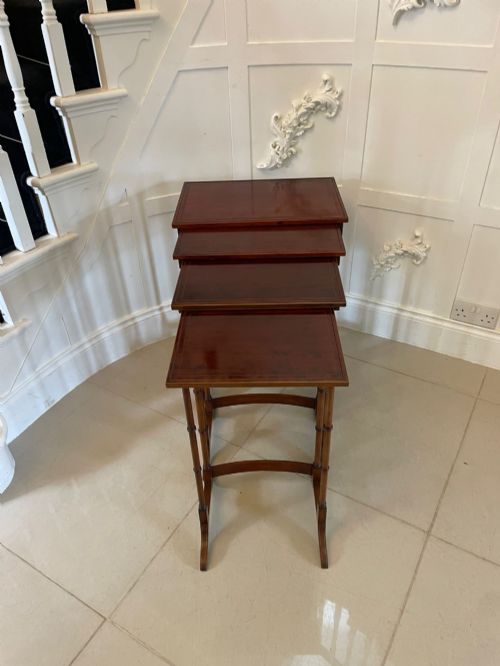
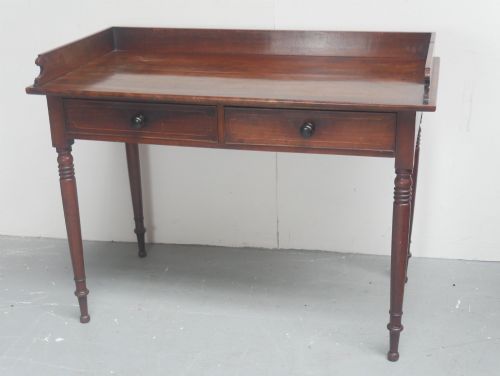
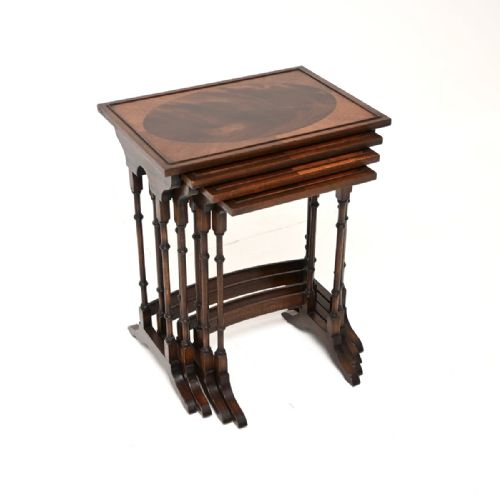
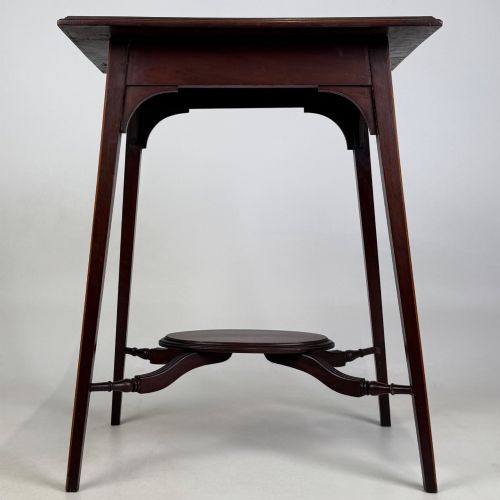
When you search for inlay mahogany side tables, you encounter a wide variety of forms designed for specific domestic uses across multiple centuries. The selection spans compact occasional tables, writing desks, envelope games tables, and bedside cabinets.
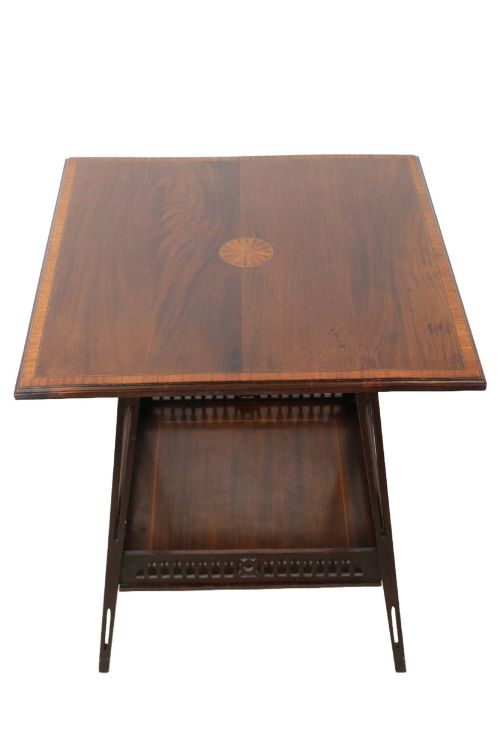
The pieces on this page are most commonly Edwardian and Georgian in origin, alongside Regency and Victorian examples. Many incorporate sophisticated wood inlay, satinwood borders, and boxwood lines to define their surfaces.
How they were made
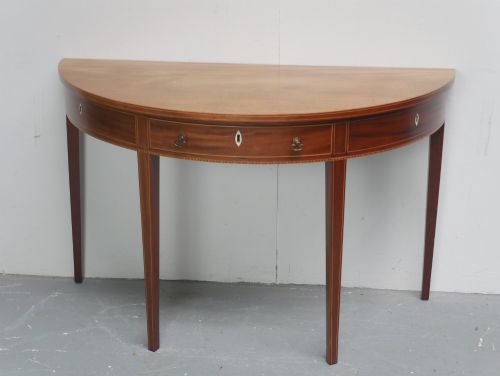
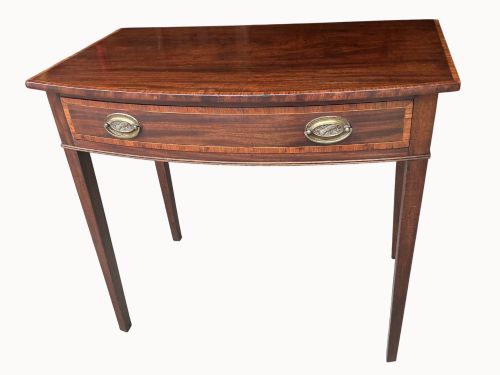
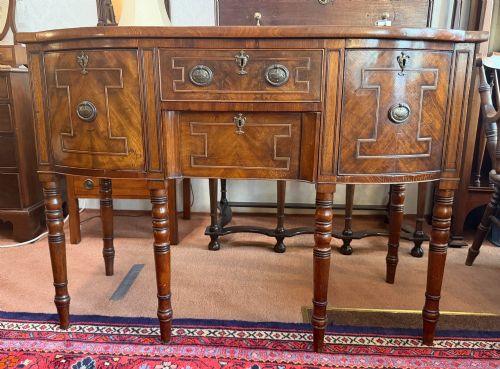
Cabinetmakers utilised solid mahogany and mahogany veneers over secondary timbers, shaping the structural frames into bow fronts, demi-lune consoles, and rectangular forms. Brass hardware, leather inserts, and marble tops appear on specific utilitarian variants.
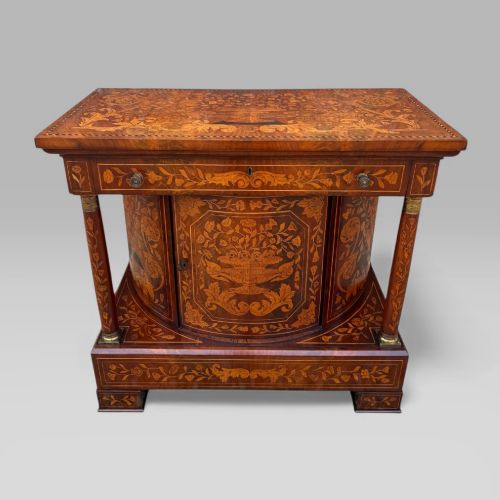
Decorative detailing relies heavily on precise wood inlay, incorporating contrasting timbers such as satinwood and boxwood to create geometric borders, floral motifs, and marquetry panels.
Materials recorded across the inventory include solid mahogany, satinwood, boxwood, brass fittings, leather writing surfaces, and marble tops.
What varies in quality
The standard of an inlay mahogany side table rests on the crispness of the contrasting woodwork and the depth of the timber's grain. Pieces featuring intricate satinwood crossbanding and finely executed boxwood stringing represent a higher tier of workshop output.
Proportion and structural integrity dictate the distinction between standard commercial production and exhibition pieces. Refined tapering legs, balanced serpentine shapes, and well-preserved original surfaces elevate the standing of a table.
Trevor Page & Co
The Inlay Mahogany Side Tables Glossary
- Inlay
- A technique where pieces of contrasting timber, such as boxwood or satinwood, are inserted into recessed cavities in the mahogany primary wood to form a flush decorative surface.
- Satinwood
- A durable, yellowish tropical timber utilised extensively for contrasting banding, stringing, and marquetry panels on Georgian and Edwardian furniture.
- Pembroke table
- A small occasional table featuring two hinged drop leaves on opposite sides, frequently fitted with a single drawer.
- Demi-lune
- A half-moon shape characteristic of console and side tables designed to sit flat against a wall.
- Crossbanding
- A border veneer applied around the perimeter of a table top so that the grain runs perpendicular to the central panel.
Inlay Mahogany Side Tables: Frequently Asked Questions
How do I identify a Georgian inlay mahogany side table?
Georgian examples display hand-cut dovetails, dense Cuban or Honduras mahogany grains, and restrained boxwood stringing. The construction relies on traditional timber framing methods distinct from later mass-produced items.
Examine the underside and drawer linings for tool marks and timber shrinkage that indicate eighteenth or early nineteenth-century manufacture.
What is the difference between a side table and a console table?
Side tables are generally freestanding pieces designed to sit against walls or beside seating, while console tables traditionally require wall fixing or structural support from specific leg configurations.
Console variations often feature decorative demi-lune or serpentine front profiles intended for display rather than heavy writing use.
Where were these tables used in the home?
In period interiors, these tables served multiple functions across drawing rooms, bedrooms, and parlours as lamp stands, sewing tables, or writing desks. Compact forms such as bedside cabinets and nests of tables provided flexible surface space.
Drop-leaf Pembroke tables and revolving bookcases adapted easily to changing daily requirements within reception rooms.
How should I care for mahogany furniture with satinwood inlay?
Maintain stable indoor humidity levels and keep wooden furniture away from direct heat sources to prevent timber splitting and veneer lifting. Regular dusting with a dry, soft cloth preserves the polish without chemical buildup.
Avoid abrasive cleaners and apply traditional beeswax sparingly when the surface requires nourishment.