





Stackable Wooden Tables
Stackable wooden tables are practical sets of graduated surfaces that slide neatly beneath one another to save space when not in use.
Stackable Wooden Tables
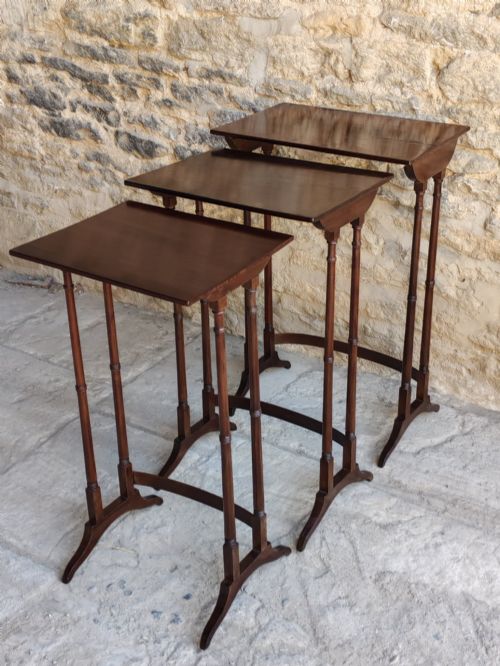
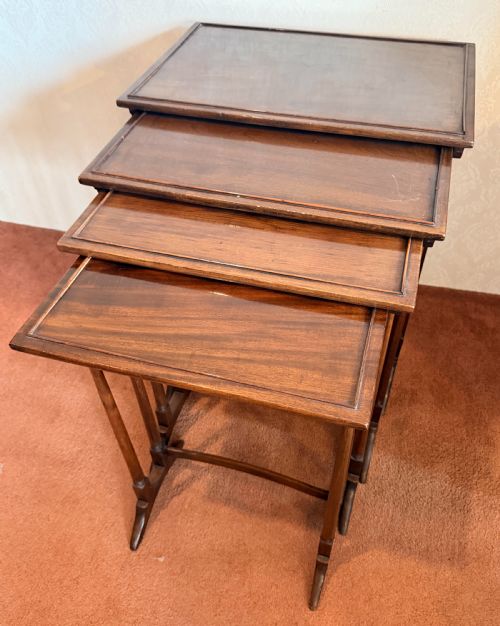
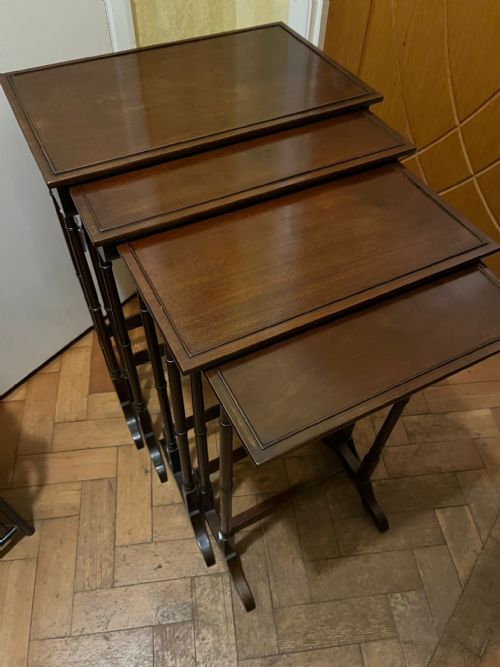
Stackable wooden tables, often found as nests of three or four graduated pieces, appear frequently across Edwardian, Victorian, and nineteenth-century periods. These sets are designed to slide progressively beneath the largest top table, offering versatile surface space for a drawing room or parlour without occupying a permanent footprint. A buyer seeking this form will encounter traditional mahogany frames alongside exotic hardwoods, rosewood, and occasional satinwood or amboyna details.
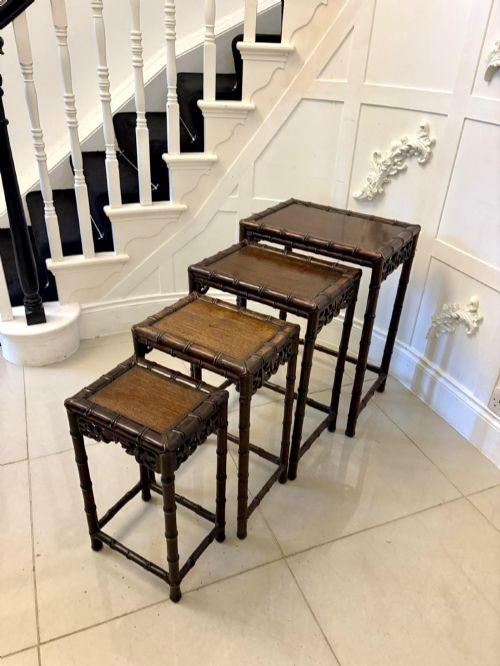
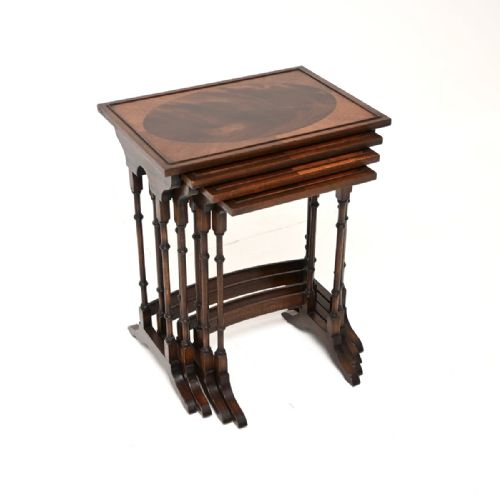
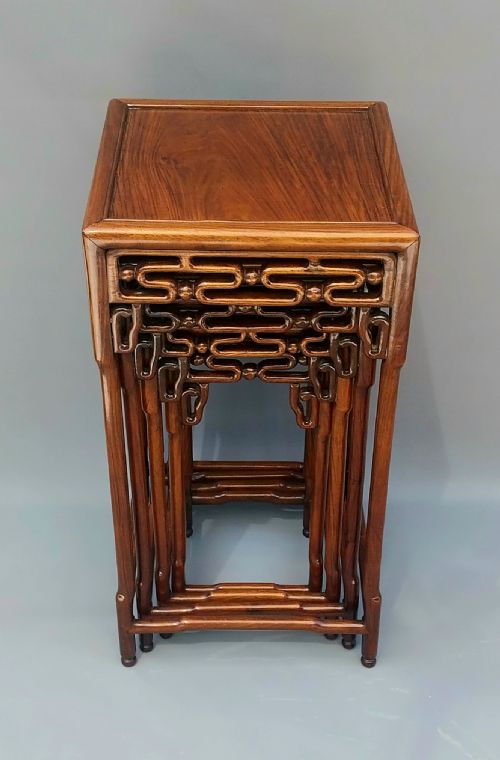
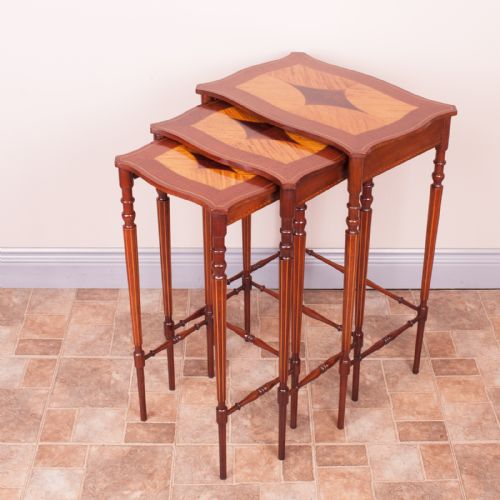
The configurations range from classic Georgian style quartetto tables to Oriental carved faux bamboo designs and Chinese Hongmu sets. Edwardian examples dominate the selection, often featuring slender legs and rectangular or oval tops suited for serving tea or holding occasional objects. Whether constructed as a set of three or four, these pieces prioritize clever storage combined with traditional cabinet-making forms.
Materials and construction methods
Cabinet-makers relied primarily on solid mahogany, rosewood, and various veneers to construct these tables, utilising the natural strength of hardwoods to support graduated tiers. Many pieces incorporate delicate boxwood or satinwood inlay, along with intricate hand-carved motifs seen in Oriental and late Qing Dynasty examples. The construction requires precise tolerances so that smaller tables slide smoothly into the rebates or underframes of the larger ones without binding.
Finishes were traditionally hand-applied to enhance the natural grain of the wood, whether dealing with British mahogany or dense Chinese Hongmu. Structural stability was achieved through slender legs joined by stretchers or simple framing, keeping the overall weight light enough for easy movement around a room.
Mahogany is the most frequently recorded material across these listings, appearing alongside rosewood, satinwood, and Hongmu.
Distinguishing quality in craftsmanship
Quality in these tables rests heavily on the selection of timber and the crispness of any inlay or carving. Finer sets display consistent grain matching across the graduated tops and employ superior hardwoods that resist warping under regular daily use.
The structural integrity of the joints where the legs meet the table top separates standard production from superior work. Examples by noted makers like Heal's demonstrate refined proportions and careful attention to the sliding fit between the individual tiers.
Heal's
The Stackable Wooden Tables Glossary
- Quartetto
- A set of four graduated tables designed to stack inside one another. This term appears frequently in Edwardian and nineteenth-century listings for nesting tables.
- Hongmu
- A dense, dark Chinese hardwood often translated simply as rosewood. It was used for substantial nineteenth-century carved table sets.
- Inlay
- A decorative technique where contrasting woods like boxwood or satinwood are inserted into the primary surface. This adds fine linear detail to Edwardian and Victorian mahogany tables.
- Graduated
- Describing tables made in progressively smaller sizes so they fit neatly beneath the main table. This sizing allows the entire set to occupy the floor space of a single piece.
- Faux bamboo
- Wood turned and carved to imitate natural bamboo stalks. It reflects nineteenth-century tastes for exotic and Orientalist design motifs.
Stackable Wooden Tables: Frequently Asked Questions
How do I use a nest of tables?
These tables are designed to remain stacked together as a single compact unit until extra surface space is required. When guests arrive or tea is served, the smaller tables slide out individually to be placed beside chairs or sofas.
Once the gathering concludes, the tables simply slide back underneath the largest top piece in descending order. This arrangement provides multiple functional surfaces while maintaining an orderly room.
What wood are most tables made from?
Mahogany is the primary timber used for the majority of these pieces across Victorian and Edwardian periods. It provides a stable, durable frame that takes a rich polished finish.
Rosewood, satinwood, and exotic hardwoods also appear, particularly in pieces influenced by Chinese export styles or Art Deco designs. Each wood imparts a distinct colour and grain pattern to the set.
Can these tables be used daily?
These tables are built from sturdy hardwoods designed for regular everyday service in domestic spaces. Their light construction makes them easy to reposition wherever a temporary surface is needed.
Routine care involves keeping them away from direct heat sources and moisture to protect the polished wood surfaces. Gentle handling ensures the sliding components continue to function smoothly.