


Antique Nest of Three
An antique nest of three provides a set of graduating tables that slide neatly together, offering adaptable surface space without crowding a room.
Antique Nest of Three
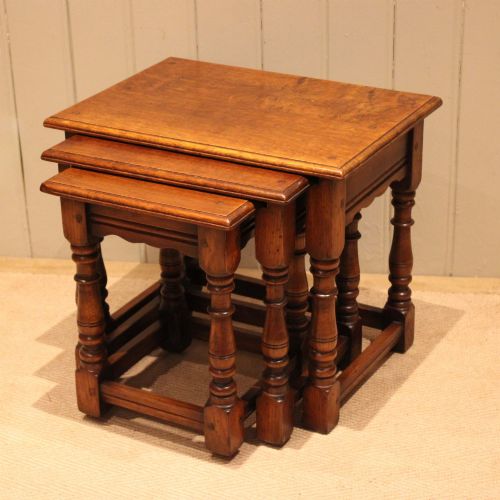
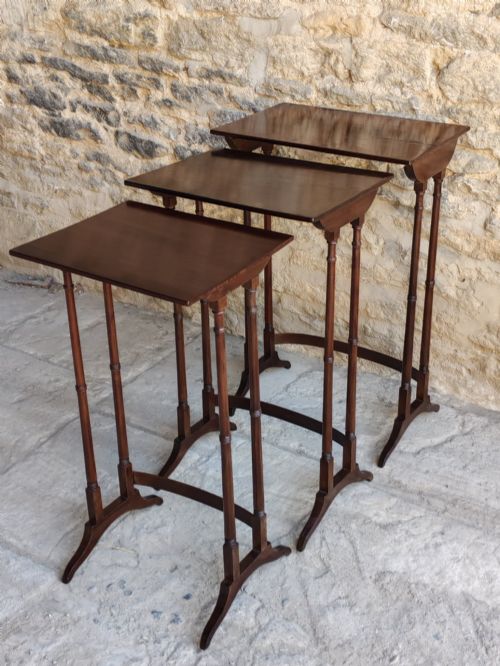
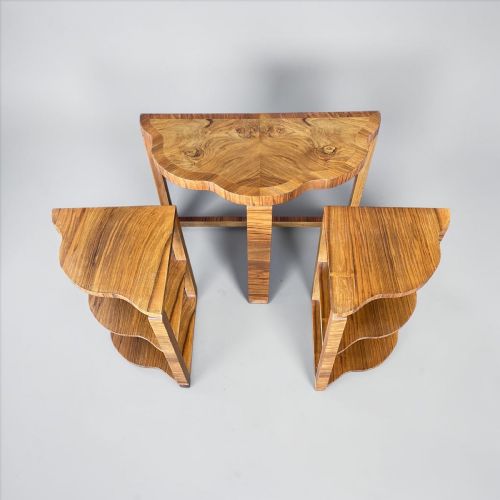
An antique nest of three consists of graduating tables designed to fit one beneath another, serving as versatile surfaces in a drawing room or parlour. The form appears most frequently in Edwardian mahogany designs with delicate inlay, alongside robust Victorian iterations and 1920s walnut variations.
Makers utilised these sets for entertaining, allowing hosts to deploy extra tables for tea or writing before storing them compactly. Pieces range from straightforward oak coffee tables to French marquetry styles and Killarney ware.
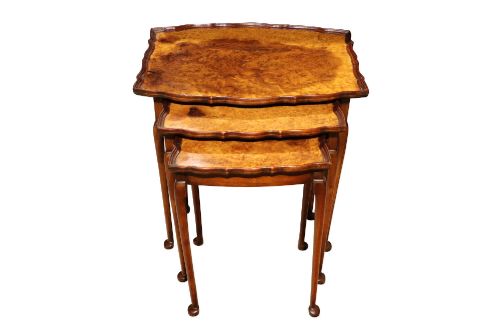
Edwardian and early twentieth-century examples dominate the selection, though nineteenth-century iterations in rosewood and mahogany also emerge. Buyers encounter rectangular tops, oval shapes, and occasional square formats designed for space-saving utility.
Markers of quality
Quality rests in the crispness of the inlay, the choice of burr or figured veneers, and the precision with which the smaller tables slide beneath the master frame. Finer versions exhibit balanced proportions, tight joinery, and sustained attention to secondary timbers.
Simpler oak or mahogany tables from the early twentieth century offer domestic utility, whereas signed pieces by workshops such as Émile Gallé or Waring and Gillow display superior artistry and material selection.
Common timbers include mahogany, walnut, oak, and rosewood, supplemented by decorative veneers.
Émile Gallé·Heal's·Waring & Gillow
The Antique Nest of Three Glossary
- Nest of tables
- A set of graduating tables designed to slide neatly beneath one another. This arrangement maximises surface area while occupying the floor space of a single small table.
- Marquetry
- Decorative veneer work arranged in pictorial or geometric patterns using various coloured woods. Craftsmen cut thin slices of timber to form intricate designs across the tabletop.
- Parquetry
- Geometric mosaic woodwork used for repeating patterns on tabletops. It relies on contrasting wood grains to create a structured visual effect.
- Pie crust
- A carved, raised tabletop border shaped with undulating curves resembling pastry work. This decorative edge appears on select mahogany tables.
- Barley twist
- A spiral turning carved into furniture legs and upright supports. This technique adds vertical movement and visual weight to the frame.
Antique Nest of Three: Frequently Asked Questions
How do I date an antique nest of tables?
Dating relies on timber selection, construction methods, and prevailing decorative styles seen across different decades. Edwardian pieces often feature mahogany with fine string inlay, while 1920s versions frequently utilise burr walnut or oak.
Secondary woods and the style of the legs provide further clues, moving from Victorian solidity to lighter twentieth-century forms. Comparing the piece to documented examples helps narrow the production window.
Were these tables used for tea?
These sets served primarily as movable surfaces for afternoon tea, holding cups and small plates when guests visited. Servants or hosts could deploy the smaller tiers as needed and clear them away quickly.
Beyond tea service, they functioned as writing supports or display stands for decorative objects. Their modular nature made them indispensable in formal reception rooms.
How do I care for walnut veneer?
Walnut veneer requires protection from direct sunlight and excessive moisture to prevent fading and lifting. Regular dusting with a soft, dry cloth preserves the polished surface without building up residue.
Applying a suitable wax polish occasionally maintains the moisture of the timber. Avoiding placement near heat sources prevents the wood from drying out.
What is Killarney ware?
Killarney ware denotes marquetry items produced in Ireland, typically utilising local timbers such as arbutus and yew. These pieces often feature detailed inlaid motifs representing Irish scenery or flora.
Such work showcases regional craftsmanship distinct from standard English or French production methods. Their decorative tops make them particularly sought after by collectors.