









Asian Carved Accent Table
An asian carved accent table brings dense timber work and regional motifs directly into a room, serving multiple domestic uses.
Asian Carved Accent Table
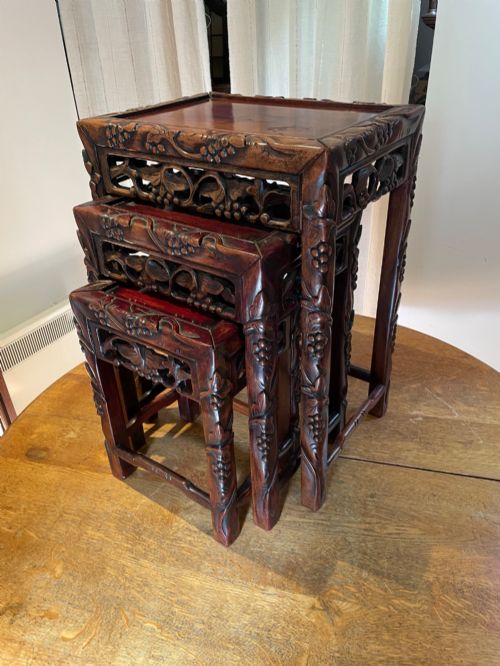
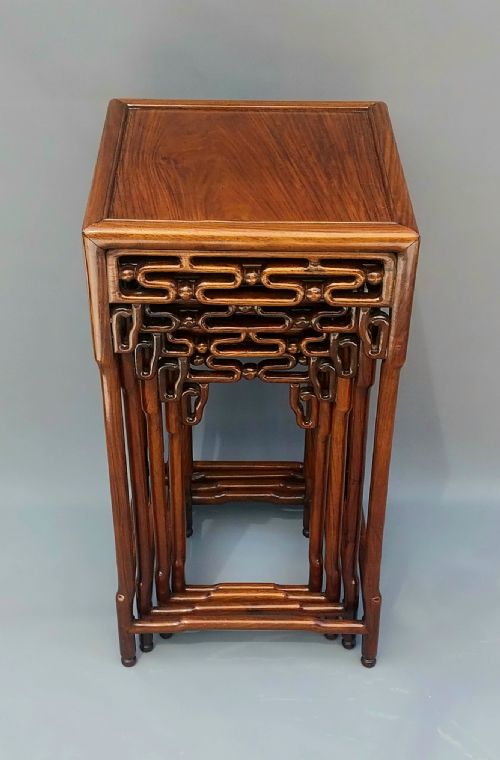
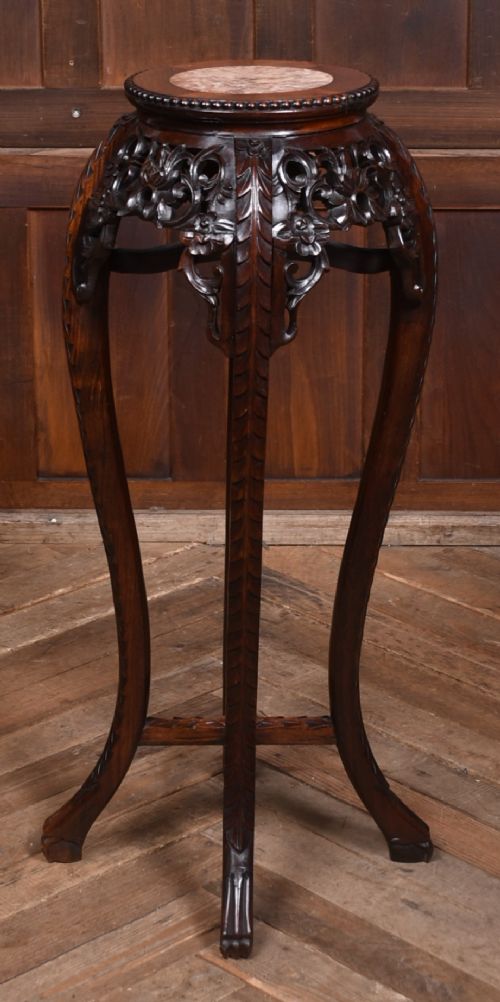
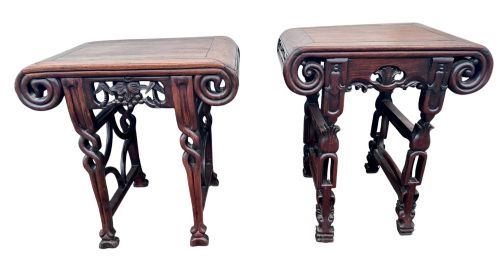
An asian carved accent table encompasses low coffee tables, plant stands, nests of four, and occasional tables originating from the nineteenth and early twentieth centuries. The primary forms seen here span Chinese export, Qing Dynasty, and Anglo-Indian traditions, frequently utilised as side surfaces or display pedestals.
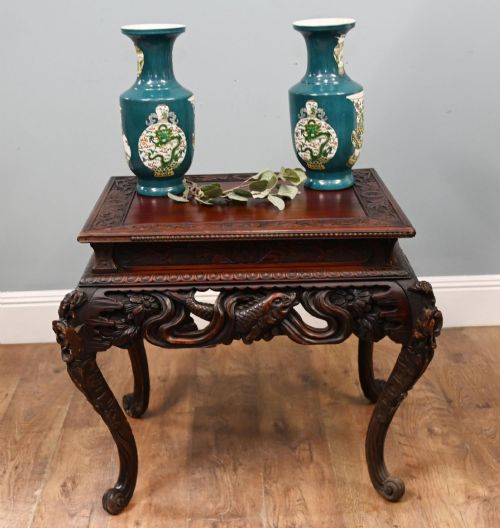
Buyers encounter frequent examples made from dense tropical woods like rosewood, hongmu, and elm, often carved with traditional dragon or floral motifs. Many pieces incorporate inset marble, quartz, mother-of-pearl, or lacquer panels within the wooden frames.
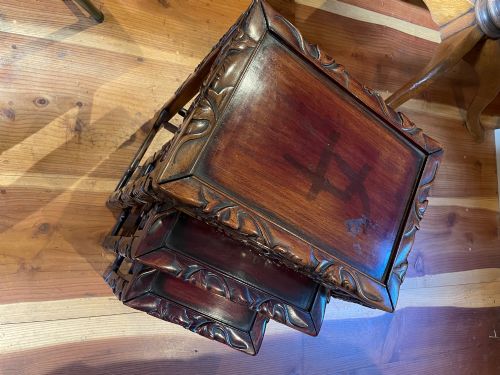
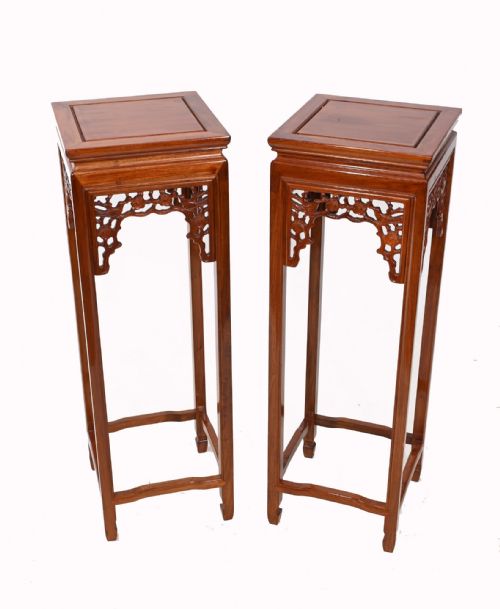
The selection ranges from tall pedestal stands and urn holders down to low opium tables and nested sets designed to tuck beneath one another. These objects reflect various regional workshops operating across East Asia during the late Victorian and Edwardian eras.
How they were made
Cabinetmakers utilised dense native hardwoods such as rosewood, hongmu, and elm, which allowed for deep, crisp relief carving without splintering. These timbers were joined using traditional framing techniques that accommodated the natural expansion and contraction of the wood.
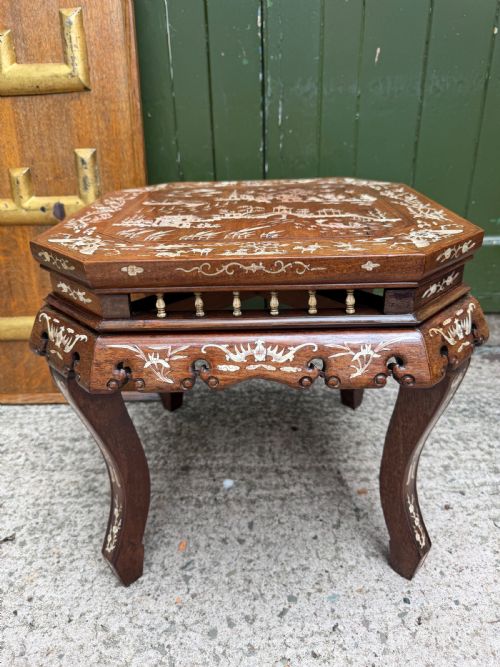
Decorative surfaces frequently combine carved timber with contrasting inlays of mother-of-pearl, marble, or stone slabs fitted directly into the top. Lacquer and cinnabar finishes were also applied to specific pieces to seal the wood and create smooth, coloured planes.
Asian Carved Accent Table Retail Price Guide 2026
Typical asking prices for asian carved accent table among the pieces listed under this phrase on Sellingantiques today, from the lower quarter to the upper quarter. They describe what is for sale here now, not the wider market.
Object forms on this page include nests of four, multi-tier plant stands, low coffee tables, and octagonal occasional tables.
What varies in quality
The crispness and depth of the hand carving separate standard items from finer works, as skilled artisans produced sharper undercut details and more expressive dragon motifs. The selection of the timber grain, particularly in dense rosewood and hongmu, also dictates the visual weight of the piece.
The integrity of the structural joinery and the precise fitting of inlaid marble, quartz, or mother-of-pearl panels influence the overall durability and finish. Pieces maintaining their original surface patination without excessive modern intervention represent a higher standard of preservation.
The Asian Carved Accent Table Glossary
- Hongmu
- A dense, heavy Chinese hardwood prized for furniture production, often translated as red wood. It ranges in colour from deep brown to dark reddish-purple.
- Huali
- A fragrant and durable Chinese hardwood utilised in fine cabinetmaking during the Qing Dynasty. The timber displays a distinct grain pattern and rich natural tones.
- Kang table
- A low domestic table traditionally placed on a heated brick bed or floor platform in Chinese interiors. These pieces now function widely as low coffee tables.
- Jardiniere stand
- A tall pedestal or table specifically designed to support heavy plant pots or floral arrangements. They frequently feature circular tops and inset marble panels.
- Cinnabar
- A bright scarlet mineral pigment applied in multiple layers to a wooden core and subsequently carved with intricate designs. This technique appears on specialised decorative surfaces.
Asian Carved Accent Table: Frequently Asked Questions
How were asian carved accent tables used originally?
These tables served specific practical functions in domestic interiors, ranging from low surfaces for resting tea sets to elevated stands for displaying prized vases and plants.
Larger forms operated as centre tables or nesting sets, while lower variants accommodated seated activities on platforms and floors.
How do I identify a Qing Dynasty piece?
Identification relies on observing traditional construction methods, dense timber choices like hongmu, and characteristic motifs such as dragons or floral relief work.
Many pieces from this period also incorporate inset marble tops or distinct framing details consistent with nineteenth-century workshop practices.
What is the difference between a plant stand and a side table?
Plant stands generally feature taller, narrower proportions with circular or octagonal tops designed to support single heavy vessels.
Side tables offer broader surfaces intended for general domestic placement and everyday utility.
How should I care for a hardwood table?
Maintenance requires keeping the timber away from direct heat sources and sudden humidity changes to prevent timber movement.
Regular dusting with a dry cloth protects the original surface patination without stripping the natural oils.