




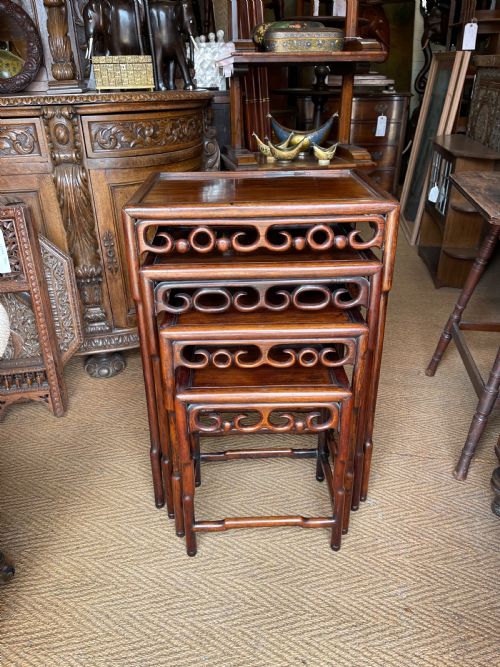


Chinese Nesting Tables
Chinese nesting tables offer a clever space-saving design where graduated tables slide neatly one beneath another.
Chinese Nesting Tables
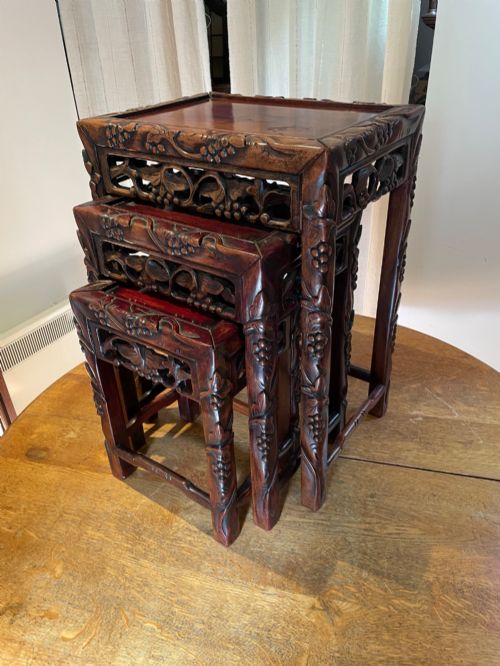
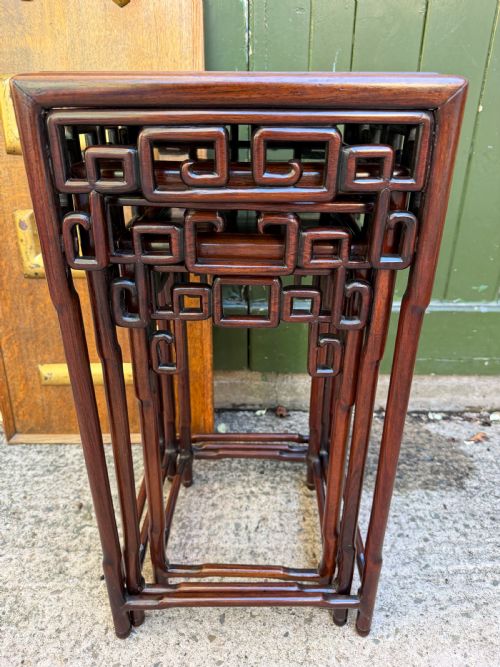
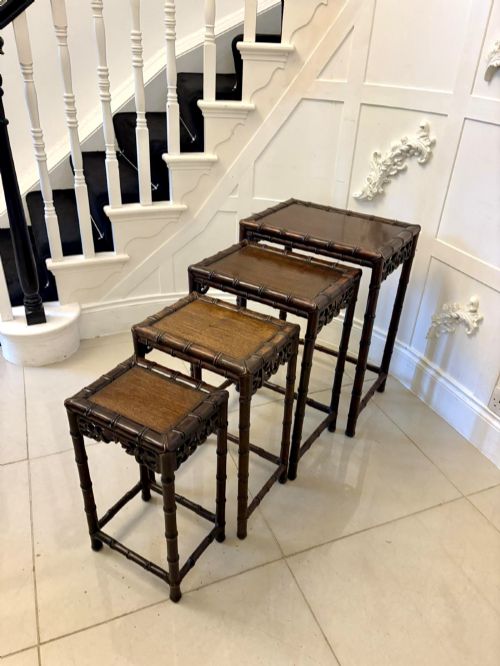
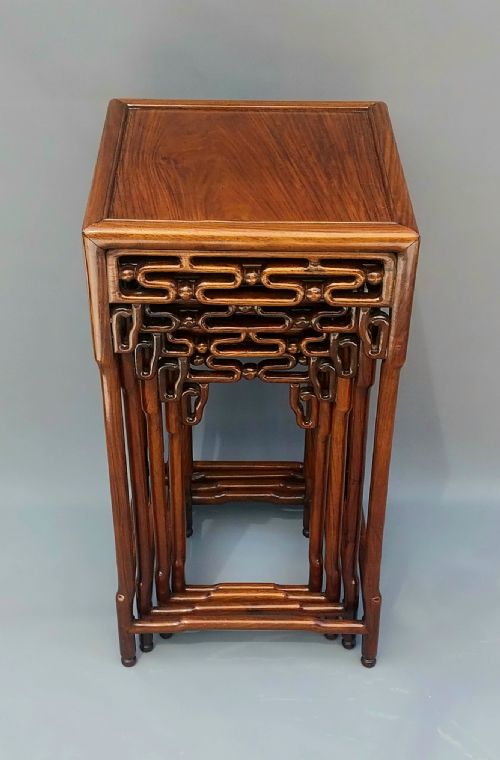
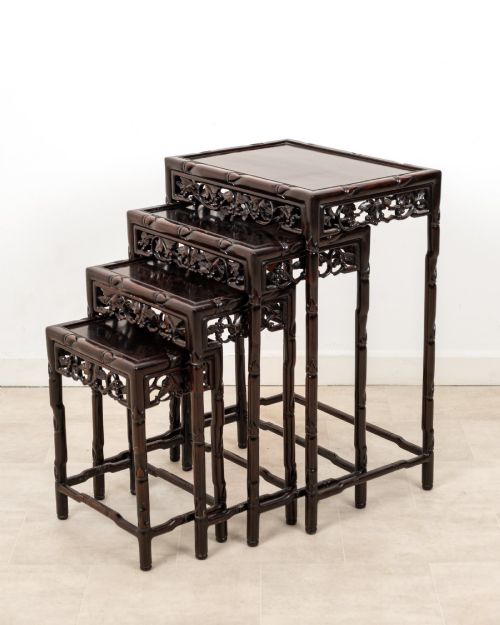
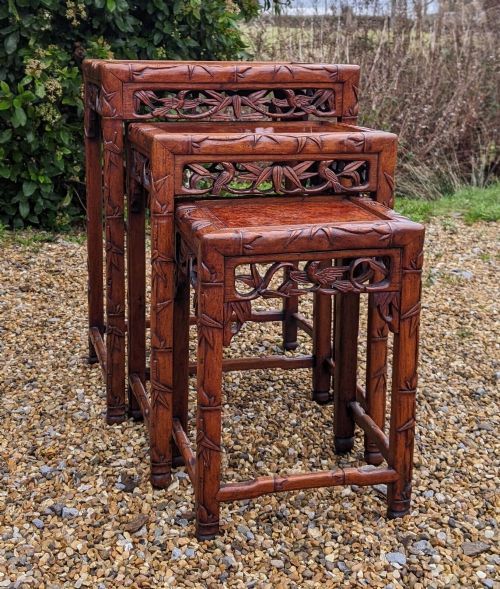
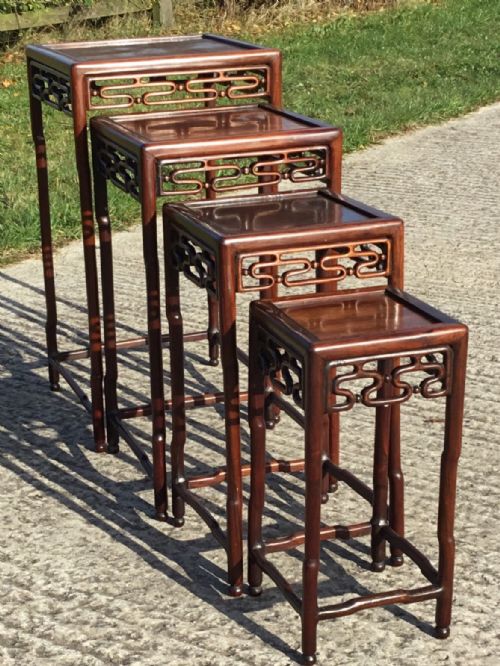
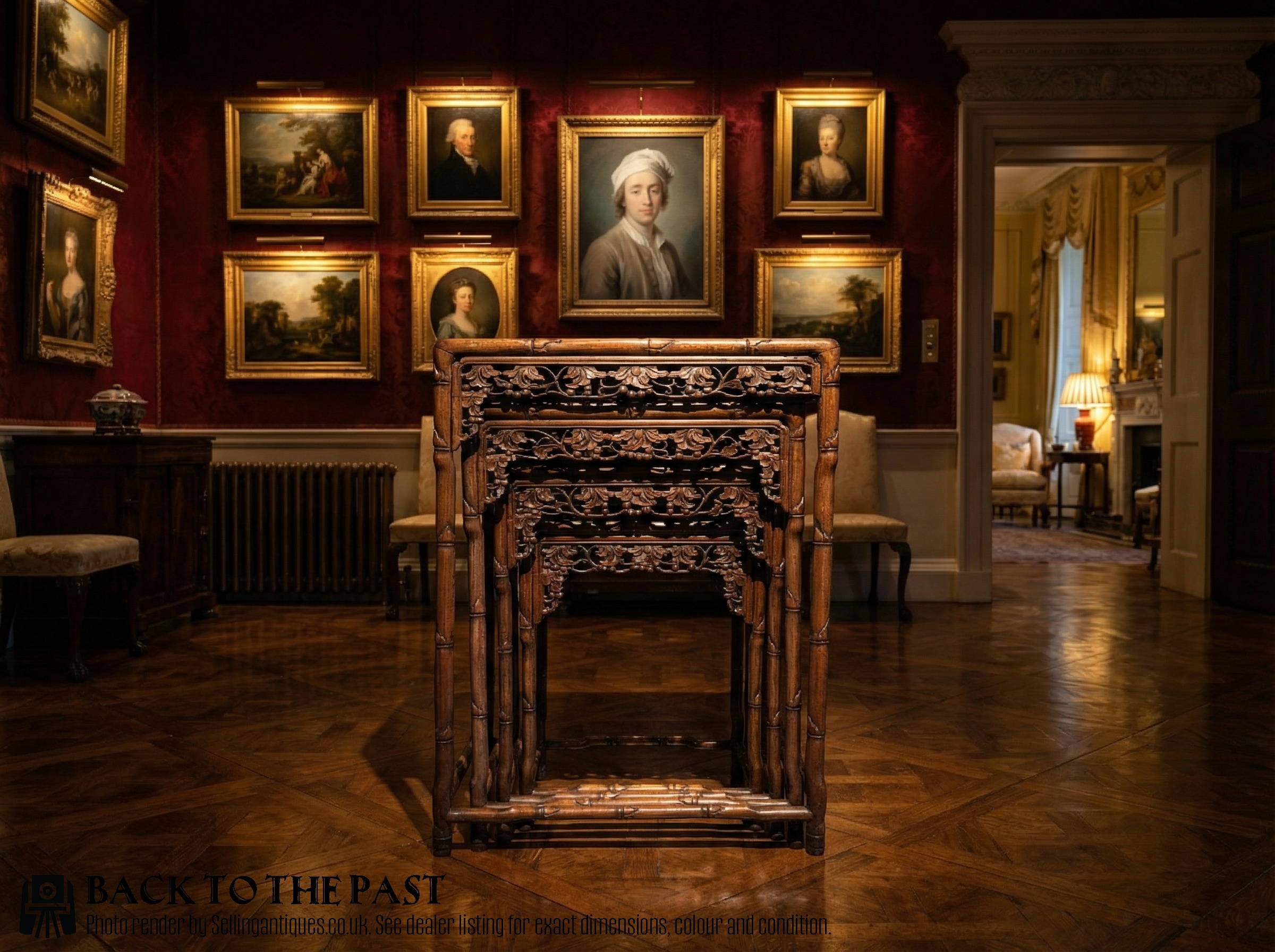
Chinese nesting tables comprise sets of three or four graduated tables designed to slide neatly beneath one another when not in use. You will most frequently encounter sets of four tables, often referred to in period terms as a quartetto, originating from the nineteenth century through the early decades of the twentieth century.
The forms span straightforward occasional tables intended for practical daily use alongside heavily carved or decorated examples reflecting Chinese Export and Chinoiserie styles. They appear in Victorian and Edwardian contexts as well as late Qing Dynasty periods, showing how easily these practical sets crossed cultural design boundaries.
How they were made
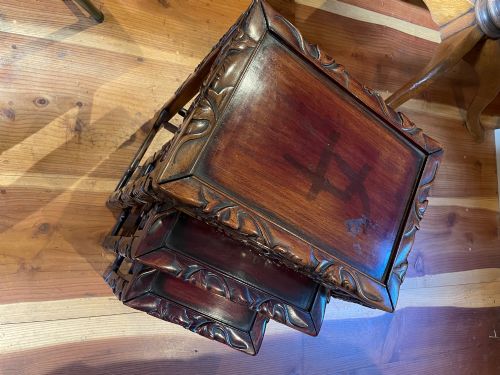
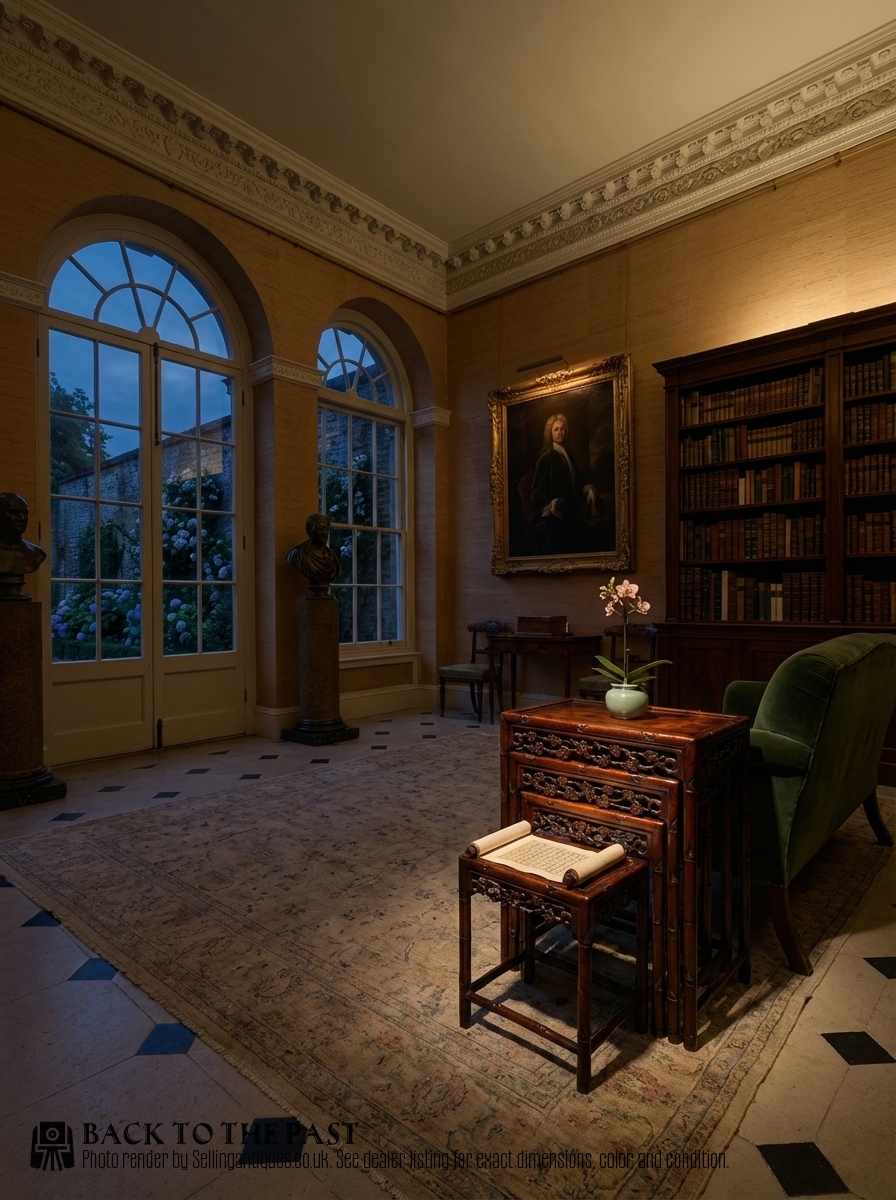
Carpenters utilised dense timbers including rosewood, hongmu, huanghuali, teak and general hardwoods to build sturdy frames capable of withstanding the friction of repeated sliding. These dense woods allowed artisans to execute crisp carved details along the aprons and legs without compromising the structural integrity of smaller table frames.
Alternative examples employ wood bases finished with black lacquer, occasionally incorporating gold leaf or decorative Chinoiserie motifs to create a striking visual surface. Glass inserts and burrwood panels also appear on select tops, adding textural contrast to the polished wooden frames.
Chinese Nesting Tables Retail Price Guide 2026
Typical asking prices for chinese nesting tables among the pieces listed under this phrase on Sellingantiques today, from the lower quarter to the upper quarter. They describe what is for sale here now, not the wider market.
Some tables double as sneaky hiding spots for tea sets.
What varies in quality
Quality rests primarily on the density and choice of timber, with heavy rosewood, hongmu and huanghuali sets holding superior presence compared to general softwood or basic hardwood alternatives. The crispness and depth of the carving on the aprons and legs further separate standard production from finer craftsmanship.
The precision of the fit when the tables slide together dictates practical success, as well-made sets nest flush without wobbling or scraping. Intricate lacquer preservation and intact decorative elements such as gold leaf or boulle-work significantly elevate the finish of lacquered variations.
The Chinese Nesting Tables Glossary
- Quartetto
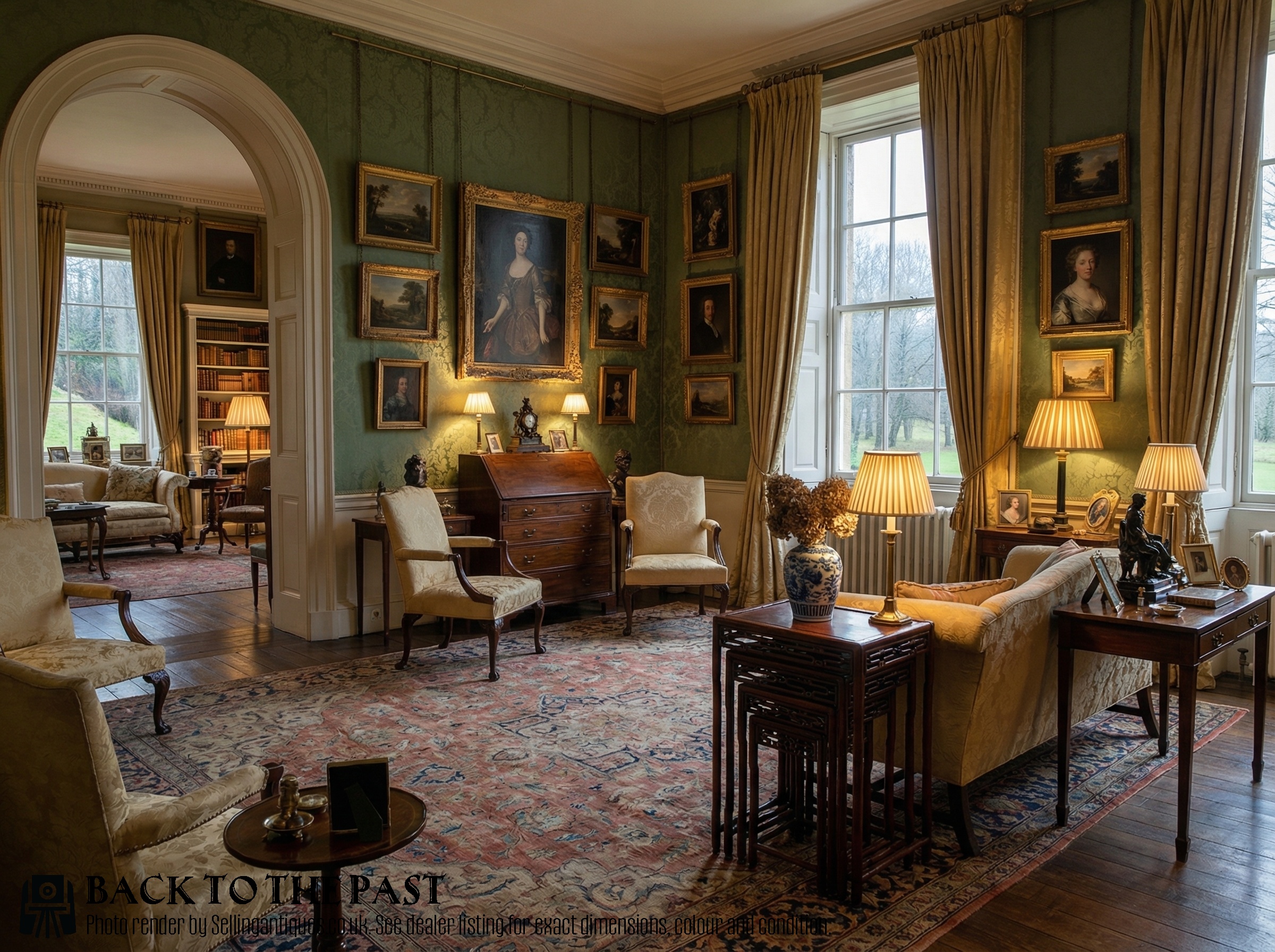
- A matched set of four pieces of furniture designed to fit together, commonly applied to nineteenth-century nesting tables.
- Hongmu
- A traditional Chinese term denoting dense, hard cabinet timbers such as rosewood and related dark tropical hardwoods. It yields a heavy, durable structure with a fine natural grain.
- Chinoiserie
- A European decorative style reflecting Chinese artistic influences, frequently seen in black lacquer and painted or gilded ornamentation on nineteenth-century tables.
Chinese Nesting Tables: Frequently Asked Questions
How were Chinese nesting tables used historically?
These sets served as versatile occasional furniture in nineteenth and early twentieth-century drawing rooms and parlours. Individual tables could be pulled out to hold tea, books or lamps when guests visited.
Once the gathering ended, the smaller tables slid compactly back beneath the largest table to free up floor space.
How do I care for a hardwood nesting table?
Keep wooden tables away from direct heat sources and strong sunlight to prevent the dense hardwood or lacquer from drying out. Dust regularly with a soft, dry cloth and avoid harsh chemical polishes.
Take care when sliding the tables in and out to prevent unnecessary friction or scratching on the legs and tops.
How can I tell a 19th-century set from a later one?
Nineteenth-century examples often display deep hand-carved details in dense woods like hongmu or rosewood, accompanied by traditional joinery methods. The weight of the timber and the hand-finished surface patination provide strong clues to age.
Twentieth-century sets may show lighter construction methods or simpler surface decorations associated with Edwardian or 1920s production.
What is the difference between hardwood and lacquer sets?
Hardwood sets rely on the natural grain and deep colour of timbers like rosewood or huanghuali, often enhanced by carved aprons. They showcase the raw material through polished surfaces.
Lacquer sets feature a prepared wood base coated in dark or black lacquer, frequently ornamented with Chinoiserie designs, gold leaf or contrasting burrwood panels.