




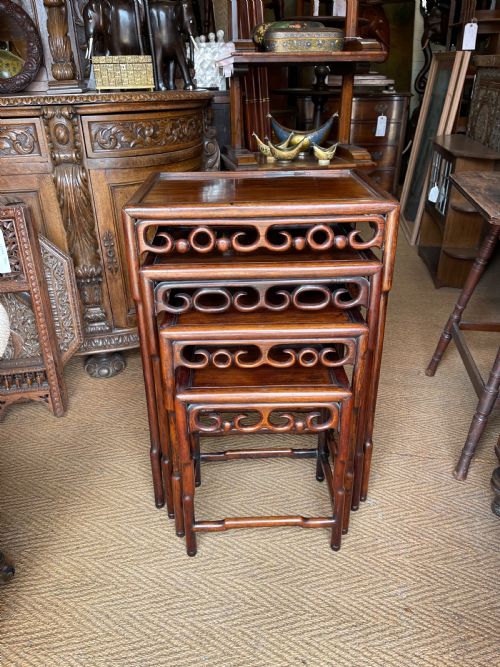


Hardwood Nesting Tables
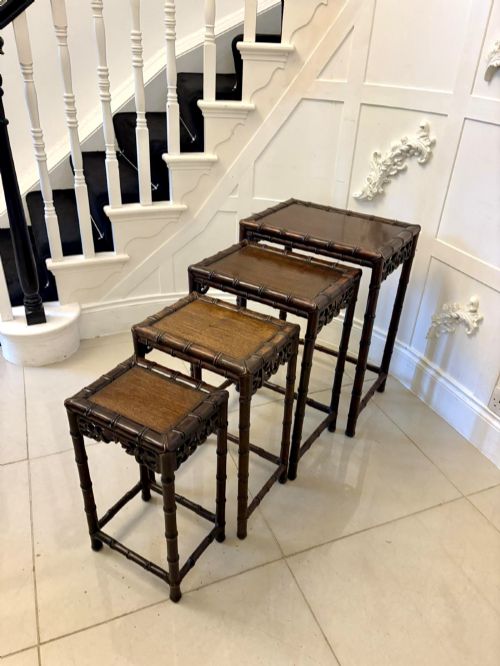
Hardwood nesting tables are sets of graduated side tables designed to slide neatly one beneath another, offering practical surface space that disappears when not in use.
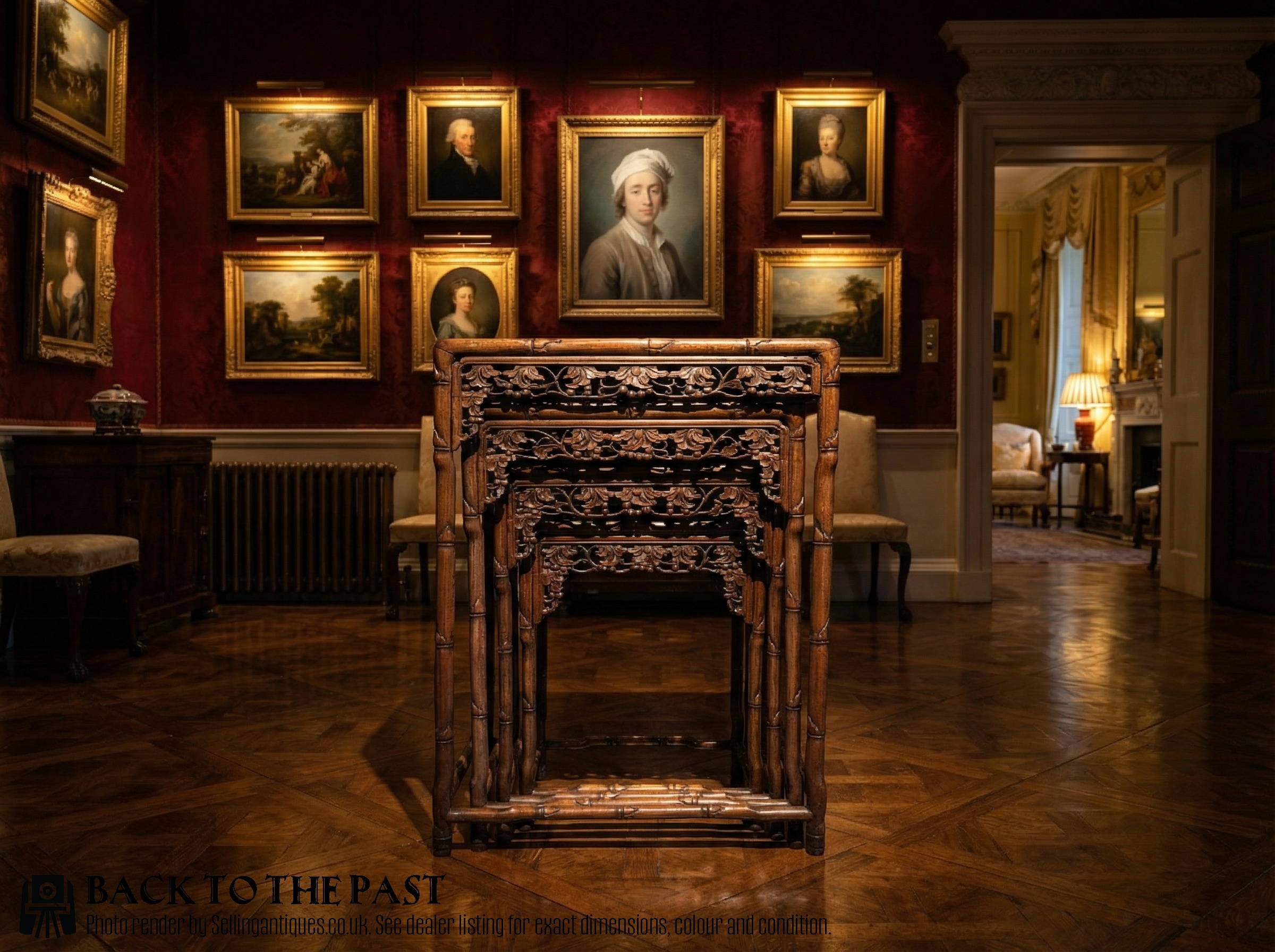
Hardwood Nesting Tables
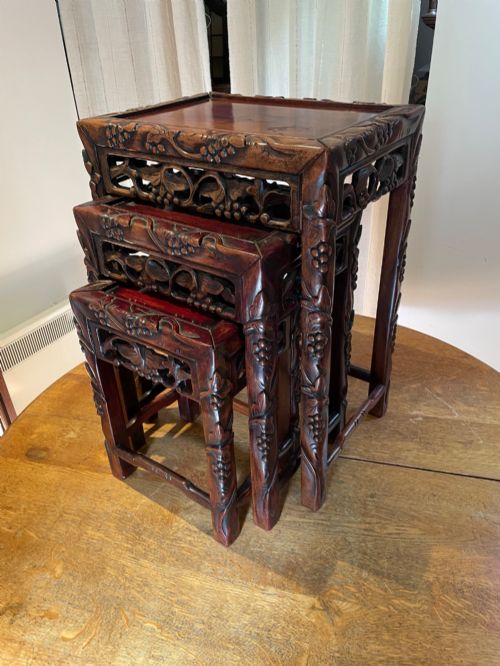
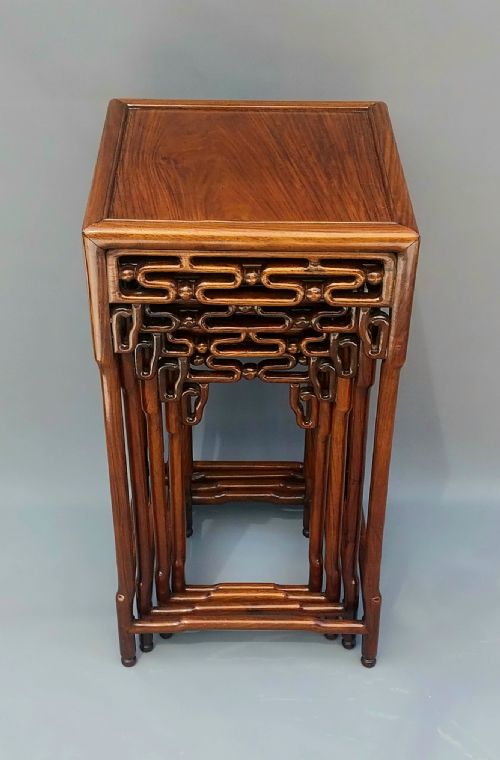
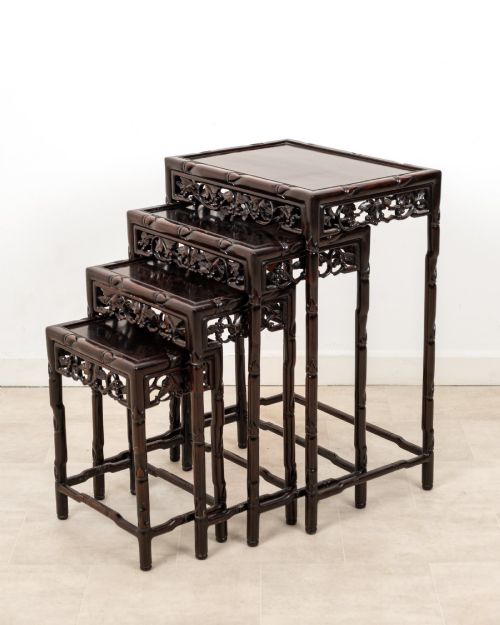
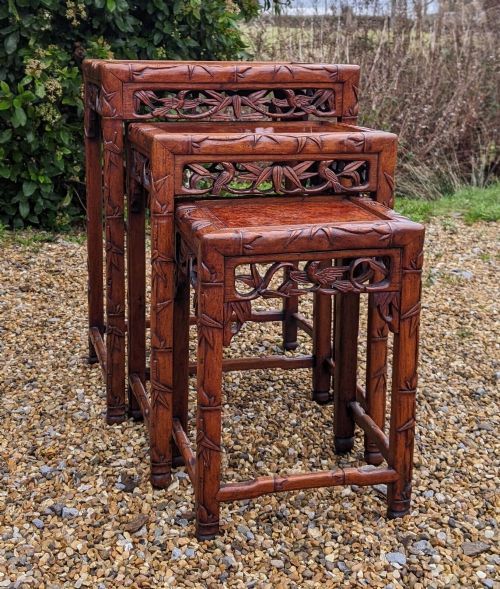
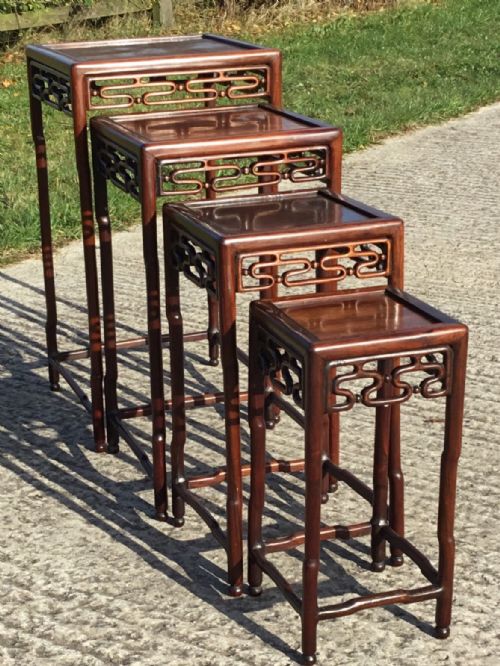
Hardwood nesting tables appear primarily as sets of four graduated pieces, designed to slide together into a single compact footprint when not required for service. These pieces emerge from Chinese export workshops and Victorian production, drawing on Qing Dynasty styles and traditional forms.
The configurations on this page include quartetto sets and carved occasional tables dating from the nineteenth century through to the early twentieth century. Most examples are constructed as graduating sets of four, allowing individual tables to be drawn out around a room for tea or display.
Makers from these periods utilised dense timbers to create sets that function both as standalone occasional furniture and as a unified stack. Buyers encounter variations in carving depth and wood grain across Victorian and Chinese export iterations.
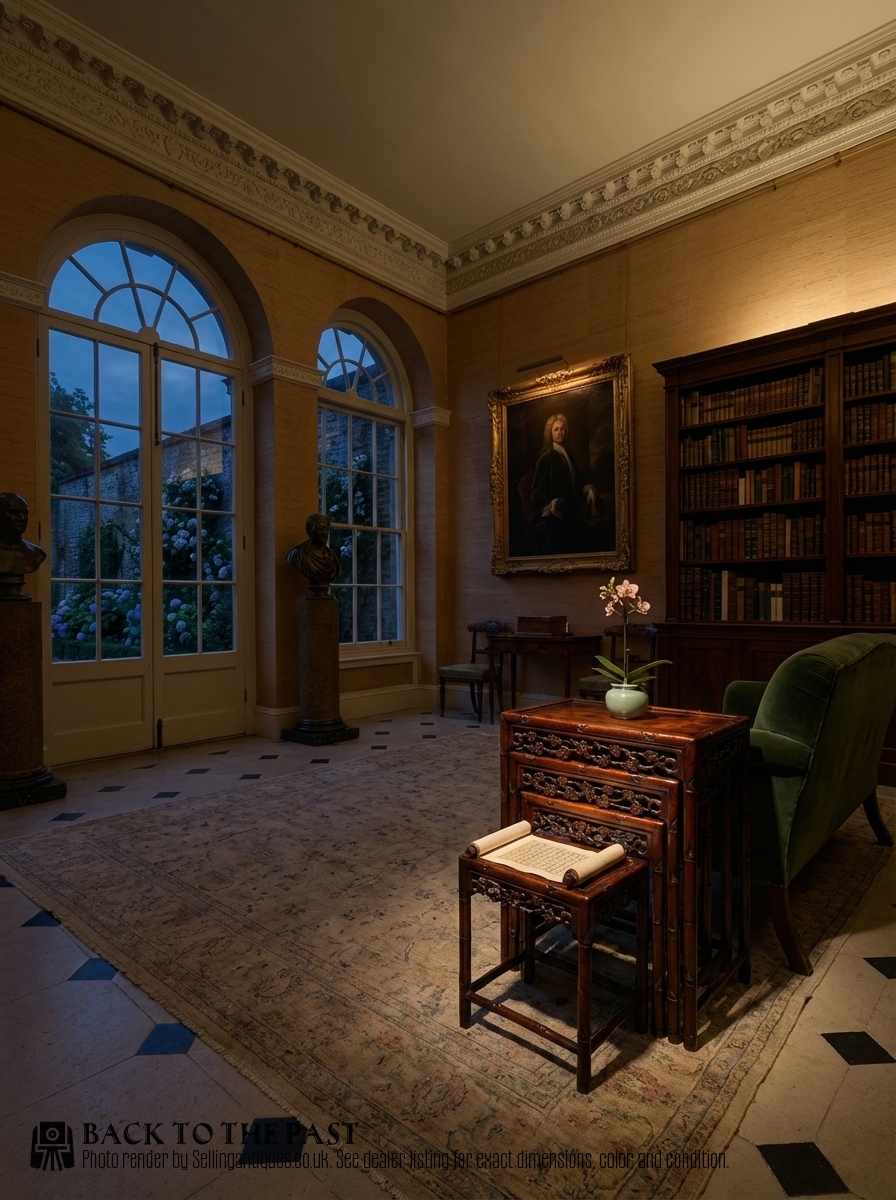
How they were made
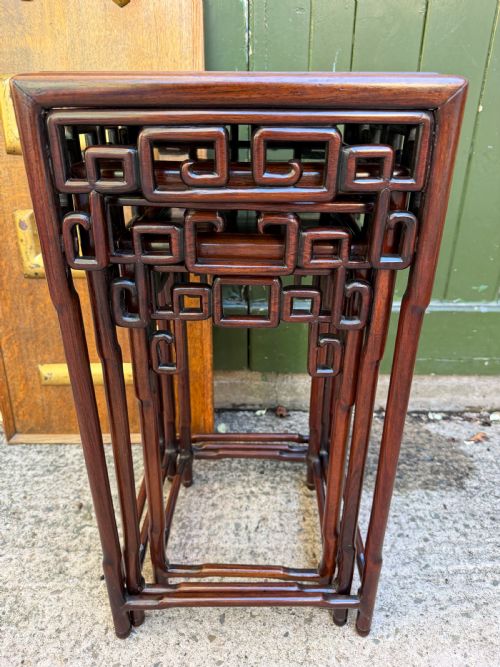
Craftsmen built these sets using dense timbers including rosewood and general hardwood, selected for their structural stability and capacity to hold fine detail. Artisans employed traditional joinery to ensure each table in the graduated set fitted precisely beneath the next larger one.
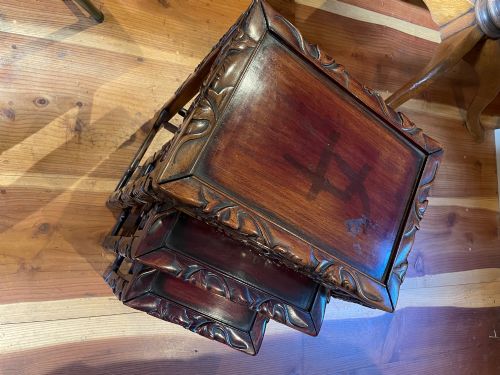
Surface decoration on these pieces relies on hand carving, particularly within Chinese Qing Dynasty traditions where frames and aprons receive intricate relief work. Timber surfaces were finished to highlight natural grain patterns while maintaining durability for daily use.
Hardwood Nesting Tables Retail Price Guide 2026
Typical asking prices for hardwood nesting tables among the pieces listed under this phrase on Sellingantiques today, from the lower quarter to the upper quarter. They describe what is for sale here now, not the wider market.
Listings feature hardwood and rosewood materials across nineteenth-century and early twentieth-century periods, including Victorian and Qing Dynasty styles.
What varies in quality
Quality in these sets depends upon the density and selection of the timber, alongside the precision of the graduated fit between tables. Superior examples display crisp, deep hand carving that remains sharp across all four pieces in the nest.
The structural integrity of the joints and the uniformity of the wood grain separate standard production from finer export pieces. Better sets maintain stable alignment when stacked and balanced proportions when individual tables are deployed.
The Hardwood Nesting Tables Glossary
- Quartetto
- A set of four small tables designed to fit inside one another. This term appears frequently in nineteenth-century descriptions of nesting furniture.
- Graduated
- Describing a set of tables where each piece decreases in dimensions to slide beneath the next. This arrangement ensures the entire group occupies the floor space of only the largest table.
- Qing Dynasty
- The final imperial dynasty of China, spanning from the seventeenth to the early twentieth century. Export pieces from this era heavily influence the carving styles found on these tables.
- Rosewood
- A heavy, richly grained tropical timber utilised for fine furniture. Its natural durability and dark tone make it a primary material for nineteenth-century nesting tables.
Hardwood Nesting Tables: Frequently Asked Questions
How do nesting tables work?
These sets consist of multiple tables of descending sizes that slide sequentially beneath one another. When separated, they provide multiple independent surfaces around a room.
They stack into a single column to save floor space when not in active use.
What are quartetto tables?
A quartetto refers specifically to a set of four matching tables designed as a nest. The term originates from musical ensembles of four parts and was adopted for furniture.
These sets were popular in the nineteenth century for drawing rooms and parlours.
Are these tables solid wood?
The pieces listed utilise dense timbers such as rosewood and carved hardwood throughout their construction. These heavy materials provide the structural strength required for slender legs and frames.
Natural grain patterns remain visible across the surfaces of these traditional pieces.
How do I date a set?
Dating relies on stylistic indicators such as Qing Dynasty carving motifs, construction methods, and period documentation. Nineteenth-century examples often show distinct hand-tool marks and traditional joinery.
Comparing the timber selection and decorative depth helps place pieces between the Victorian era and the early twentieth century.