




19th Century Nesting Tables
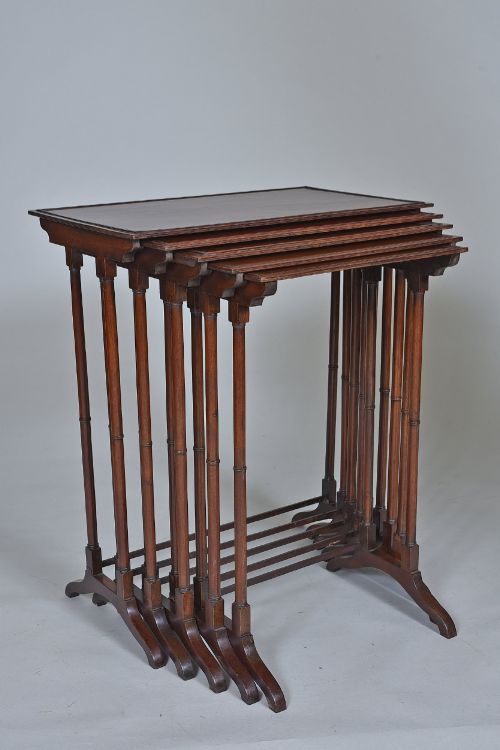
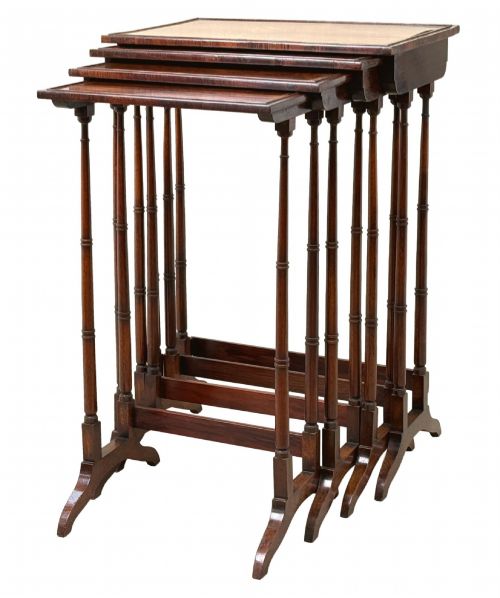
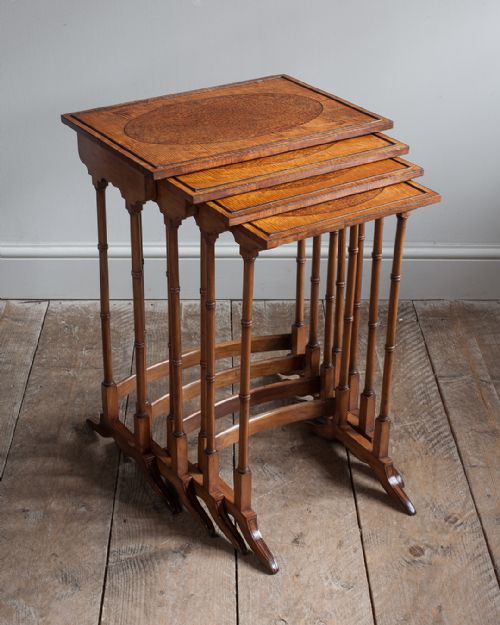
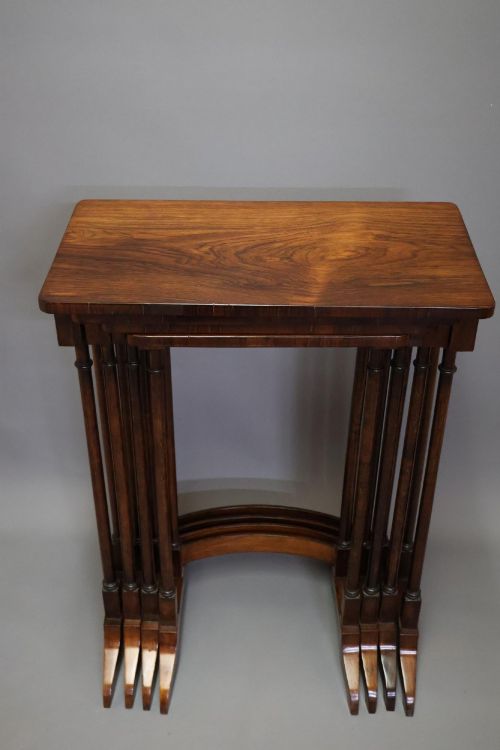
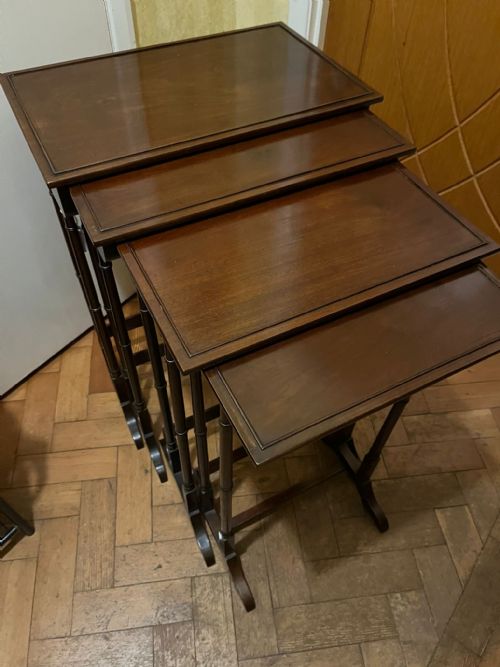
These 19th century nesting tables are clever sets of graduated occasional furniture designed to slide neatly beneath one another.
19th Century Nesting Tables
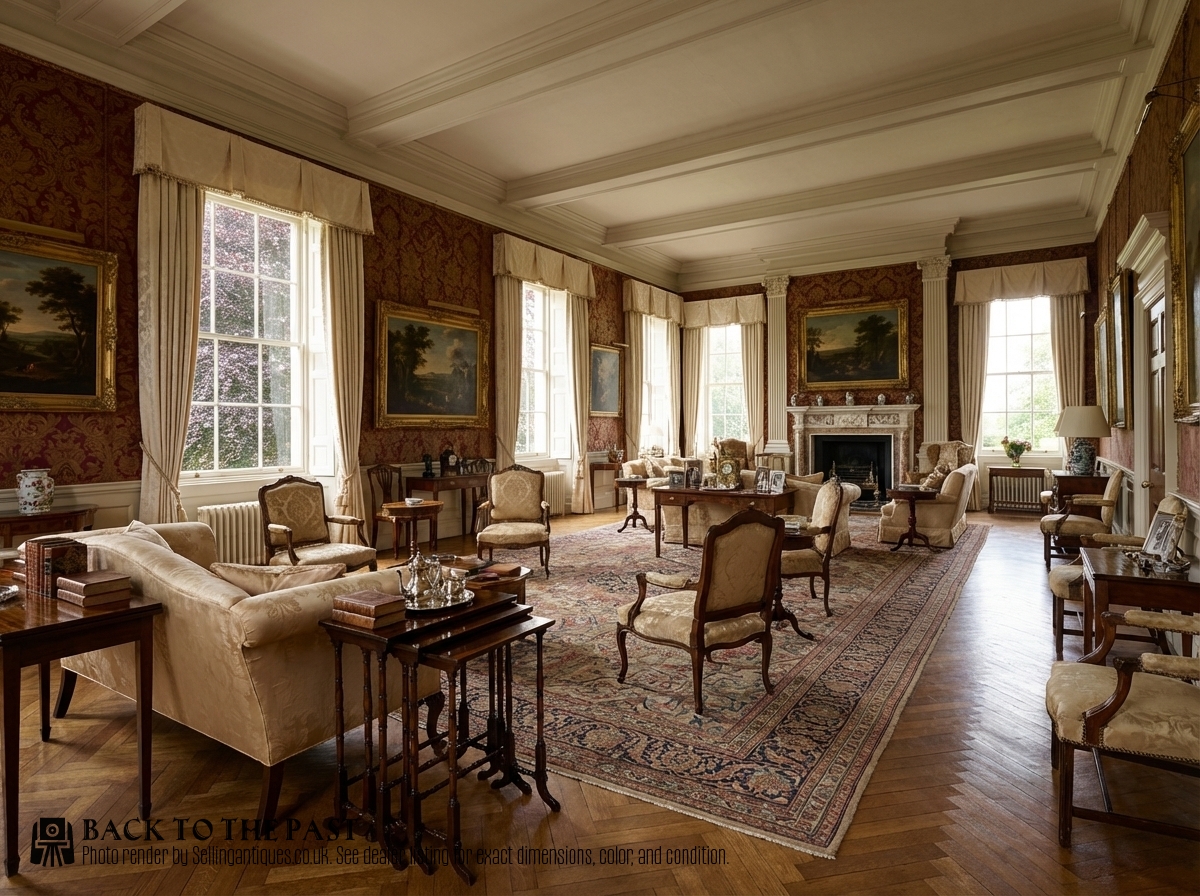
When searching for 19th century nesting tables, a buyer encounters sets of graduated tables designed to slide neatly into one another when not in use. These pieces appear primarily as quartetto sets of four, alongside smaller sets of three.
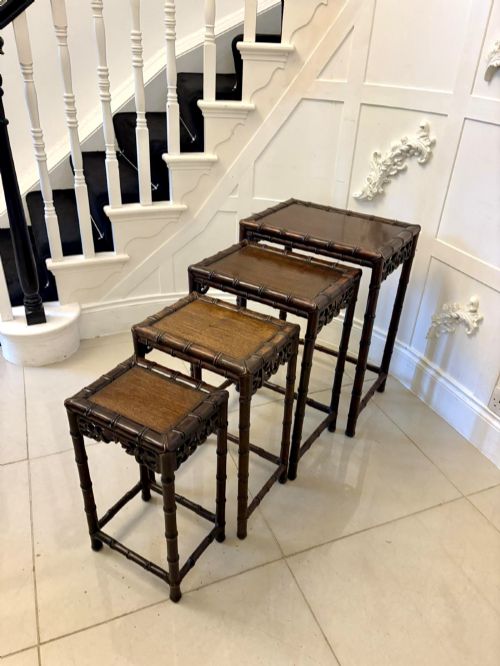
The materials span mahogany, rosewood, oak, satinwood, and lacquer, reflecting periods from the Regency era through to the Victorian period. Forms range from simple occasional tables to elaborate Chinoiserie and Chinese hardwood designs.
How they were made
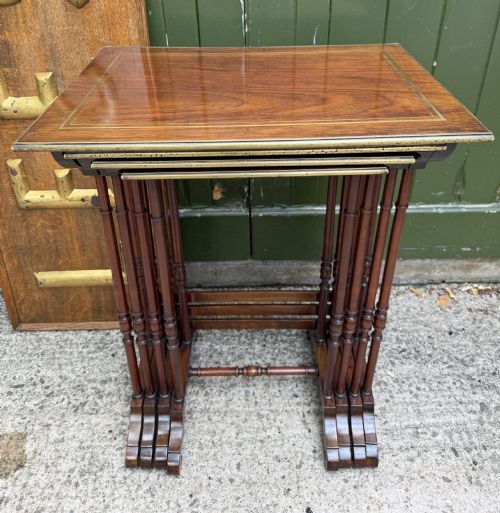
Cabinetmakers utilised dense timbers such as mahogany and rosewood, often pairing them with contrasting veneers like satinwood, burr walnut, and yew. Brass inlay and gold leaf frequently highlight the finer examples.
Constructing sets of four demanded precise carpentry so that each smaller frame cleared the legs and under-framing of the one above. Lacquered pieces involved layered decoration finished in the Chinoiserie taste.
19th Century Nesting Tables Retail Price Guide 2026
Typical asking prices for 19th century nesting tables among the pieces listed under this phrase on Sellingantiques today, from the lower quarter to the upper quarter. They describe what is for sale here now, not the wider market.
Listings feature woods spanning rosewood, mahogany, oak, satinwood, teak, burr walnut, and Chinese hardwood across the Regency and Victorian periods.
What varies in quality
Quality rests upon the selection of timber and the precision of the graduated sizing. The finest examples employ rich rosewood, mahogany, or satinwood with crisp brass inlay and hand-painted lacquer.
Simpler pieces rely on plain oak or standard mahogany without secondary decorative flourishes. The integrity of the joints where the slender legs meet the tops dictates the structural success of each tier.
Gillows
The 19th Century Nesting Tables Glossary
- Quartetto
- A set of four graduated occasional tables designed to nest together. This term appears frequently in nineteenth-century records.
- Chinoiserie
- European decorative style employing Chinese motifs and lacquer techniques. Artisans applied this style to black lacquer surfaces.
- Satinwood
- A durable hardwood yielding a lustrous golden yellow appearance. Cabinetmakers used it for decorative veneers.
- Boulle-work
- Inlay technique utilising brass and tortoiseshell. This decorative method enhances luxury lacquer surfaces.
19th Century Nesting Tables: Frequently Asked Questions
What are quartetto tables?
Quartetto tables are sets of four graduated pieces designed to slide one beneath another to save space.
Cabinetmakers built these sets from the Regency period onwards, utilising rich timbers like rosewood and mahogany for drawing rooms.
How were nesting tables used?
They served as versatile occasional furniture for tea, writing, or holding small decorative items during the nineteenth century.
Servants moved the individual tables about the room as needed and stacked them away neatly when not in use.
What timbers should I look for?
Rosewood and mahogany dominate the higher-end pieces from the Regency and Victorian periods.
Other examples utilise oak, satinwood, teak, and Chinese hardwood, sometimes featuring hand-painted lacquer or yew veneer.
How do I spot Chinoiserie decoration?
Chinoiserie pieces feature black lacquer decorated with motifs inspired by Chinese art and craftsmanship.
These decorative surfaces often appear on quartetto sets dating from the nineteenth century.