





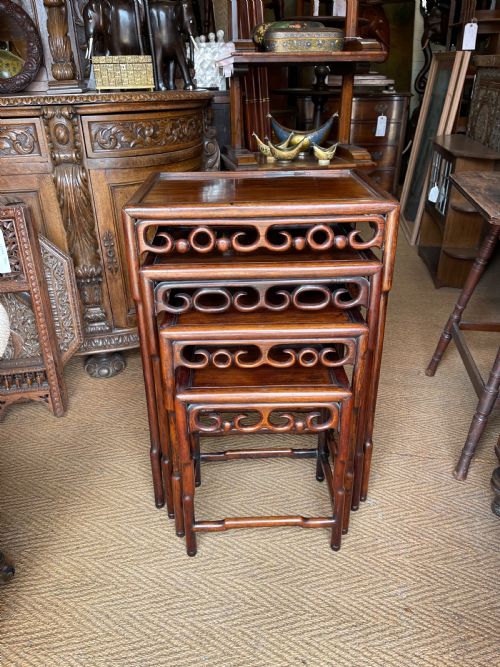

Oriental Nest of Tables
Oriental nest of tables sets offer ingenious space-saving utility through graduated tiers of occasional tables sharing a single footprint.
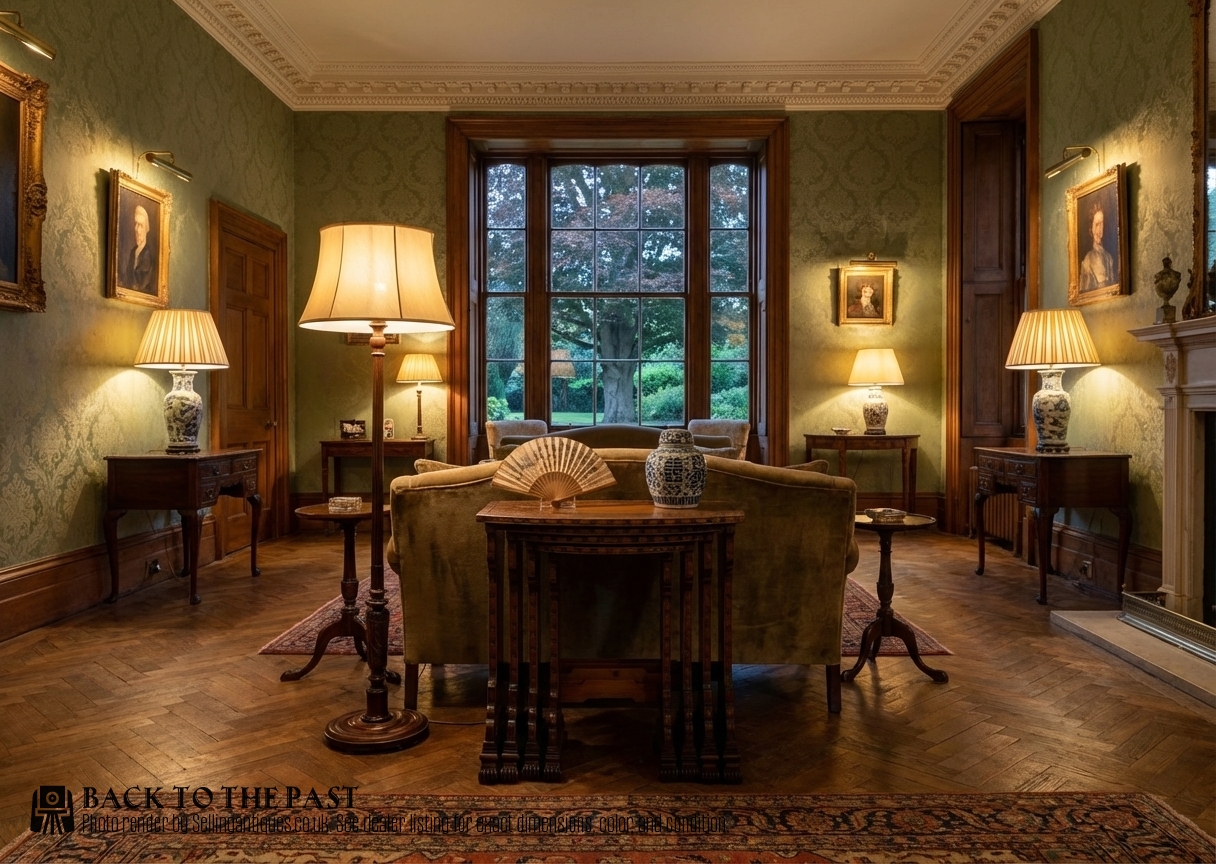
Oriental Nest of Tables
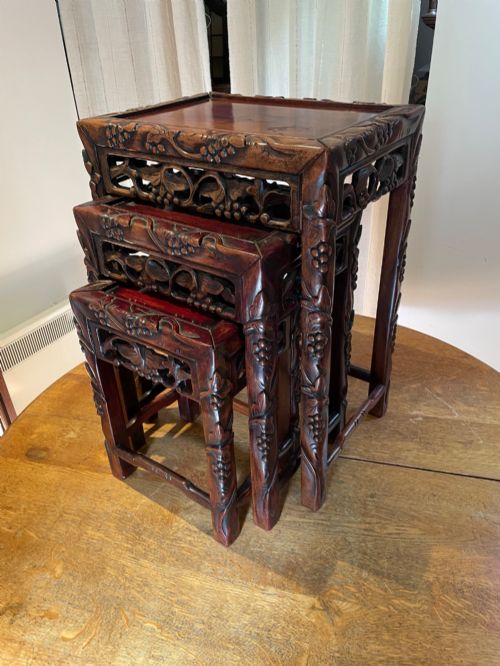
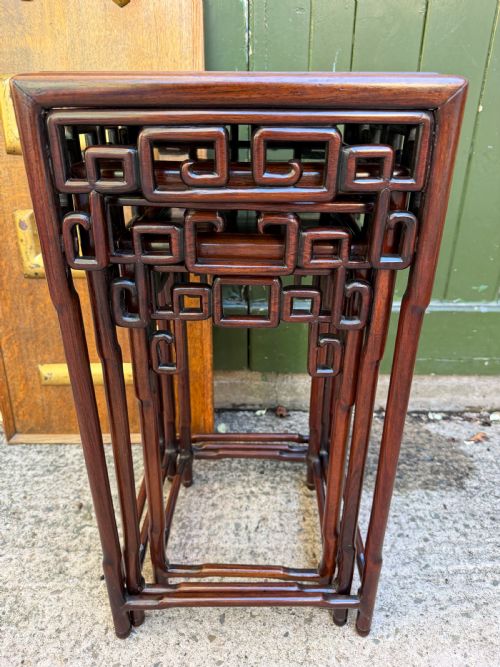
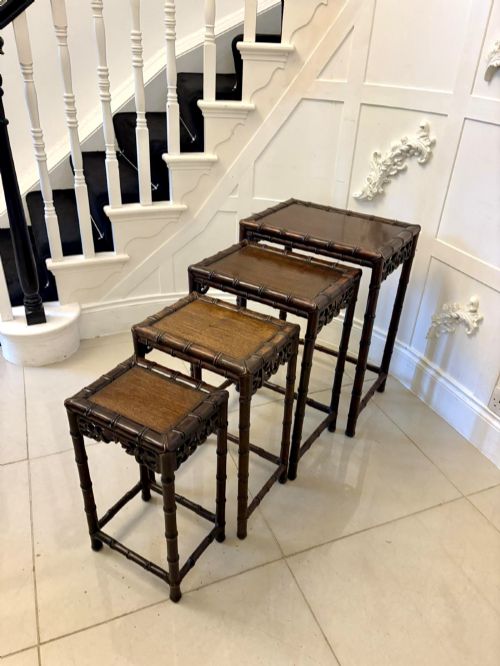
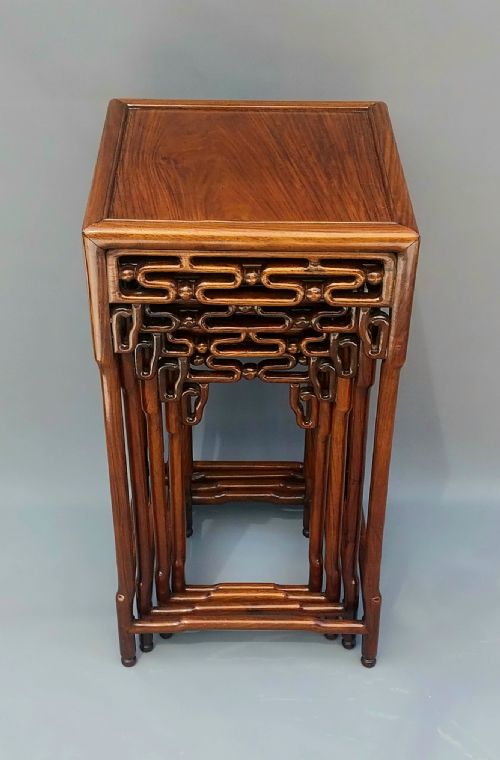
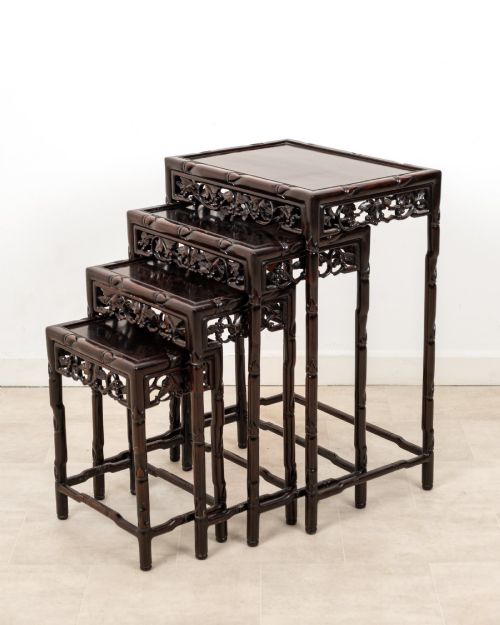
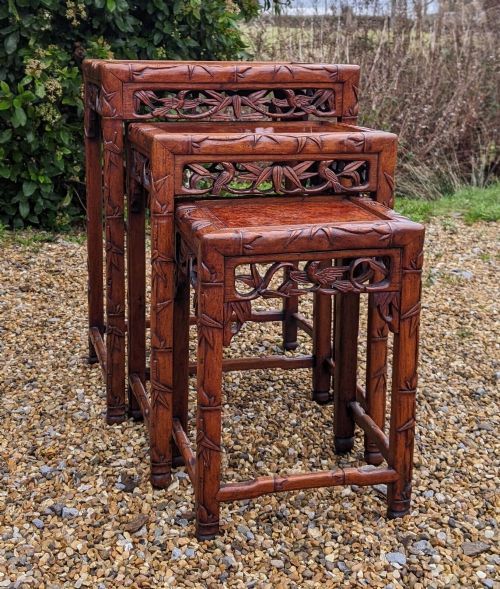
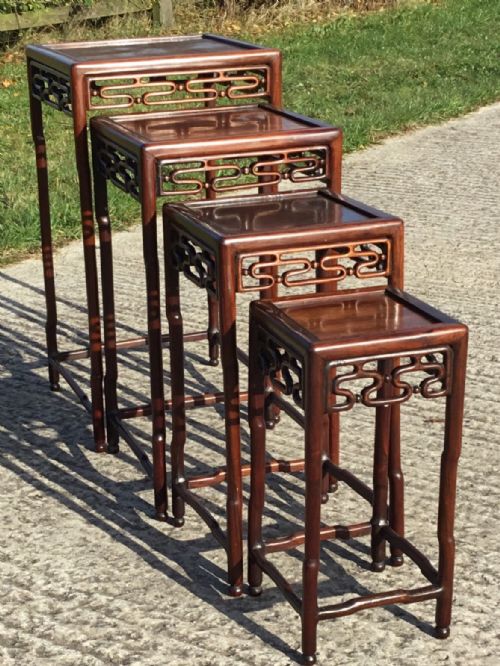
An oriental nest of tables comprises a set of graduating occasional tables designed to slide neatly beneath one another when not in use. These sets predominantly appear in configurations of three or four pieces, functioning traditionally as side or tea tables.
The pieces emerge across the nineteenth century through the early twentieth century, spanning late Qing Dynasty export pieces alongside British Victorian and Edwardian interpretations in Chinoiserie styles. Hardwood iterations and black lacquer finishes dominate the forms available on this page.
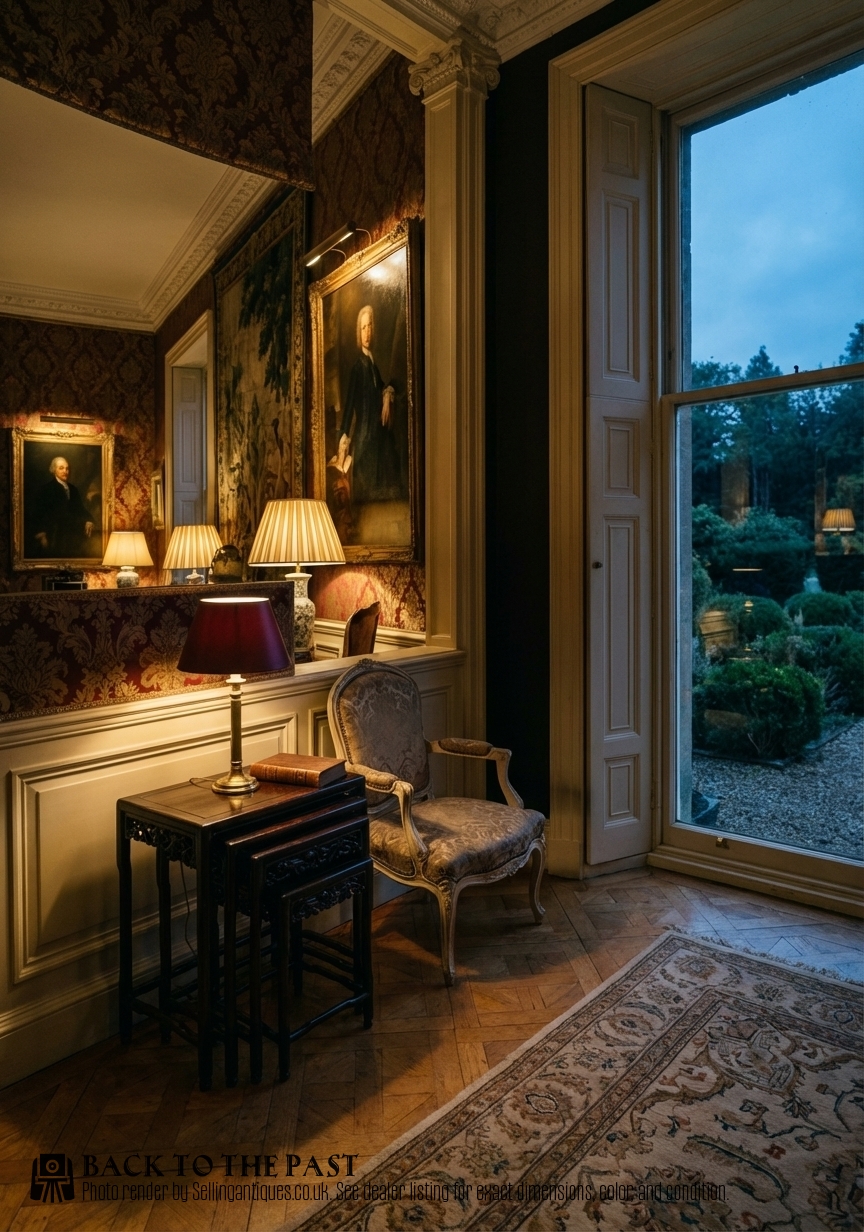
How they were made
Maker workshops utilised dense Asian hardwoods including hongmu, rosewood, huanghuali and teak, selected for their structural stability and rich natural grain. These dense timbers allowed artisans to carve intricate floral and figural motifs directly into the wood without compromising the load-bearing frames.
Alternatively, makers applied multiple coats of black lacquer to softwood or hardwood carcases, embellishing the surfaces with hand-painted enamel, gold leaf, and gilded detailing in Chinoiserie designs. Some specialised examples incorporated burrwood panels, stone inlay, or faux bamboo turnings to achieve distinct decorative textures.
Oriental Nest of Tables Retail Price Guide 2026
Typical asking prices for oriental nest of tables among the pieces listed under this phrase on Sellingantiques today, from the lower quarter to the upper quarter. They describe what is for sale here now, not the wider market.
Listings feature hardwood and lacquer materials alongside Chinoiserie and Qing Dynasty design influences spanning the nineteenth and early twentieth centuries.
What varies in quality
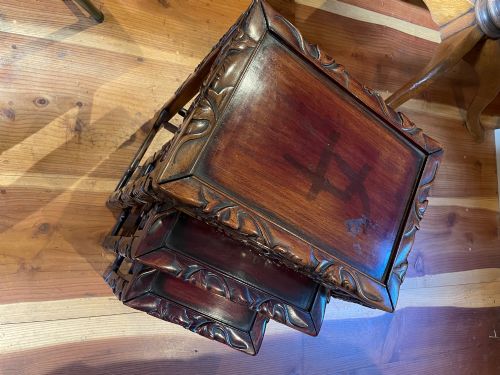
Quality rests upon the depth and crispness of the carving, or the precision and preservation of the lacquer and gilding. Superior examples display tightly fitted joints where the smaller tables slide smoothly into the rebates of the next tier without binding or excessive clearance.
The choice of material dictates the foundational grade, with dense rosewoods and hongmu achieving greater longevity and weight than softer utility woods. Furthermore, the complexity of the design - such as fully carved aprons on all four sides rather than just the front - distinguishes standard export items from exceptional workshop productions.
The Oriental Nest of Tables Glossary
- Quartetto
- A set of four small tables designed to nest together. This term appears frequently in nineteenth-century records for matching sets.
- Hongmu
- A traditional Chinese term denoting dense, dark hardwoods used for fine furniture. It translates literally to red wood.
- Chinoiserie
- European artistic style reflecting Chinese motifs and decorative techniques. Makers applied this style extensively to lacquered furniture during the Victorian and Edwardian periods.
- Japanned
- European made furniture finished with black or coloured varnishes intended to emulate East Asian lacquerwork. This technique involved successive layers of heat-cured varnish.
- Graduated
- Describing tables built in diminishing sizes so each smaller unit slides beneath the preceding one. This construction allows the entire set to occupy the floor space of a single table.
Oriental Nest of Tables: Frequently Asked Questions
How were oriental nests of tables used?
These tables served primarily as flexible tea and coffee surfaces in nineteenth-century reception rooms. Servants would deploy the individual tiers around a room to hold cups or reading materials when guests visited.
Once entertaining concluded, the smaller tables stacked compactly back into the master frame against a wall. This space-saving mechanism made them exceptionally popular in domestic interiors.
What is the difference between hardwood and lacquer sets?
Hardwood sets showcase the natural grain and colour of timbers such as rosewood, hongmu, and teak. These pieces rely on carved ornamentation and joinery for their visual appeal.
Lacquer sets feature applied resin coatings, often in black, decorated with hand-painted enamel and gold leaf. They represent distinct aesthetic traditions within export and domestic markets.
How do I date a nest of tables?
Dating relies upon timber selection, construction methods, and stylistic markers recorded across the Victorian and Edwardian eras. Mid to late nineteenth-century pieces often display heavier Hongmu construction and hand-cut joinery.
Early twentieth-century examples frequently incorporate lighter teak frames or specific regional carving styles like elephant motifs. Comparing the finish against known export periods provides a reliable chronological anchor.
Can I use them as coffee tables?
Historic sets function well as occasional or side tables positioned beside armchairs and sofas. The master table in a set often provides a suitable height for resting cups and small objects.
Because the smaller tiers sit at lower heights, they offer versatile surface levels around a seating area. Care should be taken with antique lacquer finishes against hot liquids or moisture.