



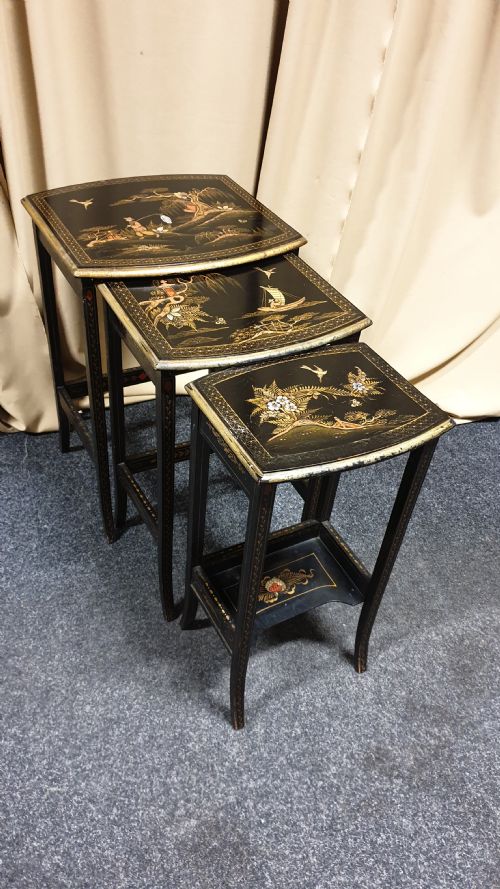
Chinese Stacking Tables
Chinese stacking tables offer clever tiered convenience, fitting neatly together when not in use.
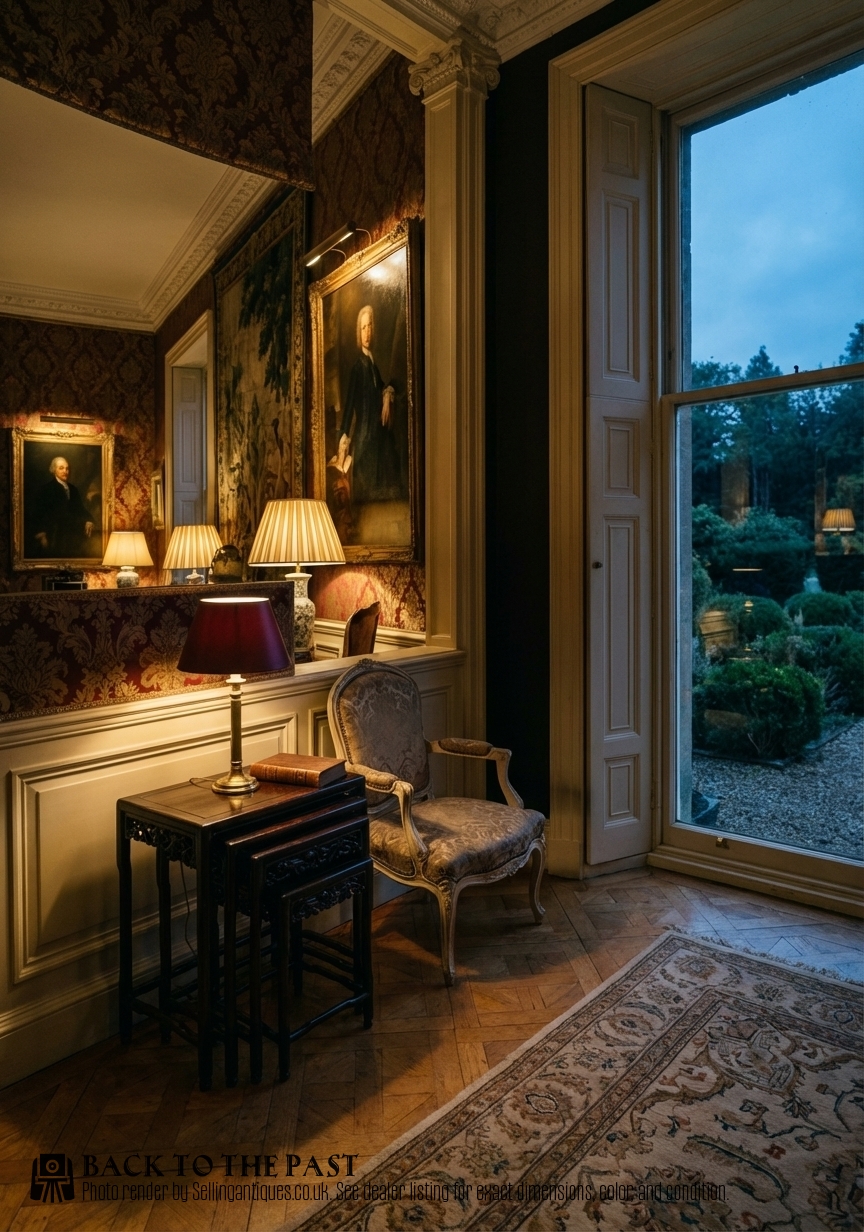
Chinese Stacking Tables
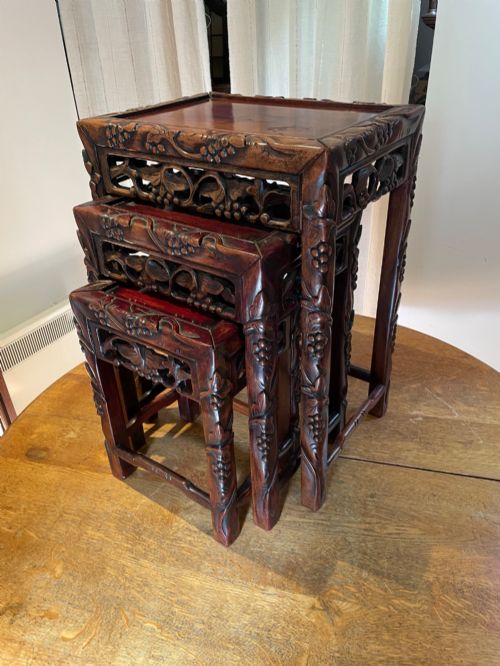
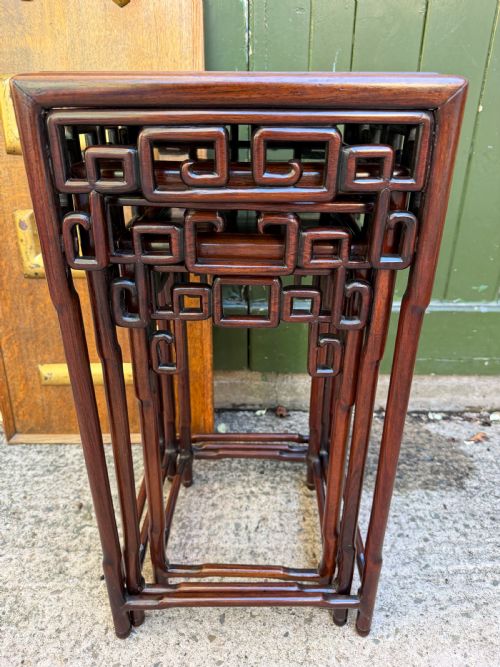
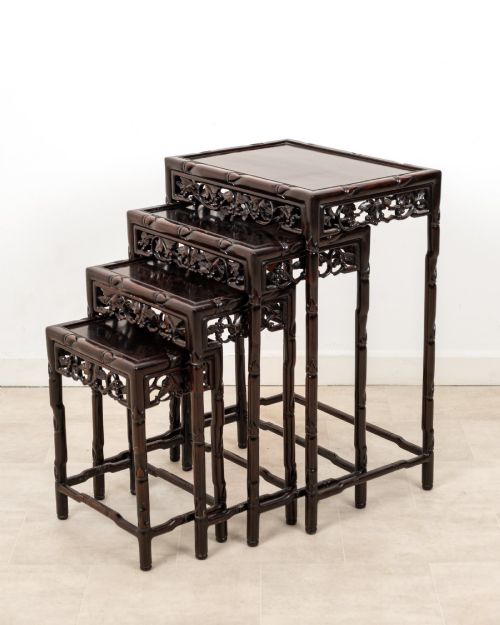
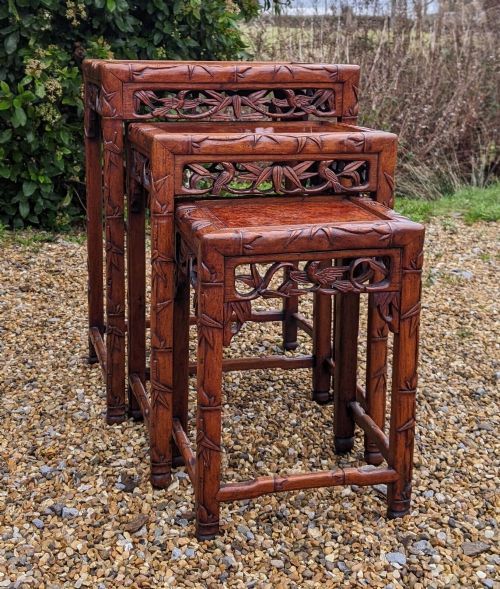
Chinese stacking tables appear primarily as sets of four graduated pieces designed to slide one beneath another to save space. Buyers searching for chinese stacking tables encounter forms referred to as nests of tables or occasional tables, which function easily beside seating or as low coffee surfaces. These clever assemblies range from sets of three up to four interlocking tables constructed for compact placement.
The pieces emerge predominantly from the nineteenth century alongside early twentieth century and Edwardian periods. Styles span traditional Qing dynasty and Chinese export aesthetics through to British Chinoiserie interpretations and Asian export designs. Most examples found here present a practical arrangement where smaller tables slip smoothly into the frame of the largest one.
What varies in quality
Quality rests upon the selection of timber and the precision of the graduated fit between tables. Superior sets utilise dense hardwoods like huanghuali or rosewood with exceptional grain, whereas simpler versions rely on standard hardwoods or teak. The tightness of the nesting action and the stability of each frame determine the overall integrity of the set.
Decorative execution separates standard pieces from finer examples. Finely applied gold leaf, detailed hand-carved motifs, and smooth lacquer finishes require specialist labour that elevates the visual depth of the tables. The crispness of the carving and the preservation of the lacquer surface indicate the level of craftsmanship involved.
Chinese Stacking Tables Retail Price Guide 2026
Typical asking prices for chinese stacking tables among the pieces listed under this phrase on Sellingantiques today, from the lower quarter to the upper quarter. They describe what is for sale here now, not the wider market.
The Chinese Stacking Tables Glossary
- Lacquer
- A durable resin finish applied in multiple layers to wooden surfaces, often serving as a base for painted Chinoiserie decoration or gold leaf.
- Chinoiserie
- A European artistic style reflecting Chinese motifs and techniques, frequently applied to black lacquer occasional tables during the nineteenth century.
- Graduated
- Describing a set of tables where each successive piece is slightly smaller, allowing them to stack neatly inside one another.
- Quartetto
- A nineteenth century term for a nest of four matching tables designed to stand together or separate for serving.
Chinese Stacking Tables: Frequently Asked Questions
How were they used historically?
Historically, these tables provided flexible surface space for serving tea, displaying ornaments, or writing letters. Servants could pull out individual tables as required and tuck them away afterwards.
This practical space-saving function made them popular in both Chinese households and Western drawing rooms during the nineteenth and early twentieth centuries.
How do I live with them?
You can arrange the tables nested together in a corner or separated around a room to hold lamps and books. Their compact footprint suits both large reception spaces and smaller sitting rooms.
Regular dusting with a soft cloth helps preserve the wood or lacquer finish. Avoid placing them in direct sunlight to protect the decorative surfaces.
How do I tell periods apart?
Nineteenth century examples often display traditional Chinese hardwood construction or detailed hand-applied lacquer work. Pieces from around nineteen hundred to the Edwardian era may incorporate British Chinoiserie styles or Anglo-Indian influences.
Examining the type of timber, the wear on the feet, and the style of decoration helps indicate the approximate period of manufacture.